Paragraph Speaking Practice for Preliminary Level Students
 Nivedita Dar22 May, 2026
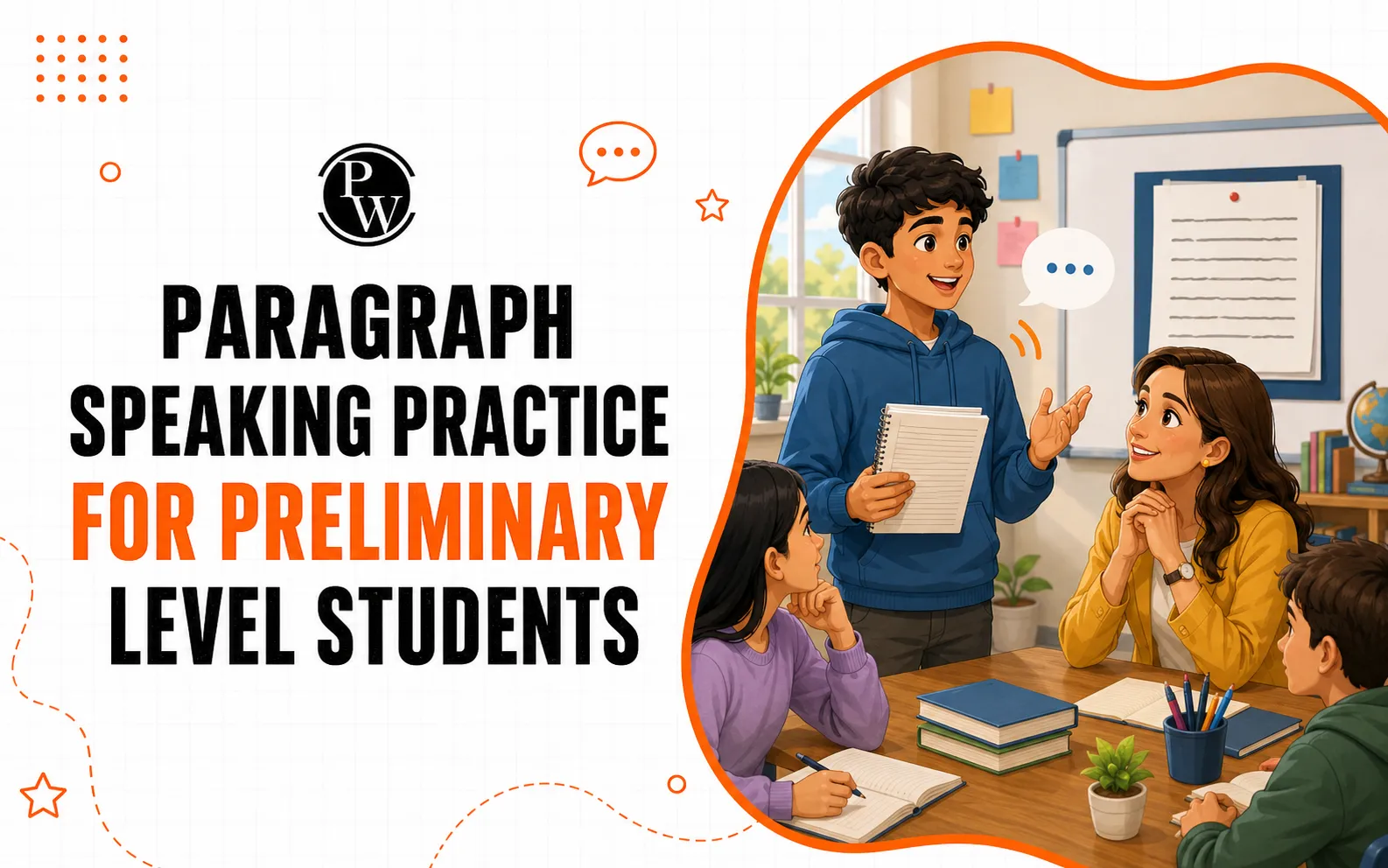
Many young learners understand basic words but freeze when asked to speak in complete thoughts. They might answer with a single word or a short phrase, struggling to connect their ideas smoothly. This common challenge creates a barrier to natural communication. At the English learning preliminary level, students aged 12–14 need to move beyond simple vocabulary. The goal is to help them group their thoughts into short, meaningful blocks of speech.
Why Is Paragraph Speaking Practice Important?
When children step into the English learning preliminary level, their language needs change. They no longer just name objects or say simple greetings. Instead, they must explain what they think and why they think it.
Engaging in regular paragraph speaking practice allows young minds to build a bridge between knowing single words and speaking in fluent paragraphs.
This type of training is essential because it helps students stretch their mental muscles. When a child practices speaking a whole paragraph, they learn how to start a thought, add details, and wrap it up neatly.
This structure removes the fear of making mistakes and stops them from translating words in their head before speaking.
Tips for Paragraph Speaking Practice
Building paragraph speaking skills does not require long, tiring study hours. In fact, short bursts of daily activity work much better for children. Here are simple habits that make speech training easy and fun to do at home:
-
The Daily Mirror Talk: Have your child stand in front of a mirror for two minutes. Let them describe their favourite toy, their pet, or what they ate for breakfast using four or five continuous sentences.
-
The "Why" Game: Whenever your child shares an opinion, ask them "Why?". If they say, "I love summers," prompt them to add details: "Because I can eat ice cream and swim in the pool." This naturally stretches a single sentence into a paragraph.
-
Story Chains: Start a story with one basic sentence, such as, "The little dog ran into the garden." Let your child add the next three sentences to complete the story paragraph.
Weekly Plan for Paragraph Speaking Practice
To ensure steady progress, young learners benefit from a predictable routine. A clear, weekly schedule helps combine vocabulary building, active listening, and speech delivery without causing any stress.
The table below outlines a balanced weekly schedule designed specifically for students at the preliminary level to experience structured speaking practice.
|
Day |
Focus Area |
Practice Activity |
Goal for the Student |
|
Monday |
Vocabulary & Themes |
Learn 3 new words related to school, family, or hobbies and use them in full sentences. |
To build a strong foundation of words before speaking. |
|
Tuesday |
Active Listening |
Listen to a short audio story or a kid-friendly podcast and write down key ideas. |
To understand the natural rhythm and pronunciation of English. |
|
Wednesday |
Sentence Starters |
Practice using opening phrases like "In my opinion," "I believe," or "This looks like." |
To learn how to kickstart a spoken paragraph smoothly. |
|
Thursday |
Visual Descriptions |
Look at a family photograph or a picture book and describe the scene in 4-5 sentences. |
To match visual images with spoken descriptions effortlessly. |
|
Friday |
Roleplay & Games |
Set up a mini-cafe or a toy shop at home and act as the shopkeeper or customer. |
To practice real-world communication in a fun, relaxed setting. |
|
Saturday |
Review & Record |
Record a short 1-minute speech about the week on a phone and listen to it together. |
To track progress, celebrate small wins, and note areas to improve. |
Read More - Daily 5 Sentence Practice for English Fluency (Level Preliminary)
English Fluency Exercises to Try at Home
To keep children excited about learning, speech practice should feel like playtime. Parents can use specific English fluency exercises that turn language acquisition into an interactive family activity.
One great exercise is the Synonym Swap. When your child uses a simple word like "good" or "happy," challenge them to replace it with a stronger word like "wonderful" or "thrilled." This simple swap instantly makes their spoken paragraphs sound richer.
Another excellent method is the Label Challenge. Put sticky notes on everyday items around the house, but add descriptive words to them. Instead of just writing "Door," write "The Big Wooden Door." When your child walks past, ask them to make up a quick three-sentence paragraph about that object.
Movement also helps retention, so asking children to act out action words while speaking keeps.
Read More - Build Vocabulary without Memorizing (Level Preliminary)
How Does Paragraph Speaking Practice Help in Communication Improvement?
The journey toward communication improvement can sometimes feel slow, and children may face a few common hurdles. The most frequent issue is performance anxiety. Children are often perfectionists and prefer staying silent over making a public mistake.
Another common barrier is the habit of translating sentences from a native language into English. This causes a noticeable delay in speech and makes conversations feel broken.
To overcome these barriers, encourage the use of hand gestures. Non-verbal communication is a fantastic tool that helps children express themselves when they are searching for a specific word.
Additionally, focus heavily on listening activities. The more everyday English a child hears, the faster their brain learns to think directly in English, completely eliminating the need for mental translation.
How CuriousJr Helps Paragraph Speaking for Young Minds?
A great language journey is never completed without proper tracking and positive feedback. For children preparing for global standards, interactive and activity-based learning is the best approach. With CuriousJr English learning classes, Young learners thrive when they receive guidance from dedicated mentors who use storytelling, real-life conversation prompts, and voice-based practice tasks.
Rather than relying on old-fashioned memorisation, modern methods focus on real communication. Small group sessions ensure that every single child gets ample time to speak, practice, and interact without feeling lost in a crowd.
Regular progress updates shared with parents also ensure that the child's growth is consistently monitored and celebrated at every single step.