English Fluency Activities That Improve Faster Responses (Preliminary Level)
 Nivedita Dar22 May, 2026
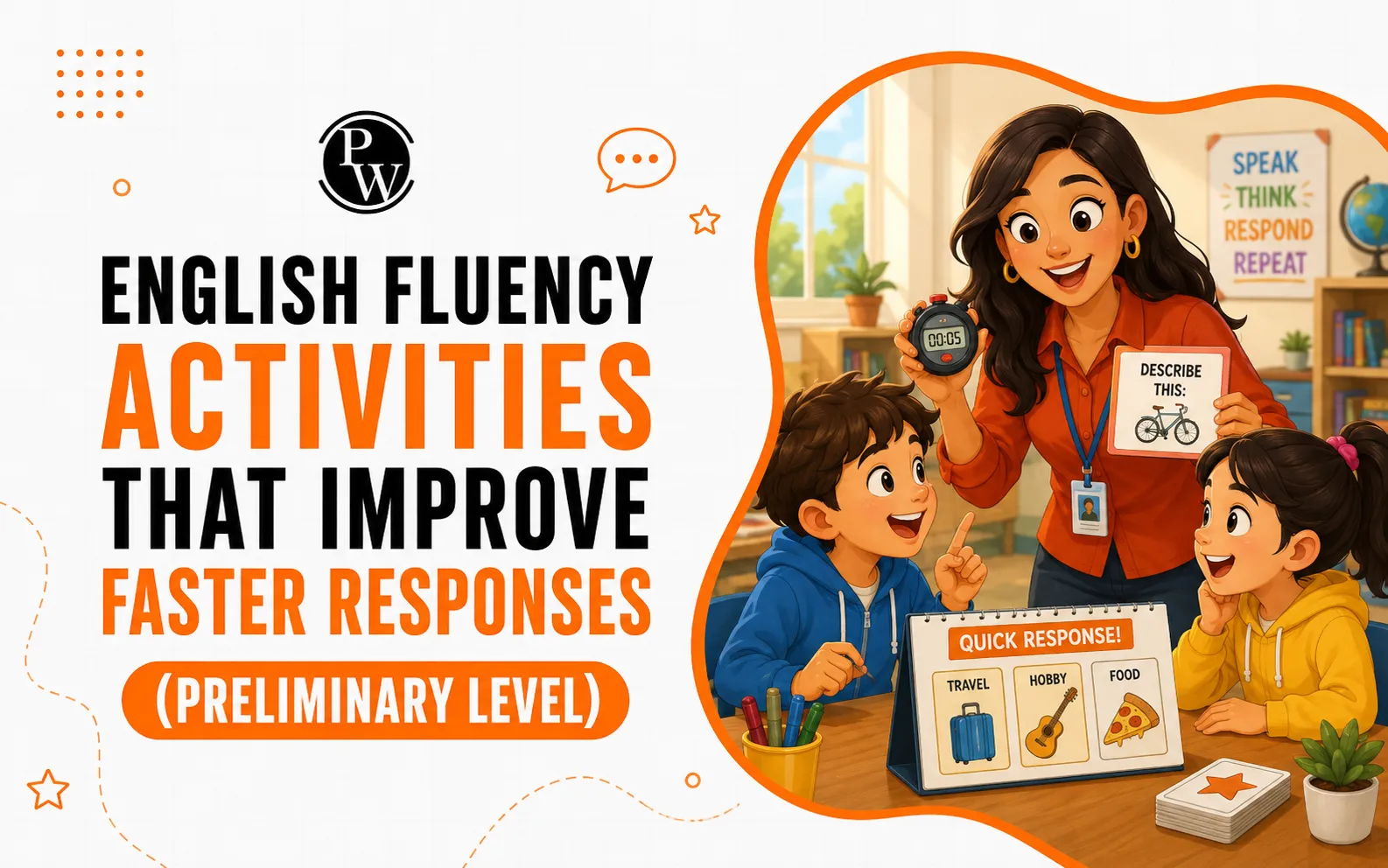
For many young learners, a difficult barrier is speaking a new language. This gap is frequently due to children trying to convert sentences from their original language into English in their head before they speak. At the preliminary level, which is suited for pupils between 12 and 14 years old, the major objective is functional, real-world communication, not perfect grammar. To break this habit, children need active English fluency activities that train their brains to process thoughts directly in English.
Why Are English Fluency Activities Important for Children?
Kids become so caught up in the rigid rules of the textbook that their natural conversational flow hits a screeching halt. In real life scenarios, such as when you’re talking to a teacher or trying to make new acquaintances, excessive pauses can make communication seem unpleasant.
Developing quick response English skills help your child understand questions and respond more confidently.
Using active fluency improvement activities helps shift your child's brain from passive listening to active speaking. When speech becomes a quick reflex, children feel more comfortable expressing their thoughts. This practice teaches them that English is a lively tool for daily connection rather than just a boring subject they study for a school exam.
Best English Fluency Activities to Reduce Hesitation
Many students hesitate because they feel they do not have a large enough vocabulary to express complex thoughts. To improve communication skills kids need regular speaking exposure instead of memorising long lists of dictionary definitions. Focus on building word associations through everyday conversations and activities. Using common household objects to practice new words naturally throughout the week helps children expand vocabulary, speak more confidently, and develop stronger communication habits.
The Label Everything Method
Place small sticky notes on common household items around the house. Instead of writing just the name of the object, write descriptive pairs such as "Wooden Table" or "Bright Lamp". This simple visual trick helps the brain pair descriptive adjectives with nouns instantly, reducing the time it takes to form a sentence.
Word Family Trees
Pick a simple root word like "Act" or "Play" and challenge your child to name as many related words as possible, such as "Action", "Actor", "Playground", or "Playful". This activity expands their mental vocabulary bank without making them feel like they are doing tedious school homework.
Daily English Fluency Activities for Better Speaking
Mastering quick responses at the preliminary level lays a strong foundation for future academic and social achievements. When a child can speak without hesitation, they are more likely to participate in classroom discussions, ask questions when they are confused, and collaborate effectively with their peers.
By incorporating targeted English fluency activities into their weekly routine, you are giving your child a tool that extends far beyond the classroom. They will learn to view English not as a set of rules to be tested on, but as a lively, natural way to share their unique ideas with the world around them.
Read More - Daily 5 Sentence Practice for English Fluency (Level Preliminary)
Weekly Plan for English Fluency Activities
A clear, organized weekly schedule helps parents track progress and keeps children looking forward to their daily sessions.
The table below outlines simple daily tasks focused on reading, writing, listening, and speaking for the English learning preliminary level.
|
Day |
Focus Area |
Specific Activity Details |
Core Fluency Goal |
|
Monday |
Self Introduction |
Answer basic questions about name, age, hobbies, and home life using full sentences. |
Build fundamental speaking confidence |
|
Tuesday |
Visual Description |
Look at an unfamiliar picture and describe the objects, colors, and actions out loud. |
Improve descriptive vocabulary speed |
|
Wednesday |
Opinion Sharing |
Discuss a favourite school subject or best friend and explain the reasons using "Because". |
Express independent thoughts quickly |
|
Thursday |
Polite Requests |
Practice formal structures like "May I" and "Please" during family dinner conversations. |
Master practical social communication |
|
Friday |
Story Chains |
Start a story with one sentence and challenge your child to add the next line instantly. |
Develop rapid creative thinking skills |
|
Saturday |
Active Listening |
Listen to a short audio story and provide immediate, simple spoken feedback about the plot. |
Enhance real-time listening habits |
|
Sunday |
Casual Review |
Revisit the new words learned during the week and use them in funny, relaxed conversations. |
Reinforce long-term memory retention |
Read More - Why Kids Can’t Speak English Fluently (Level Preliminary)
How to Track Progress in English Fluency Activities
Tracking your child's improvement should always be based on their communication speed and confidence rather than perfect test scores. Celebrate small victories, such as when they answer a question without a long pause or when they use a new descriptive word correctly during a casual conversation.
Keep a voice recording log on your phone. Record your child describing a picture at the beginning of the month, and then record them describing a similar picture four weeks later. Letting them hear their own progress is an incredible motivational tool that proves their dedication to speaking speed practice is working.
How CuriousJr Supports English Fluency Activities
CuriousJr has a unique platform that is a perfect fit to the Assessment English: Preliminary curriculum. CuriousJr English learning classes provide structured learning routes to assist young learners become more competent communicators.
Using interactive mobile tools removes the stress of traditional classrooms and turns language learning into an engaging habit.
The curated tasks on the platform focus directly on daily conversation topics, ensuring that children spend less time translating and more time speaking. Through immediate feedback, guided pronunciation modules, and fun milestone badges, students stay motivated to achieve their daily speaking goals. It bridges the gap between passive textbook learning and active, real-world confidence, making it a helpful learning companion for young learners.