Mental Maths Games Using Dots for Class 1
 Nivedita Dar22 May, 2026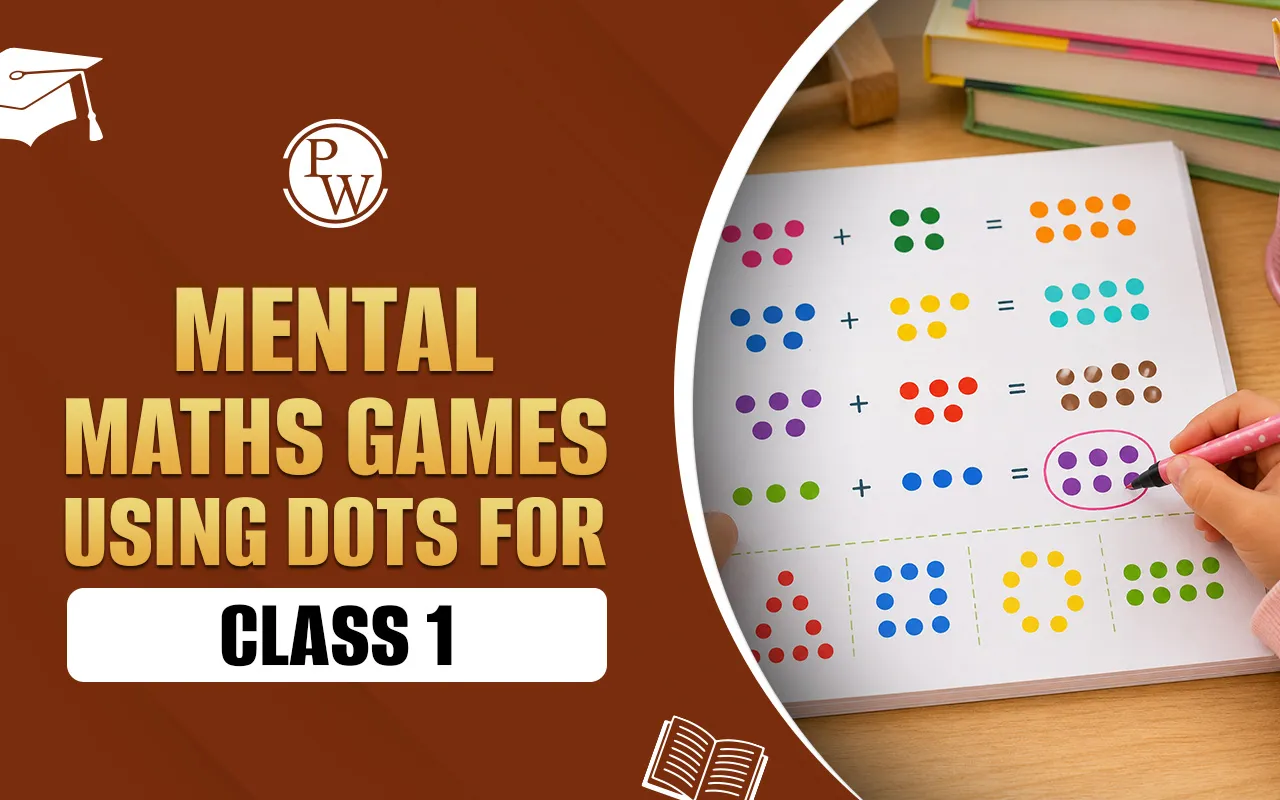
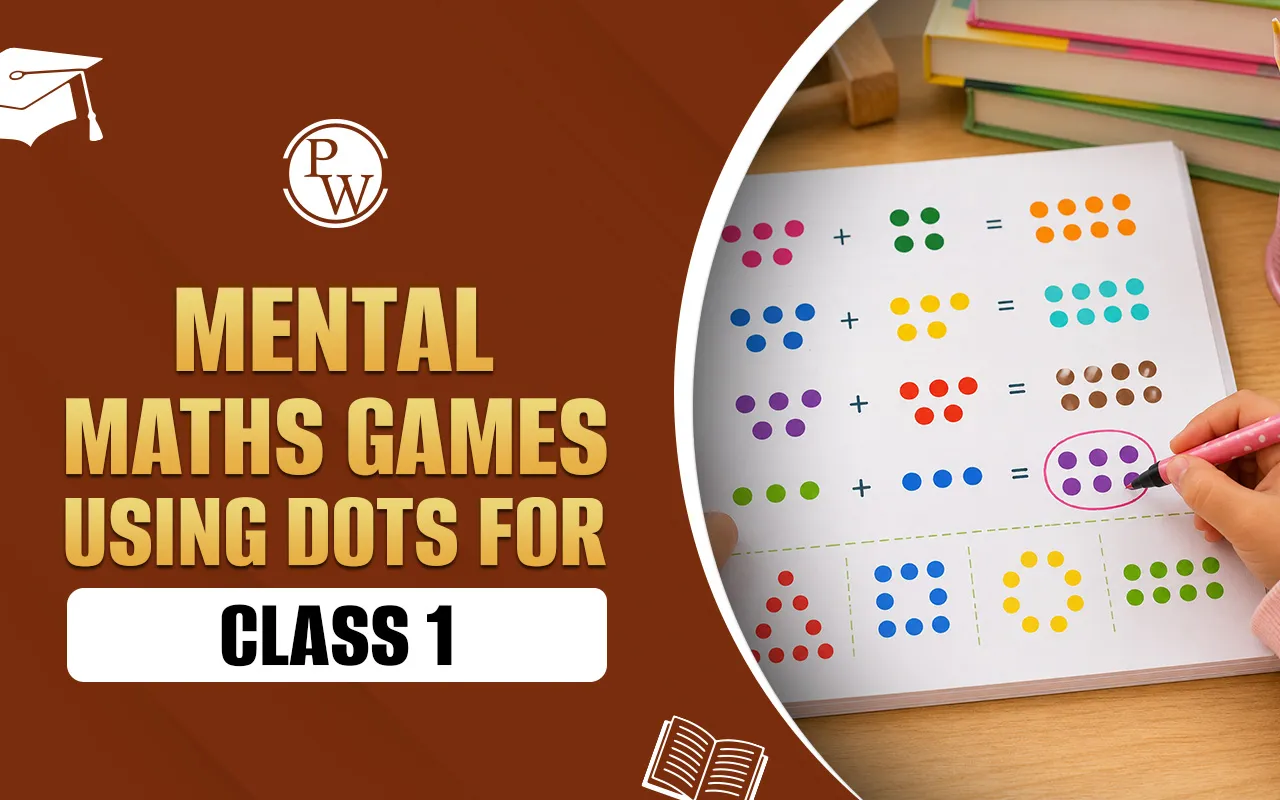
Six-year-olds learn to read and write numbers as their first steps toward the important milestone of arithmetic, but the transition from physical objects to abstract symbols, such as digits, can be challenging. Mental maths games using dots provide a great solution to this problem, because they convert numbers into easily recognisable visual shapes.
This article will help you close the gap between your child being aware of counting and their actual understanding of maths.
Importance of Mental Maths Games Using Dots
All early childhood education experts agree that children understand maths best when it is presented in ways they can see and experience. Dot games provide a crucial step between the physical and abstract symbols we use to represent numbers. All this information, of course, is too much for a Class 1 student to handle all at once — jumping straight into written equations! Dot cards and defined patterns fill a void in between that is more playful.
We come across a skill known as "subitising" when the emphasis is placed on visual learning, such as maths techniques like these. This means you can see a collection of items and immediately know how many there are, without counting them individually. Just like when you roll a die, the six faces of that cube each have one aspect to them, but your eyes recognise those five dots as quickly as I do.
Read More - Speed Maths Test for Class 1 (Try Now)
Some Mental Maths Games Using Dots
A Class 1 student needs variety and a little thrill. These dot counting activities are for both home and school use – there is very little equipment; you just need some cards and a marker.
1. Count the Dots
A great resource for practicing basic early maths skills. Create groups of 1 to 10 dots on a piece of paper. Here, you ask your child to count the dots and say the number aloud. Arrange them in various shapes to make it more challenging. This could occasionally be a line with dots that were sometimes triangular, and other times they were different colours. This helps them know that no matter how they lay out the problem, it always equals the same amount.
2. Match Dots with Numbers
A simple worksheet with 2 columns. Draw different dot patterns on the left. Now write the digits in a mixed-up way on the right side. Tell the child to connect lines from each dot to their number. This simply enhances their number recognition and allows them to associate a visual representation of a quantity with a written symbol.
3. Add the Dots
Show two different groups of dots side by side (for example, 3 and 2) to introduce addition. Tell the child to calculate the total. When they see the groups together, it clicks that addition is really just taking two sets and putting them all together. Now, this exercise gives a far better interpretation of plus than examining an equation on paper.
4. Missing Dot Game
Observing this activity, then practices the observation skill and activate mental subtraction. First show a 5-dot card, then hide it while you cover one of the dots with your thumb. Then, show it again and say, "Know how many are missing? Children could think about what was there and how much was left, which builds the logic of subtraction.
5. Flash Dot Game
For a true mental maths speedup, flash a dot card for two seconds and then hide it. Have the child quickly say the number observed. It also stops them from counting one by one, which causes their brain to use subitising. This technique is among the best ways to improve calculation speed.
6. Dice Dot Game
They also make excellent aids for class 1 maths practice. For this exercise, all you have to do is roll a dice, and the child should shout out what number appears as fast as possible. Because dice shapes are standard, they learn to identify numbers very quickly. But you can extend it later on by rolling two dice and requesting them to state the total sum of dots.
7. Make the Number with Dots
Start with a blank sheet of paper in your hand. Then the child will need to have drawn only 7 dots. This active participation reverses the learning process; instead of merely recognising a number, they are crafting it with their own hands, solidifying its value.
Question on Mental Maths Games Using Dots
While you are playing these games, you can record your child's progress with respect to specific types of questions. These are meant to assess their grasp of mathematical visualisation and make sure they are not just rote learning.
-
Count and Write: Present a card with 8 dots arranged in two rows of four. Ask the child to count the dots and write the corresponding digit on a piece of paper. This links their visual count to their writing skills.
-
Match Dot with Numbers: Draw a group of 3 dots and a group of 6 dots. Provide the numbers 3 and 6 nearby. Ask the child to point to the number that matches each group. This helps with quick identification.
-
Colour the Dot: Provide a sheet with empty circles. Ask the child to "colour 5 dots" with a specific crayon. This requires them to keep track of their count while performing a physical task.
Read More - 10-Second Addition Tricks for Class 1
Benefits of Mental Maths Games Using Dots
Why not just teach them how to write 1-10 and be done with it? Such benefits are amazing for a child's brain development.
-
Moves Beyond Finger Counting: These games teach the brain to treat many items as "groups" (the first step towards more advanced mental maths).
-
Reduces Maths Anxiety: The fun element means children feel no pressure and cannot be wrong. They are willing to try things that are guesswork.
-
Builds Concentration: Games such as "Flash Dot Game" are examples of games which demand tight focus. This helps to extend the attention span of Class 1 students, who are typically very short on patience.
-
Teaches Number Relationships: The dots help children visualise the relationship between numbers. They can see that a group of 6 is actually two groups of 3, or one group of 5 and another small one all by itself.
-
Prepares for Place Value: When children use "ten frames" (dots arranged in two rows of five), they begin to see that ten separate single units form a ten, the building block of our entire number system.
How Does CuriousJr Help with Class 1 Mental Maths?
While using physical cards for hands-on practice is fantastic, using digital tools during Class 1 maths practice can create a clear path. CuriousJr online mental maths classes use gamification to turn education into an exciting journey! They have created a platform that revolutionises fundamental math skills. interactive games for children.
-
The platform focuses on visual learning, which may sound a little strange when first explained in terms of number systems. It does this by displaying dots in various imaginative configurations, preventing kids from learning by memorisation of predetermined numerical patterns.
-
Challenge modules provide interactive tasks that focus on maths skills such as subitising and rapid number (or quantity) recognition; these modules are timed.
-
It gives instant, real-time feedback that enables the student to find their mistake and learn about grouping logic immediately.
-
There is a transition from the dot-counting level to mental addition and subtraction, with increasing sophistication at each step.