Build Vocabulary without Memorizing (Level Preliminary)
 Nivedita Dar14 May, 2026
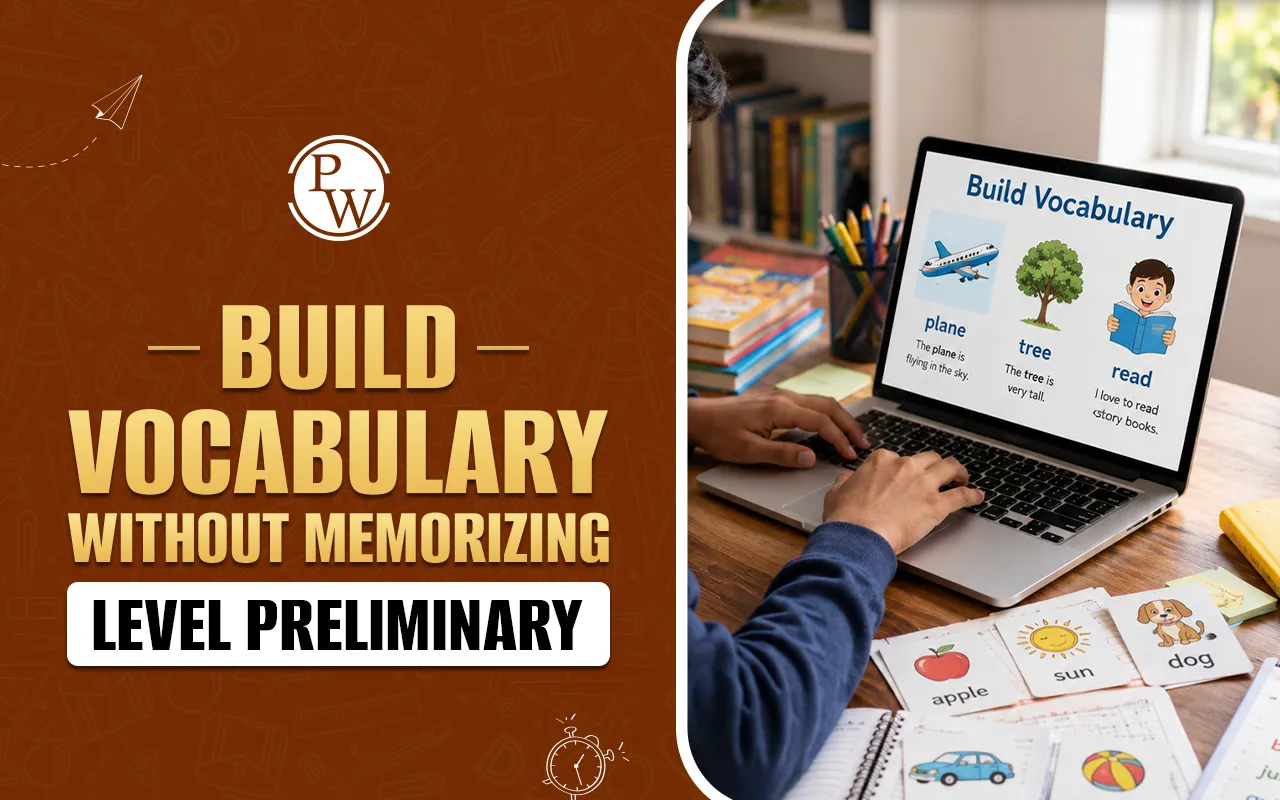
Teaching kids new words is often a game of tug-of-war. Parents want growth, but kids often hate the “word of the day” drills. The truth is that old school memorization is the worst technique for learning a language. If you want your child to do well in the Cambridge Preliminary level, you need tactics that make vocabulary building for kids feel like a discovery and not a job. In this article we will explore how to learn words effortlessly with vocabulary tactics that kids truly like, and that will help you move away from uninteresting lists and towards real fluency.
Why Memorization Does Not Work for Kids
Memorising a definition is not the same as understanding a word. When children cram for a test, the information usually vanishes within forty-eight hours. To truly excel English vocabulary tips, children need to see, hear, and use words in real-life situations.
Children learn best when a word is associated with emotion, picture or movement. For example, displaying them a huge slice of cake develops a permanent mental anchor instead of defining the word “enormous”.
Fun Vocabulary Building for Kids Tricks
Building a robust word bank doesn't require hours of desk time. These vocabulary tricks kids respond to will help them pick up language through engagement.
The "Label Everything" Challenge
Turn your home into a living dictionary. Use sticky notes to label household items. However, don't just write "Door." Write "Mahogany Door" or "Entrance." This helps in vocabulary building for kids by associating adjectives with everyday objects.
Word Family Trees
Pick a root word and see how many "branches" you can grow.
-
Root: Play
-
Branches: Playful, player, playground, playing, replay.
This method helps children understand how prefixes and suffixes change meanings, making it one of the most effective english vocabulary tips children can use to decode unfamiliar text.
Read More - Why Kids Can’t Speak English Fluently (Level Preliminary)
Story Chains
Start a story with one sentence. Your child adds the next, but they must use a specific "mystery word" you provide. This forces them to think about context and usage immediately.
The Synonym Swap
Whenever your child uses a basic word like "good" or "sad," ask them for a "stronger" version.
-
Good becomes Superb.
-
Sad becomes Miserable.
Visual Journaling
Instead of writing definitions, let them draw the word. If the word is "vibrant," they might draw a bright rainbow. This visual connection helps them learn words more easily because the brain processes images faster than text.
Act Out the Word
Children remember words faster when movement is involved. Ask them to act out words like “crawl,” “whisper,” or “celebrate.” This creates a physical connection with the vocabulary, making retention much stronger. It is one of the easiest ways to support vocabulary building for kids without making it feel like studying.
Create a “Word Treasure Box”
Take a small jar or box and let children collect new words throughout the week. Every Friday, open the box and create stories or funny sentences using those words. This transforms learning into a game and encourages curiosity around language.
Use Songs and Rhymes
Rhymes help children remember patterns naturally. Listening to songs with rich vocabulary introduces pronunciation, rhythm, and usage together. This method is especially useful for children preparing for Cambridge Preliminary speaking tasks.
Watch and Describe
After watching a cartoon or short video, ask your child to describe one character using three new words. For example: “The dragon was fierce, enormous, and fearless.” This strengthens speaking confidence alongside vocabulary growth.
Weekly Vocabulary Practice Plan
To keep progress steady without burnout, follow this low-pressure weekly routine:
|
Day |
Activity |
Goal |
|
Monday |
The "Word Hunt" |
Find 3 new words in a favourite book. |
|
Tuesday |
Sentence Architect |
Build the silliest sentence possible using Monday's words. |
|
Wednesday |
Visual Arts |
Draw a comic strip using at least one new word. |
|
Thursday |
Verbal Sparring |
Use the new words during dinner conversation. |
|
Friday |
CuriousJr Session |
Interactive practice to reinforce learning. |
|
Weekend |
Review Play |
Play a board game like Scrabble or Charades. |
Read More - Daily 5 Sentence Practice for English Fluency (Level Starters)
Vocabulary Practice Worksheet for Kids
Use this quick exercise to see how your child handles vocabulary building for kids in a Cambridge Preliminary context.
Part A: Match the Emotion
Match the word on the left to the feeling on the right.
-
Elated — A. Very tired
-
Exhausted — B. Very happy
-
Anxious — C. Very worried
Part B: Fill the Gaps
Choose from: Ancient, Courageous, Fragile.
-
The knight was very _______ when he fought the dragon.
-
Be careful with that glass vase; it is very _______.
-
We visited an _______ castle that was built 1,000 years ago.
How CuriousJr Helps in Vocabulary Building for Kids
Technology might help fill the gap if you can’t get enough physical activity. CuriousJr online English learning class is built to change passive screen time into an active learning experience. The platform follows a curriculum aligned to Cambridge. Vocabulary building is systematic, engaging, and fun.
CuriousJr enables kids to polish their reading, writing, listening, and speaking skills through activity-based learning and live interactive sessions. The platform has gamified modules wherein youngsters are exposed to new terms through stories, conversations, quizzes, and creative projects. This means kids are not simply memorizing words but are really employing them in discussions, presentations, and writing activities.
Children also participate in small group discussions that improve pronunciation, grammar, and communication confidence. Through guided practice, they learn how to express opinions, answer confidently, and use advanced vocabulary in real-world situations. By integrating English vocabulary tips children can apply immediately, CuriousJr makes it easier for students to learn words while preparing confidently for Cambridge Preliminary level exams.