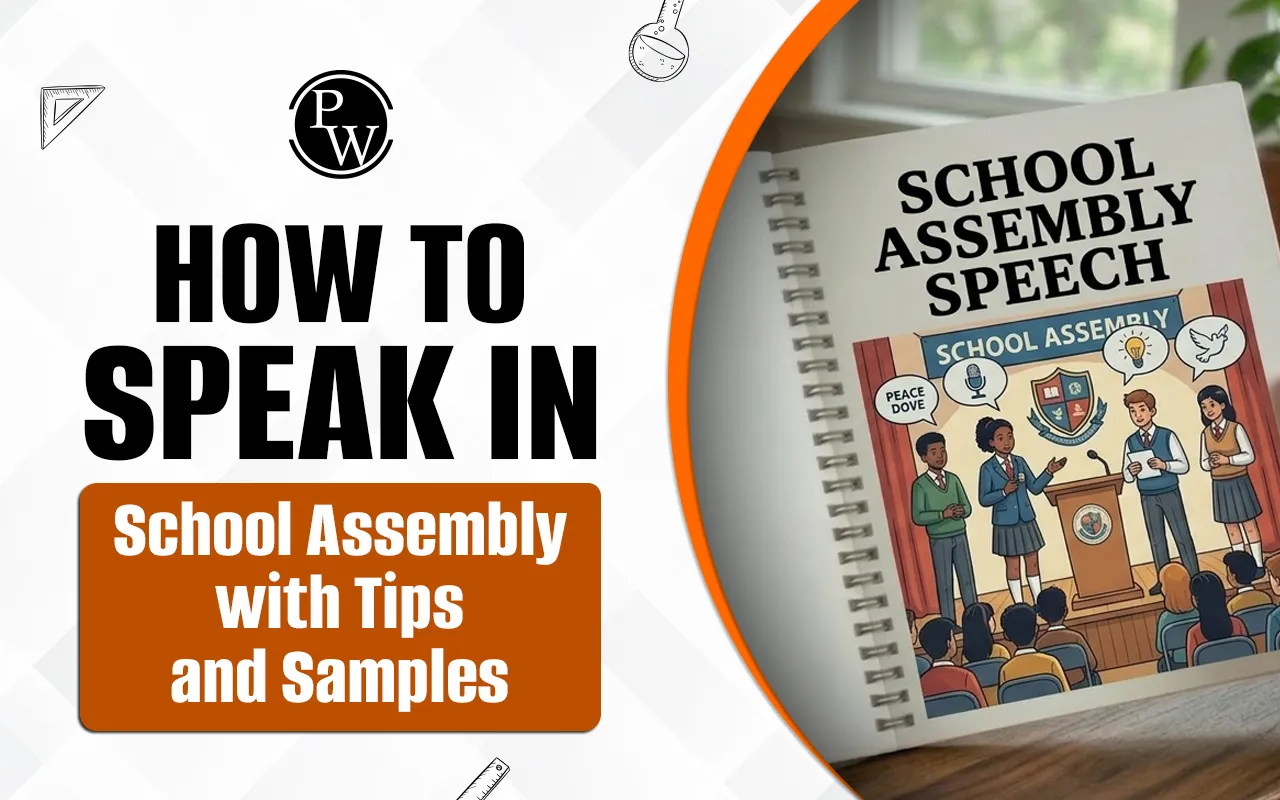
How to Speak in School Assembly with Tips and Samples
 Nikita Aggarwal30 Mar, 2026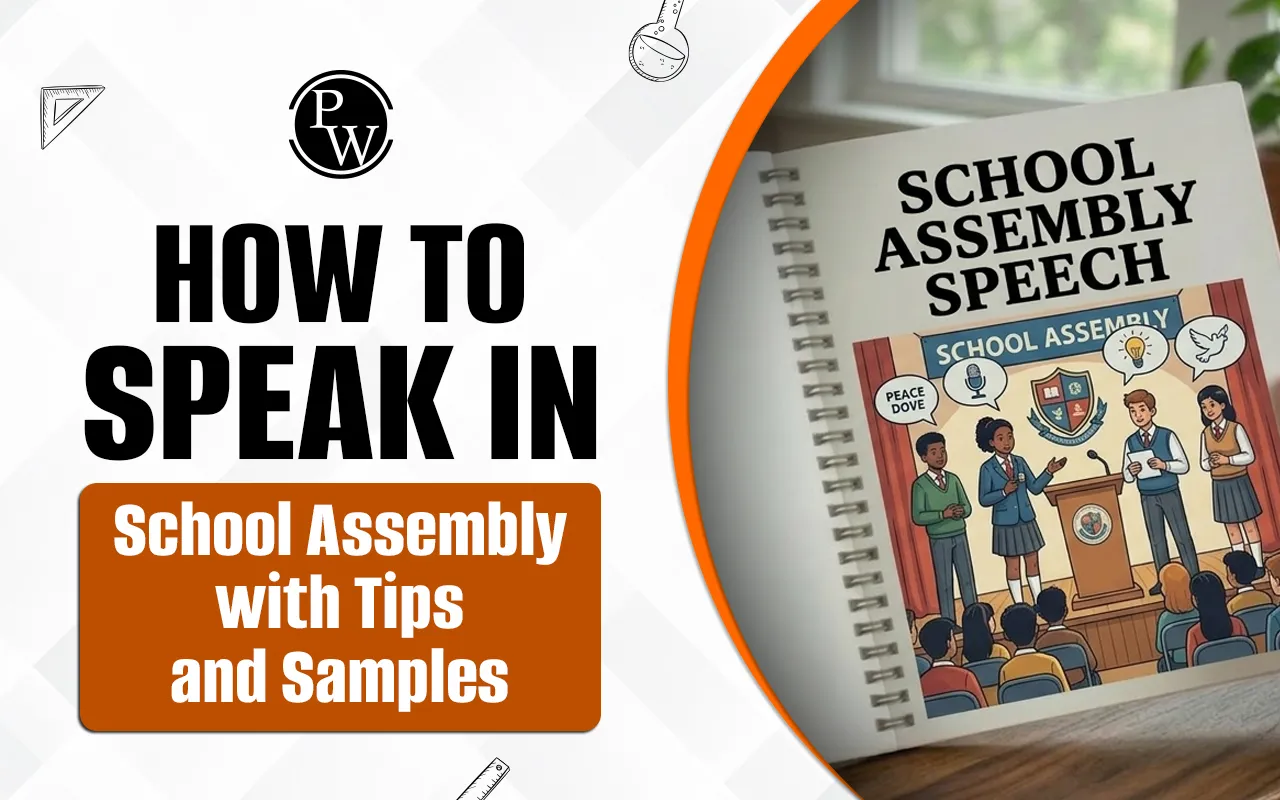
What is Speech for School Assembly?
An assembly speech is a formal yet accessible speech that is given to the whole school in a school setting. It ought to be more interesting than a classroom lecture and cover topics like discipline, motivation, kindness, or current events. It is a way to motivate pupils and generate a good mood for the school day ahead.
Success on stage begins long before you step up to the microphone. Most students struggle because they focus only on the speech content rather than the delivery technique.
Research and Structure of School Assembly
Pick a topic that speaks to you to begin. An effective assembly speech for students has a straightforward "Hook-Body-Conclusion" structure:
-
The Hook: A comment or question that gets people's attention.
-
The Body: Two or three main points, each with an example.
-
The Conclusion: A call to action or a last thought that will inspire.
Roles in School Assembly for Students
There is more to a school assembly than just talks. Students are regularly given multiple jobs, and each one needs a somewhat different way of doing things.
-
Anchoring (Host): The anchor keeps the assembly going, introduces speakers, and keeps the audience interested. It's important to be sure and clear.
-
Thought of the Day: A short quote or message that is delivered to motivate students, often with a short explanation after it.
-
Reading the news: Students talk about current events, which are frequently broken down into national, international, and sports news.
-
Speech Delivery: A planned speech about a certain subject, such as discipline, motivation, or awareness.
-
Pledge or Prayer: You need to speak clearly and in a calm, courteous way.
Knowing what your job is will help you get ready and talk with the correct tone and confidence.
Read More - 2 Minute Speech Topics in English for Students
Tips on How to Speak in School Assembly
To stand out, you need to master both your voice and your body language. Here are the core pillars of effective assembly speaking:
Pracise Deep Breathing
When you're anxious, you could breathe shallowly, which makes your voice seem wobbly. Before your name is called, practise inhaling deeply into your abdomen. This slows down your heart rate and makes your voice stronger and more resonant.
Focus on Articulation
When you talk into a microphone in a big room, it's easy for your words to get lost. Make a conscious effort to pronounce every syllable. Avoid rushing; a 1 minute speech for school assembly should contain roughly 130 to 150 words to ensure clarity.
Maintain Eye Contact
Instead of staring at your paper or the floor, divide the hall into three sections: left, centre, and right. Shift your gaze between these sections every few sentences. This makes every student in the room feel included in the conversation.
Body Language and Posture
Stand tall with your feet shoulder-width apart. Avoid leaning on the podium or fidgeting with your hair or clothes. Keep your hands visible; use natural gestures to emphasise points, as this makes you appear more trustworthy and relaxed.
How to Start a Speech in School Assembly?
The first ten seconds determine if the audience will listen to you. Learning to start a speech in school assembly involves creating an immediate connection. Avoid starting with a boring "My name is..." unless specifically required. Instead, try these openings:
-
The Rhetorical Question: "Have you ever wondered why a small act of kindness can change someone's entire week?"
-
The Powerful Quote: "As Mahatma Gandhi once said, 'Be the change you wish to see in the world.'"
-
The Surprising Fact: "Did you know that it takes more muscles to frown than it does to smile?"
Thought of the Day for School Assembly
One of the most common responsibilities in a school assembly is presenting the “Thought for the Day.” While the quote is important, what truly makes an impact is how well you explain its meaning.
Here are a few examples:
-
“Success is not final, failure is not fatal: it is the courage to continue that counts.”
This means that both success and failure are temporary. What truly matters is having the courage to keep moving forward despite challenges. -
“Small deeds done are better than great deeds planned.”
This reminds us that taking action, even in small ways, is more valuable than just making big plans without execution. -
“Discipline is the bridge between goals and accomplishment.”
This highlights that without discipline, it becomes difficult to achieve any goal, no matter how big or small.
Keep your explanation short, simple, and relatable so that your audience can easily connect with the message.
School Assembly News Reading Format
News reading is another key part of many school assemblies. It requires clarity, confidence, and a structured approach to ensure the information is delivered effectively.
A simple format to follow is:
-
Greeting:
“Good morning respected Principal, teachers, and my dear friends.” -
Introduction:
“Here are today’s news headlines.” -
Main Body:
-
National News
-
International News
-
Sports News
-
Closing Line:
“That’s all for today. Thank you.”
While reading news, maintain a neutral tone, avoid rushing, and focus on clear pronunciation, especially for difficult words.
Read More - How to Improve English Speaking Skills at Home
How to Speak in School Assembly Preparation Checklist
This checklist helps you cover all the key steps for delivering a confident school assembly speech:
|
Step |
Action Item |
Goal |
|
Topic Selection |
Choose a theme like 'Perseverance' or 'Gratitude' |
Relatability |
|
Drafting |
Write a short speech for school assembly (200-300 words) |
Conciseness |
|
Voice Check |
Practice varying your pitch and volume |
Engagement |
|
Visuals |
Ensure your uniform is neat and posture is upright |
Professionalism |
|
Ending |
End with a clear "Thank You" and a smile |
Impact |
Best Topics for School Assembly Speech
Choosing the right topic plays a major role in how well your speech connects with the audience. Here are some simple and effective topics you can consider:
-
Importance of Discipline
-
Time Management
-
Kindness and Empathy
-
Benefits of Reading
-
Environmental Awareness
-
Dealing with Failure
-
Positive Thinking
-
Digital Responsibility
Select a topic that feels relevant to your daily life so that your speech sounds natural and relatable.
Short Speech for School Assembly Samples
Sometimes, seeing a template helps you find your own voice. Below are two samples tailored for different time slots.
Sample 1: The 1 Minute Speech for School Assembly (Topic: Time Management)
"Good morning respected Principal, teachers, and my fellow students. Today, I want to talk about the most valuable resource we all have: Time. We often say, 'I don’t have time,' but the truth is, we have the same 24 hours as the greatest achievers in the world. The difference lies in how we use them. Start by finishing your hardest task first thing in the morning. When you control your time, you control your life. Let’s make every second count today. Thank you!"
Sample 2: Assembly Speech for Students (Topic: The Power of Habits)
"Honourable Principal and teachers, a very warm morning to you all. Have you noticed how we brush our teeth every morning without even thinking about it? That is the power of a habit. Our lives are the result of the small things we do every day. If you want to be a better student, you don't need a miracle; you just need better habits—like reading five pages of a book every night or waking up ten minutes earlier. Success isn't a one-day event; it’s a daily practice. I encourage you all to pick one good habit today and stick to it. Have a wonderful day ahead!"
How to Overcome Fear in School Assembly Speech?
Even the best speakers get nervous. If you forget your line, do not panic. Take a breath, look at your notes, and continue. Most of the audience won't even realise you made a mistake unless you tell them. Remember, the students in the audience are your peers; they want you to succeed because they know they might be in your shoes next week.
Keeping your tone conversational is key. Avoid using overly complex words that you wouldn't use in real life. If you sound like a robot, the audience will tune out. Use "we" and "us" to build a sense of community. Instead of saying "Students should be disciplined," try saying "We can all benefit from a little more discipline in our routines."
Give Your Child a Global Advantage with CuriousJr’s Cambridge-Certified English Program
Is your child facing difficulty in speaking or understanding English confidently at school or in daily conversations? At CuriousJr, we help children aged 6 to 14 strengthen their English skills through live online english learning classes led by experienced teachers.
Our program is designed around international Cambridge standards and tailored for Indian learners. It offers four structured levels—Pre A1, A1, A2, and B1—where children build grammar, vocabulary, reading, writing, listening, and speaking skills step by step.
With small batch sizes, every child receives individual attention and the right encouragement to grow. Our aim is to help children communicate confidently in both academic and real-life situations.
Book a demo session today to explore how CuriousJr can support your child’s English learning journey.