Loud and Soft Sound: Meaning, Importance and Examples
 Nikita Aggarwal25 Mar, 2026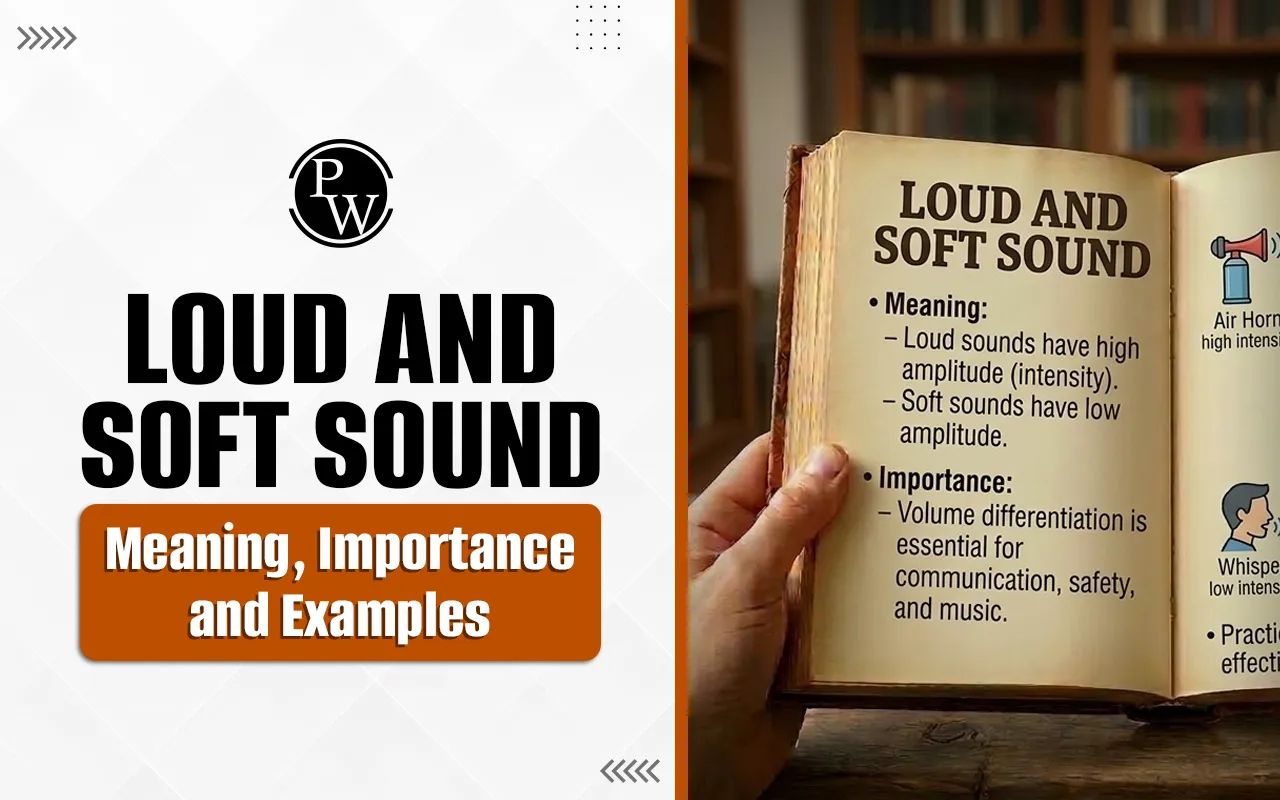
What is Sound?
Sound is a type of energy that comes from vibrations that move through something like air, water, or solids. When anything shakes, it makes sound waves that travel through particles and into our ears.
Loud and Soft Sound Meaning
We need to look at how sound is made before we can understand what it means. Sound is energy that moves through the air in waves. When something vibrates, it moves the air molecules surrounding it, which makes a ripple effect.
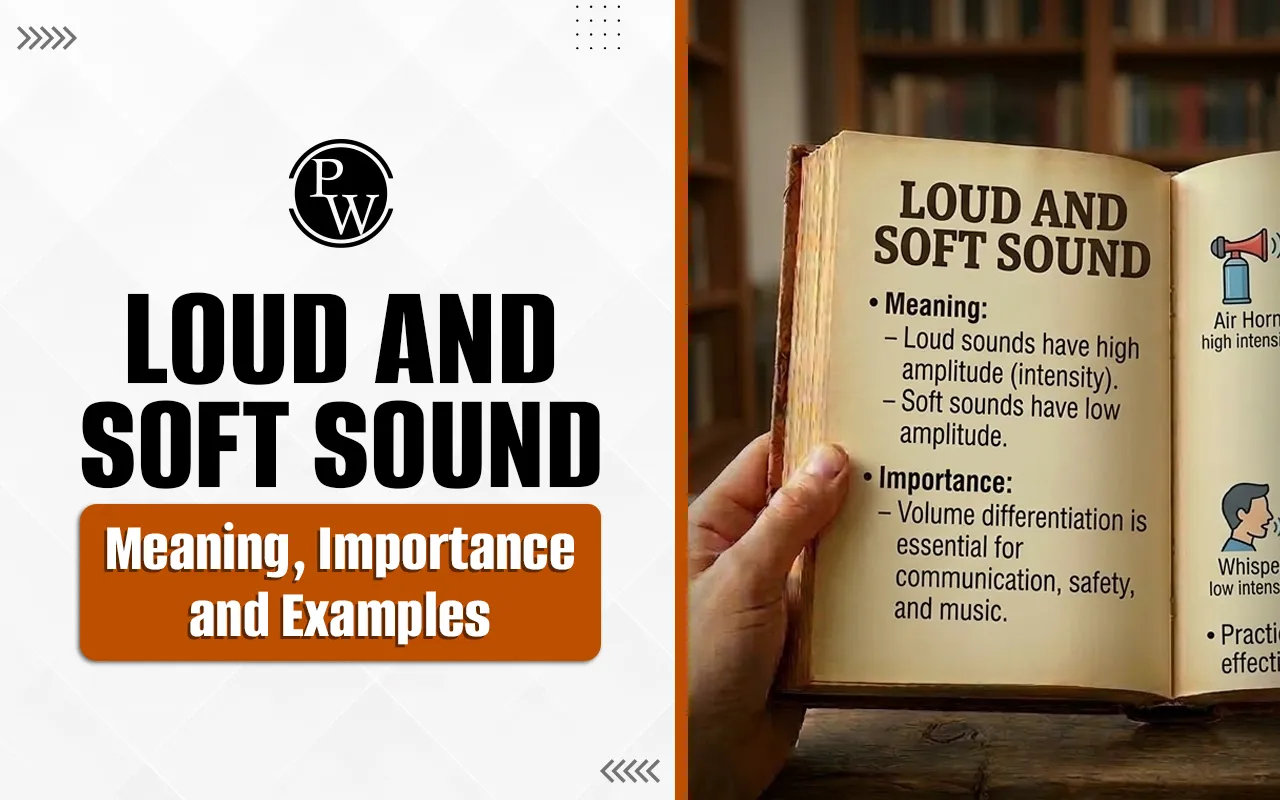
The amplitude of these waves is what makes a sound loud or soft.
-
Loud sounds: Loud sounds come from intense vibrations. They have high energy and large amplitudes. If you toss a big rock into a pond, the splash will make big waves. That's how a loud noise acts.
-
Soft sounds: Sounds that are soft arise from mild vibrations. They carry less energy and have small amplitudes. This is like putting a little stone into water and making modest, soft waves.
In simple terms, it tells us how much pressure a sound wave puts on our eardrums. We use decibels (dB) to quantify its strength.
Importance of Loud and Soft Sound
Safety, emotion, and communication are all important and the pitch of the sound is important to convey these.
Safety and Warnings
Loud noises are important signs. To get our attention right away, a fire alarm or an automobile horn has to be loud. If these sounds were quiet, we wouldn't know about urgent danger.
Expressing Emotions
Volume gives music and speech more depth. A soft lullaby helps a baby sleep by making them feel protected and at ease. A loud cheer at a football game, on the other hand, shows excitement and energy from the crowd.
Effective Communication
Knowing when to use which type of sound is a key part of public speaking. People could believe you're bashful or hard to comprehend if you talk too softly. If you shout all the time, people might think you're hostile. Finding the correct balance makes sure that others hear and respect what you have to say.
Loud and Soft Sound Examples
Let’s look at some examples from our daily lives to better understand this concept. These examples show that the same environment can produce very different sound levels.
Loud Sounds Example:
-
Thunder: A natural event that happens during storms and causes huge waves of pressure.
-
Emergency Sirens: Police cars and ambulances use loud sirens to get people out of the way.
-
Construction drills: They make a lot of noise since the heavy machinery shakes a lot.
-
Balloon Pop: When you pop a balloon, the air inside it suddenly escapes, making a loud, piercing sound wave.
-
Rock concerts: Amplifiers make instruments vibrate more so they can reach thousands of people.
Soft Sounds Example:
-
Whispering: When we whisper, we simply use our breath and very little vibration in our voice cords.
-
Ticking Clock: The tiny motions of a watch's gears make tiny waves in the air.
-
Purring Cat: A cat purring is a low-frequency, low-energy vibration that means the cat is happy.
-
Rustling Leaves: The sound of rustling leaves is a soft, high-frequency sound with a low amplitude that comes from the wind blowing through trees.
-
Raindrops: When single drops hit a surface, they make very mild sounds. When a lot of them hit at once, they make loud sounds.
Read More - Digraph Words: Meaning, Types, and Examples
Teaching and Activity-Based Learning for Loud and Soft Sound
Learning them is simpler when you do things with them. Here are some simple ways to practice:
-
Clap Activity: Clap softly and then loudly to watch how the sound changes.
-
Drum Exercise: Hit a table or drum with different amounts of force and listen to how the sound changes.
-
Speak vs. Whisper: Say the same thing in both a loud and a gentle voice.
-
Sound Scavenger Hunt: Look for sounds in your environment
-
Echo Game: Speak loudly and watch how the sound moves and fades.
These tasks help students really understand the idea instead of merely reading about it.
Multimedia Tools to Learn Loud and Soft Sound
New learning tools make it more engaging to understand sound. These resources help students connect their lessons with real-life sound experiences.
-
Audio Clips: Hearing different sound levels aids recognition.
-
Videos: Visual representations of waves and vibrations.
-
Interactive Apps: Allow experimentation with sound waves and volume changes.
-
Animations: Illustrate how sound travels through the air.
-
Classroom Experiments: Create sound with everyday objects.
Loud and Soft Sound in English Communication
In the English language, volume is more than just physics; it is a tool for emphasis. When we talk about them, we often refer to "word stress" or "vocal variety."
-
Emphasis: We often say important words slightly louder to make them stand out in a sentence.
-
Tone: A soft tone can indicate empathy, sadness, or a secret. A loud tone can indicate anger, joy, or authority.
-
Clarity: Good speakers vary their volume to keep the audience engaged. Staying at one volume (monotone) makes it difficult for listeners to stay focused.
Factors That Affect Loud and Soft Sound
There are a number of things that affect how we hear a sound as loud or soft:
-
Distance: The sound gets quieter the more away you are from the source. This is because the energy is spread out over a bigger region.
-
Environment: Sound travels through solids, liquids, and gasses in different ways. It also bounces off hard surfaces, generating echoes, or it gets absorbed by soft surfaces like carpets.
-
The Force Applied: The harder you hit a drum, the more energy you transfer to it, resulting in a louder sound.
How Our Ears Process Sound?
Our ears are quite sensitive. A loud sound makes the eardrum vibrate intensely. The brain interprets these strong vibrations as loud. However, frequent exposure to loud noises can damage the tiny hair cells in our inner ear, leading to hearing loss. That's why it’s important to protect your ears and keep noise levels down when necessary.
Read More - List of Hard Pronunciation Words in English
Loud vs Soft Sound Short Summary
The table below summarizes the main differences for easy understanding:
|
Feature |
Loud Sound |
Soft Sound |
|
Vibration |
Strong |
Weak |
|
Energy |
High |
Low |
|
Amplitude |
Large |
Small |
|
Impact |
Alerting |
Soothing |
|
Usage |
Warning, excitement |
Calm, subtle communication |
Understanding the difference between them can enhance your communication, raise awareness about safety, and improve your listening skills.
Help Your Child Build Strong English Skills with PW CuriousJr
PW CuriousJr provides thoughtfully designed online English classes that make learning easy and effective for young learners. With small batch sizes, every child receives individual attention, ensuring better understanding and continuous support. Interactive activities keep students engaged while building confidence in reading, writing, speaking, and listening skills.
The curriculum is based on globally recognized English standards, helping children use the language confidently in everyday situations. Each course is well-structured, simple to follow, and designed to create a smooth and enjoyable learning experience.
In addition to live classes, students also get access to recorded video lessons for revision and extra practice. These recordings let them revisit concepts anytime and learn at their own pace, making the learning journey more flexible and complete.