Learn Subtraction Without Borrowing (Class 3)
 Nivedita Dar20 May, 2026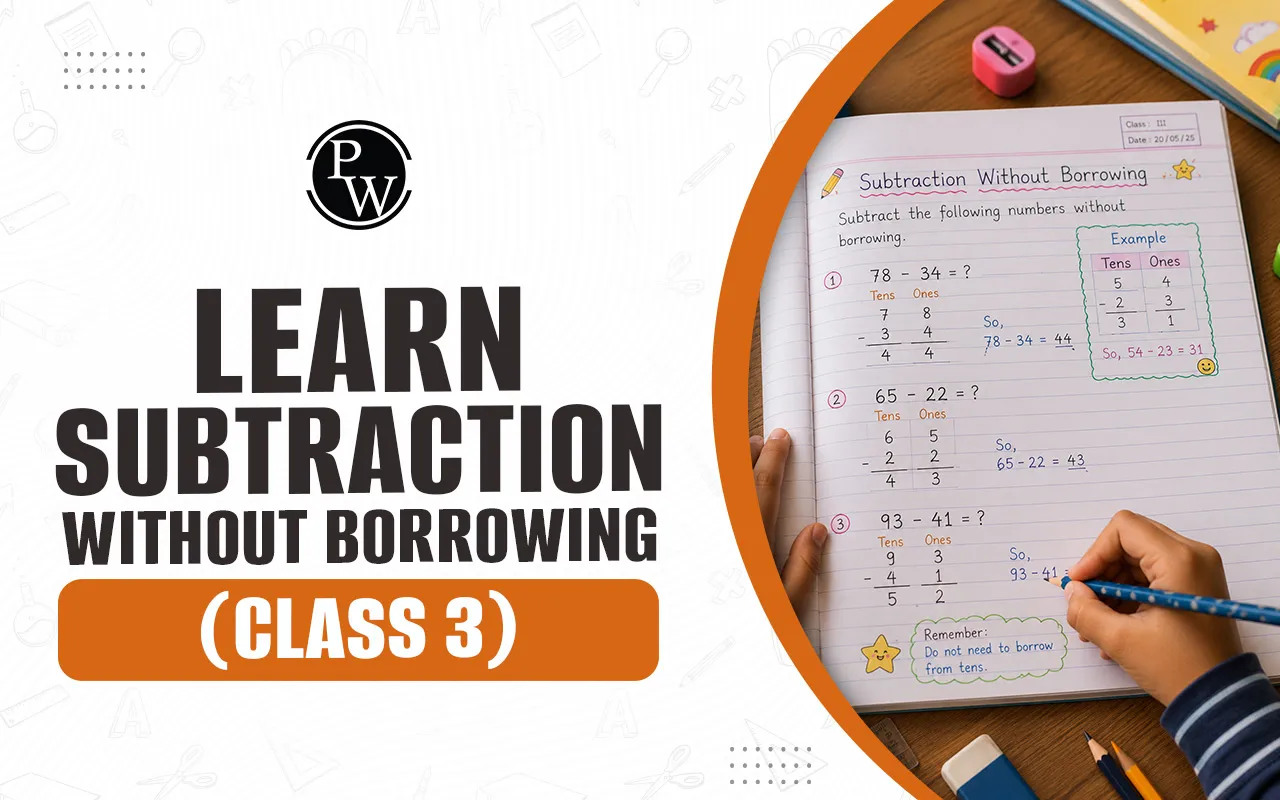
What are Subtraction Tricks?
Class 3 is introducing two and three-digit numbers, as well as more complex problems. A typical method is using paper-and-pencil algorithms. These help a child, but not always in understanding the "why" behind the numbers.
The tricks we are going to learn for subtraction in class 3 are different from those we learned in class 2. It is number-sense focused. Students don't follow a recipe but learn to play with numbers to suit their purpose.
Best Subtraction Tricks Class 3
Below are some of the best strategies for subtracting without borrowing to help your child become a genius in maths. The techniques are designed to be easy to remember and intuitive.
1. Tens and Ones Trick (Number Breakdown)
This is a favourite Class 3 subtraction trick. Instead of seeing a number as a whole, break it down into tens and ones. This avoids the confusion of “big numbers”.
How to do so:
Subtract using math facts: Break each number into tens and ones, then subtract the tens from the tens and the ones from the ones.
-
Example: 58 - 24
-
Step 1: 50 - 20 = 30
-
Step 2: 8 - 4 = 4
-
Result: 30 + 4 = 34
This method will be easier to understand and surely helps in avoiding confusion in exams.
2. Line Up Properly Trick
The key to success in mathematics is organisation. Most errors occur because the numbers are messy, not because the child cannot do the maths.
How to do it:
Write digits in the same column. Ones should go under ones, and tens should go under tens.
-
Example: 67 - 35
-
Write 67.
-
Write 35 directly underneath it.
-
Subtract each number in a column from another column.
Errors can happen, especially at this age, called "diagonal subtraction", which can be avoided by correct alignment.
3. Start from One's First
To avoid mistakes, it is important to be consistent. A routine is created so children do not experience "order confusion".
How to do it:
Always calculate from the right (ones' place).
-
Example: 69 - 24
-
Ones: 9 - 4 = 5
-
Tens: 6 - 2 = 4
-
Answer: 45
Read More - 10-Second Addition Tricks for Class 1
4. Break and Subtract
For a large subtraction problem which looks intimidating, split the second number into two parts. This is a vital mental maths subtraction method that helps to make big differences seem smaller.
How to do it:
Subtract the tens from the whole number and then subtract the ones.
-
Example: 76 - 32
-
Step 1: 76 - 30 = 46
-
Step 2: 46 - 2 = 44
-
Result: 44
5. Number Line Jump
The number line is the best for children who like to see things visually. Subtraction is a physical travel experience.
How to do it:
Suppose there is a sequence of numbers. Begin with the greater number and "jump" backwards.
-
Example: 15 - 4
-
Start at 15.
-
Jump 4 steps back: 14, 13, 12, 11.
-
Answer: 11
6. The Vedic Subtraction Method
The Vedic subtraction method is a fast method of subtraction from Vedic Mathematics. This is particularly helpful when subtracting from numbers such as 100 or 1,000. It is based on the principle of "all from 9 and the last from 10.
Example: 1000 - 342
-
9 - 3 = 6
-
9 - 4 = 5
-
10 - 2 = 8 (The last digit is subtracted from 10)
-
Answer: 658
Read more - Why Kids Struggle with Multiplication in Class 2
Practise Sheet for Subtraction Tricks Class 3
Let's put your new skills to the test! Now that you have learnt the subtraction tricks of Class 3, solve these fun challenges.
Part 1: Multiple Choice Questions (MCQ)
Test your mental maths skills for subtraction and tick the correct answer.
-
What is 97 - 40?
-
A) 47
-
B) 57
-
C) 67
-
Solve 100 - 62
-
A) 38
-
B) 48
-
C) 28
-
Solve 89 - 56. What is the answer?
-
A) 23
-
B) 33
-
C) 43
Part 2: Match the Following
Draw a line to match the subtraction problem on the left with its correct answer on the right.
|
Subtraction Problem |
Correct Answer |
|
1. 85 - 32 |
A. 6 |
|
2. 100 - 48 |
B. 12 |
|
3. 15 - 9 |
C. 53 |
|
4. 44 - 32 |
D. 52 |
Part 3: Missing Number Challenge
Find the hidden number to complete the subtraction story.
-
78 - 30 = ____ (Hint: Use the Fast Tens Trick!)
-
(90 - 40) + (6 - 4) = ____
-
100 - ____ = 65 (Think: All from 9, Last from 10)
-
55 - ____ = 50 (Count back to find the answer)
-
88 - 44 = (88 - 40) - ____ = 44
Part 4: The "Number Spy" Game
Circle the subtraction problems that do not require borrowing.
-
45 - 12
-
32 - 19
-
78 - 56
-
91 - 09
-
66 - 33
Benefits of Subtraction Tricks Class 3
There are some long-term benefits to taking the traditional classroom approach outside of the classroom.
-
Takes the Math Anxiety Out: You can screw up the numbers when you borrow. Easy subtraction tricks help you keep a clean workspace and a clean mind.
-
Improves mental agility: Working memory is improved by mental maths practice. This is a mental exercise, like going to the gym.
-
Accuracy: The common error of "subtraction across zero", which is a problem for primary students, does not happen when the students use the Vedic method.
-
Real-World Application: Most of the time, when we are shopping, we don't have a pencil and paper to hand. Subtraction skills improve children's ability to handle everyday tasks, such as giving change.
-
Saves Time: These shortcuts can save a few minutes during timed tests, enabling students to focus on more challenging word problems.
How Does CuriousJr Help with Class 3 Mental Maths
Class 3 is an important year for building a solid foundation in maths. They've designed their platform to teach these subtraction tricks for Class 3 as easy skills to learn, not rules to memorise.
-
Interactive Visuals: CuriousJr online mental maths classes add fun visuals to the 'Number Line Jump' routine, so kids can see the number line 'jump' in real time.
-
Gamified practice: Students play games to practice mental maths and get rewarded for speed and accuracy.
-
Logical Steps: The Vedic method of subtraction is introduced in small steps so that the children understand the logic before they proceed to bigger numbers.
-
Feedback Loops: The learning platform does not say “wrong” to the child when he/she makes a mistake, but provides feedback loops to help them correct their mistakes. It tells them what trick (like “Line Up Properly”) they may have missed.