Parent Activities That Build English Thinking Skills in Kids (Preliminary Level)
 Nikita Aggarwal25 May, 2026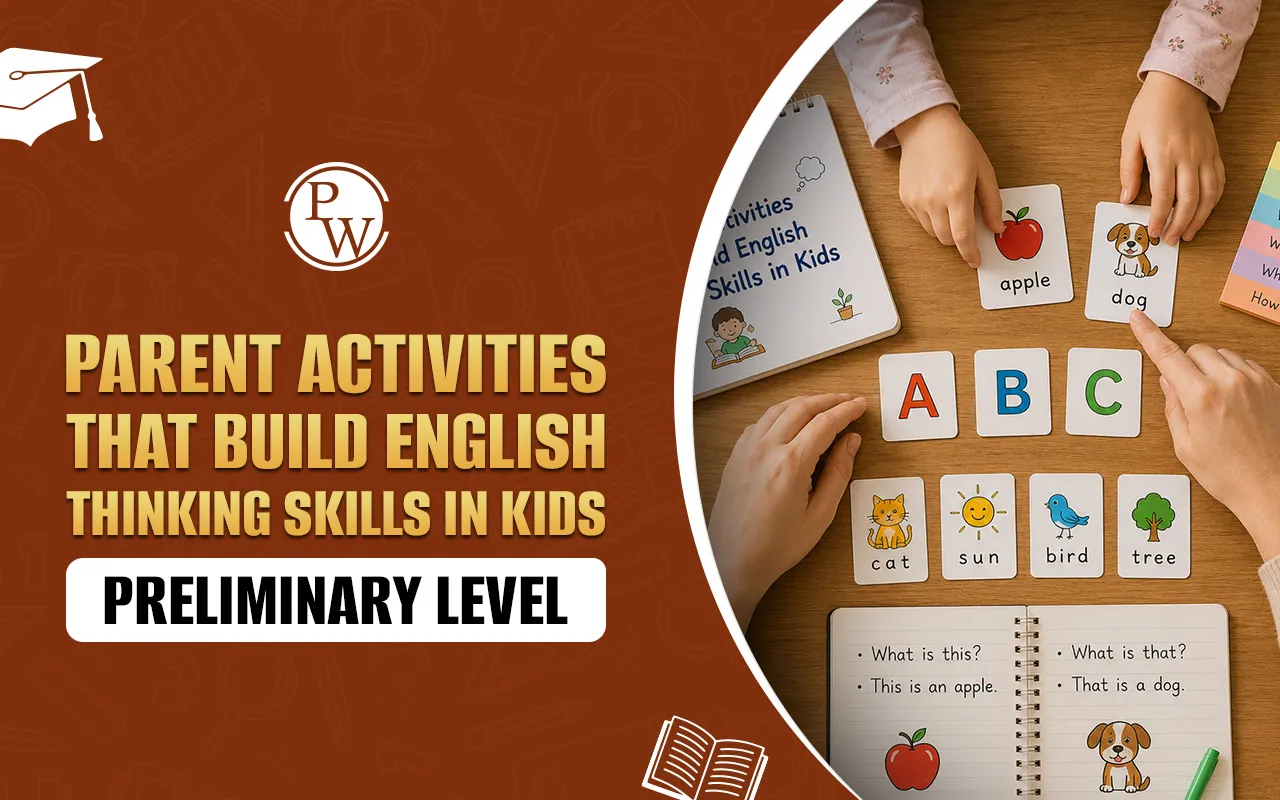
Importance of English Thinking Skills
When children learn to think directly in a language, they bypass the mental "middleman" of translation. This results in faster response times and more natural-sounding sentences. At a preliminary level, the brain is highly adaptable, making it the perfect time to introduce English learning at home. Building these cognitive pathways early ensures that as the vocabulary becomes more complex, the child’s ability to process information remains fluid.
The following table highlights the differences between translation-based learning and direct thinking:
|
Feature |
Translation-Based Learning |
Direct English Thinking |
|
Processing Speed |
Slow (mental conversion needed) |
Fast (instant response) |
|
Accuracy |
Prone to grammatical errors |
Natural sentence structure |
|
Confidence |
Lower due to hesitation |
Higher due to fluency |
|
Usage |
Academic and forced |
Conversational and intuitive |
Daily Routine for English Thinking Skills
You do not need a formal classroom setting to improve how your child processes language. Simple daily habits are often the most effective ways to encourage thinking skill development kids need to excel. Start by narrating your day. As you cook or clean, describe your actions in simple English. Ask your child to do the same.
-
The Morning Commentary: Ask your child to describe what they are doing as they get ready for school.
-
Mealtime Discussions: Use dinner time to talk about the colours, tastes, and textures of food using full sentences.
-
Decision Making: Give them choices in English, such as "Would you like the red apple or the green pear?" and encourage a reasoned response.
Providing a consistent linguistic environment helps the child’s brain stay in "English mode" for longer periods.
Fun English Thinking Skills
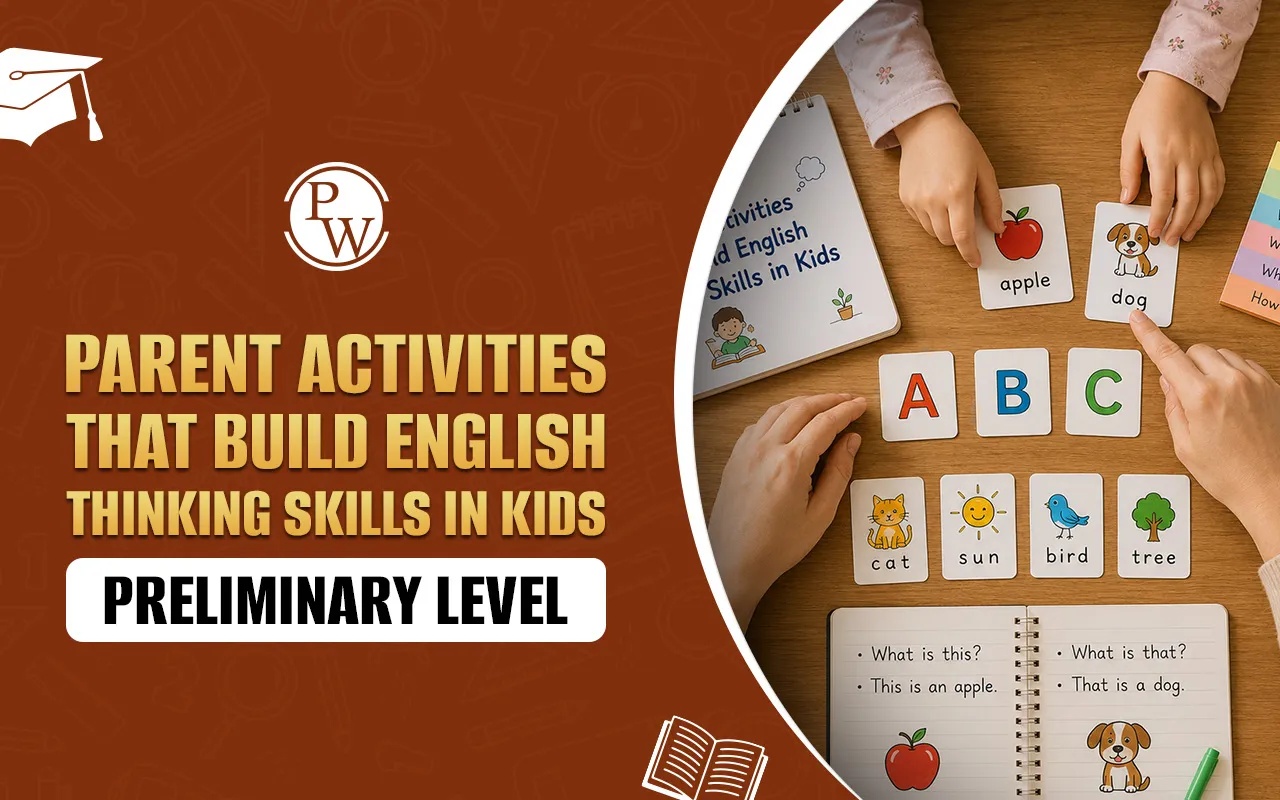
Play is the primary way children learn. By turning parent English activities into games, you remove the pressure of "studying" and replace it with genuine engagement. At the preliminary level, games should be visual and active to keep their attention.
-
Object Association: Place several household items on a table. Name a quality (e.g., "Something soft") and have the child pick the item and explain why in English.
-
The 'Why' Game: Ask simple questions about their toys. "Why does the car move?" This forces them to construct logical thoughts in English.
-
Picture Dictation: Describe a simple scene (e.g., "A blue house with two yellow windows") and have your child draw it based only on your English instructions.
These activities require the child to visualise concepts, which is a key component of developing thinking skills.
Read More - English Fluency Activities That Improve Faster Responses (Preliminary Level)
Storytelling for English thinking skills
Stories are powerful tools for language immersion. Instead of just reading a book to your child, make it an interactive session. This shifts them from being a passive listener to an active thinker. Preliminary level learners benefit from stories with clear structures and repetitive themes.
-
Predictive Reading: Stop halfway through a page and ask, "What do you think happens next?" This encourages them to form logical predictions in English.
-
Character Interviewing: Pretend to be a character from the book and let your child ask you questions.
-
Alternative Endings: After finishing a story, ask them to come up with one different thing that could have happened to the protagonist.
This level of English learning practice moves beyond simple vocabulary and enters the realm of critical thinking and creative expression.
Read More - Introducing Yourself Confidently in English (Preliminary Level)
Visual Aids for English Thinking Skills
Visual learners often find it easier to think in English when they have a physical reference point. Labeling the house is a classic technique, but you can take it further for the preliminary level. Use "thought maps" or "mood boards" to help them categorise their ideas.
Consider using a simple chart to help them categorise their thoughts throughout the day:
|
Category |
English Examples |
Child's Goal |
|
Feelings |
Happy, tired, excited |
Identify emotion without translating |
|
Weather |
Sunny, rainy, windy |
Describe the environment daily |
|
Action Words |
Running, jumping, eating |
Link movement to the English word |
By associating words directly with images or physical sensations, the child builds a direct link in their brain, strengthening their thinking skills significantly.
Audio for English Thinking Skills
Listening is the precursor to thinking. To help a child think in English, they must hear the rhythm and intonation of the language frequently. This doesn't mean constant grammar lessons; it means background immersion.
-
English Audiobooks: Play these during car rides or before bed. Even if they don't understand every word, they are absorbing the structure.
-
Simple Songs: Action songs that require a physical response help link the word to the action.
-
Repeat and Echo: Play a short clip of a native speaker and have the child try to match the emotion and tone, not just the words.
Regular exposure makes the language feel "safe" and familiar, which reduces the mental effort required to think in it.
Milestones for English Thinking Skills
It is important to track progress without making it feel like a test. At the preliminary level, milestones should be based on how comfortably the child uses the language in "unscripted" moments. Look for signs that their thinking skills are improving, such as:
-
Using English filler words (like "um" or "well") instead of native language ones.
-
Talking to themselves in English while playing with toys.
-
Responding to English questions without a long pause for mental translation.
-
Correcting their own English sentences mid-speech.
Tips for Improving Thinking Skills
Consistency is more important than duration. Ten minutes of focused English learning preliminary level activity every day is better than a two-hour session once a week. Keep the atmosphere light and praise the effort rather than just the accuracy.
-
Avoid over-correcting: If they are thinking and speaking, let the flow continue. Constant correction halts the thinking process.
-
Model the behaviour: If you want them to think in English, let them hear you "thinking out loud" in English too.
-
Use visual prompts: Keep a "Word of the Day" on the fridge and try to use it in different contexts throughout the day.
How CuriousJr Helps Enhance Thinking Skills in English
Building these skills at home is a wonderful start, but structured guidance can accelerate the process. A curriculum designed specifically for the preliminary level ensures that no gaps are left in a child's linguistic foundation. By following a path that mimics natural language acquisition, children can transition from simple words to complex thoughts with ease.
The Cambridge English courses available through CuriousJr are specifically designed to nurture these capabilities. CuriousJr English learning classes focus on real-world communication and interactive learning, ensuring that thinking skills are developed through engaging, age-appropriate content. By combining parent-led activities with a professional framework, children gain the confidence to use English as their primary tool for expression.