Weak Number Recognition Mental Maths Tricks for Class 1
 Nikita Aggarwal25 May, 2026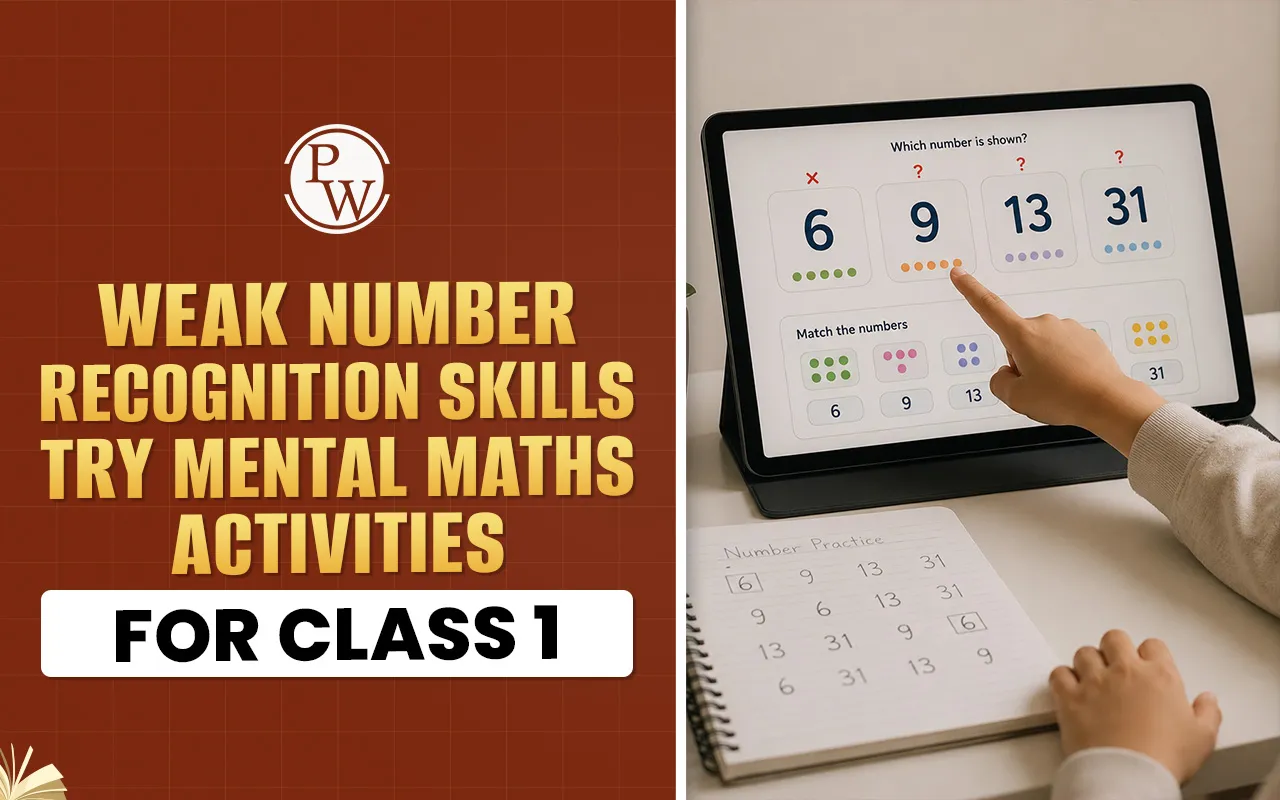
Importance of Number Recognition Tricks
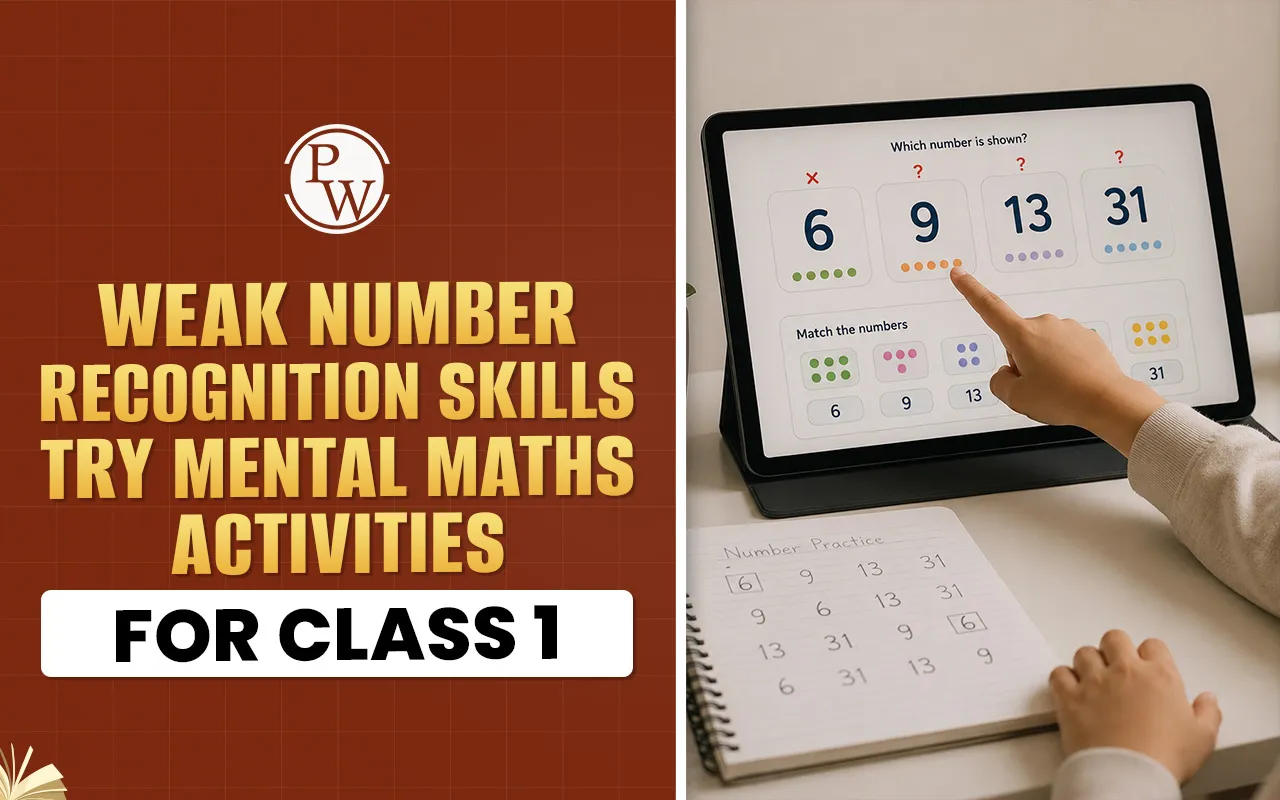
Maths begins by learning to recognise and name digits. Without these principles it is hard for youngsters to understand addition or subtraction later. Number recognition activities help children associate number symbols with quantities in the actual world.
When kids can spot numbers quickly, they can focus on using them instead of figuring out what they are. This is important for building early numeracy skills. Visual aids, like saying 8 looks like glasses or 7 looks like a walking stick, make learning fun and less scary for young children.
Simple Number Recognition Tricks
Using pictures and stories is a great way to help kids remember what numbers look like. Young children have big imaginations, so connecting a number to something they know makes it easier for them to remember.
Here are some visual tricks you can try to help your child for number recognition practice:
-
The Number 2: Describe it as a swan swimming in a lake.
-
The Number 5: Explain it as a person wearing a big hat and having a round belly.
-
The Number 0: Compare it to a donut or a hula hoop.
These simple comparisons help your child see numbers as familiar characters, not just lines on a page. Using flashcards or drawing these number shapes in sand often can help them learn faster.
Interactive Class 1 Number Recognition Tricks
While classrooms use set lessons, at home you can make maths more hands-on. Doing Class 1 maths activities shows kids that numbers are part of everyday life, not just something in a book. This approach is great for children who find memorizing numbers boring or tough.
Play a “Number Scavenger Hunt” at your house. Give your child a list of numbers and have them search for those numbers on objects such as cereal boxes, remote controls and clocks. This helps students use what they know in real world situations.
Another fun idea is “Tracing Numbers in Air”. Have your youngster close their eyes and speak the name of the number out loud as they draw it in the air with their finger. This combines movement, hearing and sight which helps kids recall things better.
Mental Maths Number Recognition Tricks for Kids
Games are the secret weapon for any parent trying to teach maths. When a child is playing, they are less likely to feel the pressure of "getting it right" and more likely to experiment. Mental maths games kids enjoy often involve a bit of competition or a reward system.
Here are some quick games you can play with your child during dinner or while traveling:
|
Game Name |
How to Play |
Skill Developed |
|
Mystery Number |
You think of a number between 1-20; they guess based on "higher" or "lower" clues. |
Number ordering and logic. |
|
Plate Counting |
Ask the child to bring a specific number of plates or spoons to the table. |
One-to-one correspondence. |
|
Number Bingo |
Create a simple 3x3 grid with numbers; call them out and have the child mark them. |
Speed of recognition. |
These games don't require expensive equipment and can be played in five-minute bursts. The goal is to make numbers a natural part of their daily conversation.
Read More - Mental Maths Games Using Dots for Class 1
How to Build Counting Basics Practice
Children need to know what quantity means before they acquire number recognition strategies. This is called cardinality, which means you know that the last number you say tells you how many objects there are.
Counting basics practice should involve physical objects. Use marbles, buttons, or even pieces of fruit. Ask your child to count them one by one, touching each object as they say the number. This physical touch prevents them from rushing through the sequence and skipping numbers.
Once your child can count up to 20, try counting backwards. Counting down from 10 to 1 helps prepare them for subtraction and teaches them to think about which number comes before.
How to Use Number Recognition Tricks in the Kitchen
The kitchen is a treasure trove of mathematical opportunities. From measuring ingredients to looking at temperatures in an oven, the environment is full of digits. You can use number recognition techniques while baking by asking your child to identify the numbers on a weighing scale or a measuring jug.
Ask questions such as, "Can you find the number 5 on this cup?" or "How many eggs are left in the carton?" These help your child spot numbers and understand what they mean at the same time, which helps them remember better.
Read More - 10-Second Addition Tricks for Class 1
How to Build Confidence with Number Recognition Tricks
Confidence is often the missing piece in the numeracy puzzle. If a child feels they are "bad at maths" at age six, they may carry that belief for years. Frequent, low-stakes number recognition practice builds a sense of achievement. Every time they correctly identify a number, offer specific praise. Instead of just saying "good job," try saying "I like how you remembered that 8 has two circles!"
If they make a mistake, avoid using the word "wrong." Instead, guide them back to the number recognition tricks you've practiced. If they mistake a 6 for a 9, ask them to look at where the "balloon" part of the number is—at the bottom or the top? This helps them self-correct and learn from the visual structure of the digit.
Fun Ways to Learn Mental Maths for Kids
Learning mental maths class 1 doesn't always have to involve sitting at a desk with a pencil. You can use music and movement to reinforce these concepts. Number songs and rhymes are excellent for children who are auditory learners.
Try incorporating these movement-based ideas:
-
Number Hop: Draw numbers on the floor with chalk and ask your child to jump on the number you call out.
-
Clap the Count: Have the child clap their hands while counting out loud, ensuring each clap matches a number.
-
Finger Counting: Use fingers to represent numbers quickly, helping them "see" the number 5 as a whole hand.
These methods engage different parts of the brain, making it easier for the child to store the information. The more senses involved in the learning process, the stronger the neural connections become.
How CuriousJr Improves Mental Maths Activities
While home activities are fantastic, some children benefit from a structured, digital environment that provides instant feedback. Interactive platforms can take number recognition tricks to the next level by offering visual puzzles and gamified challenges that adapt to a child's learning pace. Using a digital approach allows kids to practice independently, building a sense of autonomy over their learning.
If you are a parent who wants to give their child a full-on edge in early numeracy, the next step is to explore the CuriousJr mental maths classes. These classes are specifically created to correspond with the Class 1 syllabus, ensuring that the games and activities your kid engages in are both exciting and educationally appropriate. And with that, you have created a well-rounded learning environment that caters to all areas of a child’s development by integrating offline physical activities with the structured digital path supplied by CuriousJr.