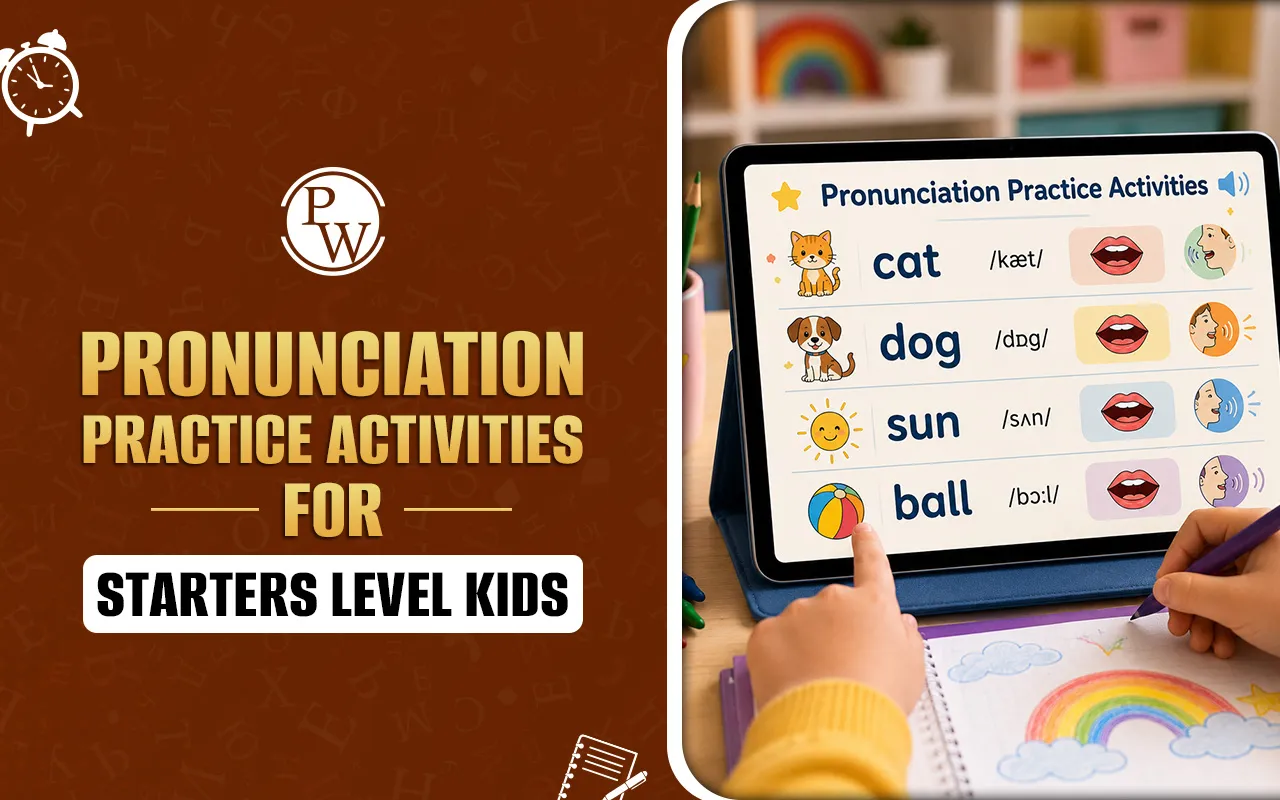
Pronunciation Practice Activities for Starters Level Kids
 Nikita Aggarwal25 May, 2026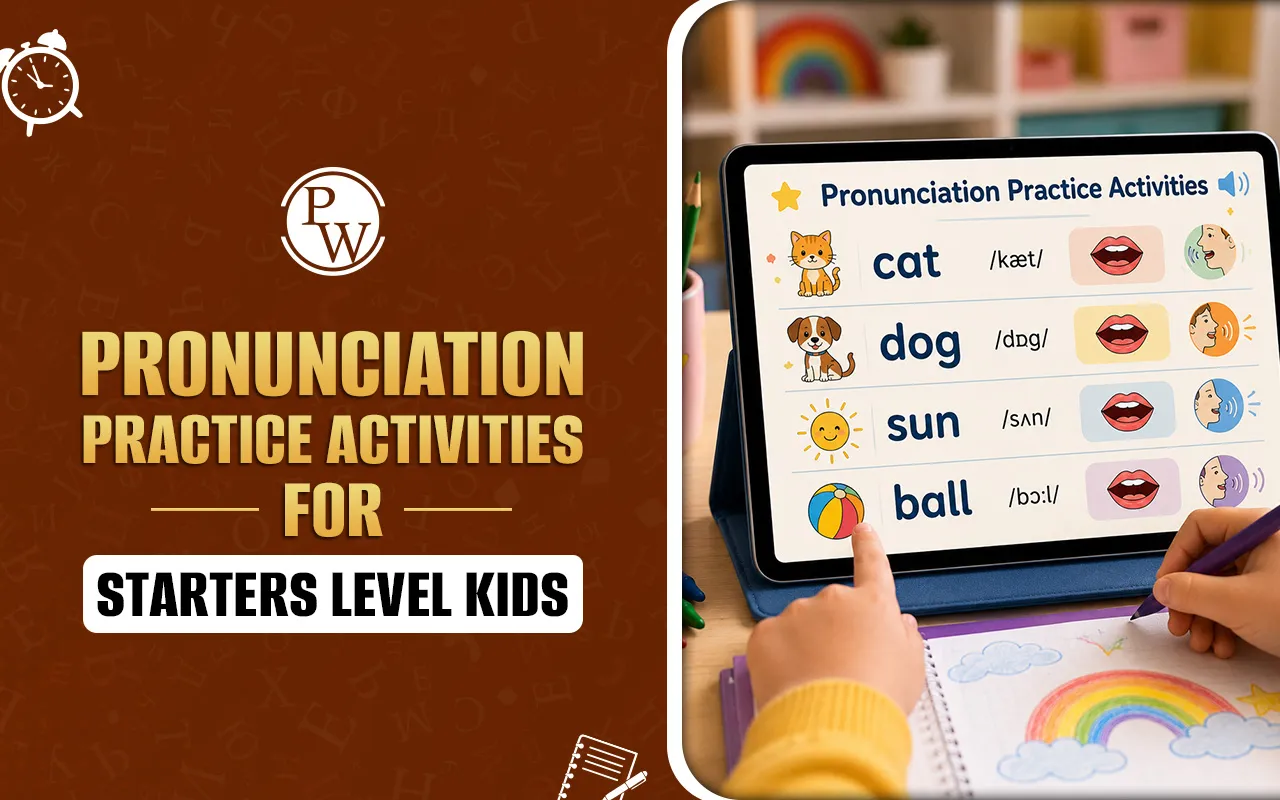
Why is Pronunciation Practice Important?
Starting with correct speech habits prevents "fossilisation," where mistakes become permanent habits. When kids engage in pronunciation practice early, they develop the practice habits needed for difficult sounds. This isn't just about accents; it is about being understood.
Benefits of Early Sound Training
Focusing on sounds at the starters level helps children link what they hear to what they read. Here are a few reasons why this focus is vital:
-
Builds Confidence: Kids who know they are speaking clearly are more likely to volunteer in class.
-
Improves Listening: Understanding how a sound is made helps them recognise it when others speak.
-
Enhances Spelling: Many spelling errors in English stem from poor phonological awareness.
Pronunciation Practice Activities
The most effective way to teach sounds to starters is through physical movement and repetition. Since kids at this level have short attention spans, activities should be quick and high-energy.
Mirror Mimicry Games
Children often don't realise that their tongue or lip position is what causes a "wrong" sound. Using a mirror during practice allows them to see the physical mechanics of speech.
-
Ask the child to look in a mirror.
-
Demonstrate ai"target sound" like /th/ or /f/.
-
Have them copy your mouth shape and check their own reflection.
-
Compare the "look" of different sounds to see the physical difference.
The Sound Scavenger Hunt
This activity turns pronunciation practice into a physical challenge. It helps kids associate specific sounds with real-world objects they encounter daily.
|
Sound Category |
Target Objects |
Focus Area |
|
Sibilant Sounds |
Socks, Soap, Spoon |
Airflow through teeth |
|
Plosive Sounds |
Pen, Pot, Ball |
Sudden release of air |
|
Nasal Sounds |
Mug, Net, Moon |
Vibration in the nose |
Before starting the hunt, say the target sound clearly. Have the child repeat it three times. Once they find the object, they must say the word aloud to "claim" it.
Read More - Learn English Easily with Simple Words, Speaking and Daily Practice (Level Starters)
Fun Speaking Clarity Pronunciation Practice
Achieving clarity requires more than just knowing individual sounds; it involves understanding the rhythm and "music" of English. This is often referred to as speaking clarity practice, which focuses on word endings and syllable stress.
The Robot Talk Method
Many kids swallow the endings of words, making "cat" sound like "ca." To fix this, use the "Robot Talk" technique. Speak in a rhythmic, mechanical way that emphasises every single syllable and ending consonant.
-
Break words down: "E-le-phant."
-
Clap for every syllable to feel the beat.
-
Exaggerate the final sounds (like the 't' in 'bat') to ensure they aren't lost.
Minimal Pair Sorting
Minimal pairs are words that differ by only one sound, such as "ship" and "sheep." This is a core part of pronunciation improvement kids often need to distinguish between short and long vowel sounds. Use flashcards with pictures and ask the child to point to the correct one as you say the word.
English Sound Pronunciation Practice
Teaching children the specific phonemes of English requires a structured approach. English sound training focuses on the common sounds used in spoken English, rather than just the 26 letters of the alphabet.
Tongue Twister Challenges
Short, age-appropriate tongue twisters are excellent for practice. For starters level, avoid overly complex sentences. Stick to simple repetitions that target one specific sound.
-
For 'S': Six silly snakes.
-
For 'B': Big blue bear.
-
For 'P': Pink pig plays.
Start very slowly, then gradually increase the speed. This helps with "articulatory agility," which is the ability to move the mouth quickly and accurately between different positions.
The "Loud and Quiet" Game
Varying volume can help children focus on the texture of a sound. Ask them to say a word as a whisper, then at a normal volume, then in a "stage voice." This variety keeps the practice from becoming boring while forcing them to concentrate on how the sound is produced at different breath pressures.
Read More - Daily 5 Sentence Practice for English Fluency (Level Starters)
English Pronunciation Practice
Music is a natural carrier for language. Because songs have a set rhythm, they force the speaker to keep time, which naturally improves word stress and intonation. This form of English learning practice is highly effective for starters level students.
Action Rhymes
Combine physical gestures with specific sounds. For example, when singing about a "Zipping Zooming Zoo," have the kids make a "Z" shape with their hands. This multi-sensory approach ensures the brain encodes the sound in multiple ways.
-
Nursery Rhymes: These often use repetitive vowel sounds (assonance).
-
Chants: Simple, rhythmic chants help with the "flow" of English.
-
Phonics Songs: Specifically designed to highlight the relationship between letters and sounds.
Pronunciation Practice Kids Can Do at Home
Consistency is the secret to better speech. Parents can support pronunciation improvement kids by making English a part of the daily routine through low-stress activities.
Echo Reading
During bedtime stories, read a sentence and have the child "echo" it back to you. Focus on the melody of your voice—where it goes up and where it goes down. This helps them move beyond "robotic" speech into more natural-sounding English.
Record and Playback
Using a phone or tablet to record the child speaking can be eye-opening for them. Often, children think they are making a sound correctly until they hear it played back.
-
Record a short phrase.
-
Listen together.
-
Ask the child, "Does that sound like the word?"
-
Try again to see if they can make it clearer.
English Learning Starters Level
At the English learning starters level, the goal is not perfection but communication. Teachers and parents should praise effort and focus on "high-impact" sounds—the ones that, if corrected, make the child much easier to understand.
Visual Cues for Sounds
Sometimes, a visual metaphor helps a child understand a sound. For example, the /s/ sound is the "snake sound," and the /r/ sound is the "angry lion sound." Using these labels during practice gives the child a mental hook to grab onto when they are trying to remember how to position their mouth.
|
Sound |
Visual Metaphor |
Action |
|
/p/ |
Popcorn |
Small "pop" of air from lips |
|
/z/ |
Bee |
Buzzing vibration in the throat |
|
/sh/ |
Quiet Signal |
Finger to lips |
Pronunciation Practice with CuriousJr
Moving from individual sounds to full sentences requires a structured environment where kids feel safe to make mistakes. CuriousJr English learning online class is where English learning practice becomes most effective when paired with interactive tools. The Cambridge English Starters curriculum focuses on building a vocabulary of about 600 words, and being able to pronounce these clearly is a major milestone.
Modern learners benefit from platforms that provide instant feedback. Engaging with the CuriousJr English Cambridge Starters course allows children to practice these pronunciation skills in a guided, step-by-step manner. By following a curriculum designed specifically for their age group, kids can transition from basic sound recognition to confident, clear speaking. This digital approach complements physical practice by providing a variety of listening and speaking tasks that align with global standards.