Reading Between the Lines Activities for Movers Level Students
 Nikita Aggarwal25 May, 2026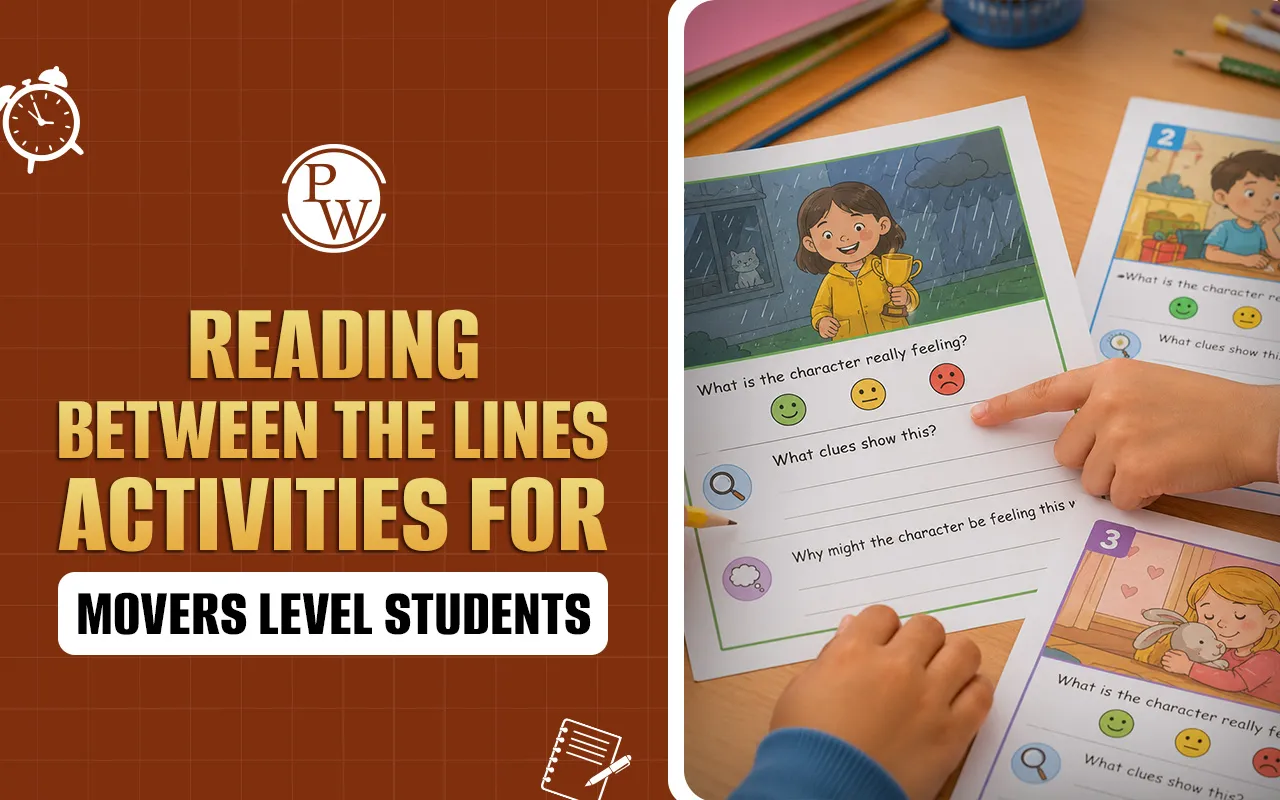
Importance of Reading Between the Lines Activities
Understanding what is not explicitly stated is a vital part of English learning activities. At the Movers level, students are transitioning from basic word recognition to understanding context. When we use these activities, we teach children to become "detectives." They learn to look for evidence in the text and combine it with what they already know about the world.
This skill is essential because many stories and conversations rely on inference. By practicing early, students improve their overall practice and become better at predicting outcomes and understanding character emotions. It changes reading from a chore of decoding sounds into an active game of discovery.
Reading Between the Lines Activities Using Pictures
Visual aids are the most effective way to start with younger learners. Before jumping into dense text, use illustrations to spark their curiosity. Pictures provide immediate context that helps with English learning goals.
Try these simple visual tasks:
-
The Emotion Guess: Show a picture of a child slumped over a broken toy. Ask, "How do they feel?" instead of telling them.
-
The Weather Detective: Show a character wearing a heavy coat and scarf. Ask what the season is based on their outfit.
-
The Next Step: Show a person holding a tray of food walking toward a table. Ask the student what will happen next.
These visual activities remove the pressure of difficult vocabulary. They allow the student to focus entirely on the logic of inference, building a strong foundation for later written comprehension practice.
Text-Based Reading Between the Lines Activities
Once a student is comfortable with pictures, you can introduce short sentences. At the Movers level, the language should remain simple, but the meaning should require a little bit of thought. This is a core part of practice for primary students.
Consider the following examples for your lessons:
|
Sentence Provided |
The Literal Fact |
The Hidden Meaning (Inference) |
|
Ben put on his swimsuit and grabbed a towel. |
Ben has a towel and swimwear. |
Ben is going swimming or to the beach. |
|
The cake in the oven started to smell like smoke. |
There is smoke in the kitchen. |
The cake is burning and needs to be taken out. |
|
Sarah’s eyes were red and she held a tissue. |
Sarah has red eyes and a tissue. |
Sarah has been crying or has an allergy. |
Using a table like this during activities helps students see the connection between "clues" and "conclusions." It makes the abstract concept of inference much more concrete and manageable.
Read More - Picture Description Practice for Better English Speaking (Movers Level)
Dialogue for Reading Between the Lines Activities
Conversation is a goldmine for teaching inference. In real life, we rarely say exactly how we feel. We use tone and choice of words. For English learning students, you can use short dialogues to practice identifying moods or settings.
Give the students a script like this:
-
Character A: "Is it time to go yet? I've been standing here for an hour!"
-
Character B: "The bus is usually late on Mondays, just be patient."
Ask the students: "Is Character A happy or annoyed?" and "Where are they standing?" Because the text doesn't say "Character A is angry at the bus stop," the child must use the clues "standing for an hour" and "bus" to find the answer. This is a highly effective form of comprehension practice.
Structure for Reading Between the Lines Activities
To keep students engaged, vary the format of your activities. Moving between individual work and group games prevents boredom and reinforces English learning activities.
A good lesson flow might look like this:
-
Warm-up: A quick "What’s in my bag?" game where you show items (e.g., a toothbrush, a passport) and they guess where you are going.
-
Guided Practice: Reading a short paragraph together and highlighting "clue words."
-
Independent Task: A worksheet where they match a "clue" sentence to a "meaning" picture.
-
Creative Exit: Asking them to draw a picture that shows a feeling without using any words.
This structured approach ensures that reading between the lines exercises are integrated naturally into the curriculum. It helps bridge the gap between basic vocabulary and true fluency in English practice.
Read More - Listening and Answering Activities for Movers Level Students
Improving Vocabulary with Reading Between the Lines Activities
Inference and vocabulary go hand in hand. Often, a student can't "read between the lines" because they don't understand a specific descriptive word. Expanding their descriptive vocabulary is a key part of English learning movers level development.
Focus on these word groups:
-
Feeling words: Instead of just "happy" or "sad," introduce "excited," "lonely," or "nervous."
-
Action verbs: Use words like "stomped," "whispered," or "leaped" to imply emotion or speed.
-
Setting clues: Teach words like "shore," "stadium," or "aisle" to help them infer locations quickly.
When children have a wider range of words to choose from, their ability to perform these activities improves significantly. They stop guessing and start making informed deductions based on the language used in their comprehension practice.
Challenges in Reading Between the Lines Activities
Not every child finds inference easy. Some students are very literal thinkers and may get frustrated when the answer isn't "right there" in the text. This is a common hurdle in English learning in practice.
To help these students:
-
Think Aloud: Model your thought process. Say, "I see the character is shivering, and I know I shiver when I'm cold, so it must be a cold day."
-
Use Graphic Organizers: Use a "What I Read" + "What I Know" = "My Inference" chart.
-
Graphic Novels: Use comic strips where the art tells half the story.
By breaking down the process, these activities become less about "guessing correctly" and more about following a logical path. This builds the confidence needed for more advanced activities.
English Learning Practice with CuriousJr
Finding the right resources to support these skills is crucial for a child's progress. At the Movers level, children need content that is both challenging and age-appropriate. CuriousJr offers a structured path through the Cambridge English curriculum, specifically designed to help students understand these nuances. By engaging with the platform, learners get consistent activities that feel like play rather than study.
The journey toward English fluency involves moving through levels of complexity with the right support. CuriousJr online English learning class provides specialized modules for the Movers level that focus on practical communication and deep understanding. Through interactive storytelling and targeted exercises, students can sharpen their reading comprehension practice in a way that sticks. This digital approach makes reading between the lines exercises easily accessible, supporting your child excel in their English journey.