Subtraction from 10 Vedic Maths Tricks for class 1
 Nikita Aggarwal25 May, 2026

What are the Vedic Subtraction Tricks for Class 1?
Vedic Mathematics is an ancient system of arithmetic techniques that simplifies calculations through logical patterns and mental strategies. Although subtraction may seem challenging for young learners at first, the basic principles of Vedic Maths make it easier to understand.
In Class 1, children are introduced to subtraction through everyday situations such as taking away objects, finding how many are left, and comparing quantities rather than solving complex written problems.
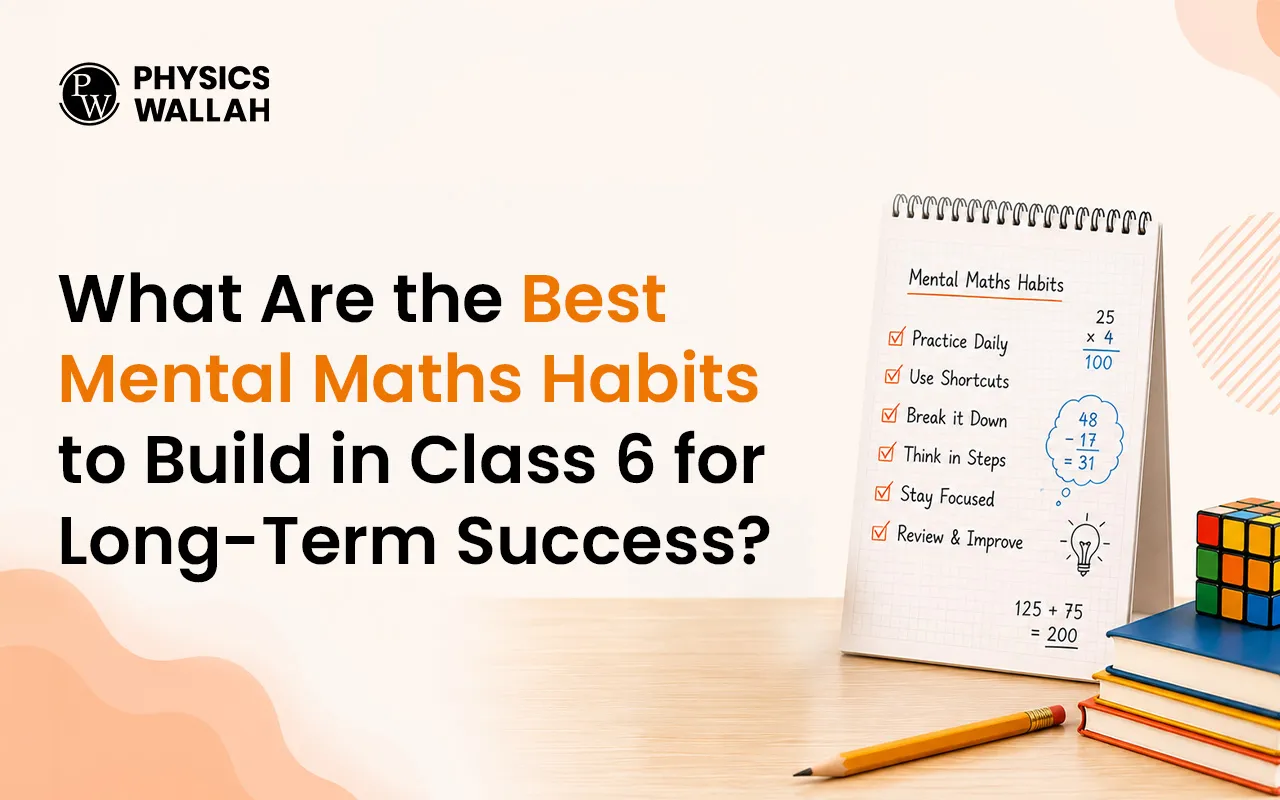
Through Vedic subtraction techniques, children learn to visualise numbers and understand number relationships. For example, they may learn to subtract by counting backwards, using number bonds, or recognising how much needs to be removed from a group.
Children who understand how to break apart and adjust numbers mentally develop stronger calculation skills and better number sense. This approach encourages them to view subtraction as a flexible thinking process rather than simply following fixed steps, creating a solid foundation for more advanced mathematics in later classes.
Best Subtraction Vedic Maths Tricks for Class 1
Pattern-finding and bases like 10 capture the essence of Vedic maths. In Class 1, we concentrate only on the base number 10. The strongest Vedic subtraction trick for this age group is based on complements. This reduces nicely to "number friends" or "number of partners".
Now, once a child can spot these patterns, they will instantly subtract from 10. Let us examine the 10 most useful tricks that simplify this process to the utmost for toddler pupils.
1. The Nikhilam Trick (All from 10)
The core of Vedic maths is also embedded in a concept called 'Nikhilam'. We have a simplified version for young learners. You take any single-digit number and subtract it from a base 10.
The child avoids complex mental steps by viewing the total base of 10 and subtracting everything from it.
-
Example: To solve 10 - 4, the child recognises that removing 4 from the total base of 10 leaves exactly 6.
2. The 10 Friends Trick
One of the most popular Vedic maths subtraction techniques. I read that each digit has a "best friend" that can pair with it to make 10. After a child has memorised these pairs, they do not need to calculate at all. They just name the friend.
The core pairs to remember are:
-
1 and 9 are best friends
-
2 and 8 are best friends
-
3 and 7 are best friends
-
4 and 6 are best friends
-
5 and 5 are best friends
If the question is "10 - 7", then the child thinks to himself, "Who is the best friend of seven?" The answer is instantly 3.
3. The Finger Trick
The finger trick offers a straightforward visual when children require an appropriate representation. It is a perfect fit because we have exactly 10 fingers, matching our base.
-
Step 1: Show all 10 fingers open.
-
Step 2: Fold down the number of fingers being subtracted.
-
Step 3: Count the remaining upright fingers.
So, for example, with 10 – 2, the child folds down two fingers. Well, we can see straight away that 8 cats are left standing.
4. The Count Back Trick
This technique teaches simple Class 1 maths techniques through backwards verbal counting. It helps them understand that subtraction goes down.
-
Example: To solve 10 - 3, start at 10 and count back three steps.
-
The mental chant: 10... 9, 8, 7.
-
Result: The final number reached is 7.
Read More - Mental Maths Games Using Dots for Class 1
5. The Dot Trick
The dot trick works wonders for visual learners. This is one of the reasons it allows children to see physical removal on paper from an early age, helping them develop amazing tracking skills.
-
Step 1: Draw 10 stars or dots on a page
-
Step 2: Cross out or cut the number of dots you want to subtract.
-
Step 3: Count the clean dots that are left.
By removing 4 dots, you would erase all 4 stars and be left with exactly 6 bright stars intact.
6. The Number Line Trick
A number line is one of the best visual aids used for simple subtraction in younger kids. This gives the eyes a clear path to follow.
-
Step 1: Draw a straight line numbered from 0 to 10.
-
Step 2: Place a finger on the number 10.
-
Step 3: Take backward jumps to the left based on the number being subtracted.
With 10 - 5, the child starts at 10 and jumps back in increments of 5 to land exactly on 5.
7. The Object Trick
Mathematics becomes concrete and practical through the use of real-world items. Use blocks, candies, buttons or apples of all kinds as everyday objects and demonstrate subtraction.
-
Example: Place 10 candies on a table.
-
Action: Take away 6 candies to give to a friend.
-
Result: Count the remaining candies on the table to find that 4 are left.
Read More - 10-Second Addition Tricks for Class 1
8. The Quick Partner Trick
It is a speed maths subtraction game. It can transform math into a high-speed dialogue between parent and child.
-
The Rule: Whenever the parent says "10 minus a number", the child must instantly shout out that number's partner.
-
Example: The parent says, "10 minus 8!"
-
The Response: The child instantly responds with "2!" because 8 and 2 are partners in multiplication.
9. The Flash Card Trick
Playing with speed is a common technique in visual memory training. Flashcards improve a child's speed at remembering the base facts of subtracting numbers you can't do by counting (referred to as 'core subtraction'), and this knowledge becomes immediate. Make simple cards with the equation on one side and the answer on the reverse:
-
10 - 1 = 9
-
10 - 2 = 8
-
10 - 3 = 7
-
10 - 4 = 6
Shuffle the cards daily and run through them to build lightning-quick recall speeds.
10. The Near 10 Mental Trick
That trampoline will get the kids thinking about distance and gaps. The child does not think about taking away things; they want to take a number and ask how close it is to 10.
-
The Thought Process: "How much less than 10 is this number?"
-
Example: For 10 - 9, the child thinks, "9 is super close to 10. "It is just 1 step away from being 10."
-
Result: The answer is 1.
How Does CuriousJr Help with Class 1 Mental Maths?
CuriousJr online mental maths class is dedicated to revolutionising early childhood education by bringing interactive, experiential learning in subjects that are deeply conceptual. At that level, darting abstract numbers across a blackboard may not be so easy for the Class 1 student to understand.
To address this problem, CuriousJr magically transposes core arithmetic into visual game-based learning journeys.
-
Interactive and Conceptual Approach: How would you teach Class 1 students if numbers on a blackboard immediately made no sense to them and became completely abstract?
-
Game-Based Learning Journeys: The platform transforms core math skills into visually engaging, game-based learning journeys that are sure to ignite the minds of even your most curious learners.
-
Reinforcement of Core Concepts: The platform keeps reiterating core concepts (number bonds, mental addition) through structured content designed for age-appropriate learners.
-
Storytelling over Worksheets: Kids are used to boring, repetitive worksheets; instead, kids use colour storytelling & puzzles, which makes kids of 5 and above understand the basic concepts, such as subtracting from 10, Vedic maths tricks.
-
Bite-Sized and Stress-Free Lessons: The short, easy-to-digest lessons are structured such that children never feel overwhelmed when learning on a platform guided by intuitive thinking.