English Listening Activities Using Short Stories (Starters Level)
 Nikita Aggarwal25 May, 2026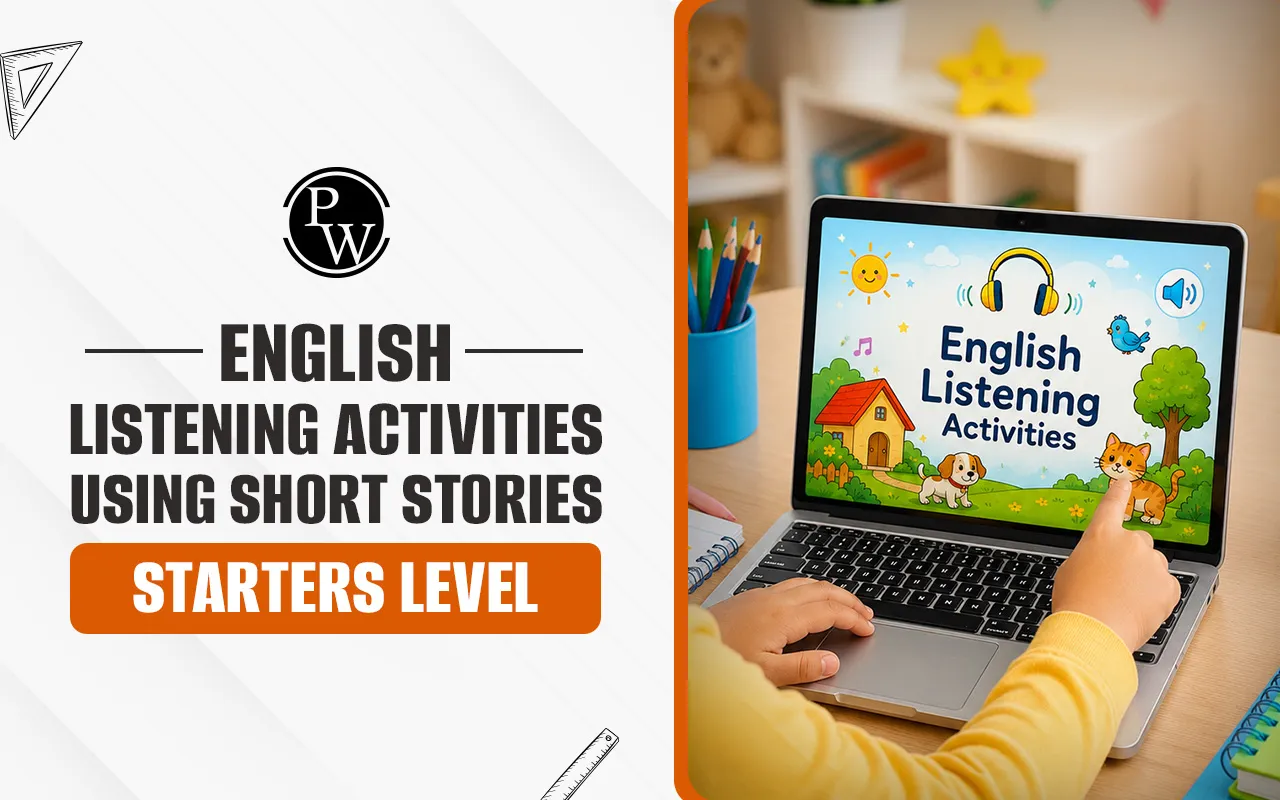
Importance of English Listening Activities
The Starters level Children learn very fast with the correct setting. They hear words in a natural way when they do listening exercises. Stories have a different flow than word drills and help kids guess what will happen next.
Short stories work well because they have a clear beginning, middle, and end. This structure supports listening through stories and helps children feel proud when they finish a story. It also helps them learn basic words about things like objects, animals, and family members.
Benefits of Beginner English Audio
English audio made for children is paced just right. At this stage, how fast people speak matters a lot. If the audio is too quick, kids lose interest. If it is clear and lively, they stay focused.
-
Improved Pronunciation: Kids mimic the sounds and rhythms they hear in stories.
-
Confidence Building: Simple stories allow children to understand most of the content, which motivates them to keep learning.
-
Contextual Learning: Hearing words used in sentences helps kids understand grammar without formal rules.
English Listening Activities with Stories
Activities feel like work instead of play, and children lose interest. Use a range of interactive approaches to assess understanding in a non-threatening fashion. These exercises are ideally suited for home or classroom.
The "Stop and Draw" Method
For this activity, play a short story and pause at certain points. Ask the child to draw what they just heard. For example, if the story says "big blue hat," the child draws it. This helps you see how well they understand.
Action-Based Storytelling
This involves physical movement. Assign an action to a specific word that appears frequently in the story. Every time the child hears that word during their listening practice, they must perform the action, such as clapping their hands or jumping.
The table below suggests simple actions for common Starters level words found in short stories:
|
Target Word |
Physical Action |
|
Jump |
Child jumps once |
|
Sun |
Child makes a circle with arms |
|
Run |
Child runs in place |
|
Sleep |
Child puts hands on cheek |
Read More - Learn English Easily with Simple Words, Speaking and Daily Practice (Level Starters)
Comprehension Activities for Kids
Once the story is finished, the learning doesn't have to stop. You can reinforce what was heard through quick comprehension activities kids find rewarding. These tasks should be short and focused on the main events of the plot.
Sequence the Story Cards
Print out or draw three to four pictures representing different scenes from the story. After the listening session, ask the child to put the pictures in the correct order. This helps them understand the chronological flow of English narratives.
True or False Listening Games
Tell the child you are going to say something about the story, and they have to shout "True" or "False." Make some statements obviously wrong to make them laugh. For instance, if the story was about a dog, say, "The purple cow ate the sandwich."
Simple Questioning Techniques
When asking questions, keep them "Wh-" based but very simple. Focus on the "Who" and the "What" rather than complex "Why" questions.
-
Who was in the garden?
-
What colour was the cat?
-
Where did the boy go?
Read More - Sight Word Reading Practice for Starters Level Learners
Stories for English Listening Activities
Not every story is suitable for the Starters level. The content must align with the English learning starters level requirements, focusing on high-frequency words and simple sentence structures. Avoid stories with complex metaphors or advanced vocabulary.
Look for stories that feature:
-
Clear Character Names: Easy to distinguish and remember.
-
Repetitive Phrases: "The bear went over the mountain" style repetition helps memory.
-
Visual Support: Books with large, bright illustrations that match the audio perfectly.
Storytelling Listening Practice at Home
Parents can easily add English listening activities to daily routines. Bedtime works well, but car rides are also a good option. Playing audiobooks or recorded stories while traveling helps kids hear English often.
At home, you can use a 'listen and repeat' method. When a character says something funny, ask your child to repeat it using the same tone. This helps with intonation and makes listening practice more enjoyable.
Track Progress in English Listening Activities
Pay attention to how your child’s skills grow over time. There’s no need for tests. Instead, see how much of a story they can retell in their own words or how quickly they answer in the 'True or False' game. Change up activities to keep things interesting. One week, try drawing; the next, focus on actions or using sequencing cards.
Here are some signs your child is making good progress:
-
They can identify characters by name without help.
-
They react to funny or sad moments in the audio at the right time.
-
They start using phrases from the stories in their daily talk.
-
They ask to hear the same story again, showing engagement.
CuriousJr for English Learning Activities
To build a strong foundation in a new language, it helps to have the right tools and a clear plan. Interactive platforms offer the variety that keeps kids interested and eager to learn. If you want a more structured approach, the English learning starters level materials are a great place to begin. Mixing classic storytelling with interactive features helps children move from just listening to speaking and communicating.
CuriousJr lets kids use what they learn from English listening activities in a natural setting. Curiousjr English classes online are designed around Cambridge Starters-style learning goals. This fun and organized approach makes it easier for children to progress and enjoy learning English every day.