
Why Ages 8 to 10 Is the Perfect Window to Build Strong English Writing Foundations
 Nikita Aggarwal16 Jun, 2026

Why is an English Writing Foundation Ages 8 to 10 Important for Kids?
Between the ages of 8 and 10, a child's brain is highly receptive to language acquisition. During this developmental window, children naturally transition from learning to read to reading to learn. It is the perfect moment to introduce structured sentence formation, expanded vocabulary, and creative storytelling techniques.
Moving Beyond Simple Sentences
In early primary school, children write basic sentences like "The dog ran." By focusing on a strong English writing foundation ages 8 to 10, young learners discover how to use adjectives, adverbs, and connective words to create engaging paragraphs.
Boosting Academic Confidence
When children express themselves clearly on paper, their performance across all school subjects improves. Writing is not just for language arts; it is essential for explaining science experiments, answering history questions, and solving word problems in mathematics.
Why English Writing Skills Matter for Class 3 and 4 Students
The curriculum for English writing Class 3 4 marks a major shift from simple grammar rules to comprehensive paragraph construction. Students learn to organise their thoughts logically, which helps them communicate more effectively in everyday life.
The table below outlines the core differences in writing expectations as children grow through these primary school years:
|
Writing Feature |
Class 3 Expectations |
Class 4 Expectations |
|
Sentence Length |
5 to 8 words per sentence |
8 to 12 words with connectives |
|
Paragraph Focus |
Single ideas with basic punctuation |
Multiple ideas with transition words |
|
Vocabulary Use |
Simple, everyday nouns and verbs |
Descriptive adjectives and synonyms |
As shown in the table, the expectations double within a short period. This rapid advancement is exactly why targeted practice during these years prevents students from feeling overwhelmed by complex school assignments.
Read More - Daily 5 Sentence Practice for English Fluency (Level Movers)
Important Writing Skills Every Young Learner Should Develop
To build writing skills young learners require for future exams, parents and educators should track specific developmental milestones. Writing development is a step-by-step process that starts with simple mechanics and moves toward imaginative storytelling.
The following list highlights the primary milestones your child should reach between the ages of 8 and 10:
-
Proper Punctuation: Consistent use of full stops, capital letters, question marks, and commas.
-
Logical Organisation: Structuring stories with a clear beginning, middle, and an exciting conclusion.
-
Spelling Accuracy: Spelling common words correctly and attempting phonetic spelling for harder vocabulary.
-
Parts of Speech: Blending nouns, verbs, and pronouns seamlessly to vary sentence structures.
Regular writing exercises ensure these milestones are met comfortably, removing the stress usually associated with school compositions.
How Cambridge A1 Writing Helps Young Learners
The internationally recognised Cambridge A1 writing standard offers a fantastic benchmark for measuring a child's linguistic progress. It provides a structured pathway that ensures children are learning English that is useful anywhere in the world.
This global framework focuses heavily on practical language usage. Instead of just memorising grammar rules, children learn how to describe pictures, fill out short forms, and write brief messages about their daily routines. Meeting these international standards gives young students a massive sense of achievement and proves they can communicate on a global stage.
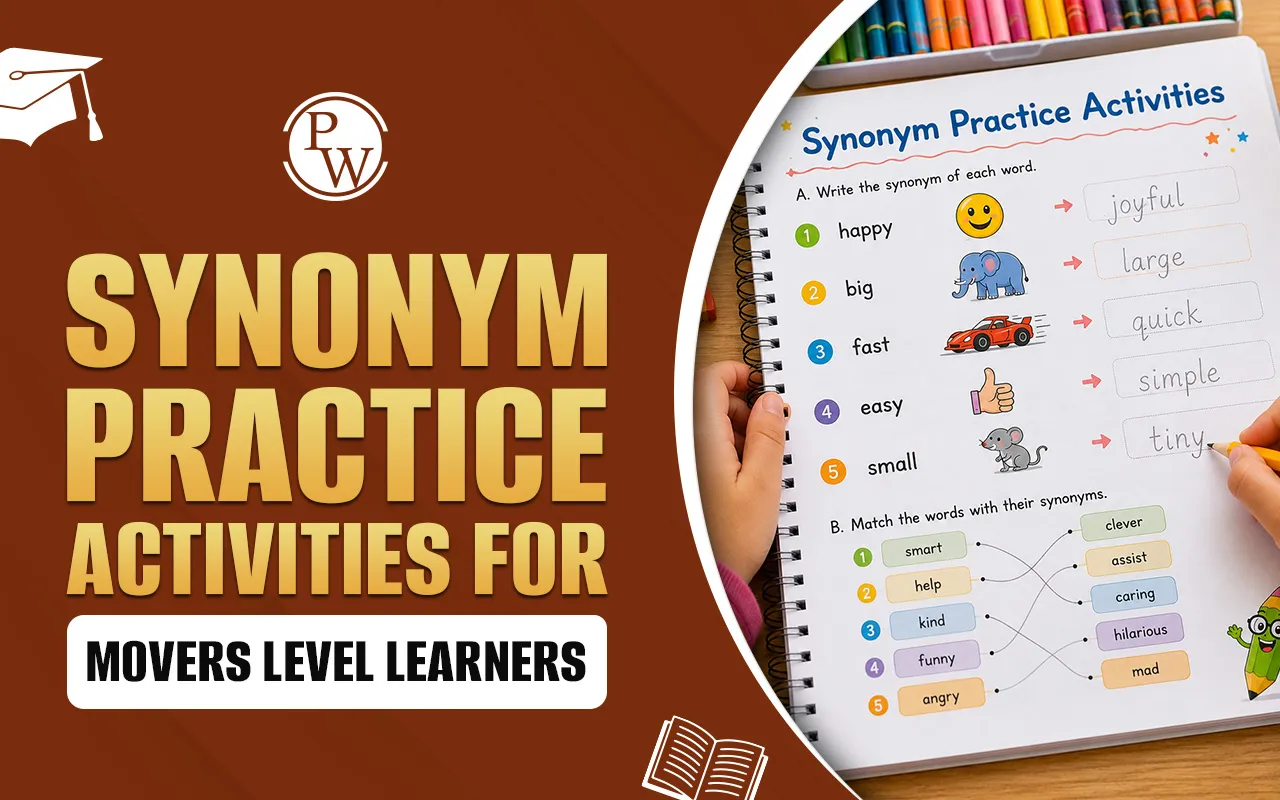
Read More - Synonym Practice Activities for Movers Level Learners
Benefits of Cambridge Movers Writing Skills for Children
Focusing on Cambridge Movers writing skills teaches children how to look at visual prompts and construct an accurate narrative. This specific method teaches attention to detail, logic, and creative thinking.
The examination tasks require students to look at a series of pictures and tell a story, which tests several core skills simultaneously:
-
Contextual Understanding: Analysing what is happening in a picture sequence accurately.
-
Tense Consistency: Maintaining the correct past or present tense throughout the entire story.
-
Creative Flair: Adding interesting details that make the narrative fun to read.
Mastering these specific skills ensures that young writers can handle any unseen writing prompt they encounter in their regular school assessments.
Why Writing Skills Are Important for Kids Aged 8 to 10
Without a proper writing foundation for kids 8 to 10, children often develop bad habits, such as run-on sentences or repetitive vocabulary, that become harder to fix later in life. Catching these errors early keeps their learning journey smooth and enjoyable.
When a child receives guided instruction during this critical phase, they learn to self-correct their work. They start to notice their own punctuation errors and actively look for better words to replace overused terms like "good" or "nice," resulting in much cleaner, more sophisticated prose.
What Are the Benefits of an Online English Writing Class?
Enrolling your child in an online English writing class provides a flexible, engaging, and highly interactive way to improve their communication skills from the comfort of home. Modern digital tools keep children focused and excited about learning.
An online environment offers unique advantages that traditional classrooms sometimes lack:
-
Interactive Visuals: Colourful digital slides and multimedia prompts that inspire creative thinking.
-
Instant Feedback: Real-time corrections from expert tutors that stop bad writing habits before they form.
-
Comfortable Pace: The ability to learn from a relaxed home setting, which encourages quieter children to speak up and share their ideas.
These digital sessions turn writing from a boring chore into an exciting, collaborative adventure that kids look forward to every week.
English Writing Foundation for Ages 8 to 10 with CuriousJr
To make the most of this unique developmental window, children need a structured, fun, and expert-led curriculum. The CuriousJr English learning movers platform offers specialized courses designed to guide young learners through their language milestones seamlessly. By focusing on international standards and interactive learning, it transforms reluctant writers into confident storytellers.
Through the CuriousJr Cambridge Movers Course, children receive targeted guidance that builds a rock-solid English writing foundation ages 8 to 10, preparing them for both school exams and global language certifications.




Why Ages 8 to 10 Is the Perfect Window to Build Strong English Writing Foundations FAQs
How long does it take to see progress in a child's writing?
Can an online class help a child who hates writing?
What is the ideal daily writing time for an 8-year-old?
Why is the Cambridge framework recommended for young learners?






Get Free Counselling Today
and Clear up all your Doubts
 Live & recorded classes available at easeDashboard for progress trackingLakhs of practice questions

