What Are the Most Common English Mistakes Children Make at Movers Level?
 Nikita Aggarwal16 Jun, 2026
Why Children Make Common English Mistakes Cambridge Movers Level
At the A1 proficiency stage, children move beyond basic words and begin forming complex sentences. This transition naturally leads to structural confusion as they test out new language patterns.
Understanding the root cause of these errors makes it easier to fix them. Young minds often translate directly from their native language or over-apply a rule they just learned. The following list outlines the main reasons why common English mistakes Cambridge Movers level learners occur during study sessions:
-
Overgeneralisation: Applying a newly learned rule to every situation, such as adding "-ed" to irregular verbs.
-
Direct Translation: Converting sentences word-for-word from their mother tongue into English, which ruins sentence structure.
-
Linguistic Confusion: Mixing up words that sound similar but have completely different spellings and meanings.
-
Lack of Practice: Not using conversational English outside the classroom, which limits their comfort level with natural phrasing.
How to Fix Common Grammar Mistakes in Cambridge Movers
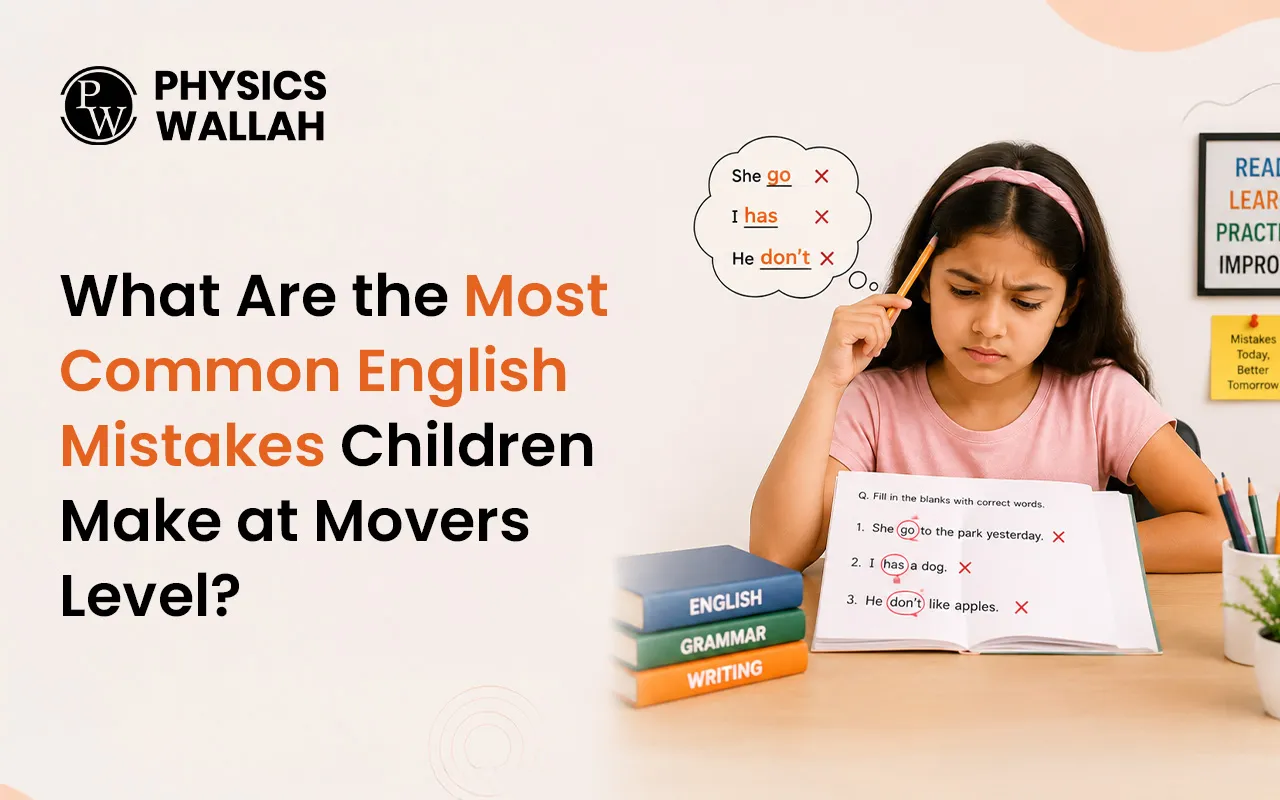
Grammar forms the backbone of the Cambridge assessment, and it is also where young test-takers stumble the most. Minor slips in verb forms or word order can completely alter the meaning of a sentence.
Children often confuse plural and singular nouns , especially when the word changes completely . The table below contains the most frequent noun and verb errors made by students at this level in regular essays.
|
Correct Form |
Incorrect Child Form |
Error Type |
|
Three children |
Three childs / childrens |
Irregular Plural |
|
He goes to school |
He go to school |
Subject-Verb Agreement |
|
I saw a bird |
I seed a bird |
Irregular Past Tense |
|
She is running |
She running |
Missing Auxiliary Verb |
Subject-verb agreement is still a major stumbling block, beyond nouns. Children often forget to add the 's' to the verb when using third person singular pronouns like he, she or it. They may write sentences such as "The dog do bark loudly," rather than "The dog barks loudly." Extra study time during weekly study sessions on these particular problem areas stops these habits from solidifying.
Read More - Daily 5 Sentence Practice for English Fluency (Level Movers)
English Vocabulary and Spelling Mistakes A1 Learners Make
Spelling in English can be notoriously tricky because many words do not sound the way they are written. At this stage, young learners frequently spell words based entirely on phonetics, leading to noticeable errors.
Children often confuse homophones, words that sound alike but have different meanings and spellings . Such mistakes are quite clear in the reading and writing sections of the test. Here’s a list of common homophone mix-ups to help improve your child’s spelling accuracy:
-
There vs Their vs They’re: Kids frequently use "there" to indicate possession instead of "their."
-
Its vs It’s: Missing or adding an apostrophe changes a possessive pronoun into a contraction.
-
To vs Too vs Two: Simple prepositions are regularly swapped with modifiers or numbers.
-
Where vs Wear: Visualising clothes versus a location causes frequent confusion in written tasks.
Prepositions also present a major challenge for younger students. Children regularly confuse terms like "in," "on," and "at" when describing time or location. For example, a student might write "I am at the car" instead of "I am in the car." Regular reading helps children memorise how these words look in context, making it easier to spot their own errors during review.
How to Improve Speaking Skills for Cambridge A1 English
The speaking test is requiring children to think on their feet and this may lead to children using simple language or hesitant phrases. Young learners under pressure tend to omit whole parts of speech.
Children forget to use the continuous tense in describing a picture story. They may not say " The boy is playing football " but " Boy play football . " The lack of auxiliary verbs and endings makes their fluency score less overall.
Pronunciation of specific consonant blends can also impact clarity during the oral exam. Words ending in "-th" or "-ch" often get mispronounced, which can confuse the examiner. Encouraging your child to speak slowly and clearly during daily conversations builds the muscle memory needed for proper pronunciation.
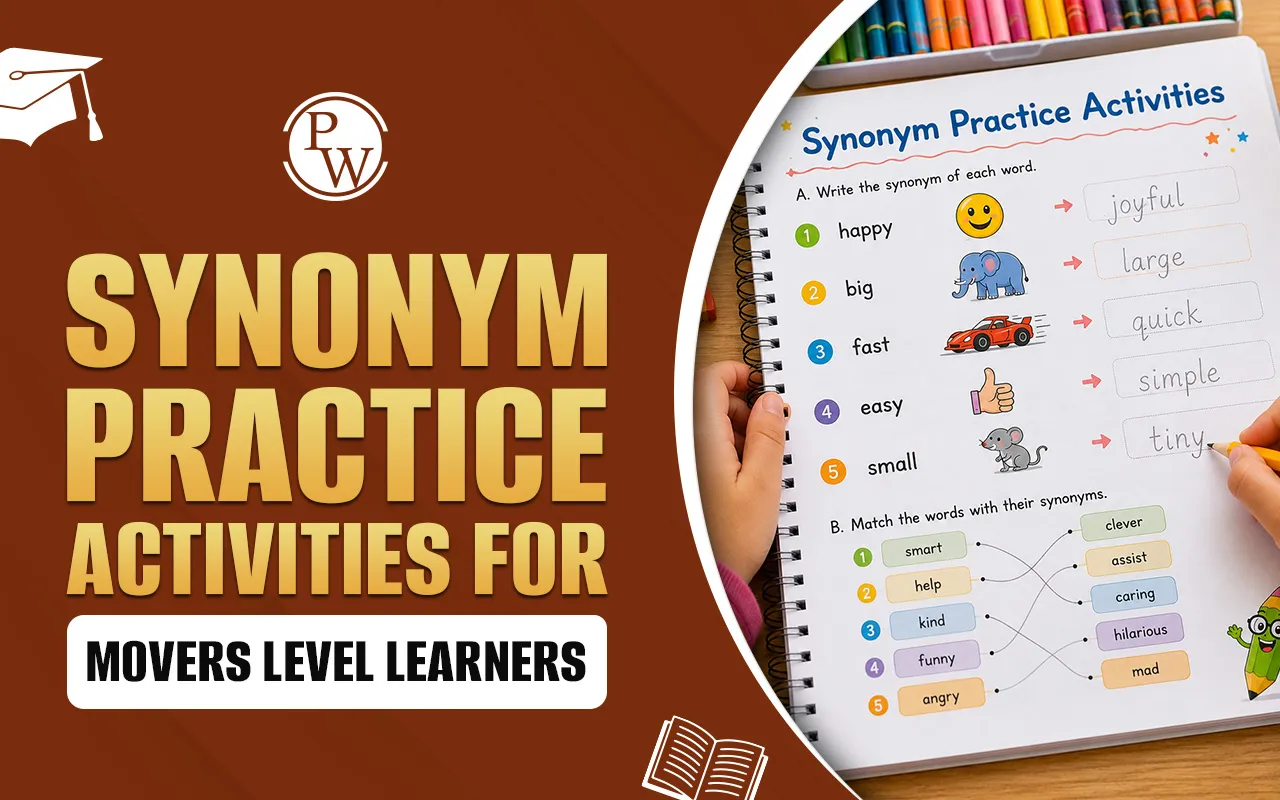
Read More - Synonym Practice Activities for Movers Level Learners
Common English Errors in Children and How to Fix Them
Correcting errors without discouraging the child requires a balanced approach. Constant correction can cause a young learner to shut down, while ignoring errors allows bad habits to form.
The most effective strategy involves turning correction into a fun game rather than a strict lecture. Using visual aids, flashcards, and interactive stories keeps engagement high. Parents can implement the following actionable strategies at home to help correct these issues:
-
Recasting sentences: When your child makes an error, repeat the sentence back to them correctly without explicitly telling them they were wrong.
-
Visual grammar jars: Use color-coded cards for nouns, verbs, and adjectives so children can physically build accurate sentences.
-
Daily reading aloud: Reading stories out loud exposes children to correct grammar structures and natural sentence rhythms.
-
Error hunting games: Write a sentence with an intentional mistake and ask your child to play detective and find the error.
Focusing on one specific grammar rule per week ensures the child does not feel overwhelmed by corrections. If pronouns are the issue, spend seven days playing pronoun-focused games before moving on to irregular past tense verbs. Consistency and patience are the ultimate keys to language mastery.
Common Class 3 and 4 English Grammar Mistakes and Solutions
Children in primary school are managing schoolwork alongside their language test preparation, meaning their study time must be highly efficient. Teachers notice that school structural habits often spill over into language proficiency tests.
In primary classrooms, students often struggle with sentence punctuation, such as forgetting capital letters and full stops. This issue heavily impacts the writing portion of the language assessment. Teachers can use peer-review activities where students check each other's work for basic punctuation, making proofreading a collaborative habit.
Structured writing prompts also help children practice specific target structures. Providing a sentence frame like "Yesterday, I went to the..." encourages the correct use of the past tense. This guidance helps reduce the cognitive load on young learners, allowing them to focus entirely on correct word choice.
CuriousJr Online English Correction Class
Identifying everyday grammar slips is just the first step toward building true language proficiency. To truly overcome the common English mistakes Cambridge Movers level students encounter, children need structured, expert guidance that makes learning enjoyable. Dedicated practice with certified instructors ensures that these errors are corrected long before exam day arrives.
Enrolling your child in a structured program provides the regular feedback required to break bad grammar habits. A dedicated CuriousJr Online English Course offers interactive lessons specifically designed to target the common pitfalls of the assessment. Through engaging live sessions, young learners receive real-time guidance that turns language hurdles into stepping stones for academic success.




What Are the Most Common English Mistakes Children Make at Movers Level? FAQs
What is the difference between Starters and Movers levels?
How long does it take a child to prepare for the Movers exam?
Can spelling mistakes lower a child's score in the listening section?
How can I help my child stop mixing up "he" and "she"?

Get Free Counselling Today
and Clear up all your Doubts
 Live & recorded classes available at easeDashboard for progress trackingLakhs of practice questions