
What Grammar Topics Are Covered at the Cambridge A1 Movers Level?
 Nikita Aggarwal16 Jun, 2026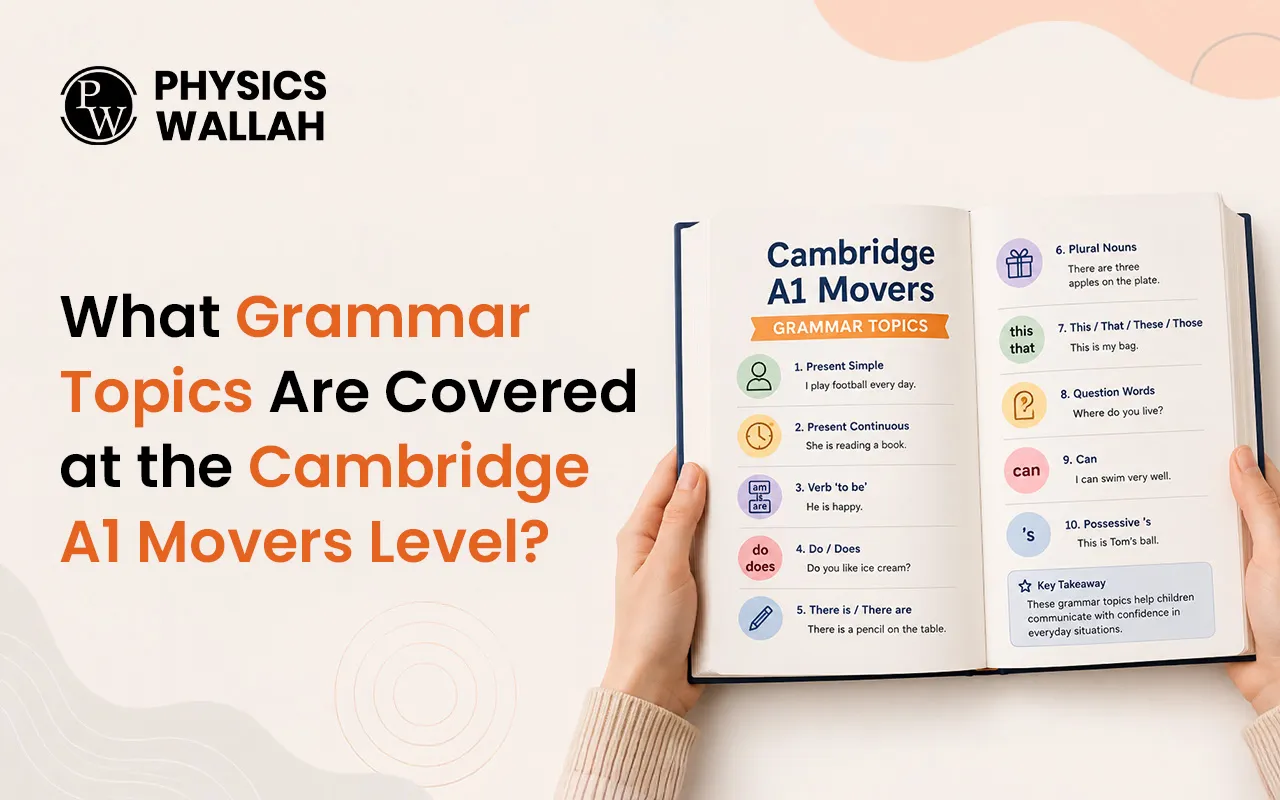
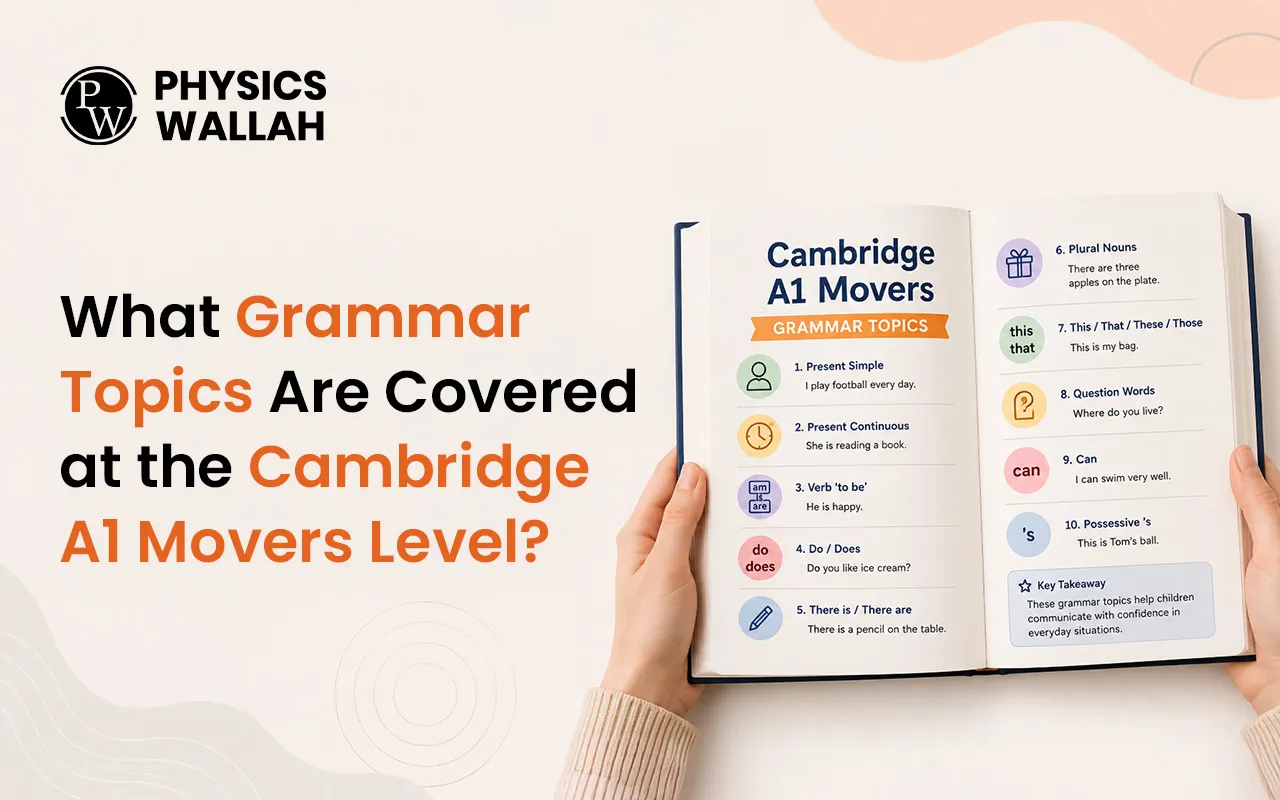
Important Cambridge A1 Movers Grammar Topics
The Cambridge Movers syllabus is designed to transition children from basic word recognition to building complete, meaningful sentences. It focuses on practical language structures that young learners use in daily conversations.
The official Cambridge Movers grammar syllabus organises these structures into logical categories. Many students struggle to find a structured path for English grammar A1 level kids that balances fun with academic rigour. The table below outlines the primary grammatical components that students must master for this level.
|
Grammar Category |
Key Elements Tested |
Example Usage |
|
Nouns and Pronouns |
Plurals, relative clauses, demonstratives |
The man who is shouting. |
|
Verbs and Tenses |
Past simple, continuous, modals |
She went to the park yesterday. |
|
Adjectives and Adverbs |
Comparatives, superlatives, manner |
This book is better than that one. |
|
Prepositions and Conjunctions |
Place, time, simple connectors |
The cat is hiding behind the sofa. |
Understanding Nouns and Pronouns
At this stage, children expand their knowledge beyond simple naming words. They learn to identify and use irregular plural nouns, such as "children", "mice", and "feet".
Pronouns also become more detailed. Pupils move past basic subject pronouns to master relative pronouns like "who", "which", and "that". For example, a student should be able to say, "This is the toy which I bought." They also learn to use possessive pronouns like "mine", "yours", "his", and "hers" correctly to show ownership.
Adjectives and Adverbs of Manner
Descriptive language takes a big step forward in the A1 curriculum. Children learn how to compare objects and people using comparative and superlative adjectives.
-
Comparatives: Adding "-er" or using "more" (e.g., bigger, more beautiful).
-
Superlatives: Adding "-est" or using "most" (e.g., biggest, most beautiful).
Additionally, students learn adverbs of manner to describe how an action happens. They practice changing adjectives into adverbs, such as turning "quick" into "quickly" or "careful" into "carefully".
Read More - Daily 5 Sentence Practice for English Fluency (Level Movers)
How Do Verbs and Tenses Work in Cambridge A1 Movers Grammar Topics?
Verbs form the backbone of the Movers level English topics, requiring students to demonstrate a clear understanding of time and action. Children must shift smoothly between talking about the present, the past, and future plans.
The examination assesses both regular and irregular verb forms. The following list details the specific tenses and verb structures that children need to practice regularly.
-
Past Simple Tense: Used for completed actions in the past. Students must know regular verbs ending in "-ed" (e.g., walked, played) and common irregular verbs (e.g., went, saw, ate, had).
-
Present Continuous Tense: Used for actions happening right now or to describe scenes in a picture (e.g., "The boy is riding a bicycle").
-
Going to Future: Used to express future intentions and plans (e.g., "We are going to visit grandma on Sunday").
-
Modal Verbs: Simple modals like "must" for obligation, "can/could" for ability or requests, and "shall" for suggestions are introduced.
Before looking at examples, it is important to note that question formation changes across these tenses. Children need to learn how to ask questions using tags like "did you", "was it", or "can they".
Common Prepositions and Connectors for Class 3 and 4 Students
The difficulty level of this syllabus aligns closely with standard Class 3 4 English grammar school curriculums. At this age, children learn to connect separate ideas into longer, more cohesive sentences.
Using correct prepositions helps children describe locations and movements accurately. Conjunctions allow them to link thoughts without repeating words unnecessarily. The list below highlights the essential connectors and prepositions taught at this level.
-
Prepositions of Place: Words like "behind", "in front of", "between", "next to", "opposite", and "above".
-
Prepositions of Time: Using "at", "on", and "in" correctly with times, days, and months.
-
Basic Conjunctions: Using "and", "but", and "or" to join clauses seamlessly.
-
The Connector 'Because': Used to give simple reasons and answer "why" questions (e.g., "I stayed home because it was raining").
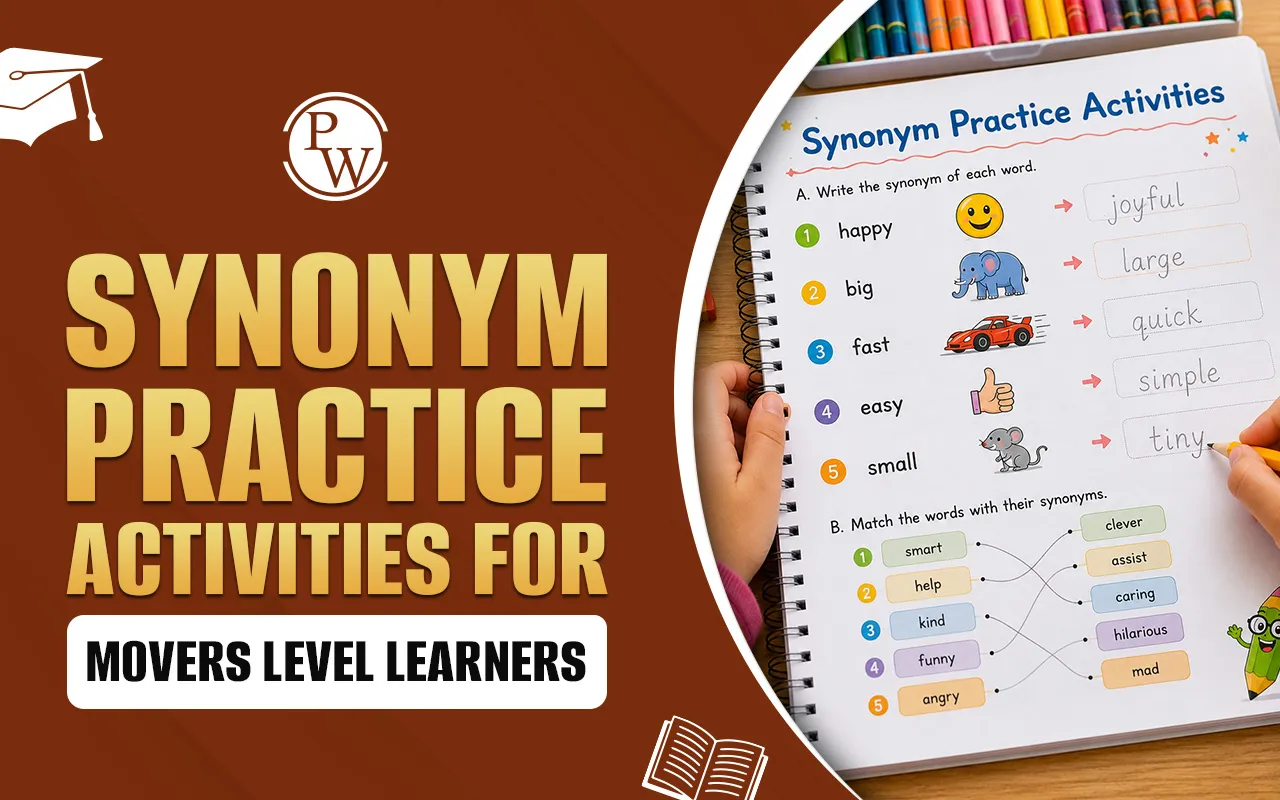
Read More - Synonym Practice Activities for Movers Level Learners
Benefits of Learning Cambridge A1 English Grammar for Kids
Building a strong foundation in Cambridge A1 English gives young learners a distinct academic advantage. It ensures they do not memorize phrases blindly but actually understand how the language functions.
When children grasp these rules, their reading comprehension and writing skills improve dramatically. They can read longer stories and write short paragraphs with minimal spelling and grammatical errors. This structural clarity prevents common mistakes as they transition to more advanced learning levels later on.
Learning Cambridge A1 Movers Grammar Topics with CuriousJr
Mastering these language patterns requires consistent practice and expert guidance. Traditional textbooks can sometimes make grammar feel tedious for young minds, which reduces their engagement.
Enrolling your child in an interactive online English A1 class can transform their learning experience completely. Structured lessons designed specifically for children ensure that every rule is learned through engaging activities, games, and real-world conversations.
To give your child the perfect start, explore the tailored curriculum offered on the CuriousJr Movers Program. This platform breaks down complex language rules into enjoyable, bite-sized lessons that keep children motivated. Through expert mentorship, interactive quizzes, and regular practice, students can easily master all the essential language skills required to clear their international examinations with confidence.




What Grammar Topics Are Covered at the Cambridge A1 Movers Level? FAQs
What is the age limit for students learning Cambridge A1 Movers grammar topics?
How many tenses are tested in the Cambridge Movers level English topics?
Can a child skip the Starters level and study the Cambridge Movers grammar syllabus directly?
Do children need to write long essays in the Cambridge A1 English exam?






Get Free Counselling Today
and Clear up all your Doubts
 Live & recorded classes available at easeDashboard for progress trackingLakhs of practice questions

