
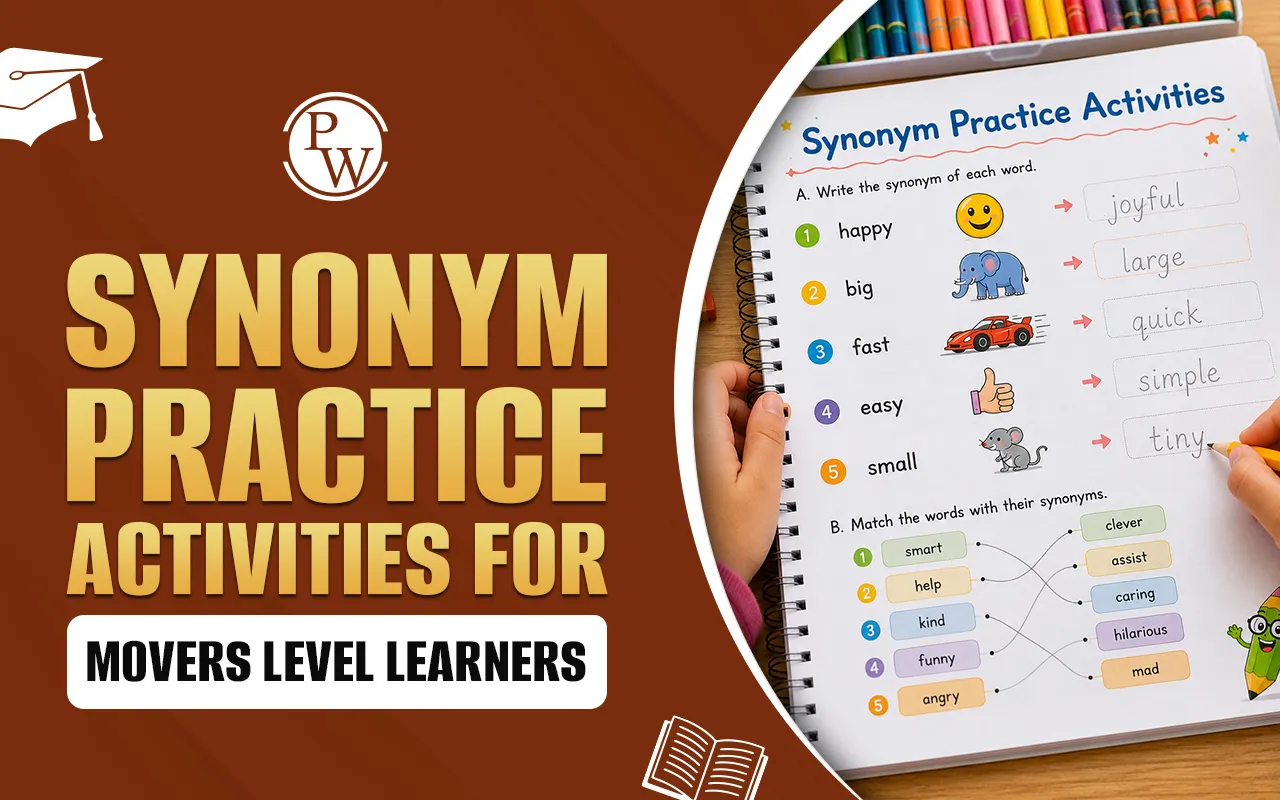
Synonym Practice Activities for Movers Level Learners
 Nikita Aggarwal5 Jun, 2026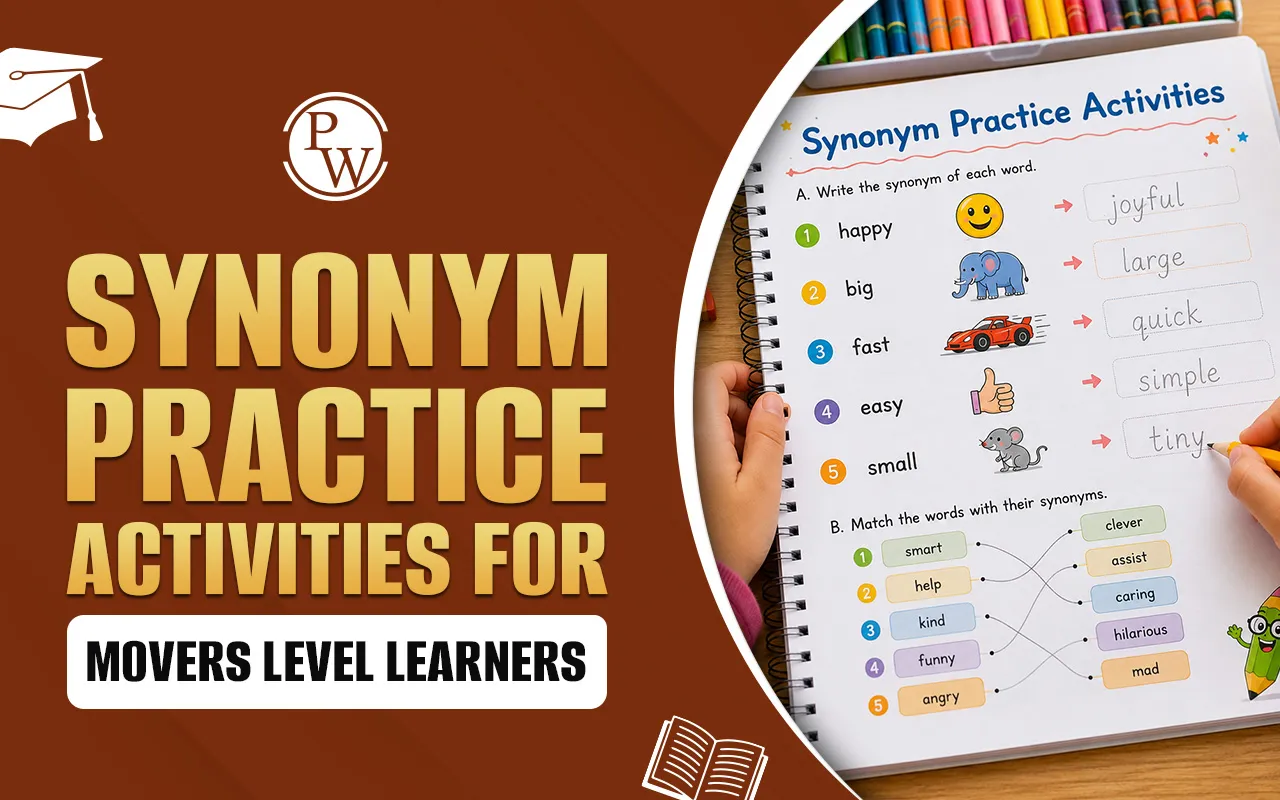
Why Use Synonym Practice Activities?
Young learners at this stage already know basic words like "happy," "big," or "sad." However, to improve their English vocabulary building journey, they must learn that multiple words can share similar meanings. Using regular synonym practice activities helps children choose better words when they speak and write.
Children playing with words that imply the same thing cease repeating themselves. "The huge dog walked into the large house" instead of stating "The big dog walked into the big house." This small change allows their language skills to blossom naturally and they have greater clarity.
-
Expands Expressive Power: Children learn to describe their internal world and emotions more accurately.
-
Improves Reading Comfort: Recognizing similar words makes it easier for kids to understand simple stories.
-
Encourages Independent Writing: A wider vocabulary helps students write friendly personal notes and short messages without getting stuck.
Read More - Simple English Question and Answer Practice for Kids (Level Movers)
Synonym Practice Activities for Home and Classroom
Teaching similar words does not have to involve boring lists. You can use active games to make synonym practice activities something your child looks forward to every day. Here are some of the easiest and most effective games for young learners:
1. The Synonym Match-Up Card Game
Make a set of easy flashcards. Write the words little, pleased, swift, etc. on some cards. On other cards write their matched mates, e.g. little, cheerful, swift. Lay them face down on a table.
Ask your youngster to turn over two cards at a time, looking for a pair. This is a practical game that helps cement words graphically in their minds, and turns abstract language principles into a physical, exciting task.
2. The Word Swap Story Time
Read a simple text or short story aloud to your youngster. Every time you hit a simple adjective or verb, pause the reading. Ask your child to shout out a different word that means the same thing.
For instance, if the story says, "The cat slept on the cozy mat," your child can swap it for "The cat slept on the comfortable mat." This activity keeps children highly focused and helps them understand how words work in real-life contexts.
3. The "Silly Voices" Sentence Booster
Pick a simple base sentence such as "I feel scared." Ask your child to replace the highlighted word with a synonym like frightened or afraid. To make it exciting, have them speak the new sentence using a silly voice, like a roaring dinosaur, a tiny mouse, or a robot.
This brings joy to English speaking practice sessions and removes the fear of making mistakes. It also helps children memorize new vocabulary through laughter and play.
Weekly Synonym Practice Strategy Plan
To build a strong habit of synonyms vocabulary kids can remember long-term, consistency is far more important than long hours. Spending just 10 to 15 minutes a day on focused activities saves mental fatigue and keeps children engaged.
The table below provides a structured, bite-sized weekly routine designed specifically for young learners to practice their vocabulary step by step:
|
Day of the Week |
Daily Focus Topic |
Interactive Activity to Perform |
Example Words to Use |
|
Monday |
Happy & Glad Feelings |
The Mirror Game: Look in the mirror, make a joyful face, and say two full sentences using different words for happy. |
Glad, Joyful, Cheerful, Delighted |
|
Tuesday |
Big & Small Sizes |
Object Hunt: Find things around the room and describe them using size words. |
Huge, Large, Tiny, Little |
|
Wednesday |
Fast & Slow Movements |
Action Mimicry: Act out actions in the living room while speaking aloud the speed of the movement. |
Quick, Rapid, Speedy, Swift |
|
Thursday |
Good & Nice Qualities |
Friendly Notes: Write a short two-sentence personal note to a family member praising them. |
Kind, Lovely, Wonderful, Pleasant |
|
Friday |
Sad & Tired Emotions |
Story Retelling: Look at a picture book and describe how the characters look using varied feeling words. |
Unhappy, Sleepy, Gloomy, Exhausted |
|
Saturday |
Review & Match Challenge |
Card Mix-Up: Mix all the word flashcards from the week and match them under a stopwatch countdown. |
All weekly words mixed together |
Read More - Build Vocabulary without Memorizing (Level Movers)
Synonym Practice Activities Benefits
Building a rich vocabulary is the ultimate foundation for natural communication. When synonym practice activities are combined with regular listening and writing routines, language learning becomes second nature.
Encourage your youngster to listen to simple children's audiobooks or educational podcasts. Hearing native pronunciation helps them grasp the natural rhythm, tone, and flow of sentences.
Pair this listening with brief daily writing tasks. Have your child write down two or three sentences about their day in a small journal, purposely replacing simple words with exciting new synonyms. This links their spoken skills directly to their writing habits, preparing them perfectly for higher learning levels.
How CuriousJr Helps Young Learners Improve English
Developing excellent language abilities is a step-by-step journey that needs the correct direction. CuriousJr has built online platforms, which is a good approach to keep youngsters interested at home.
Young learners can practise reading, writing and speaking in full sentences through live, engaging lessons based on global curricula.
Vocabulary building is a game, not a chore, with interactive exercises, storytelling modules, and gamified quizzes.
With the help of personal mentors and small group classes, CuriousJr English Learning Class Mover level ensures children receive the individual attention they need to speak with absolute clarity, fluency, and real-world confidence.




Synonym Practice Activities for Movers Level Learners FAQs
How often should kids do synonym practice activities?
Why is English vocabulary building crucial for English learning Movers level students?
What are the easiest spoken English exercises for children at home?
How can I make synonyms vocabulary kids find boring more exciting?







Get Free Counselling Today
and Clear up all your Doubts
 Live & recorded classes available at easeDashboard for progress trackingLakhs of practice questions

