What Is Euphemism? – Meaning and Definition
 Swati Kumar5 Oct, 2025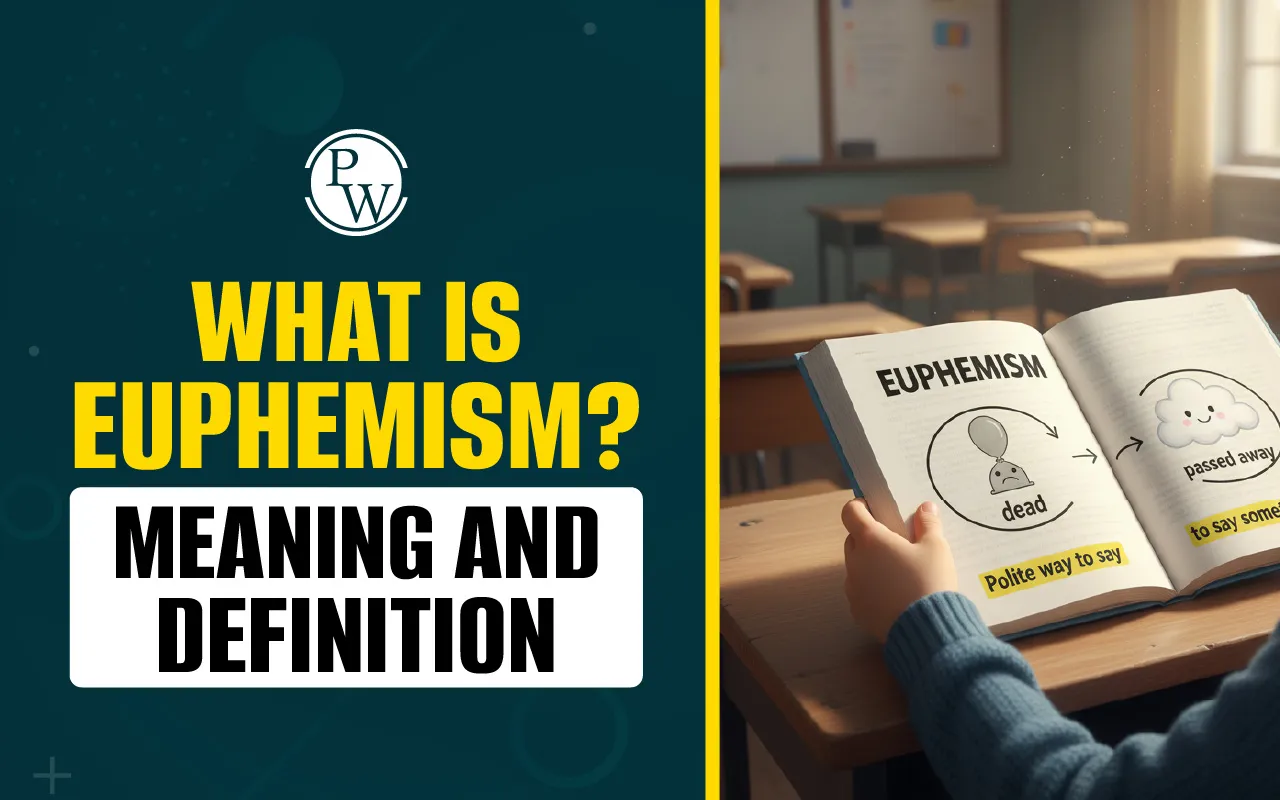
What is Euphemism?
It is easy to communicate messages to people today, but at times, the manner of speaking will bring about confusion or fights. The usage of words and the way something is worded have a great impact on the understanding of the message. Telling bad news or delivering negative comments is always difficult, but English offers the useful device of 'euphemism' to ease such situations.
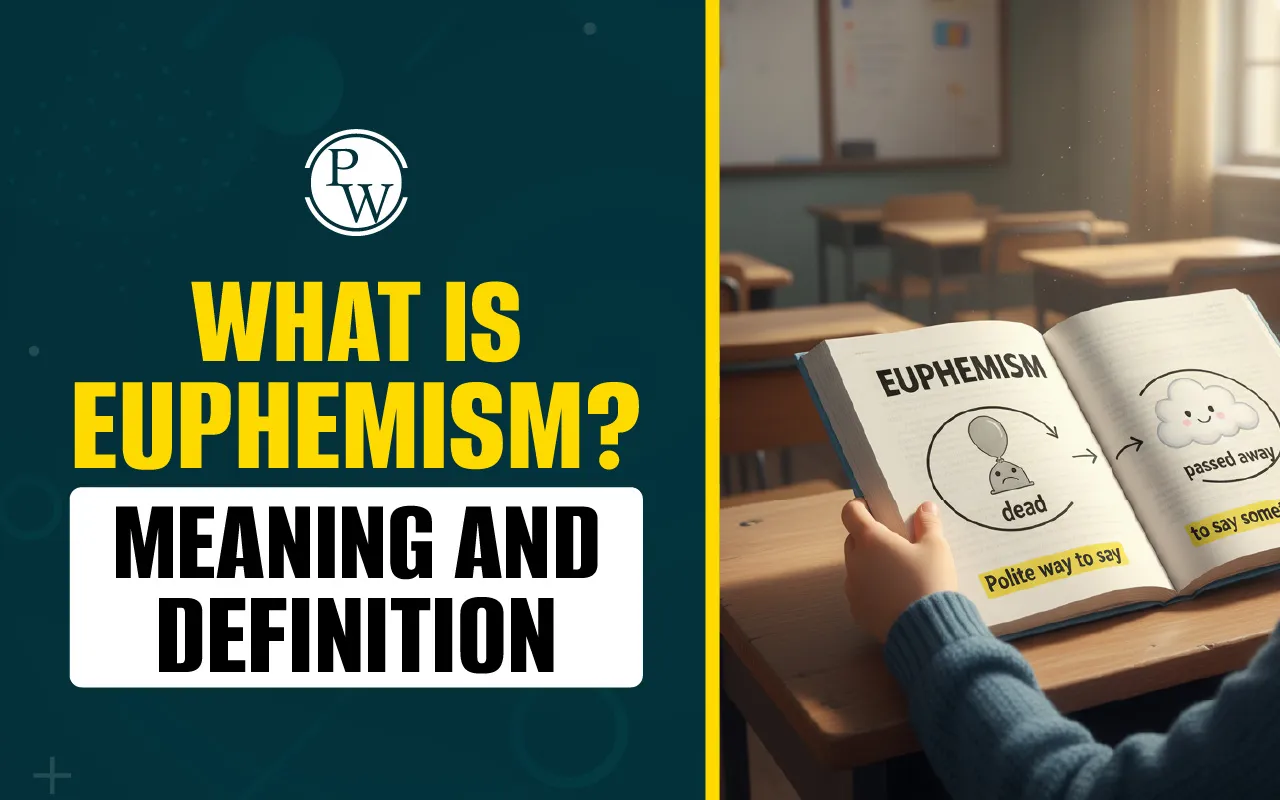
A euphemism is a type of figure of speech used in place of one that is deemed to be too harsh, blunt, or embarrassing when speaking of something unpleasant or sensitive. It can be likened to the polite or softer manner of expressing something that could be otherwise rude, frightening, or disturbing. For instance, rather than state that someone "died," you would use the euphemism "passed away." Individuals employ them daily in order to make conversations regarding things such as death, money, or unpleasant situations less offensive and more acceptable.
Read More: Phrases and Clauses
Euphemism Definition
A euphemism is an indirect, modest, or ambiguous word or phrase replacing one found to be too blunt, rough, or embarrassing. Basically, a euphemism is a civil manner of referring to something nasty or delicate. It's a tool that enables individuals to mitigate the effect of unpleasant topics such as death, sickness, or economic hardship, presenting the topic as more acceptable or pleasant for discussion. The term itself is derived from the Greek term euphemia, "to use words of good omen."
The term is described well in prominent linguistic sources. By the definition of the Merriam-Webster Dictionary, a euphemism is "the substitution of an agreeable or inoffensive expression for one that may offend or suggest something unpleasant." Likewise, the Oxford Learner's Dictionary defines it as "an indirect word or phrase that people often use instead of a word or phrase that is more direct and unpleasant."
Euphemism meaning emphasizes the very purpose of a euphemism: to replace a less pleasant or offensive word with a more tactful one. Typical ones are stating that someone "passed away" rather than "died," or was "let go" rather than "fired."
Individuals utilize euphemisms in occupational or interpersonal situations due to politeness or to prevent causing upset.
For example, a government may use "collateral damage" rather than "accidental civilian casualties" in a war, or a business may use "restructuring" rather than "mass firings." While euphemisms can be useful to preserve dignity and sensitivity, they can at times be employed to hide the facts or minimize the severity of a situation. The strength of a euphemism is its capacity to convey the overall sense without reducing the emotional or adverse force of the literal truth.
Read More: Gender in Grammar
Some Common Euphemism Examples
Euphemisms are courteous or gentle words employed to substitute words or phrases that could sound blunt, straight, or unpleasant. They render conversations on uncomfortable or sensitive matters simpler and more respectful.
With the use of euphemisms, individuals can convey messages with politeness and without offending others. A few popular examples of euphemisms, along with their interpretation, are presented below:
| Some Common Euphemism Examples | |
| Euphemism | Meaning |
| Passed away | Died |
| Letting you go | Fired from a job |
| Correctional facility | Prison |
| Pre-owned | Used or second-hand |
| Senior citizen | Elderly person |
| Restroom | Toilet or bathroom |
| Under the weather | Feeling unwell |
| Economically disadvantaged | Poor |
| Visually impaired | Blind |
| In a family way | Pregnant |
| Sleeping together | Having sexual relations |
| Collateral damage | Civilian casualties |
| Domestic engineer | Housewife or homemaker |
| Gone to a better place | Deceased |
| Vertically challenged | Short in height |
| Life partner | Spouse or significant other |
| On the streets | Homeless |
| Economical with the truth | Lying or being dishonest |
| Quality time | Spending time together |
| Revenue enhancement | Tax increase |
| Enhanced interrogation techniques | Torture |
| Freedom fighter | Insurgent or rebel |
| Differently abled | Disabled |
| Comfort woman | Woman forced into sex slavery |
| Youthful indiscretion | Youthful mistake |
| Strategic withdrawal | Military retreat |
| Conscious uncoupling | Divorce |
| Previously loved | Used/second-hand |
| Golden years | Old age/retirement |
| Breadwinner | Family income earner |
Examples Using Euphemism in Sentences
Euphemisms are also used in regular words to simplify communication and be polite. They mean replacing a soft expression with one that might be disturbing or stern. It assists us in making gentle conversation about delicate matters such as death, finance, or social status without offending or inconveniencing anyone. Examples of using euphemism in sentences are as follows.
- My grandfather passed away peacefully last night. (passed away = died)
- The corporation had to lay off some employees last month. (lay off = fired)
- She is not feeling well today, so she will not attend school. (not feeling well = under the weather)
- They were taken to a correctional facility upon their arrest. (correctional facility = prison)
- He is a senior citizen and receives travel discounts. (senior citizen = elderly person)
- Please go to the restroom before we depart. (restroom = toilet)
- She is blind and walks with a cane. (blind = visually impaired)
- They indicate she's pregnant and in a family way. (pregnant = in a family way)
- There was a great deal of collateral damage in the city after the war. (civilian casualties = collateral damage)
- He is a housewife who does the domestic chores. (housewife = domestic engineer)
- He eventually retired and is living his golden years. (retirement/old age = golden years)
- The politician was economical with the truth throughout the debate. (lying = economical with the truth)
- They had a strategic withdrawal from the field of battle. (retreat = strategic withdrawal)
- Their marriage came to an end through conscious uncoupling. (divorce = conscious uncoupling)
- She's not unemployed, she's in between jobs. (in between jobs = unemployed)
- This sofa is pre-owned but in good shape. (pre-owned = used)
- He's not short, he's vertically challenged. (vertically challenged = short)
- The council will raise money through revenue enhancement. (revenue enhancement = tax increase)
- The prisoners were taken to a correctional facility. (correctional facility = prison)
Also Read: Figures of Speech
Boost Your Child’s Confidence in English Communication with CuriousJr Online Classes
Many children understand English but still hesitate when speaking or struggle to express themselves in writing. Weak grammar, limited vocabulary, and low confidence can affect school performance and make communication challenging.
CuriousJr’s Online English Classes are designed to close that gap. With structured lessons, interactive tools, and Cambridge-aligned content, your child will build strong skills in grammar, speaking, writing, reading, and pronunciation step by step.