Conditional Sentences : Definition, Types & Examples (Zero to Third)
 Jiya Tyagi20 Jan, 2026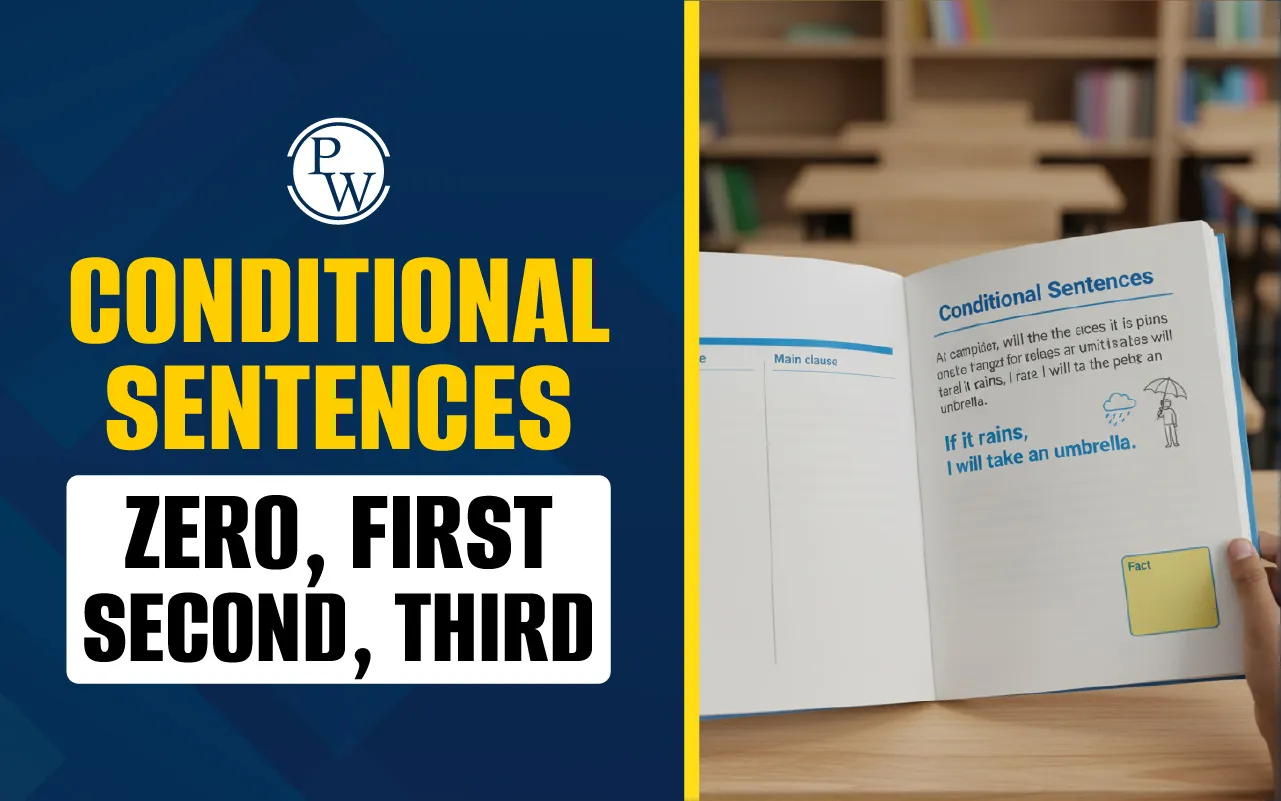
Conditional Sentences
A large part of English involves expressing real situations and imaginary situations. Conditional sentences or clauses describe what happens if a certain condition is true or not true. We will begin here with the idea of conditional sentences.
They are commonly used to recall likely outcomes, acknowledge general truths, or imagine or describe hypothetical or impossible situations. We have defined, discussed, and explained the zero conditional sentence, the first conditional sentence, the second conditional sentence, and the third conditional sentence within certain examples to provide students with a necessary grammar skill.
Conditional Sentences Definition
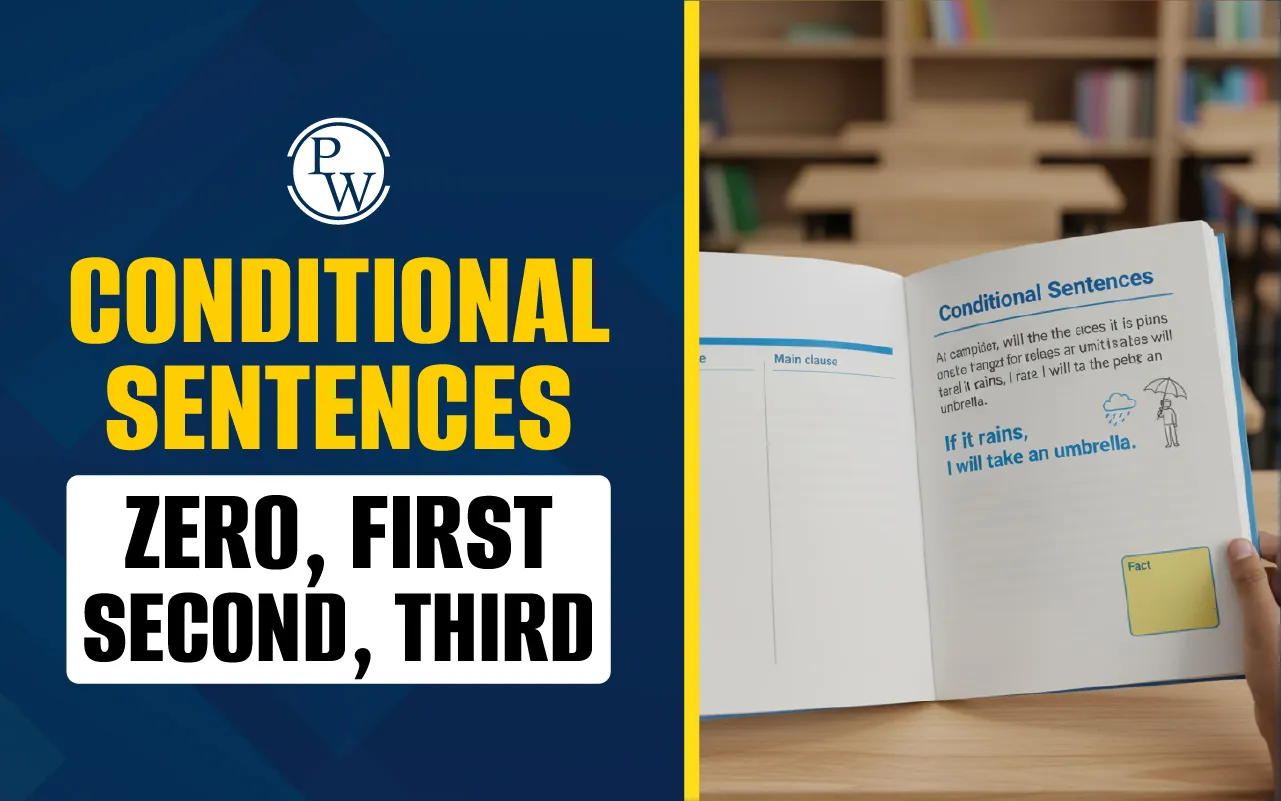
A conditional sentence connects a condition and its outcome. In a conditional sentence, one situation depends on another, usually describing possibilities, factual accounts, imaginary situations, or past regrets, in English communication. Conditional sentences contain two clauses:
-
The if-clause (condition), which tells us the requirement or situation.
-
The main clause (result), which explains what happens when the condition is fulfilled.
For example:
-
If it rains, we will stay indoors. Here, the if part (condition) tells what must happen, and the main clause (result) explains the outcome.
Read More - Figures of Speech
Conditional Sentences Meaning
Conditional sentences meaning is to connect a condition with its outcome. Conditional sentences (or clauses) assist in expressing cause-and-effect relationships in English. A conditional sentence can be used in real situations (something that is possible to happen) or unreal conditions (imaginary or impossible to happen). Conditional sentences are commonly used in:
-
Daily conversations: If you study hard, you will pass the exam.
-
Science facts: If you heat ice, it melts.
-
Imaginary talks: If I were rich, I would travel the world.
-
Regrets about the past: If she had called me, I would have helped her.
Types of Conditional Sentences
Conditional sentences are divided into four main categories based on time and reality. Each type has a specific structure and use, helping learners express real, possible, or imaginary situations clearly. Below are the types of conditional sentences:
-
Zero Conditional Sentences
-
First Conditional Sentences (Type 1)
-
Second Conditional Sentences (Type 2)
-
Third Conditional Sentences (Type 3)
Read More: List of Tricky Words in english
Zero Conditional Sentences
Zero conditional sentences are used to talk about general truths, facts, and things that are always true under certain conditions. Zero conditional sentences show scientific truths and daily routines.
Structure:
If + Present Simple, Present Simple
Example:
-
If you heat water to 100°C, it boils.
-
If it rains, the ground gets wet.
First Conditional Sentences (Type 1)
First conditional sentences express a real possibility in the present or future. They are used when the condition is possible and likely to happen. First conditional sentences show future predictions based on real conditions.
Structure:
If + Present Simple, will + Base Verb
Example:
-
If you study hard, you will pass the test.
-
If it rains tomorrow, we will cancel the trip.
Second Conditional Sentences (Type 2)
Second conditional sentences are used to talk about unreal, imaginary, or unlikely situations in the present or future. Second conditional sentences help to express wishes, dreams, or unlikely possibilities.
Structure:
If + Past Simple, would + Base Verb
Example:
-
If I were a bird, I would fly across the world.
-
If he studied more, he would get better grades.
Third Conditional Sentences (Type 3)
Third conditional sentences are used to express regrets or unreal situations in the past. They describe conditions that never happened and their possible results. Third conditional sentences show how things could have been different in the past.
Structure:
If + Past Perfect, would have + Past Participle
Example:
-
If she had called me, I would have helped her.
-
If we had left earlier, we would have caught the train.
Read More: 7 Daily Habits to Improve English Fluency
Why are Conditional Sentences Important for Students?
Conditional sentences exist for more than grammar rules. They serve a unique role in English for expressing logic, imagination, and reasoning. In communicating, conditional sentences help students express ideas of facts, possibilities, dreams, and regrets more clearly. Therefore, understanding English conditional sentences is important because they help with:
-
Expressing logical reasoning in writing and speech
-
Talking about possibilities, wishes, and regrets clearly
-
Writing essays, stories, and dialogues effectively
-
Improving accuracy in grammar and academic writing
Also read: How to Improve English Writing Skills
Conditional Sentences Examples
Understanding conditional sentences gets easier with examples. These examples demonstrate how each type exists in real life, and in turn allow students to see how to identify the structure and how to use them. Here are some conditional sentence examples for practice:
-
Zero Conditional: If you touch fire, it burns.
-
First Conditional: If you work hard, you will succeed.
-
Second Conditional: If I had a car, I would drive to school.
-
Third Conditional: If they had practiced more, they would have won the match.
Also Read: Direct and Indirect Speech
Improve Your Child’s English Grammar with CuriousJr
Strong grammar boosts confidence and helps children communicate clearly while excelling in school. At CuriousJr, we make grammar learning simple, interactive, and enjoyable. Through engaging lessons and practical examples, students go beyond memorizing rules, they learn to apply them naturally in speaking and writing.
With CuriousJr English Online Classes, your child will:
-
Gain confidence in everyday English conversations
-
Master grammar, vocabulary, and sentence construction step by step
-
Benefit from personalized guidance by expert mentors
-
Build fluency and a lasting interest in the language
Our unique teaching approach makes English fun and supports overall academic growth. Give your child the tools to communicate effectively and confidently. Book a free demo class today.