Metric System - Chart, Units, Conversion, Examples
 Study Abroad6 Feb, 2026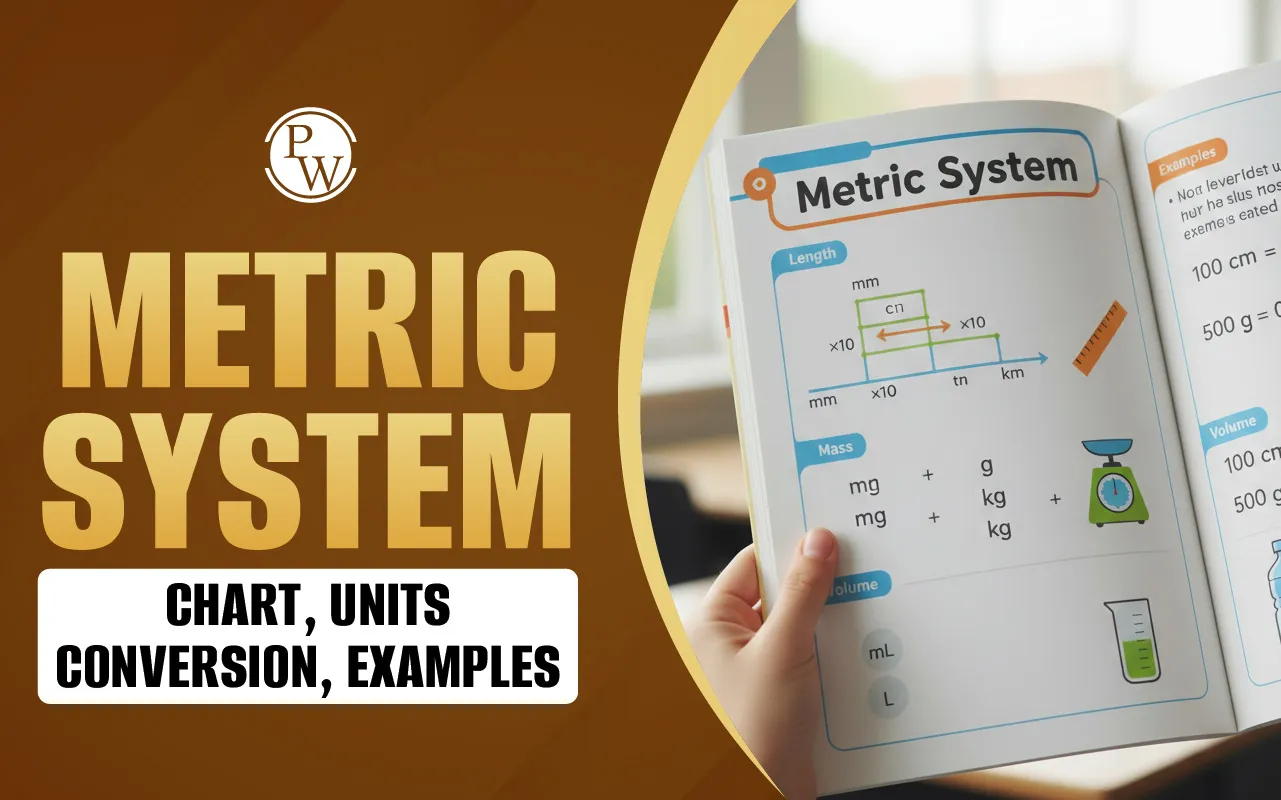
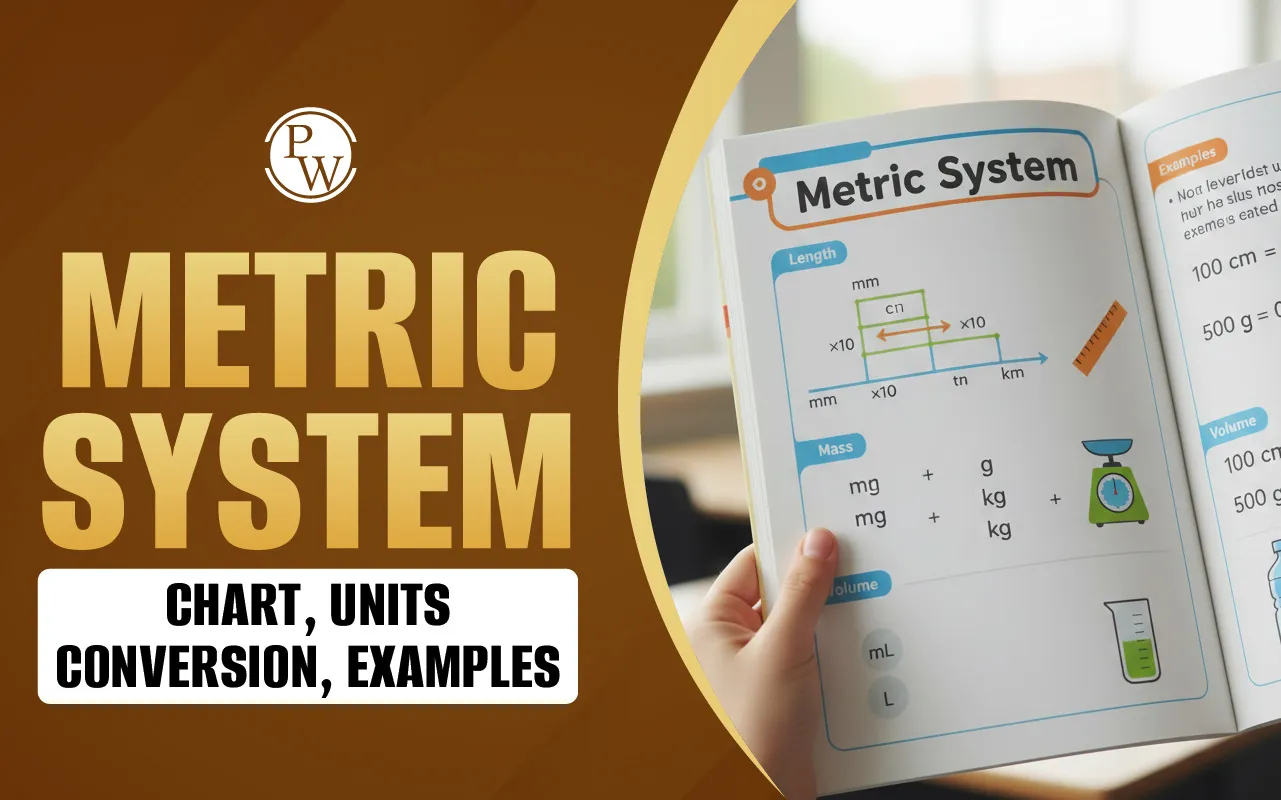
The metric system is an international decimal-based system of measurement used to calculate distance, mass, and volume. It relies on powers of ten, utilizing base units like meters, grams, and liters. By adding specific prefixes to these bases, the system allows for the easy scaling of measurements to accommodate very small or very large quantities.
Metric System vs Imperial and the Metric System Chart
When we look at global standards of measurement, the conversation usually centers on the metric system vs imperial. Most countries across the globe utilize the metric system because of its logical, decimal-based structure. In contrast, the imperial system, which is primarily used in the United States, relies on units like inches, feet, and pounds. The beauty of the metric system lies in its uniformity; because it is based on the number 10, every unit is exactly ten times larger than the one before it.
To visualize this structure, we use a metric system chart. This chart acts as a roadmap for understanding how different units relate to one another. Whether you are measuring the length of a tiny insect or the distance between two cities, the chart provides a consistent framework.
Read More - How Kids Build Mathematical Thinking in Young Kids
The Metric System Prefixes
The foundation of this system is its prefixes. By attaching a prefix to a base unit (meter, gram, or liter), you immediately know the scale of the measurement. Here are the standard metric system prefixes used to define these scales:
-
Kilo: 1,000 times the base unit
-
Hecto: 100 times the base unit
-
Deka: 10 times the base unit
-
Base Unit: (Meter, Gram, Liter)
-
Deci: 0.1 (1/10) of the base unit
-
Centi: 0.01 (1/100) of the base unit
-
Milli: 0.001 (1/1,000) of the base unit
By memorizing these prefixes, you can easily navigate any measurement. For example, a "kilometer" is simply 1,000 meters, while a "millimeter" is one-thousandth of a meter. This consistency is why the metric system is the preferred choice for scientific and international industrial work.
Metric System Conversion Chart and Calculation Rules
Understanding how to move between units is the most practical skill you can gain from this system. A metric system conversion chart typically shows units arranged from largest to smallest. The rule for conversion is incredibly simple: it is all about moving the decimal point.
The Standard Units of Measurement
The metric system categorizes its units based on what is being measured:
-
Length (Meter): Used to measure how long or far something is. Common units include millimeters (mm), centimeters (cm), meters (m), and kilometers (km).
-
Weight/Mass (Gram): Used to measure how heavy an object is. Common units include milligrams (mg), grams (g), and kilograms (kg).
-
Capacity/Volume (Liter): Used to measure the amount of liquid a container can hold. Common units include milliliters (ml), centiliters (cl), and liters (l).
How to Convert: The Multiplication and Division Rules
The most straightforward way to handle a metric system conversion is to remember two basic directions:
-
Moving from a larger unit to a smaller unit: Multiply by 10 for every step you take down the chart. For example, to change kilometers to meters, you multiply by 1,000.
-
Moving from a smaller unit to a larger unit: Divide by 10 for every step you take up the chart. For example, to change grams to kilograms, you divide by 1,000.
Practical Examples:
-
Example 1 (Length): Convert 5 kilometers to meters. Since 1 km = 1,000 meters, you calculate 5 x 1,000 = 5,000 meters.
-
Example 2 (Mass): Convert 2,500 grams to kilograms. Since 1,000 grams = 1 kg, you calculate 2,500 / 1,000 = 2.5 kg.
-
Example 3 (Volume): Convert 3 liters to milliliters. Since 1 liter = 1,000 ml, you calculate 3 x 1,000 = 3,000 ml.
Read More - Compound Interest Half Yearly Formula with Examples
Understanding the "Staircase" of Metric Units
If you are a student or a professional looking for a mental shortcut, think of the metric system as a staircase. Each step represents a change by a factor of ten.
-
Top Step: Kilo (k)
-
Step 2: Hecto (h)
-
Step 3: Deka (da)
-
Step 4 (Landing): Base Unit (m, g, l)
-
Step 5: Deci (d)
-
Step 6: Centi (c)
-
Step 7 (Bottom): Milli (m)
If you are "going down" the stairs from Kilo to Milli, your number gets larger (multiply). If you are "going up" the stairs from Milli to Kilo, your number gets smaller (divide). This logical flow makes the metric system much easier to master than the imperial system, where you have to remember that 12 inches make a foot and 3 feet make a yard. In the metric world, everything is always a 10.
Make Mental Maths Simple and Enjoyable with CuriousJr
Does your child feel confused or lose focus while doing maths? Many children find maths difficult and feel stressed. With the right guidance and encouragement, maths can become easy, fun, and confidence-building.
CuriousJr’s online mental maths classes are designed to make learning smooth and stress-free. The interactive sessions follow the school syllabus and explain concepts in a clear, practical way. This helps children improve speed, accuracy, and understanding while developing a positive interest in maths.