

Sequence of Tenses- Definition, Rules and Examples
 Nikita Aggarwal22 Oct, 2026
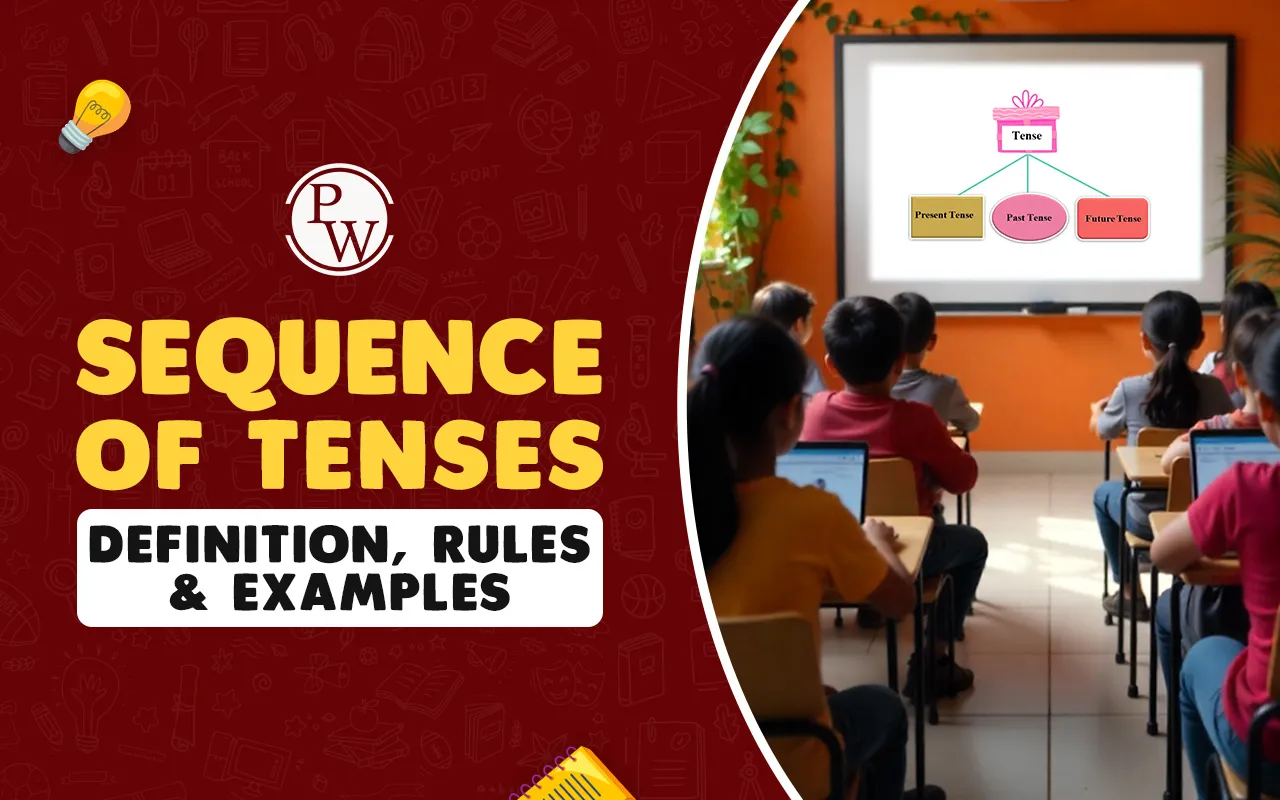
The sequence of tenses is an English grammar rule that explains how verb tenses work together in different clauses of a sentence. It helps readers understand when actions happen and how they relate to one another. For Class 9 students, learning the sequence of tenses is useful for grammar exercises, sentence formation, and reported speech. The rules depend on the tense of the main clause, the meaning of the subordinate clause, and the time being described.
What Is the Sequence of Tenses?
The sequence of tenses refers to the relationship between the tenses used in two or more clauses of a sentence. A clause contains a subject and a verb, and a sentence may have a main clause and a subordinate clause. The verbs must express a clear relationship between the actions, facts, or situations being discussed. However, the tense in the second clause does not always have to change when the main verb changes.
Examples:
-
I know that she is happy.
-
I knew that she was happy.
-
She says that she likes music.
-
She said that she liked music.
In these examples, the verb in the subordinate clause changes according to the main clause and the intended meaning. The sequence of tenses helps make the time relationship clear, especially when reporting what someone said or describing actions that happened at different times.
At CuriousJr, students can learn the sequence of tenses through simple grammar rules and examples to understand how verb tenses work together in sentences.
Sequence of Tenses Rules With Examples
The rules of sequence of tenses help you choose the correct verb form when a sentence contains more than one clause. The tense depends on whether the sentence describes a past event, a present fact, a future action, a condition, or an unreal situation. Use the following rules to understand common tense combinations in English grammar and apply them while solving Class 9 grammar questions.
Rule 1: Past Tense in the Main Clause
When the main verb is in the past tense, the verb in the subordinate clause often shifts to a corresponding past form in reported speech or when describing a past viewpoint. The exact tense depends on the meaning and timing of the action. A simple past verb may become past perfect when the action happened earlier than another past event, while a future action viewed from the past may use would.
Examples:
-
I thought you were at home.
-
They told us that they liked the show.
-
The teacher wanted to know if the students had completed the work.
-
He said that he would visit us the following day.
-
He was angry because he had been waiting for an hour.
Exception: Universal Truths and Facts That Remain True
A subordinate clause can remain in the present tense when it expresses a universal truth, a scientific fact, or information that is still true. The tense does not have to change mechanically just because the main verb is in the past. The writer should consider the meaning of the statement and whether it continues to be valid at the time of reporting.
Examples:
-
The teacher said that the Earth revolves around the Sun.
-
She explained that water boils at 100°C under standard atmospheric pressure.
-
My father said that honesty is important.
Rule 2: Present and Future Main Clauses
When the main clause uses the present or future tense, the subordinate clause can use different tenses according to the time and meaning of the action. Use the present tense for current facts, the past tense for completed events, and future forms when referring to later actions where appropriate. These combinations show why sequence of tenses rules depend on context rather than requiring every verb to follow one fixed pattern.
Examples:
-
He says that he was late to school yesterday.
-
She thinks that the results will improve next time.
-
My father believes that honesty is important.
-
They hope that we have completed the task.
-
We will discuss your plan if it sounds reasonable.
Rule 3: Tense in Future Time and Conditional Clauses
When a clause begins with words such as when, before, after, as soon as, once, until, if, or unless and refers to a future event, the present tense is generally used in that clause. The main clause can use will to express the future. This rule is important in English grammar because using will in both clauses is usually incorrect when the conjunction introduces a future time or condition.
Examples:
-
I will call you when the movie ends.
-
She will come home after she finishes her project.
-
They will leave as soon as the bell rings.
-
If you study hard, you will succeed.
-
He will not stop until he wins the competition.
Incorrect: I will call you when the movie will end.
Correct: I will call you when the movie ends.
Rule 4: Past Tense in Wishes and Unreal Situations
A past-tense form can describe an unreal, hypothetical, or desired situation rather than an event that actually happened in the past. These constructions commonly appear with expressions such as I wish, as if, it is time, and it is high time. Recognising this use helps students understand why the past form sometimes expresses a present wish or an imagined situation instead of past time.
Examples:
-
I wish I had more time to prepare.
-
She talks as if she owned the company.
-
It is time you started thinking about your future.
-
It is high time they took the matter seriously.
-
What if he missed the bus?
Rule 5: Modal Verbs in Purpose Clauses
Purpose clauses explain why someone performs an action and may begin with so that. The modal verb depends on the time, meaning, and degree of possibility being expressed. Can and may commonly express ability or possibility in a present context, while could and might can express these meanings from a past viewpoint. The modal choice should communicate the intended meaning rather than follow a rigid tense-matching rule.
Examples:
-
She studies so that she can pass.
-
We work hard so that we may succeed.
-
He practised daily so that he could improve.
-
They saved money so that they might travel.
CuriousJr English learning classes help students understand the sequence of tenses, apply grammar rules correctly, and improve their English sentence formation, speaking, and writing skills.
Sequence of Tenses in Different Contexts of Communication
The sequence of tenses in different contexts of communication helps make statements, descriptions, and conditions clear. In Class 9 English grammar, this topic is especially useful when changing direct speech into reported speech, describing events in chronological order, and writing sentences about future actions or possible conditions. The correct tense depends on what happened, when it happened, and how the speaker wants to communicate the relationship between the events.
1. In Reported Statements
When reporting what someone said, the tense may shift if the reporting verb is in the past. For example, am may change to was, and will may change to would. However, a tense change is not automatic in every sentence. The original statement's meaning, the reporting context, and whether the information remains true determine which tense is most appropriate.
Examples:
-
Direct: She says, “I am tired.”
-
Reported: She says that she is tired.
-
Direct: She said, “I am tired.”
-
Reported: She said that she was tired.
2. In Connected Events
When two or more events are described in the same sentence, the tense should show their order and timing. The past perfect often identifies an action that happened before another past action, while the simple past describes a completed event. The past continuous can describe an action that was in progress when another event occurred. Choosing the right combination helps readers follow the sequence without confusion.
Examples:
-
He had finished his homework before he went outside.
-
They were waiting when the bus arrived.
-
The match had started before we reached the stadium.
3. In Conditional and Time Clauses
Conditional and time clauses explain what may happen when a particular condition is met or when an event takes place. When referring to the future, these clauses generally use the present tense after conjunctions such as if, when, and until, while the main clause may use will. This construction helps express future meaning correctly without repeating the future form in both parts of the sentence.
Examples:
-
I will call you when I reach home.
-
If she studies regularly, she will improve.
-
We will wait until the teacher arrives.
Also Read, Present indefinite tense with its definition, rules, and examples. Learn how to describe daily routines, habits, and general truths while improving English grammar and sentence formation.
Sequence of Tenses Examples
The following sequence of tenses examples show how the tense in one clause relates to the tense or meaning in another. Use the combinations as a revision guide, but remember that context determines the correct form. A sentence may contain a past-tense reporting verb with a present-tense fact, or a future main clause with a present-tense time clause, without breaking the rules of English grammar.
|
Context |
Example |
|
Past + past |
She said that she was tired. |
|
Past + past perfect |
He said that he had finished the work. |
|
Past + present fact |
The teacher said that the Earth revolves around the Sun. |
|
Present + past |
She says that she visited Delhi last year. |
|
Future + present time clause |
I will call you when I reach home. |
|
Wish |
I wish I had more time. |
|
Unreal comparison |
He behaves as if he owned the place. |
|
Past + would |
They hoped that she would pass. |
Also Read, Tenses for Class 6 with simple definitions, rules, and examples. Learn present, past, and future tenses, understand their types, and practise sentence formation to improve English grammar skills.
Sequence of Tenses Exercises for Class 9
Practise the following sequence of tenses exercises by filling in each blank with the correct form of the verb in brackets. Read the complete sentence before choosing your answer. Pay attention to the main verb, the time of the action, and whether the sentence expresses a fact, a completed event, a future condition, a wish, or a purpose. Check your answers after attempting all the questions.
-
I knew that she ______ (be) honest.
-
He said he ______ (see) the film before.
-
She says that she ______ (like) the new teacher.
-
The teacher taught us that the Moon ______ (revolve) around the Earth.
-
They were sure that he ______ (win) the match.
-
She will talk to you after she ______ (finish) her work.
-
I wish I ______ (have) more time.
-
What if they ______ (miss) the last bus?
-
We saved money so that we ______ (can) travel abroad.
-
He told me that he ______ (visit) us soon.
-
It is high time you ______ (start) preparing for your exams.
-
He will wait here until the train ______ (arrive).
-
They hoped that she ______ (pass) the exam.
-
My brother said he ______ (go) to the library every day.
-
I would rather play outside than ______ (watch) TV all day.
Answers
-
was
-
had seen
-
likes
-
revolves
-
would win
-
finishes
-
had
-
missed
-
could
-
would visit
-
started
-
arrives
-
would pass
-
went
-
watch
Also Read, Simple present tense with its definition, rules, formula, and examples. Understand how to describe daily routines, habits, and general facts while improving English grammar and sentence formation.
How to Identify the Correct Sequence of Tenses
To identify the correct sequence of tenses, first locate the main clause and its verb. Then identify the subordinate clause and determine whether it refers to a past action, a present fact, a future event, a condition, or an unreal situation. Check whether the sentence reports someone's words or describes events in a particular order. Finally, select the verb form that conveys the intended meaning clearly instead of changing every verb automatically.




Sequence of Tenses FAQs
What is the sequence of tenses?
What are the main rules of the sequence of tenses?
Does the tense always change in the sequence of tenses?
What is the sequence of tenses in different contexts of communication?






Get Free Counselling Today
and Clear up all your Doubts
 Live & recorded classes available at easeDashboard for progress trackingLakhs of practice questions

