
Informal Letter Format in English With Examples, and Tips
 Jasdeep Singh29 May, 2026
Informal Letter Format
With digital communication becoming the norm, letter writing remains a cherished tradition.
Informal letter writing provide a personal way to share thoughts, and experiences and maintain strong connections with family and friends.
Unlike formal letters, which follow a structured and professional tone, informal letters allow for creativity and a relaxed, conversational style. They offer the freedom to express emotions and communicate naturally.
This blog discusses the format of informal letter with Examples of informal letters to help you craft engaging and heartfelt letters with ease.
What is Informal Letter?
Informal Letter Definition - An informal letter is a casual, personal message written to friends, family, or acquaintances. It has no strict format and allows for a natural, conversational tone.
Writing an informal letter is a timeless way to connect with family and friends. In a world dominated by instant messages and emails, informal letters still hold emotional value. Whether you're sharing news, expressing your feelings, or simply catching up, learning how to write informal letter using the correct structure helps you communicate clearly and warmly.
These letters often share updates, express emotions, or convey well wishes. Unlike formal letters, they don’t require specific structures or professional language.
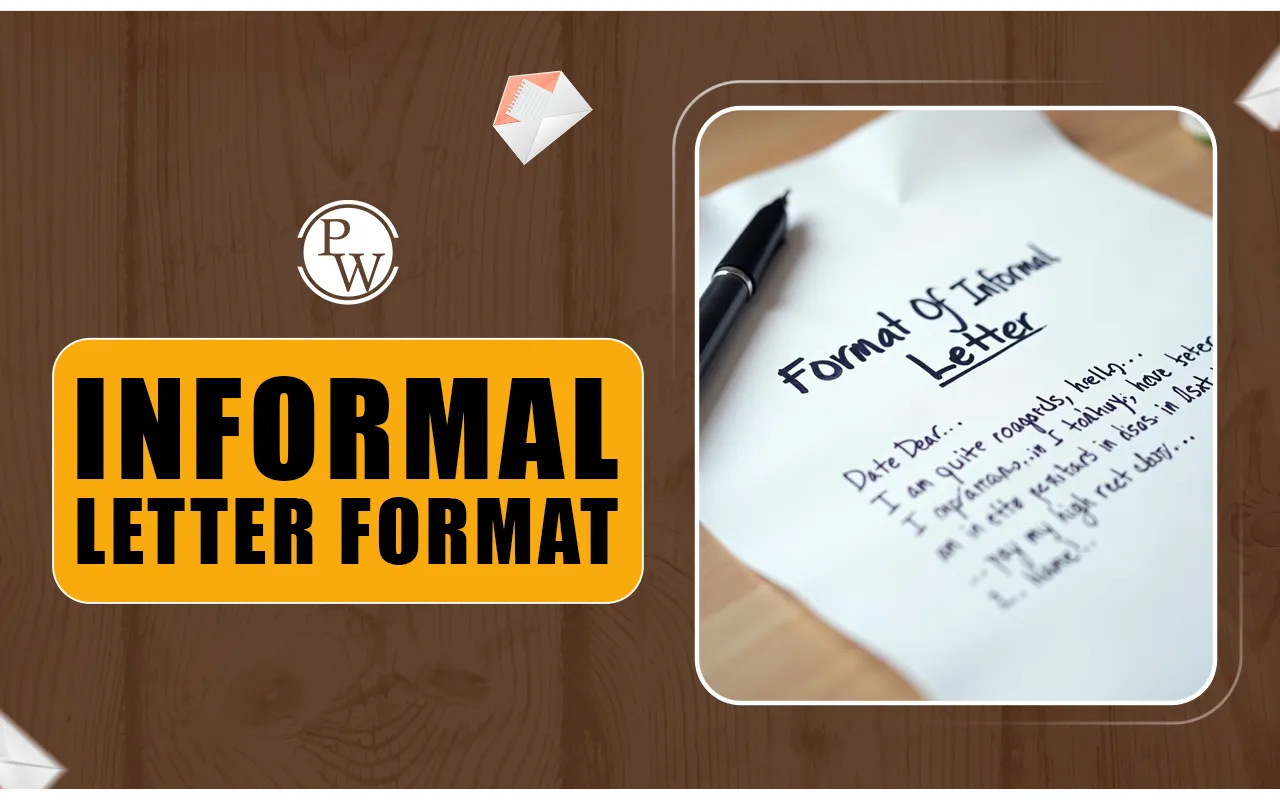
A typical informal letter writing format starts with a friendly greeting, followed by the main message, and ends with a warm closing. Whether handwritten or digital, it makes communication more personal and meaningful.
Key Features of Informal Letters:
-
Friendly tone
-
Personal topics
-
Flexible structure
-
Used for catching up, inviting, apologizing, thanking, or sharing updates
Informal Letter Writing Format
The content of an informal letter varies widely based on the context and purpose. Some common topics include:
-
Sharing personal updates about life, career, or travel experiences.
-
Expressing emotions such as joy, sadness, gratitude, or excitement.
-
Congratulating the recipient on achievements like a new job, wedding, or graduation.
-
Sending invitations for a casual get-together, wedding, or birthday celebration.
-
Offering condolences or words of encouragement during difficult times.
-
Discussing mutual interests, hobbies, or current events.
-
Asking for advice or guidance on a personal matter.
-
Recounting nostalgic memories and shared experiences.
Read More: Why Learning English is Important for a Global Career
How to Write an Informal Letter?
Though informal letter format does not adhere to a strict format, following a structured approach can make them more coherent and enjoyable to read. The standard format of an informal letter in English includes the following components:
1. Sender’s Address
The letter should begin with the sender’s address, positioned at the top-left corner of the page. Including the address ensures that the recipient knows where to send a reply. If writing to someone in a different country, it is advisable to include the country name for clarity.
Example:
45, Rosewood Apartments
Mumbai - 400001
India
2. Date
The date should be mentioned directly below the sender’s address. This allows the recipient to understand when the letter was written.
Common date formats include:
-
February 5, 2025
-
5th February 2025
-
05/02/2025
3. Salutation (Greeting)
Since informal letters are personal, the greeting should reflect the relationship between the sender and the recipient.
Common greetings include:
-
Dear Alex,
-
My Dearest Aunt Mary,
-
Hello Mike,
Using affectionate or friendly terms such as ‘Dearest,’ ‘My Dear,’ or even a nickname adds a personal touch.
Read More: How to Improve English Speaking Skills at Home
4. Introduction
The opening lines of an informal letter should set the tone. A friendly start makes the recipient feel valued and engaged. The introduction often includes a warm greeting, inquiries about the recipient’s well-being, or an introduction to the topic of the letter.
Example:
I hope this letter finds you in the best of health and spirits. It has been a while since we last caught up, and I have been eager to hear about your latest adventures.
5. Body of the Letter
This section contains the main content of the letter. It can be structured into paragraphs based on different ideas or updates. The tone remains conversational, resembling a face-to-face discussion.
-
Sharing personal experiences: If writing to a friend, one might describe recent travels, new hobbies, or interesting events.
-
Expressing emotions: Whether it’s excitement, gratitude, or sadness, informal letters allow free expression of feelings.
-
Asking questions: To keep the conversation going, the writer may pose questions about the recipient’s life, plans, or opinions.
-
Extending invitations: If the letter includes an invitation, details about the event should be clearly outlined.
Example:
Last weekend, I went on a hiking trip to the Grand Canyon. It was one of the most breathtaking experiences of my life. The scenery was surreal, and the sunsets were absolutely mesmerizing.
Have you ever visited the Grand Canyon? If not, we should plan a trip together sometime!
6. Conclusion
The closing paragraph should provide a friendly wrap-up to the letter. It can include expressions of affection, well-wishes, and a prompt for the recipient to reply.
Example:
I miss our long chats and can’t wait to see you soon. Please write back and let me know how things have been with you. Take care and give my regards to your family.
Also Read: 7 Daily Habits to Improve English Fluency
7. Closing (Subscription)
The letter should end with a warm and personal closing phrase, followed by the sender’s name.
Common closing phrases include:
-
Yours affectionately,
-
With love,
-
Best wishes,
-
Warm regards,
Types of Informal letters
Types of informal letters include ask letters, which are used to ask friends or family for help or guidance, thank-you notes, which are used to express gratitude, apology letters, which are used to make amends, and personal letters, which can be used for a number of purposes, such as sharing news or updates or inviting people to events like parties or get-togethers. Written to those you know well, such friends and family, these letters have an informal, friendly, and warm tone.
Invitation Letters: Use these to invite friends and family to gatherings such as parties, dinners, and celebrations.
Thank You Letters: Express gratitude to the sender for gifts, favors, or any other kind of support.
Apology Letters: Convey your regrets to the person you have harmed by a mistake or by skipping an occasion.
Request Letters: Write to a close friend or relative to ask for guidance, support, or information.
Letters of congratulations: Congratulate loved ones on their accomplishments, like as winning a competition or landing a new job.
Letters of Suggestion: Give someone you care about your thoughts or suggestions for strategies or solutions.
Informal Letter in Hindi
अनौपचारिक पत्र वह पत्र होता है जो हम अपने मित्रों, परिवारजनों या करीबी लोगों को व्यक्तिगत भावनाएँ, शुभकामनाएँ, समाचार या हालचाल बताने के लिए लिखते हैं। ऐसे पत्रों में भाषा सरल, सहज और भावनात्मक होती है। इसमें औपचारिक नियमों का पालन आवश्यक नहीं होता। अपने मित्र या रिश्तेदार को लिखा गया व्यक्तिगत पत्र, जिसमें अपनापन और आत्मीयता झलकती है।
Informal Letter Example 1: Letter to a Friend About a Recent Vacation
45, Rosewood Apartments
Mumbai - 400001
India
January 22, 2025
Dear Aditya,
I hope you're doing well! I’ve been planning to write to you for some time, but things have been quite busy. I just returned from a week-long vacation in Goa, and it was amazing!
The beaches were beautiful, and the sunsets were breathtaking. I even tried parasailing for the first time! It felt a bit scary at first, but by the end, I was enjoying the experience.
Have you ever been to Goa? If not, we should plan a trip together someday.
Looking forward to catching up soon. Let me know how things have been with you.
Best wishes,
Manoj
Also Read: The Power of Storytelling in Learning English
Informal Letter Example 2: Letter to a Cousin Inviting Them for a Family Gathering
12, Lakeview Residency
Bangalore - 560001
India
March 15, 2025
Dear Parul,
I hope you’re doing well. It’s been such a long time since we last met, and I really miss our conversations! We are planning a small family gathering next month, and it wouldn’t be the same without you.
Mom is already preparing a menu with all your favorite dishes, and we have planned some fun activities for everyone. It would be wonderful if you could join us. Let me know your schedule so we can finalize the plans.
Looking forward to seeing you soon!
Yours lovingly,
Adriti
Writing an informal letter adds a personal touch that digital messages often miss. A simple informal letter format discussed in the blog makes it easy to structure your message with an address, date, greeting, engaging content, and a warm closing.
Whether writing to a friend, cousin, or mentor, putting thoughts on paper strengthens connections. So, grab a pen and start writing!
Join CuriousJr Online English Learning Classes Now!!




Informal Letter Format FAQs
Do I need to mention the subject in an informal letter Writing?
What kind of greetings can be used in informal letters format?
Can I use contractions and slang in an informal letter in English?
What are the topics for informal letter?
How to write a letter class 10?







Get Free Counselling Today
and Clear up all your Doubts
 Live & recorded classes available at easeDashboard for progress trackingLakhs of practice questions

