How to Start a Debate with Tips and Samples
 Nikita Aggarwal30 May, 2026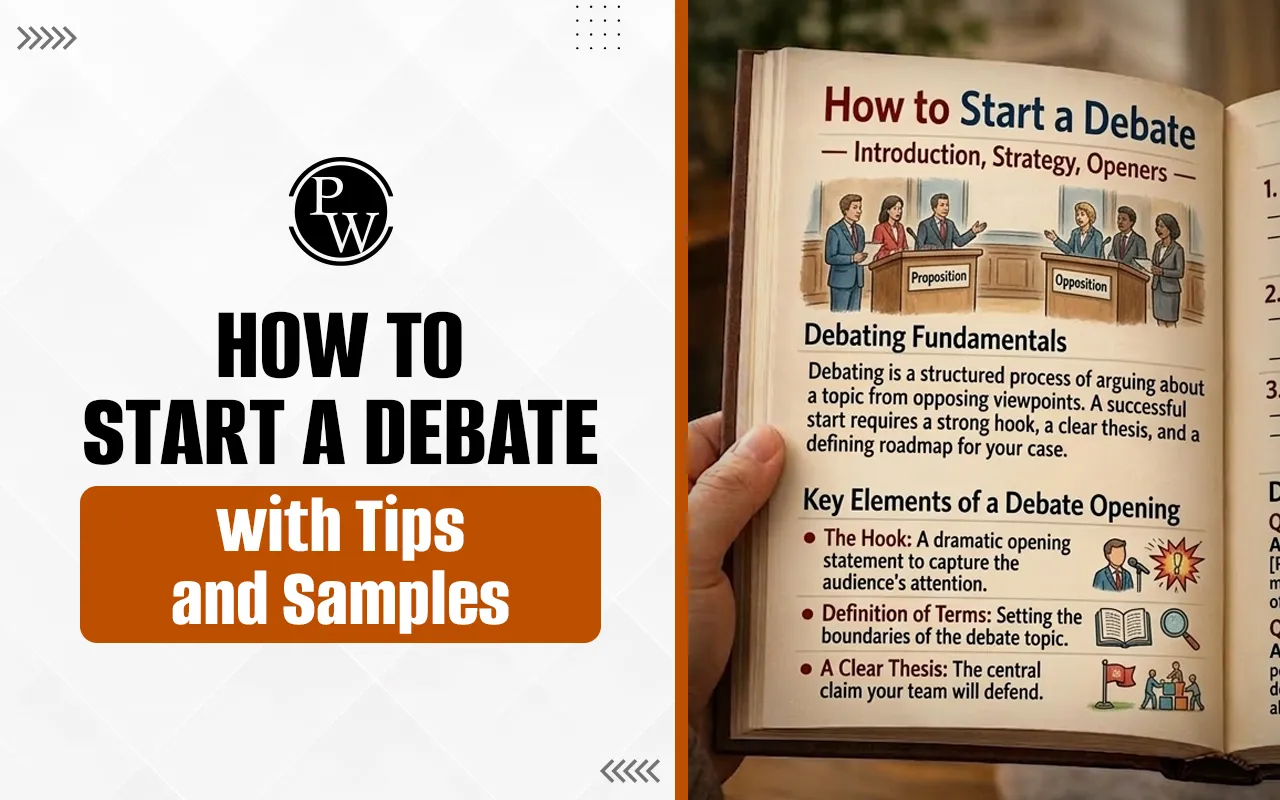
What is a Debate?
A debate is a formal discussion where two sides present opposing views on a topic and support their opinions with arguments. It helps students build confidence, improve public speaking, and learn how to think critically and express ideas clearly.
What is The Structure of a Debate?
Before learning how to start a debate in English, students should understand its basic structure. A debate follows a clear format that helps speakers present ideas logically and confidently.
1. Introduction or Opening Statement
The speaker greets the audience, introduces the topic, and clearly states their position.
2. Main Arguments
The speaker presents the main points supporting their side with reasons, facts, or examples.
3. Rebuttal or Counterargument
The speaker responds to the opposing side’s points with clear and logical arguments.
4. Conclusion
The speaker sums up the key points and reinforces their position strongly.
Read More - Debate - Definition, Types, Importance, Examples
Steps For A Perfect Debate Introduction
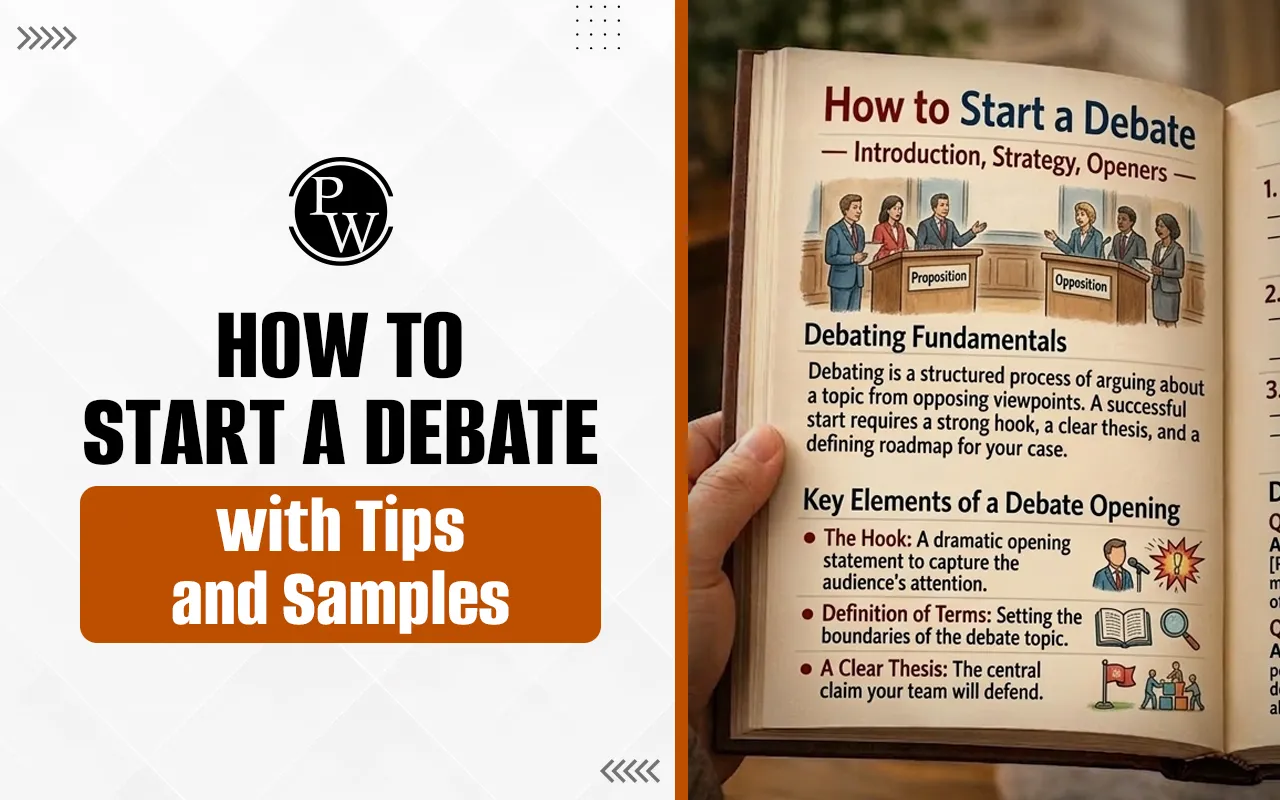
A great debate introduction needs to do three things: grab attention, introduce the speaker, and state the topic. You only have a few seconds to make a good first impression, so every word must count.
Follow these simple steps to build your opening:
1. The Hook: Start with a shocking statistic, a famous quote, or a strong question.
2. The Greeting: Formally address the judges, the chairperson, and the audience.
3. The Stance: Clearly state if you are "for" (Pro) or "against" (Con) the topic.
4. The Roadmap: Briefly mention the three main points you will talk about.
How to Introduce Yourself in a Debate?
Knowing how to introduce yourself in debate is about being polite and professional. It sets the stage for your authority on the subject. You should always speak clearly and stand tall while you say your name and your team's position.
The table below shows the difference between a weak and a strong introduction:
|
Feature |
Weak Introduction |
Strong Introduction |
|
Greeting |
"Hi everyone." |
"Honourable judges, teachers, and worthy opponents." |
|
Position |
"I think the topic is good." |
"I firmly stand in favour of the motion that..." |
|
Clarity |
Mumbling your name. |
Stating your name and role clearly (e.g., First Speaker). |
How to Create A Powerful Opening Statement For Debate?
An opening statement for debate is more than just a hello; it is the foundation of your case. You must define the "motion" (the topic) so that everyone agrees on what is being discussed. This prevents confusion later on and shows the judges that you have done your research.
If you are the first speaker, your how to start a debate speech strategy should include defining key words in the topic. For example, if the topic is "Should homework be banned?", you should explain what "banned" means in this context, is it for all grades or just primary school?
5 Sample Debate Starters by Topic
Sometimes, the easiest way to understand how to start a debate speech is by looking at examples. These sample openings show how students can begin confidently, clearly state their position, and set the tone for the rest of the debate.
-
Topic: Should homework be banned in schools?
“Good morning, respected judges, teachers, and my fellow students. I stand in favour of the motion that homework should be banned in schools. Homework often adds unnecessary stress, reduces free time, and affects the overall well-being of students.” -
Topic: Should mobile phones be allowed in schools?
“Honourable judges and everyone present here, I stand against the motion that mobile phones should be allowed in schools. While phones may seem useful, they often distract students, reduce concentration, and interfere with classroom learning.” -
Topic: Is online learning better than classroom learning?
“Good morning, everyone. Today, I speak in favour of the motion that online learning can be better than classroom learning in many situations. It offers flexibility, wider access to resources, and allows students to learn at their own pace.” -
Topic: Should school uniforms be compulsory?
“Respected judges, teachers, and dear friends, I strongly support the motion that school uniforms should be compulsory. Uniforms promote equality, reduce peer pressure, and help students focus more on studies than on appearance.” -
Topic: Should social media use be limited for teenagers?
“Good morning to all. I stand in favour of the motion that social media use should be limited for teenagers. Excessive use of social media can affect mental health, distract students from studies, and reduce meaningful real-life interaction.”
Read More - Debate Topics for Students in English
Useful Sentence Starters for Debate
Using the right phrases can make a debate introduction sound more organised and confident. These sentence starters help students move smoothly from one point to another and express their views more clearly.
For beginning the debate
- “Good morning, respected judges, teachers, and fellow students.”
- “Today, I stand in favour of the motion that…”
- “I rise to speak against the motion that…”
- “The topic for today’s debate is…”
- “I would like to begin by stating that…”
For introducing your first point
- “My first point is that…”
- “To begin with…”
- “Firstly, I would like to explain…”
- “One of the main reasons is…”
- “Let us first consider…”
For adding supporting arguments
- “Another important point is that…”
- “In addition to this…”
- “It is also important to note that…”
- “This clearly shows that…”
- “A strong example of this is…”
For giving examples or evidence
- “For example…”
- “A simple example of this can be seen in…”
- “According to research…”
- “Studies have shown that…”
- “This can be understood better through…”
For disagreeing with the other side
- “I respectfully disagree with the previous speaker because…”
- “However, the opposing argument overlooks the fact that…”
- “This point may sound convincing, but it fails to consider…”
- “On the contrary…”
- “That argument is incomplete because…”
For concluding your speech
- “In conclusion…”
- “To sum up…”
- “For these reasons, I strongly believe that…”
- “Therefore, I firmly support the motion…”
- “With this, I would like to conclude my speech.”
Comparison of Hook Types for Debates
To stay within the time limit and keep interest high, choose the hook that best matches your topic's "mood":
|
Hook Type |
Best Used For |
Effect |
|
Statistic |
Scientific or Economic topics |
Builds immediate trust |
|
Story |
Social or Emotional topics |
Makes the audience feel connected |
|
Quote |
Historical or Moral topics |
Gives your speech authority |
Remember that how to start a debate is not just about the words; it is about your voice. Speak slowly, breathe deeply, and look at the judges. If you start with energy, the audience will be excited to hear what you have to say next. Practise your opening statement for debate in front of a mirror to ensure your body language matches your strong words.




How to Start a Debate with Tips and Samples FAQs
How do I introduce my team members?
Should I thank the audience at the start or the end?
What is a "hook" in a debate?
How long should the introduction be?

Get Free Counselling Today
and Clear up all your Doubts
 Live & recorded classes available at easeDashboard for progress trackingLakhs of practice questions