Difference Between Lose and Loose with Examples
 Nikita Aggarwal6 May, 2026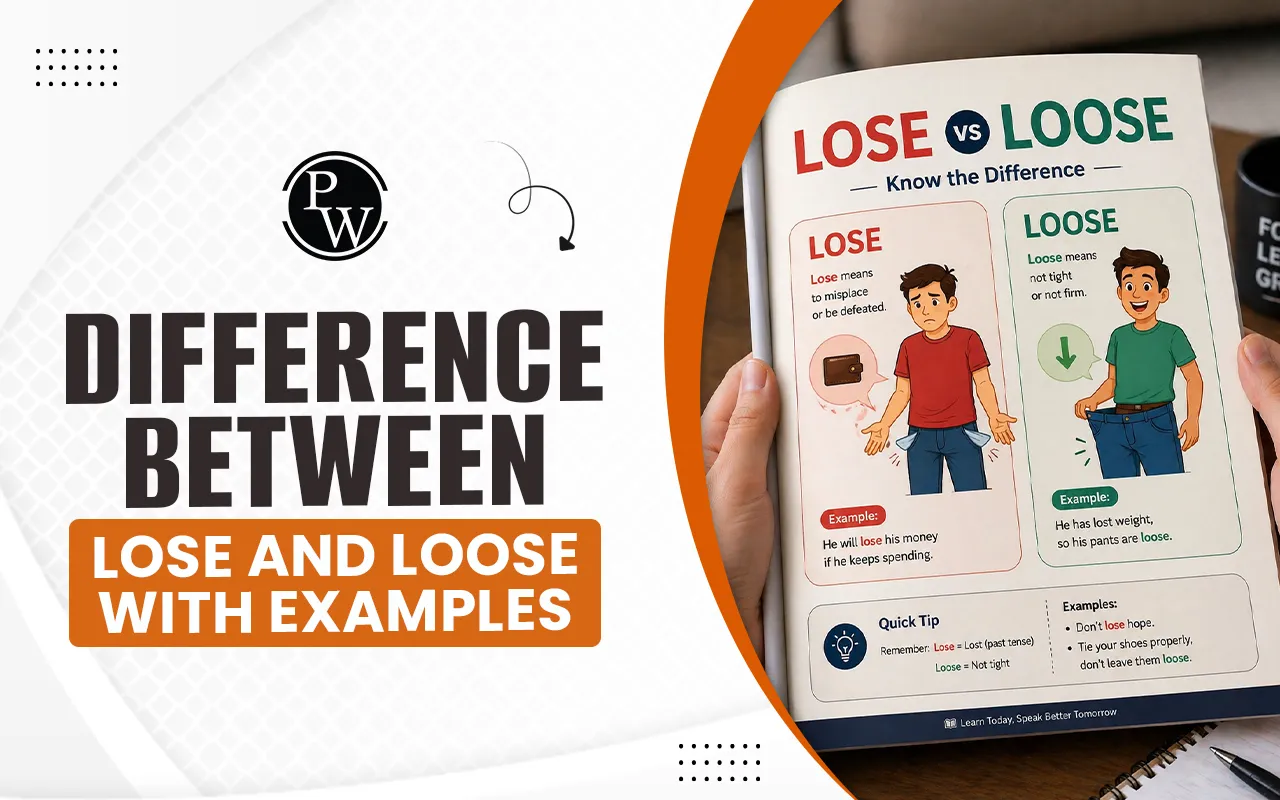
Lose and Loose Meaning
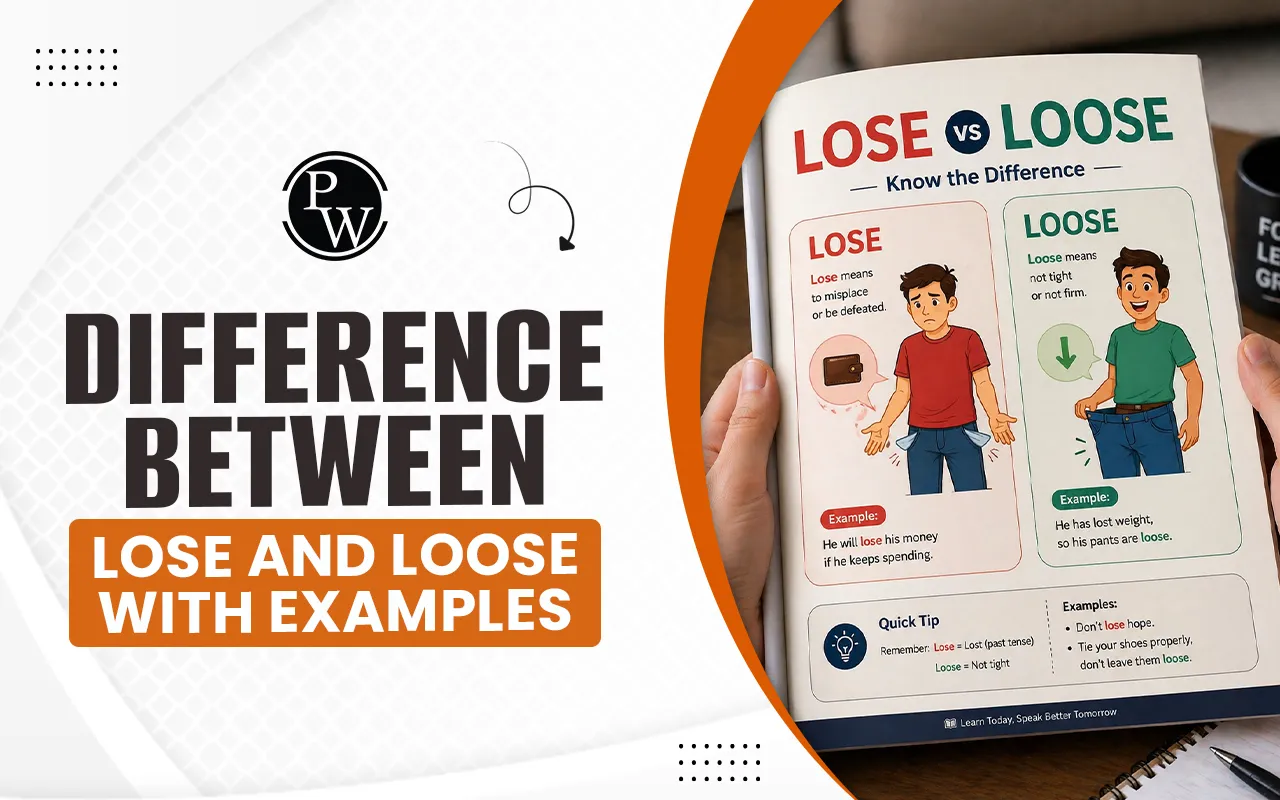
To master the loose and lose difference, we must first look at what each word actually means in a daily context.
What does Lose mean?
Lose is a verb. It is an action word used when you can no longer find something, or when you are deprived of a possession or a quality. It also refers to failing to win a game, a challenge, or a competition. Because it is a verb, it changes form based on the tense (lose, losing, lost).
What does Loose mean?
Loose is primarily used as an adjective. It describes the physical state of an object. If something is loose, it is not firmly held in place, not tight, or free from confinement. While it can occasionally be used as a verb (meaning to release something), its most frequent use in English is to describe the fit or security of an item.
Lose vs Loose Pronunciation
One of the easiest ways to remember the difference between lose and loose is to listen to how they sound when spoken aloud. Even though they only differ by one 'o' in spelling, their ending sounds are quite different.
-
Lose Pronunciation: This word ends with a soft ‘z’ sound. It rhymes with "choose," "snooze," or "shoes." When you say "lose," your vocal cords vibrate at the end of the word.
-
Loose Pronunciation: This word ends with a sharp ‘s’ sound. It rhymes with "goose," "moose," or "juice." The sound is breathier and does not involve the same vibration as the ‘z’ sound.
Paying attention to lose and loose pronunciation is a helpful trick for students. If you are writing and unsure which one to use, say the sentence out loud. If it sounds like "z," use lose. If it sounds like "s," use loose.
Difference Between Lose and Loose
When comparing lose vs loose, it helps to look at their grammatical functions side-by-side. This ensures you choose the right word based on whether you are describing an action or a physical trait.
|
Feature |
Lose |
Loose |
|
Part of Speech |
Verb (Action) |
Adjective (Description) |
|
Core Meaning |
To misplace; to fail to win; to be deprived of. |
Not tight; not fastened; free or detached. |
|
Rhymes With |
Choose, Shoes, News |
Goose, Moose, Noose |
|
Common Forms |
Loses, Losing, Lost |
Looser, Loosest, Loosely |
|
Example |
Did you lose your phone? |
My tooth is loose. |
Read More - Numerator and Denominator: Definition and Difference
How to Use Lose in a Sentence?
Since lose is a verb, it always describes an action or a state of being. You will use it whenever there is a process of "misplacing" or "dropping" something.
Contexts for using Lose:
-
Misplacing objects: When you cannot find your wallet, keys, or homework.
-
Defeat: When a sports team does not win a match.
-
Reduction: When someone is trying to lose weight or lose interest in a hobby.
-
Deprivation: To lose a job or lose a loved one.
Lose vs loose sentence examples for the word "lose":
-
I do not want to lose my seat in the front row of the class.
-
If the team does not practice harder, they might lose the championship.
-
It is easy to lose your way in a new city without a map.
-
Many people try to lose weight by exercising every morning.
-
Do not lose heart even if the exam seems difficult at first.
How to Use Loose in a Sentence?
Loose functions as a descriptor. It tells us about the physical nature of an object or the way something is attached.
Contexts for using Loose:
-
Clothing fit: When a shirt or pair of jeans is too big for you.
-
Physical attachment: A loose nail in the floorboard or a loose wire.
-
Freedom: When an animal breaks loose from its cage.
-
Lack of precision: A loose translation of a book or a loose association between two ideas.
Lose vs loose sentence examples for the word "loose":
-
The handle on the cupboard is loose and needs to be tightened with a screwdriver.
-
She prefers wearing loose clothing during the hot summer months.
-
The dog got loose and ran across the park.
-
A loose tooth can be quite uncomfortable when you try to eat.
-
He kept his change in a loose pile on top of the dresser.
Read More - Difference Between Adverb and Adjective
Key Difference Between Lose and Loose to Remember
To avoid confusion regarding the difference between lose and looses (where "looses" is a rare verb form and "loses" is the third-person version of lose), keep these simple rules in mind:
-
The "O" Rule: Lose has lost an 'o'. Since it only has one 'o', think of it as having "lost" its partner. Loose has two 'o's, which makes the word look "wider" or "roomier," just like loose clothing.
-
The Action vs. Description Rule: If you can replace the word with "misplace" or "fail," use lose. If you can replace the word with "unfastened" or "roomy," use loose.
-
Grammar Check: Use lose if you are talking about an action (I lose). Use loose if you are describing a noun (The loose dog).
Confusion Between Lose and Loose
The most frequent error is using "loose" when the writer actually means lose. This happens because people often associate the double 'o' with the "oo" sound found in "lose." However, as we noted in the lose and loose pronunciation section, the "oo" in lose sounds like a 'z', while the "oo" in loose sounds like an 's'.
Another point of confusion involves the word loss. While lose is the verb, loss is the noun form. For example, you lose a game (verb), but the result is a loss (noun). Loose remains separate from this pair as it describes the tightness of something.
Difference Between Lose and Loose in Everyday English
In everyday English, these words appear in various idioms. Recognizing these can help solidify your understanding of the difference between lose and loose.
Idioms with Lose:
-
Lose your cool: To become angry or lose control of your emotions.
-
Lose track of time: To forget what time it is because you are busy.
-
Lose your head: To panic in a difficult situation.
Idioms with Loose:
-
A loose cannon: Someone who is unpredictable and may cause damage.
-
Break loose: To escape from confinement or restraint.
-
Cut loose: To act in a free or unrestrained way.
-
Hang loose: To remain relaxed or calm.
Build Your Child’s Confidence in Spoken English with CuriousJr
Does your child feel hesitant while speaking English or find it hard to form sentences? This can impact their confidence, participation in class, and overall communication abilities. CuriousJr’s online English classs is designed to make learning simple, engaging, and results-driven.
The course focuses on key areas like grammar, pronunciation, vocabulary, and basic writing skills. Through interactive live classes, children get consistent speaking practice under the guidance of experienced mentors. Fun activities such as games, storytelling, and writing tasks make learning enjoyable and effective.
Parents receive regular progress updates, helping them track their child’s development. With well-structured levels that suit different learning speeds, CuriousJr supports children in building a strong foundation in English step by step.
Book a demo class today and help your child become a confident English speaker.