Why Mental Maths is Important for Students in the Digital Age
 Nikita Aggarwal6 May, 2026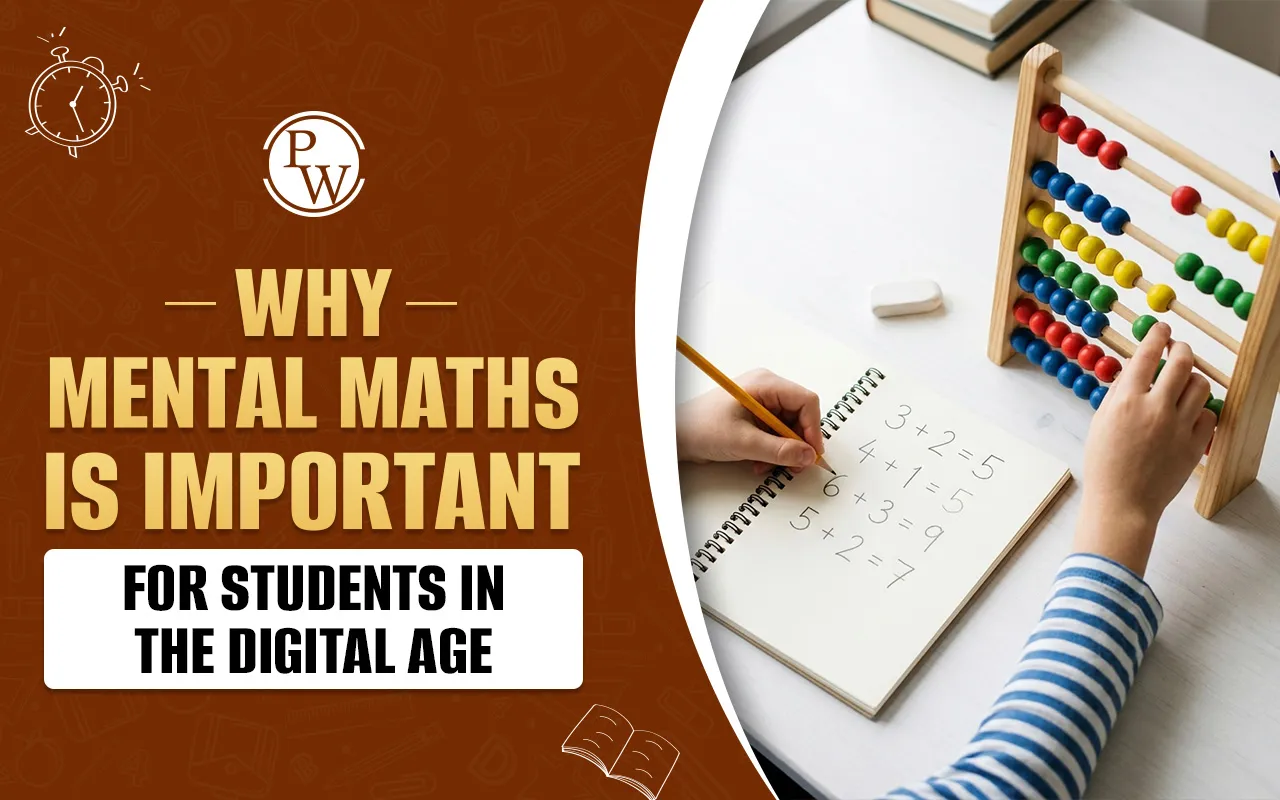
What is Mental Maths in Digital Age?
We need to explain what mental math is before discussing how important it is. In short, it means being able to do maths problems in your head without utilising a pen, paper, or any other electronic equipment. It uses different methods, like rounding, estimating, and reducing big numbers down into smaller, easier-to-handle components.
For many, it is synonymous with "quick maths." When a student learns mental maths, they aren't just memorising multiplication tables. They are learning to visualise numbers and manipulate them. This internal visualisation is a complex mental process that uses several parts of the brain to improve memory and focus.
Importance of Mental Maths in Digital World
Automation rules our planet. Machines handle numbers, from self-checkout counters to accounting software. But the necessity for mental maths in digital age settings has actually grown.
Avoiding Blind Reliance on Calculators
When a learner relies on a calculator too much, they often believe what it says without question. If they touch the wrong button by accident, they might not realise that the answer is logically impossible. A student trained in mental arithmetic has an internal "alarm" that goes off when a result doesn't look right. This critical thinking is the first line of defence against digital errors.
How Mental Maths Improves Brain Power
The human brain is like a muscle. If you stop using it for basic logic, those neural pathways weaken. Mental maths improves memory, focus, and logical thinking. This portion of the brain is in charge of making decisions and planning complicated things. Students' working memory gets better when they do math problems in their heads. This helps them remember things in all of their classes, not just math.
Problems of Relying Too Much on Technology
Technology is useful, but relying on it too much might make it hard to learn:
-
Weak number sense makes it hard to guess replies.
-
Less capacity to solve problems because of not enough practice
-
Using devices all the time makes it harder to pay attention for long periods of time.
-
Too much dependence on calculators, even for easy math problems
Mental math helps students avoid these problems by teaching them how to think for themselves and be sure of their math skills.
Benefits of Mental Maths in Digital Age for Kids
Developing these skills early provides a foundation that lasts a lifetime. Here are the primary reasons why parents and educators are looking into mental maths online classes to supplement traditional schooling.
Better Focus and Concentration
It takes a lot of focus to do a three-digit multiplication problem in your brain. A tiny distraction might break the flow of your thoughts. Students who practice regularly can learn to pay attention for extended periods of time. This is a unique and useful skill in a world full of brief digital content and continual notifications.
Strong Number Sense
Number sense is the ability to see how numbers are connected to each other. For example, knowing that 98 is only 2 away from 100 makes it much easier to add 98 to any number. This flexibility allows students to play with numbers rather than fear them.
Build Self-Confidence
There is a massive psychological boost when a student solves a problem quickly without reaching for a phone. It gets rid of the "maths anxiety" that many young students have. This confidence typically spreads to other parts of life, giving people a "can-do" attitude when they face tough problems.
Improves Exam Speed and Accuracy
Mental math has a direct effect on how well you do in school:
-
During tests, students do math problems faster.
-
Lessens reliance on rough work, which saves time
-
Makes math and science more accurate
-
Helps in tests when speed is important
This provides children a distinct edge on both school assessments and tests they will have to take to get into college.
Read More - What is Mental Maths? A Guide for Beginners
Mental Maths vs Calculator
Let's compare mental talents to digital reliance to have a better idea of the change.
|
Feature |
Mental Maths Approach |
Digital/Calculator Approach |
|
Processing Speed |
Instant for basic and intermediate tasks. |
Requires time to find and unlock the device. |
|
Cognitive Impact |
Builds neural pathways and memory. |
Can lead to "brain drain" or dependency. |
|
Error Detection |
Intuitive; based on estimation skills. |
Relies on correct data entry only. |
|
Exam Advantage |
Saves time in competitive, non-calculator exams. |
Not permitted in many core testing levels. |
|
Real-world Use |
Shopping, tipping, and quick budgeting. |
Often awkward or slow in social settings. |
Role of Mental Maths Classes in Digital Age
The digital world isn't all terrible; in fact, it's made it easier to learn these old-fashioned skills. Gamification, interactive whiteboards, and timed challenges are some of the ways that online mental math programs make math fun.
These classes don't just teach things by heart; they also teach specific skills like:
-
The Abacus Method: Using beads to see how to do quick math.
-
Vedic Maths: Using old tricks to figure out hard squares and roots.
-
Finger Theory: Using your hands to keep track of units and tens.
These classes provide a structured environment where students can compete with peers globally, turning a solitary struggle into a social and engaging activity.
Read More - Top 10 Tricks to Master Mental Maths
Benefits of the Abacus for Mental Maths
The abacus is more than simply a tool; it's a way to learn step by step:
-
Students start with real beads to learn about numbers.
-
They slowly picture the abacus in their heads.
-
Calculations become fully mental over time.
This procedure improves memory, speed, and visualisation skills, which makes it easier and faster to do complicated computations.
These classes give students a structured place to compete with other students from around the world, changing a lonely struggle into a fun and social pastime.
Uses of Mental Maths in Digital Age
You might wonder where a student will actually use mental maths in today’s scenarios once they leave the classroom.
-
Programming and Coding: Coding is like reasoning. Students who can keep track of loops and variables in their heads become better programmers.
-
Financial Literacy: You need to be able to quickly guess how much something will cost, such as the interest rate, the sale price, or how to split a bill at a restaurant.
-
Data Analysis: Even with a lot of data, a professional should be able to glance at a spreadsheet and see if a percentage appears "off" before giving it to a board.
Ways to Improve Mental Maths Skills
You don't have to completely disconnect from technology to get better at these things. You can integrate practice into daily routines.
-
Estimation Games: When you go grocery shopping, attempt to guess how much the whole bill will be before you get to the register.
-
Drills per day: Every morning, take five minutes to work on simple addition or multiplication problems.
-
Be smart about how you use apps: Find apps that focus on "brain training" instead than merely giving you the answer.
-
Enrol in Mental Maths Classes: Professional guidance can provide the "shortcuts" that make maths feel like a magic trick.
Make Maths Easy and Fun with CuriousJr
CuriousJr empowers children to develop a strong foundation in mathematics by removing fear and building confidence. Our online Mental Maths classes for students from Classes 1 to 8 are designed to enhance speed, accuracy, and logical thinking through simple techniques and interactive learning.
With our dual-mentor approach, students participate in engaging live sessions and receive personalized support to clear their doubts after every class. Animated lessons, fun activities, and exciting challenges make learning maths both effective and enjoyable.
Parents stay informed with regular progress updates and review sessions, giving them complete insight into their child’s learning journey.
Book a demo class today and discover how CuriousJr makes maths simple, engaging, and confidence-boosting for your child.