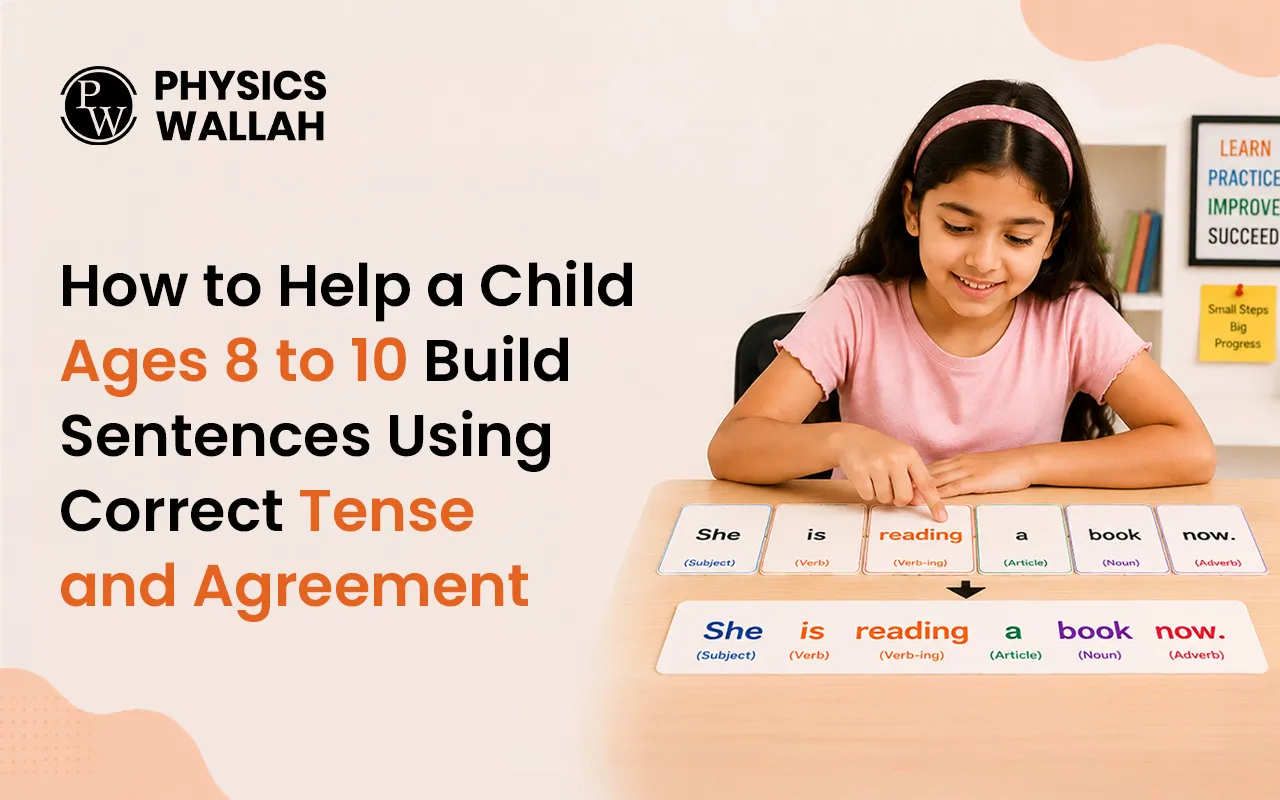
How to Help a Child Ages 8 to 10 Build Sentences Using Correct Tense and Agreement
 Nikita Aggarwal16 Jun, 2026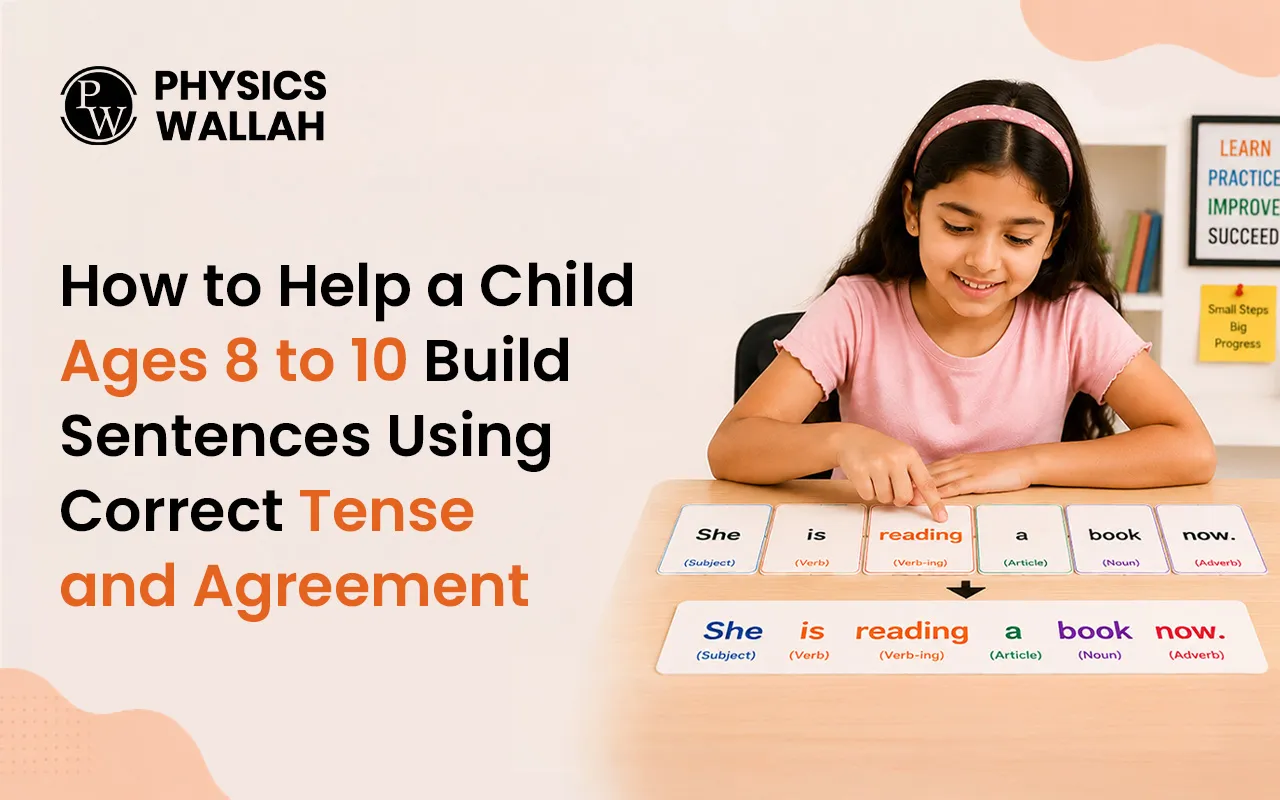
The Importance of Correct Tenses in Sentence Building for Kids
Around the ages of 8 to 10, children move from writing basic, single-clause sentences to creating more complex paragraphs. In Class 3 4 English grammar tense lessons, pupils are expected to show a clearer understanding of time markers. If a child does not grasp how verbs change based on time, their essays and stories become confusing to read.
Correct grammar also affects how well children perform in school exams and daily communication. Developing skills in sentence building correct tense ages 8 to 10 ensures that children can express their thoughts accurately. This age window is the ideal time to fix common errors before they become deeply ingrained habits.
Common Grammar Challenges in A1 English Grammar for Kids
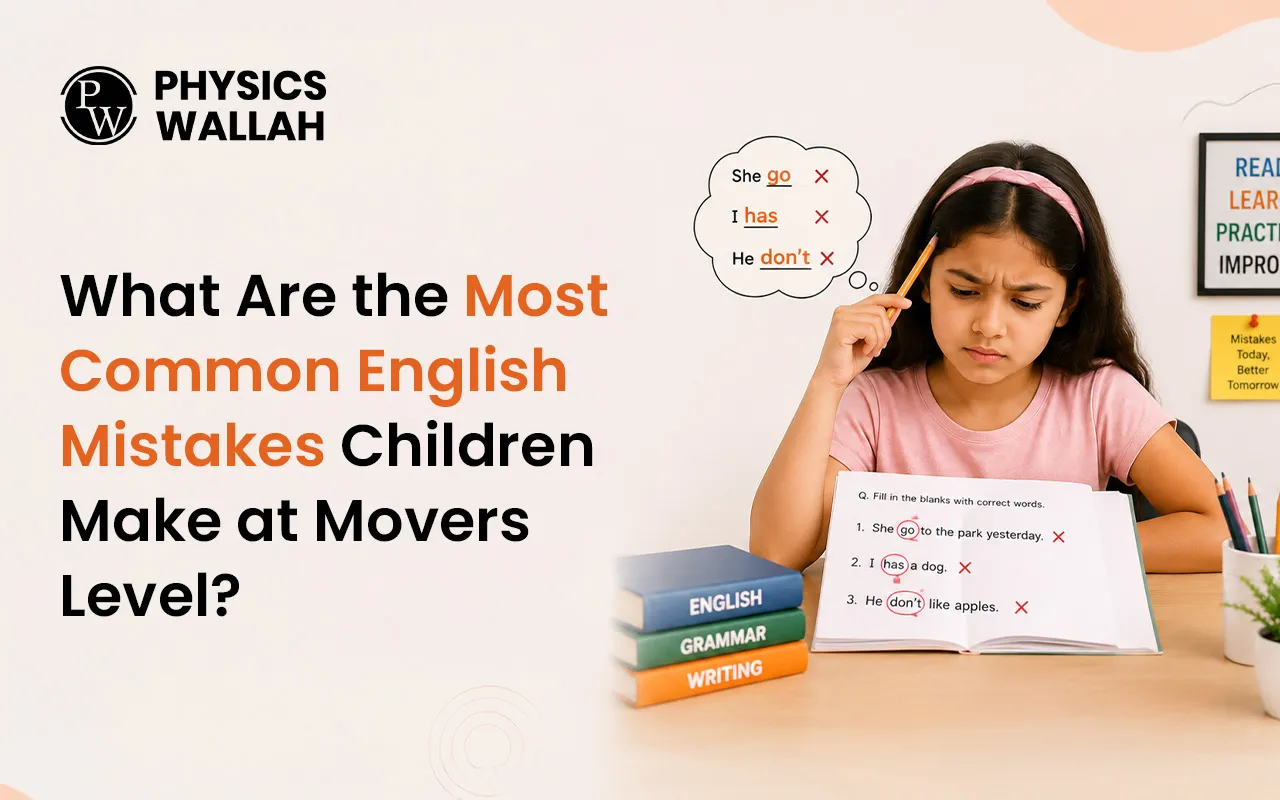
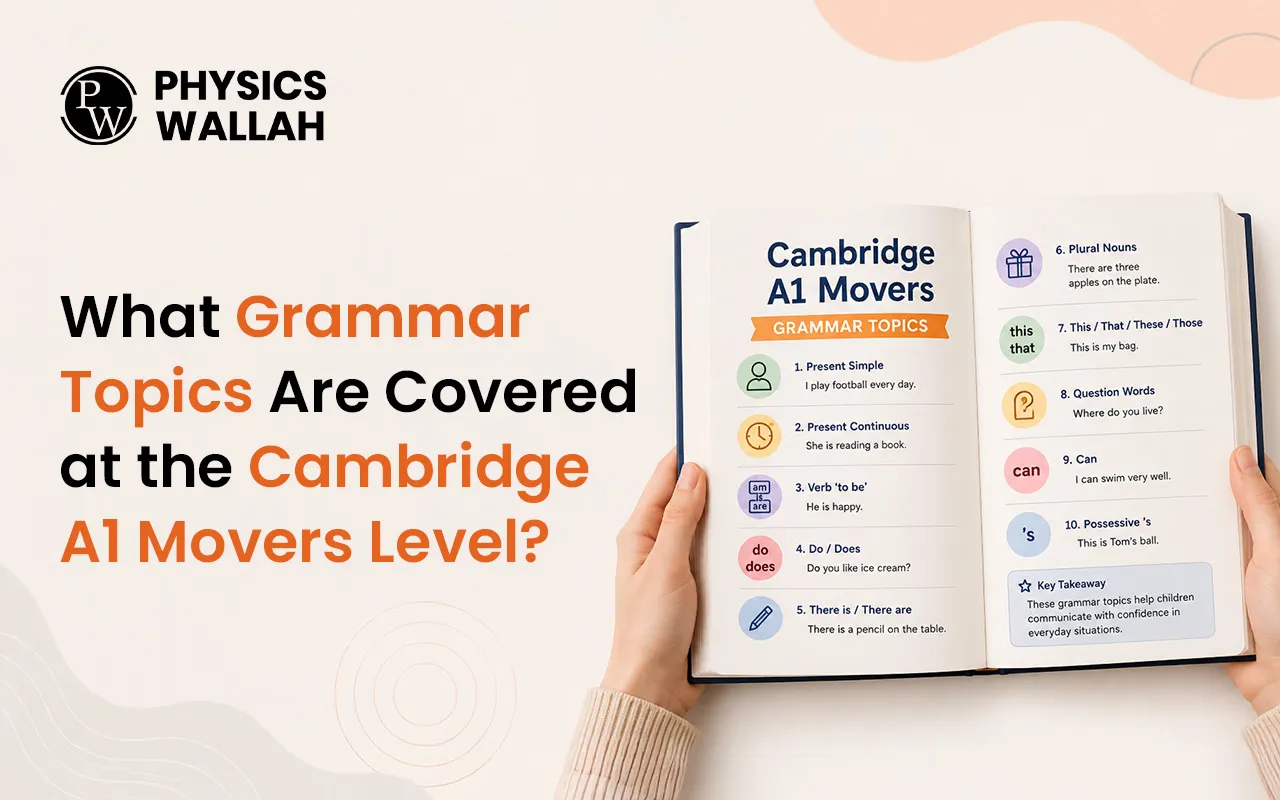
At the beginners' stage, which aligns closely with A1 English grammar guidelines, children frequently face specific hurdles. They often understand what they want to say but stumble when putting the words on paper.
The following list highlights the most frequent errors that young learners make during writing exercises:
-
Mixing Tenses: Starting a story in the past tense and suddenly switching to the present tense mid-sentence.
-
Irregular Verbs: Adding "-ed" to words that do not follow standard rules, such as writing "runned" instead of "ran".
-
Syllable Overload: Getting confused by verbs that change spelling entirely when changing form, like "fly" becoming "flew".
Teaching Tense Agreement to Children Made Easy
To write well, kids must understand that the subject and the verb must work as a team. This concept, known as correct tense agreement children must master, requires consistent practice. If the subject is singular, the verb needs a singular form; if the subject is plural, the verb must match it.
The table below breaks down how regular verbs change depending on the subject and the time frame:
|
Subject Type |
Present Tense Example |
Past Tense Example |
Future Tense Example |
|
Singular (He, She, It) |
He walks to the park. |
He walked to the park. |
He will walk to the park. |
|
Plural (They, We) |
They walk to the park. |
They walked to the park. |
They will walk to the park. |
|
First Person (I) |
I walk to the park. |
I walked to the park. |
I will walk to the park. |
Read More - Daily 5 Sentence Practice for English Fluency (Level Movers)
How to Improve Sentence Building and Tense Skills in Kids
The best way to teach grammar to children is through hands-on, engaging activities rather than dry textbooks. By making the lessons visual and physical, kids retain the rules much better.
Parents can use simple household items to create effective learning tools. Try these three practical activities at home to improve your child's writing skills:
-
The Human Timeline: Draw a long line on the floor with chalk or tape, marking it with "Yesterday", "Today", and "Tomorrow". Give your child a verb card and ask them to jump to the correct spot on the timeline while saying the proper form aloud.
-
Verb Dice Games: Roll a dice where each side represents a different pronoun (I, You, He, She, We, They). Have your child combine that pronoun with a random action word in the past or present form.
-
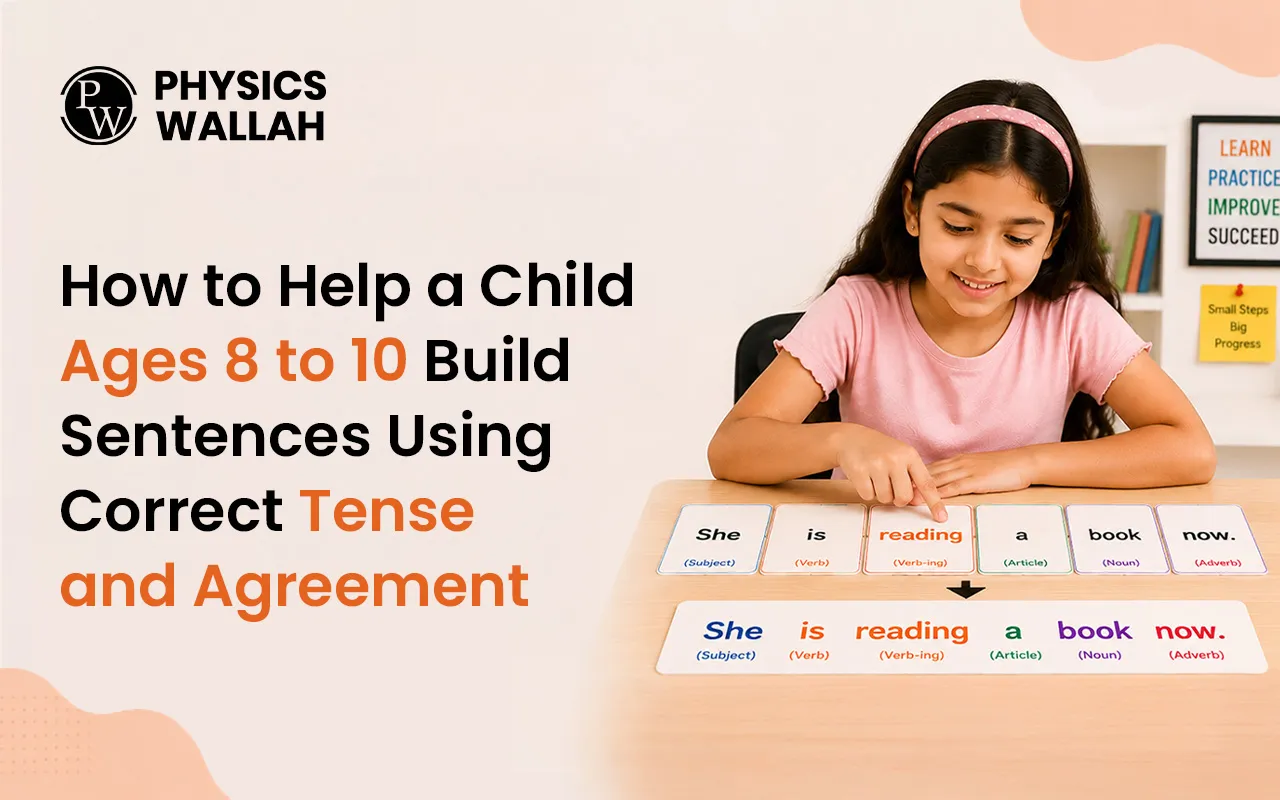
Sentence Scramble: Cut up pieces of paper containing nouns, verbs, and adverbs. Ask your child to arrange them into a logical order while ensuring the verb matches the subject perfectly.
Cambridge Movers Sentence Building Tips for Children
For parents looking at global standards, the Cambridge English qualifications offer an excellent benchmark. Focusing on Cambridge Movers sentence building skills helps children demonstrate their language abilities through practical tasks. At this level, candidates must show they can handle simple sentence structures confidently.
The exam requires children to look at pictures and write descriptive sentences about what they see. If a child has practiced sentence building correct tense ages 8 to 10 regularly, they will easily spot whether a character in a picture "is running" or "ran" away. This preparation builds immense confidence for formal tests.
Read More - Synonym Practice Activities for Movers Level Learners
Master English Tenses for Kids 8 to 10 with Visual Tools
Visual aids are incredibly powerful for young minds because they turn abstract rules into concrete ideas. When teaching English tenses for kids 8 to 10, colour coding can make a massive difference in how quickly they learn.
Assigning specific colours to different parts of speech helps the brain categorise information faster. Look at the structured framework below to see how you can colour-code your child's daily writing practice:
-
Blue for Subjects: Highlight names, pronouns, and objects in blue ink to clearly identify who is doing the action.
-
Red for Verbs: Use red for the action words so children can easily focus on changing the endings based on time.
-
Green for Time Clues: Underline words like "yesterday", "now", or "next week" in green to signal which timeframe the sentence belongs to.
CuriousJr Grammar Classes for Better Sentence Building Skills
Finding the right balance between fun and education is the key to teaching young learners successfully. The interactive framework designed by CuriousJr online English learning movers class focuses heavily on building core language skills through engaging, age-appropriate content. By guiding students through step-by-step writing exercises, it removes the frustration often associated with learning strict grammar rules.
Through targeted practice, children learn to identify subject-verb mismatches and fix tense errors independently. The system adapts to each child's pace, ensuring they fully comprehend basic concepts before moving on to advanced writing styles. This methodical approach turns grammar practice into an exciting daily habit that kids look forward to completing.




How to Help a Child Ages 8 to 10 Build Sentences Using Correct Tense and Agreement FAQs
What is the easiest way to explain subject-verb agreement to an eight-year-old?
How do I stop my child from mixing past and present tenses in stories?
How many tenses should a nine-year-old child know?
Can reading books aloud improve my child's sentence-building skills?

Get Free Counselling Today
and Clear up all your Doubts
 Live & recorded classes available at easeDashboard for progress trackingLakhs of practice questions