
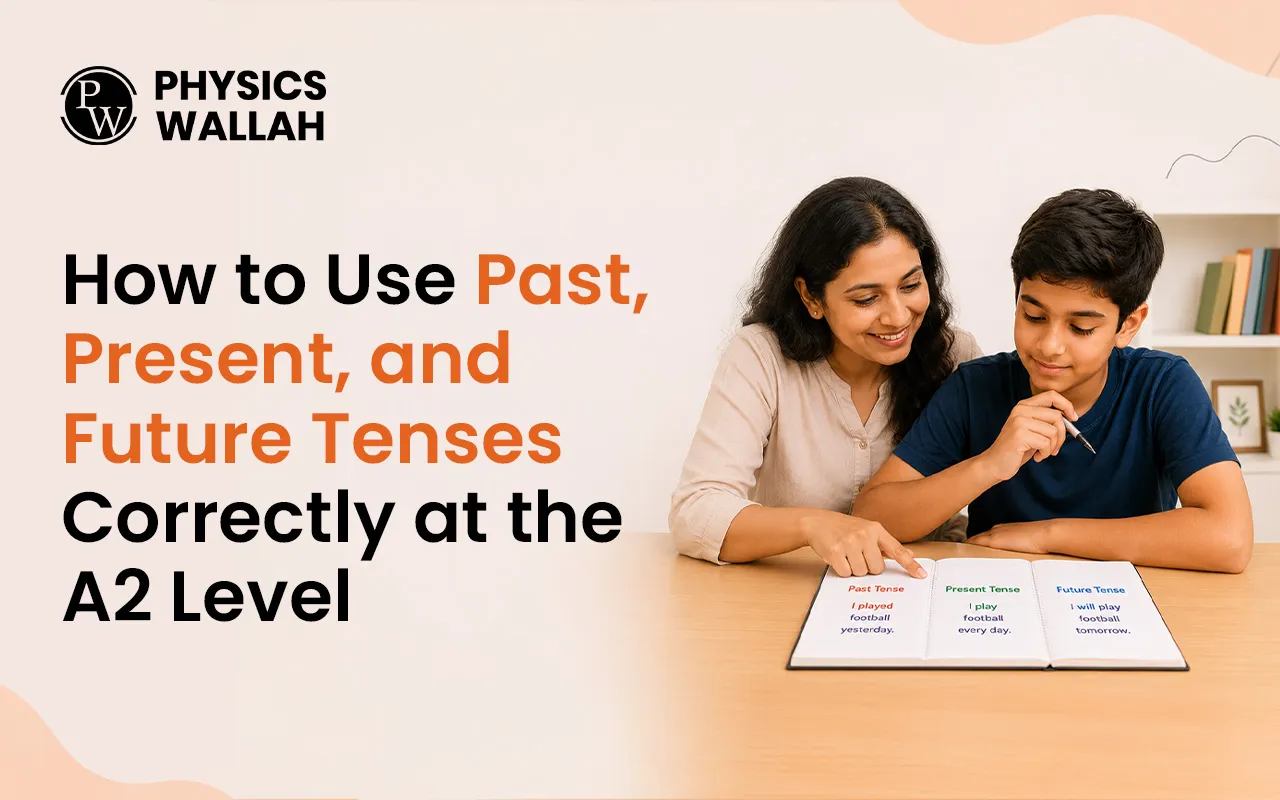
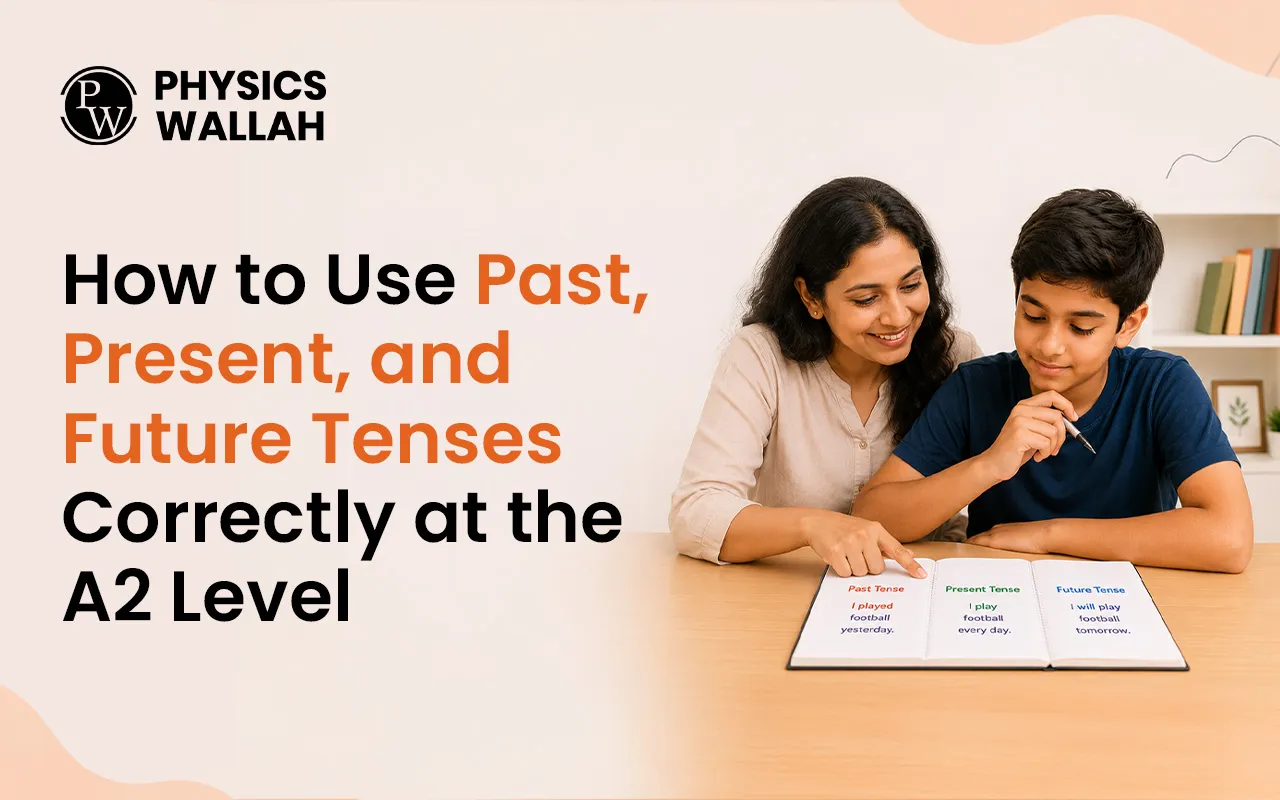
How to Use Past, Present, and Future Tenses Correctly at the A2 Level
 Nikita Aggarwal18 Jun, 2026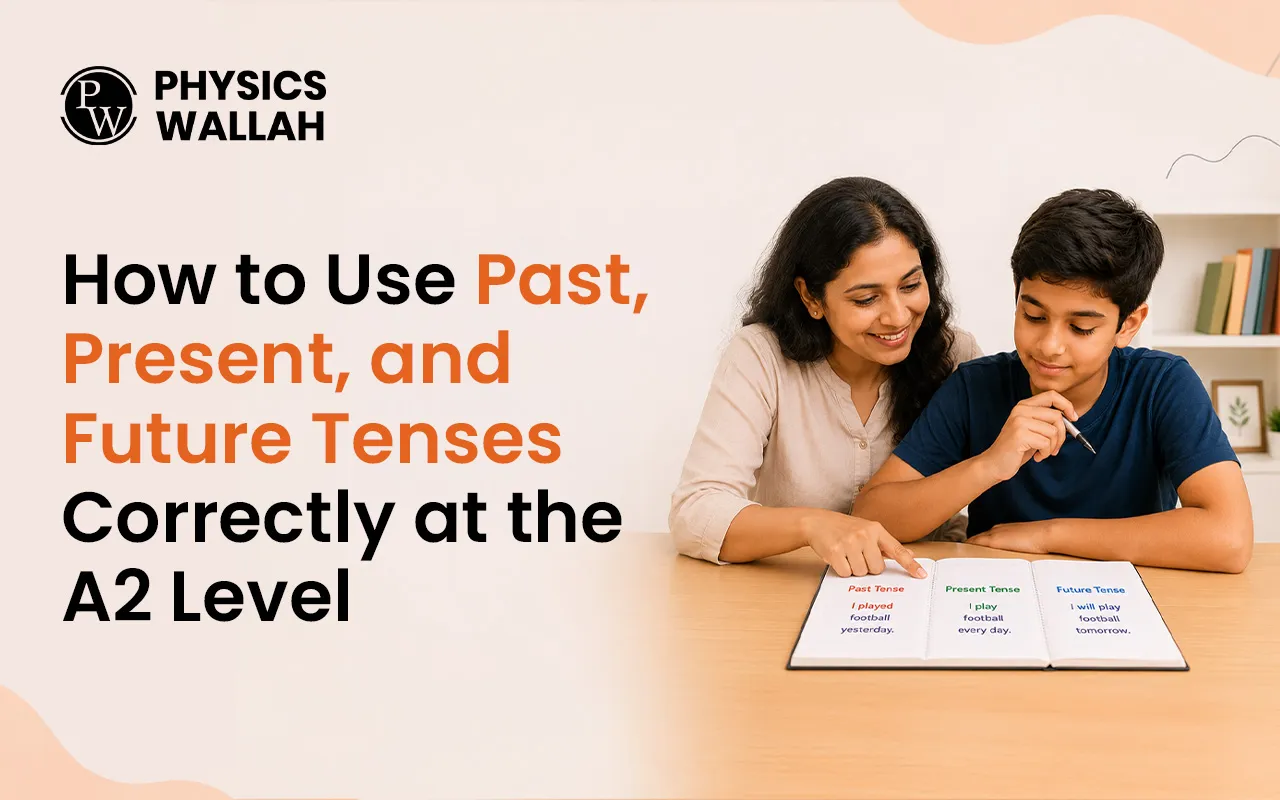
Importance of English Tenses A2 Level Cambridge Key
The present timeline is the starting point for foundational language learning. At this stage, students must know the exact differences between routine actions and things happening right now.
Present Simple Structure and Usage
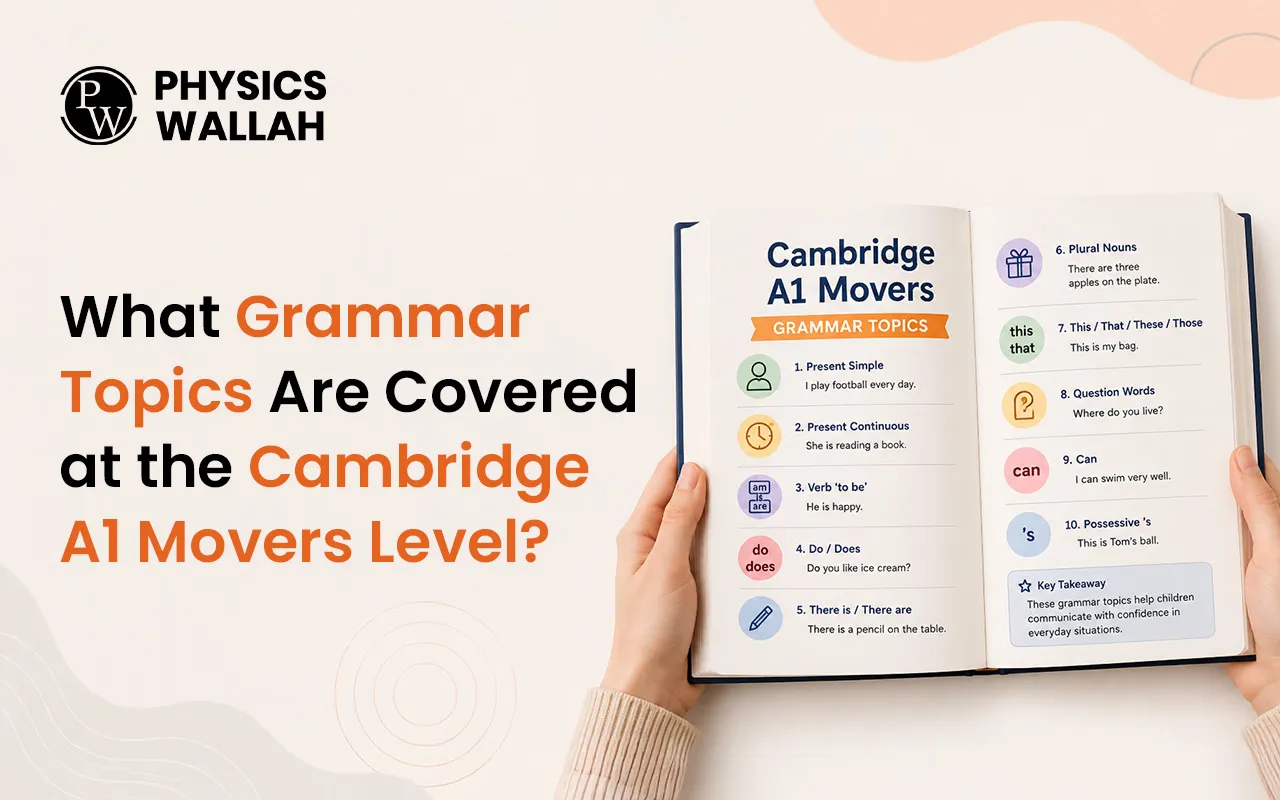
The present simple expresses habitual actions, daily routines, or universal facts. It is a vital component of A2 English grammar that students use to describe their lives.
-
Formula for Affirmative: Subject + Base Verb (add -s/-es for third-person singular).
-
Formula for Negative: Subject + do not / does not + Base Verb.
-
Formula for Question: Do / Does + Subject + Base Verb?
Key Examples:
-
He plays football every Tuesday evening.
-
They do not live in London.
-
Does she like studying history?
Present Continuous Structure and Usage
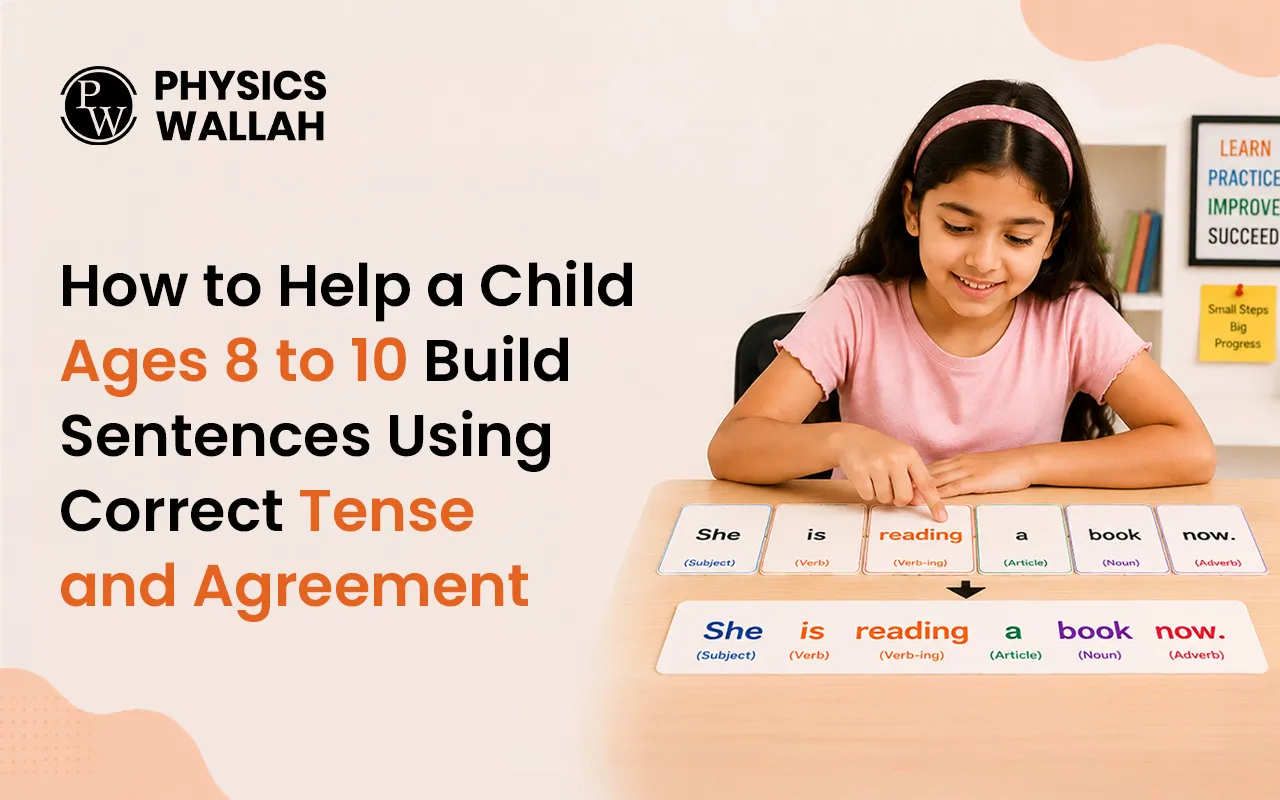
The present continuous describes temporary situations or actions happening exactly at the time of speaking. It helps clear the Cambridge Key tenses evaluation by showing dynamic actions.
-
Formula for Affirmative: Subject + am / is / are + Verb(-ing).
-
Formula for Negative: Subject + am not / is not / are not + Verb(-ing).
-
Formula for Question: Am / Is / Are + Subject + Verb(-ing)?
Key Examples:
-
I am writing an English essay at the moment.
-
The children are not watching television right now.
-
Is it raining outside?
Common Present Timeline Mistakes to Avoid
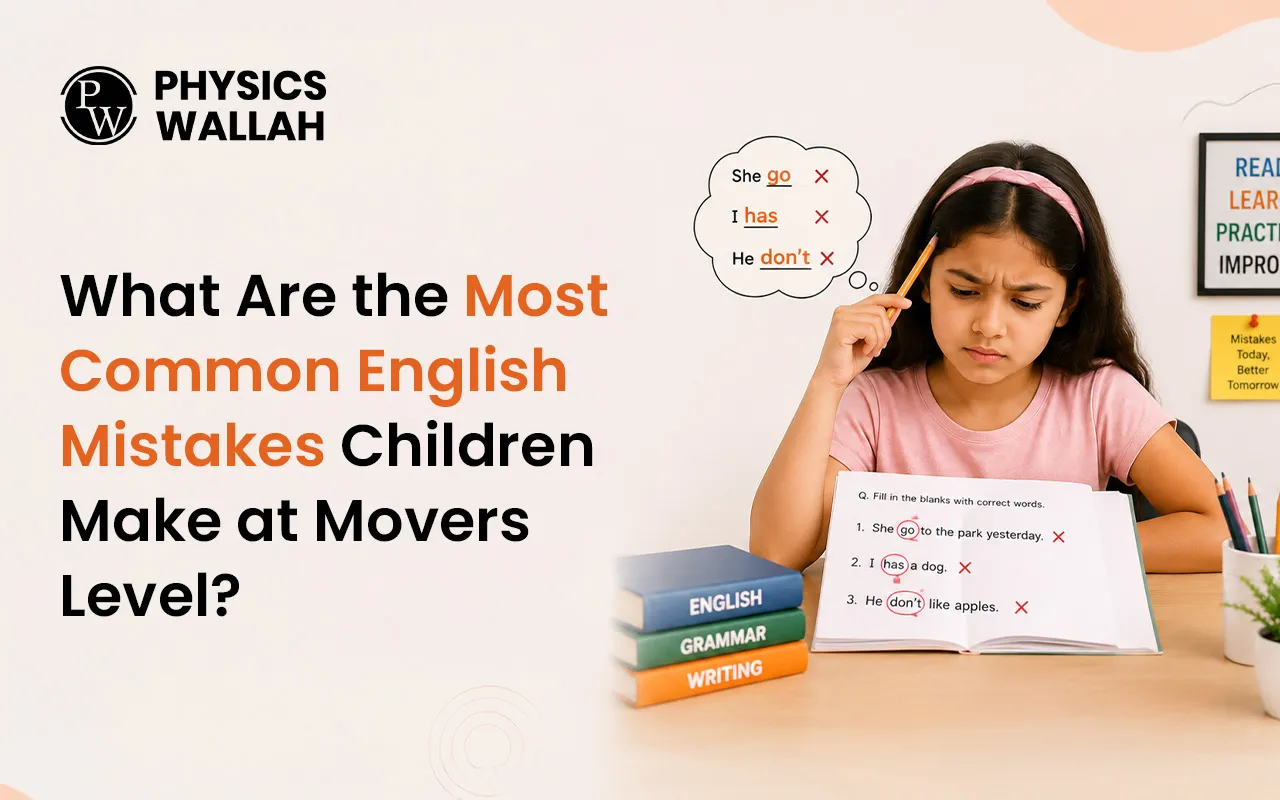
Younger learners often mix these two forms up. For instance, saying "I am going to school every day" is incorrect because routines require the simple form. Similarly, "Look! The dog runs" is incorrect for an active event. Remembering that the present simple is for permanent routines and the continuous is for temporary moments ensures correct tense usage Class 5 6 in school assessments.
Read More - Build Vocabulary without Memorizing (Level Key)
Past Tenses for the English Tenses A2 Level Cambridge Key
Talking about completed events is highly important for storytelling and answering interview questions. Candidates must master past forms to describe historical events or personal memories clearly.
|
Tense Form |
Structural Formula |
Practical Example |
Primary Function |
|
Past Simple (Regular) |
Subject + Verb(-ed) |
We visited a grand museum yesterday. |
Completed actions at a specific time. |
|
Past Simple (Irregular) |
Subject + Irregular Verb Form |
She went to the library last night. |
Fully finished past actions with irregular verbs. |
|
Past Continuous |
Subject + was / were + Verb(-ing) |
They were playing when it started to rain. |
Background actions interrupted by another event. |
Navigating Irregular Verbs in Past Simple
Regular verbs are easy because they end in "-ed", but irregular verbs change completely. Students studying past present future tense Class 5 6 must memorise core variations like eat-ate, buy-bought, and see-saw.
-
Affirmative: Regular forms add "-ed", while irregular forms change entirely.
-
Negative: Always use "did not" followed by the base verb (e.g., "He did not go," not "He did not went").
-
Question: Begin with "Did" followed by the subject and the base verb (e.g., "Did you see the movie?").
Using Past Continuous for Context
The past continuous shows an action that was already in progress in the background when a shorter action interrupted it.
-
Structure: Subject + was / were + Verb(-ing).
-
Example: While my mother was cooking dinner, the telephone rang.
Read More - Full Sentence Speaking Practice for Kids Learning English (Key Level)
Future Forms for English Tenses A2 Level Cambridge Key
Talking about future actions requires understanding different future forms. Students learn to use will, be going to, and the present continuous tense based on the situation.
When to Use "Will"
We use will for decisions made at the moment of speaking and for future predictions.
Structure: Subject + will + Base Verb
Negative Structure: Subject + will not (won't) + Base Verb
Examples:
-
The phone is ringing. I will answer it.
-
People will live on Mars in the future.
When to Use "Be Going To"
We use be going to when a plan has already been made or when there is clear evidence that something will happen.
Structure: Subject + am/is/are + going to + Base Verb
Examples:
-
They are going to visit their grandparents this weekend.
-
Look at the dark clouds. It is going to rain.
Present Continuous for Future Plans
The present continuous tense can also be used for future arrangements that are already planned.
Example:
-
I am meeting my teacher tomorrow morning.
-
We are travelling to Delhi next week.
This form is commonly used when the plan is fixed and the time is already decided.
How CuriousJr Helps with English Tenses A2 Level Cambridge Key
Learning grammar becomes easier when students practise regularly in an engaging way. CuriousJr English Learning key classes provide a structured learning platform that helps young learners understand grammar concepts through simple lessons and activities.
Interactive Exercises: Students learn through fun and engaging activities that help them identify grammar mistakes and improve their understanding of language rules.
Step-by-Step Learning: Lessons are arranged in a simple order, helping students master basic tenses before moving on to more advanced grammar topics.
Practice Question Banks: CuriousJr offers worksheets and exercises that help students practise important grammar concepts and prepare for school assessments.
Instant Feedback: Students receive immediate feedback on their answers, helping them quickly understand mistakes and learn the correct usage of grammar rules.
Using these learning tools helps students improve their grammar skills through regular practice. Instead of depending only on memorization, they learn grammar in a practical way that supports better communication and stronger exam performance.




How to Use Past, Present, and Future Tenses Correctly at the A2 Level FAQs
What is the difference between present simple and present continuous?
How can students learn irregular past tense verbs easily?
Can present continuous be used for future plans?
When should students use "will" and "going to"?



Get Free Counselling Today
and Clear up all your Doubts
 Live & recorded classes available at easeDashboard for progress trackingLakhs of practice questions

