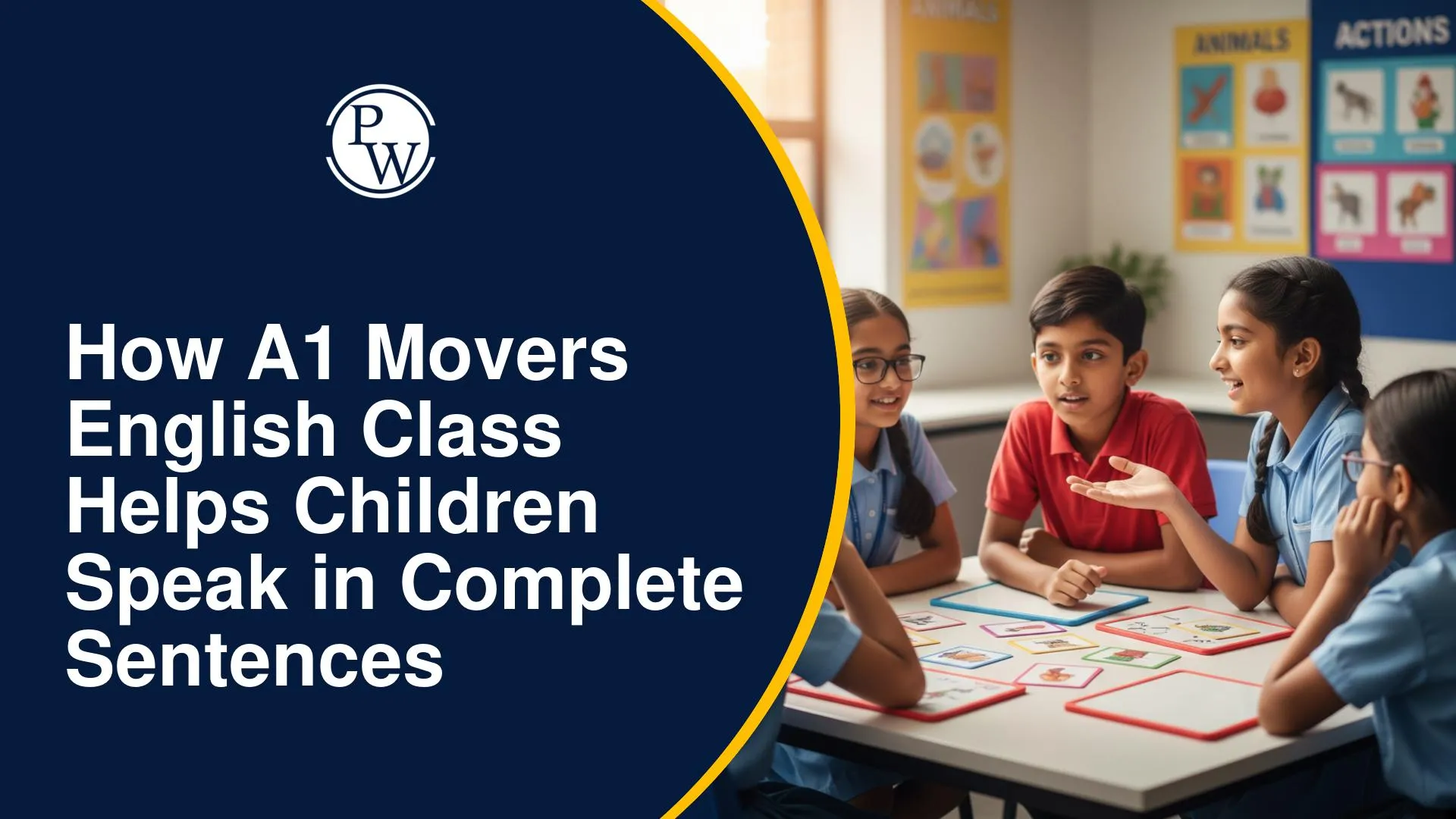
Why Peer Conversations at Key Level Build Real Communication Confidence
 Nikita Aggarwal18 Jun, 2026

Why Is Peer Conversations Cambridge Key Level Communication Confidence Important?
Peer conversations are very helpful for improving English speaking skills. They give students a chance to use English in real situations instead of only memorising rules and words.
Building peer conversations Cambridge Key level communication confidence helps children become better speakers and prepares them for speaking exams.
Improve Interactive Communication
The Cambridge speaking test checks if students can start, continue, and answer during conversations. Talking with classmates helps learners feel comfortable when sharing ideas and responding to questions.
Learn Turn-Taking and Listening
Speaking activities teach students how to listen carefully and wait for their turn to speak. They also learn useful phrases for asking questions, giving opinions, and keeping conversations going.
Build Better Pronunciation and Fluency
Regular speaking practice helps children improve pronunciation, speaking rhythm, and sentence flow. The more they speak, the more fluent and natural they become.
Use Grammar and Vocabulary Naturally
Peer conversations allow students to use grammar and vocabulary in real situations. Instead of remembering words one by one, they learn how to use them correctly in conversations.
Increase Confidence
The more students speak, the more confident they feel. Regular conversations help reduce nervousness and make speaking English easier in class and during exams.
With regular practice and support, peer conversations help students build strong communication skills and prepare for Cambridge speaking assessments.
How Does a group English class for kids Improve Speaking Confidence?
Learning English alone can sometimes feel difficult for young learners. A group English class for kids creates a fun and supportive environment where children can learn together.
Benefits of Group Learning
|
Feature |
group English class for kids |
Individual Study |
|
Speaking Practice |
Regular conversations |
Very limited |
|
Turn-Taking Skills |
Practised daily |
Not available |
|
Confidence Building |
High |
Lower |
|
Learning Support |
Friends and teachers |
Self-learning only |
In a classroom with other students, children quickly see that everyone makes mistakes. Some students forget words, while others have pronunciation problems. Seeing classmates make mistakes helps children understand that errors are normal.
Because of this, students stop worrying about being perfect. Instead, they focus on sharing their ideas clearly. Listening to different classmates also helps them understand different speaking styles and accents.
This regular interaction helps build strong A2 English speaking confidence and makes communication easier.
Read More - Build Vocabulary without Memorizing (Level Key)
Why Is English conversation practice 10 to 12 Important?
The ages of 10 to 12 are very important for language learning and communication growth. During this stage, children move from simple vocabulary towards more detailed conversations.
Regular English conversation practice 10 to 12 helps students develop the speaking skills needed for both school and Cambridge exams.
Helps Students Think Quickly
Children need to learn how to answer questions naturally instead of depending on memorised responses. Conversation practice helps them react quickly during discussions.
Improves Learning From Peers
Students learn a lot by listening to classmates. They hear new words, sentence patterns, and ideas that help improve their own speaking.
Prepares Students for Timed Speaking Tasks
Many speaking exams include tasks with time limits. Practising short talks and quick answers helps students become comfortable with these situations.
Encourages Real Conversations
Students learn how to talk about hobbies, likes, dislikes, daily activities, and personal experiences. This helps them communicate naturally.
Children in this age group enjoy making friends and sharing ideas. Using this natural interest in communication helps them improve their English faster.
Read More - Full Sentence Speaking Practice for Kids Learning English (Key Level)
How Does A2 English speaking confidence Grow Through Peer Conversations?
Many children feel nervous when speaking English for the first time. They worry about making mistakes or saying the wrong thing.
Regular conversations with classmates help build A2 English speaking confidence because students get used to speaking English every day.
Each conversation gives learners a chance to:
-
Practise speaking naturally
-
Use new vocabulary
-
Improve pronunciation
-
Learn from mistakes
-
Gain confidence
Over time, students stop focusing on perfection and start focusing on communication. This is an important step in becoming a confident English speaker.
How Does an online English group class Improve Cambridge A2 Speaking Skills?
An online English group class gives students regular opportunities to practise speaking from home. These classes provide structured activities that help improve communication and speaking confidence.
Small Group Discussions
Students work with partners and small groups to discuss topics, answer questions, and share ideas. This improves speaking fluency and communication skills.
Visual Speaking Activities
Teachers use pictures, short stories, and discussion prompts to encourage speaking. These activities help students organise their thoughts before speaking.
Timed Speaking Practice
Many classes include activities where students answer questions within a set time. This helps prepare them for speaking exams.
Teacher Feedback
Teachers provide guidance and corrections that help students improve pronunciation, grammar, and communication skills.
Learning From Different Students
An online English group class allows children to interact with learners from different places and backgrounds. This improves listening skills and communication confidence.
Through regular practice and teacher support, students improve their Cambridge A2 speaking skills and become more comfortable speaking English in real situations.
How Do Cambridge Key communication skills Help Students?
Strong Cambridge Key communication skills help students both inside and outside the classroom.
These skills include:
-
Starting conversations
-
Answering questions clearly
-
Giving simple opinions
-
Listening carefully
-
Taking turns while speaking
-
Asking follow-up questions
Students who develop these skills find it easier to communicate with teachers, classmates, friends, and family members.
Good communication skills also help learners perform better in speaking exams because they know how to keep conversations moving naturally.
How CuriousJr Helps with Peer Conversations Cambridge Key Level Communication Confidence
CuriousJr online English Learning key level classes provide interactive English learning programs that help students improve speaking skills in a friendly environment.
The platform focuses on building peer conversations Cambridge Key level communication confidence through regular speaking activities and guided practice.
Small Group Learning
Students take part in group discussions where they practise speaking, listening, and sharing ideas with classmates.
Focus on Cambridge Speaking Skills
Lessons are designed to improve important Cambridge Key communication skills, including pronunciation, grammar, vocabulary, and conversation building.
Supportive Teachers
Teachers provide positive feedback and simple corrections that help students improve without feeling nervous.
Interactive Activities
Students use visual prompts, games, discussion topics, and speaking challenges to practise English naturally.
Confidence Through Practice
Regular conversations with classmates and teachers help students become comfortable speaking English and expressing their ideas clearly.
By combining teacher support, group learning, and practical speaking activities, CuriousJr helps students improve Cambridge A2 speaking skills and become confident communicators.




Why Peer Conversations at Key Level Build Real Communication Confidence FAQs
Why are peer conversations better than memorisation?
How does a group English class for kids help shy students?
What should English conversation practice 10 to 12 include?
Is ENGLISH CAMBRIDGE PRELIMINARY (B1) harder than Cambridge A2?

Get Free Counselling Today
and Clear up all your Doubts
 Live & recorded classes available at easeDashboard for progress trackingLakhs of practice questions