Emphatic Pronoun – Definition, Meaning, Uses, and Examples
 Shivam Singh19 Jan, 2026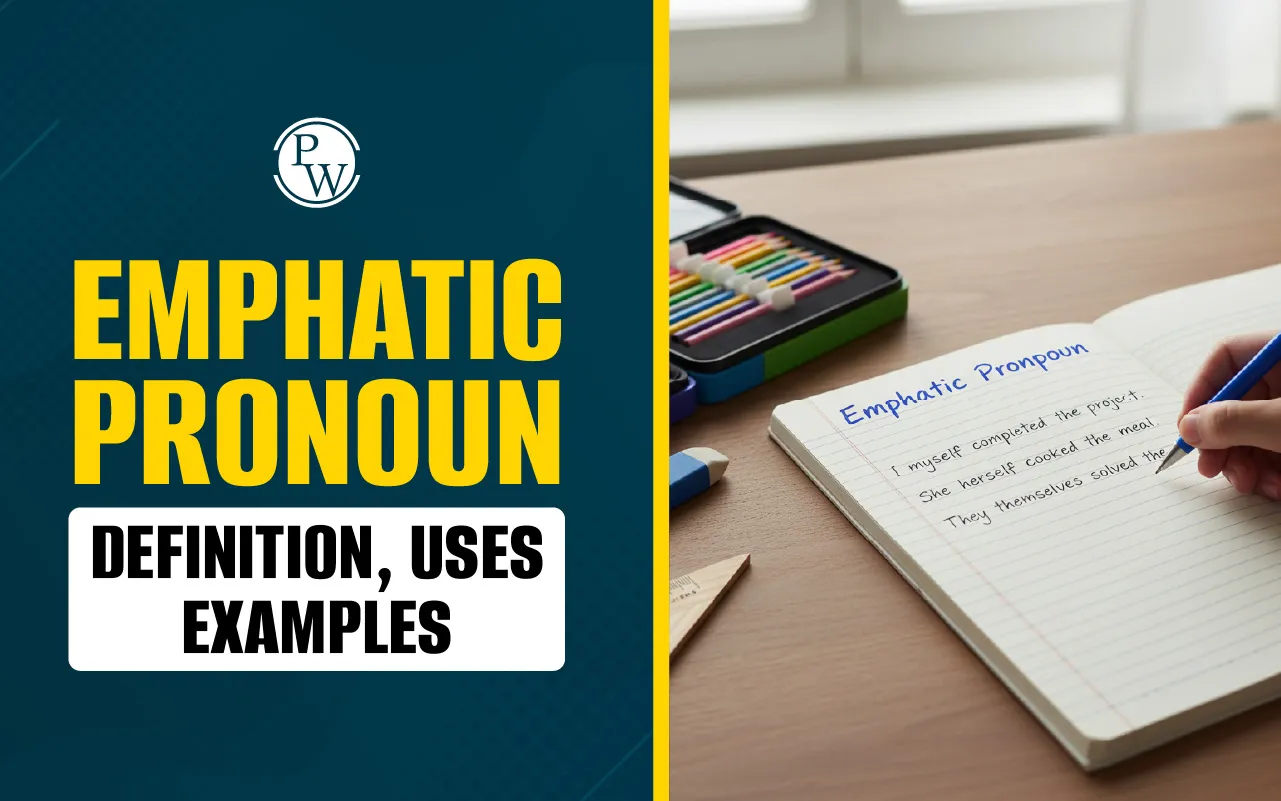
What is Emphatic Pronoun?
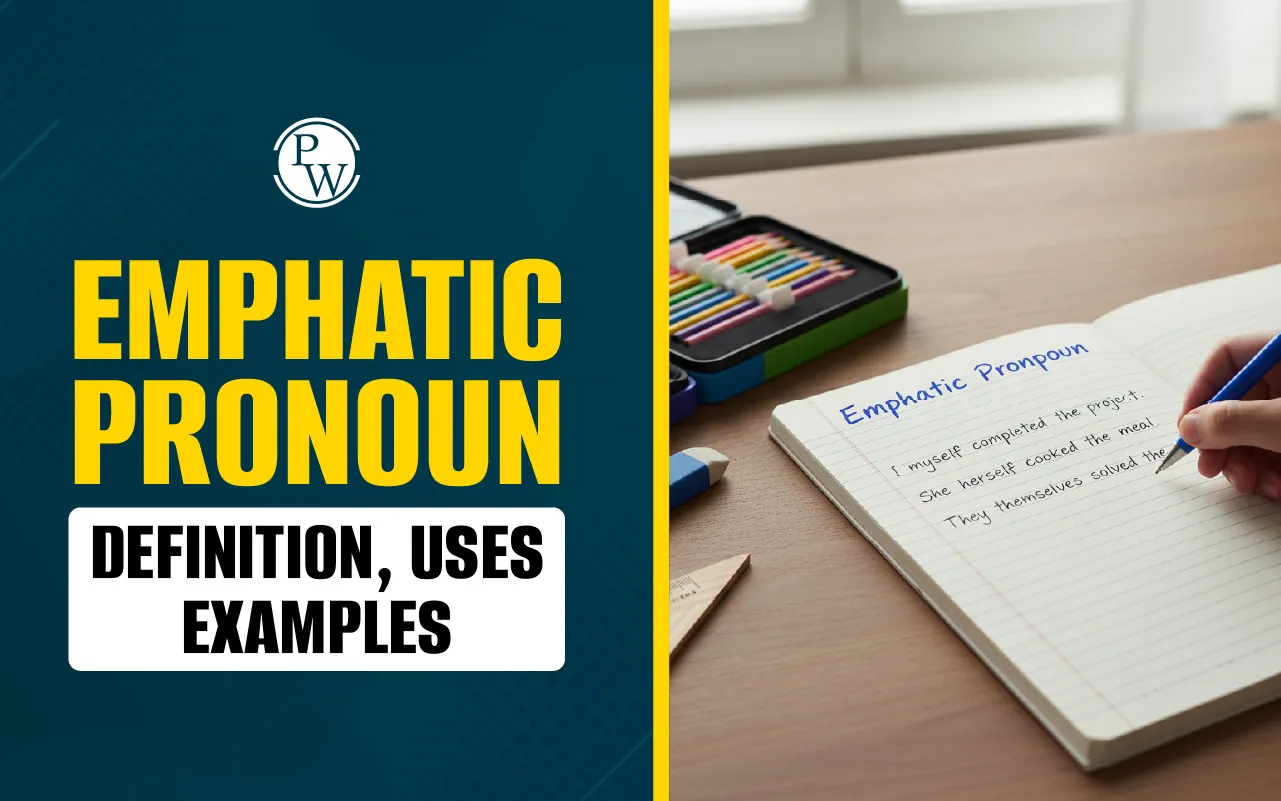
Definition of emphatic pronoun is a type of pronoun that emphasizes the subject of a sentence. It highlights that the subject has done something independently or with strong determination.
In English, emphatic pronouns are formed by adding “-self” (for singular) or “-selves” (for plural) to certain personal pronouns.
Look at the sentences below:
-
The manager approved the design.
-
The manager himself approved the design.
In the second sentence, the use of the emphatic pronoun ‘myself’ strengthens the statement by emphasizing the subject.
Common Emphatic Pronouns
There are some common emphatic pronouns used frequently in writing, speeches, and daily conversations. The purpose is to convey the message more meaningfully and effectively. The below table provides the list of emphatic pronouns with corresponding pronouns or nouns.
|
Common Emphatic Pronouns |
||
|
Emphatic Pronoun |
Used With |
Example Sentences |
|
Myself |
I |
I cooked the food myself. |
|
Yourself |
You |
It is better to do it yourself. |
|
Himself |
He |
He himself greeted the guests. |
|
Herself |
She |
She purchased all the items herself. |
|
Itself |
It |
The dog itself opened the gate. |
|
Ourselves |
We |
We ourselves are to blame for this. |
|
Yourselves |
You (plural) |
You must finish the task yourselves. |
|
Themselves |
They |
The students themselves organized the event. |
Read More: Demonstrative Pronouns
Emphatic Pronoun in a Sentence
An emphatic pronoun in a sentence is used right after the noun or pronoun to emphasize it. Without the emphatic pronoun, the sentence retains its basic meaning but loses the emphasis. Let’s look at a few examples of using emphatic pronouns in sentence:
-
She herself cooked dinner for everyone.
Here, “herself” emphasizes that she (not anyone else) cooked the dinner.
-
He himself completed the assignment on time.
Here, ‘himself” stresses that he did the task independently.
-
The minister himself visited the accident site.
Here, the use of “himself” highlights the fact that the minister took the action personally.
-
We ourselves witnessed the incident.
The word “ourselves” suggests the personal experience of “we.”
-
I myself will take care of this issue.
Here, the word “myself” demonstrates an assurance and confidence.
-
You yourself told me to do this!”
The use of “yourself” indicates a surprise or reminder of the action of “you.”
-
We ourselves collected the fund to help the needy people.
Here, the emphatic pronoun “ourselves” highlights a sense of pride.
Read More: Reflexive Pronouns
How to Identify Emphatic Pronoun?
There are some easy ways for your child to identify an emphatic pronoun in a sentence. They need to check two simple things as follows:
-
The emphatic pronoun appears after the noun or pronoun it refers to.
-
The sentence still makes sense even if you remove the emphatic pronoun.
For example: He himself cleaned the room.
Here, “himself” adds emphasis to the action performed by the subject.
He cleaned the room.
The sentence still makes sense without the emphatic pronoun.
Difference Between Emphatic and Reflexive Pronouns
Students must not get confused between emphatic pronouns and reflexive pronouns. They look identical but perform different functions in a sentence. Here’s a comparison to help students understand the difference between emphatic and reflexive pronouns:
|
Difference Between Emphatic and Reflexive Pronoun |
||
|
Feature |
Emphatic Pronoun |
Reflexive Pronoun |
|
Purpose |
Used to emphasize the subject |
Used when the subject and object are the same |
|
Position |
Comes immediately after the noun or pronoun it emphasizes |
Comes after the verb as an object |
|
If it is removed |
The sentence still makes sense |
The sentence becomes incomplete |
Let’s look at the following examples of emphatic pronouns and reflexive pronouns for better understanding:
Emphatic Pronoun
“She herself finished the assignment.” It focuses on her personal effort.
Reflexive Pronoun:
“She hurt herself while running.” It’s general information stating that she got hurt while running.
So, the key difference between emphatic and reflexive pronouns lies in their purposes.
Read More: Possessive Pronouns
Emphatic Pronouns Rules
After understanding what emphatic pronouns are, students must be aware of the rules for using emphatic pronouns correctly. These simple rules help students use emphatic pronouns in a sentence appropriately in both written and verbal communication in English. Let’s look at the rules:
-
Emphatic pronouns must match the subject in person and number.
For example: I myself went to the market.
-
They always follow the noun or pronoun they emphasize.
For example: He himself guided us to the hall.
-
Emphatic pronouns are not essential to the sentence’s meaning.
For example: The president herself was present at the event.
If we remove “herself,” the sentence is still meaningful.
Emphatic Pronoun Examples
Emphatic pronouns typically highlight the subject’s role and make the sentence more assertive and focused. Here are a few emphatic pronoun examples to help your child understand their usage in different contexts:
Emphasizing Responsibility or Effort
-
I myself accompanied them to the police station.
-
She herself designed the wedding invitation.
-
They themselves decorated the hall for the event.
Emphasizing Importance or Authority
-
The finance minister herself announced the policy.
-
The shop manager himself apologized for the inconvenience.
-
The committee members themselves decided the outcome.
Emphasizing Personal Experience
-
We ourselves witnessed the entire performance.
-
I myself saw the accident happen.
-
The children themselves came up with the proposal.
Emphasizing Independent Actions
-
He himself installed the equipment.
-
She herself learned to play the piano.
-
We ourselves painted the room.
Read More: Relative Pronouns
Common Mistakes to Avoid While Using Emphatic Pronouns
Emphatic pronouns enhance the communication quality when used appropriately. It is essential to know the common mistakes that might occur while using emphatic pronouns in a sentence, as explained below:
-
Emphatic pronouns cannot stand alone. They are always connected to the subject of the sentence.
-
Do not use an emphatic pronoun as the subject itself. For example, “I myself will call you” is incorrect. The correct form is “I will call you.”
-
Never use them in place of object pronouns. For example, “Please contact me” is correct. The correct form is “contact me”.
The use of emphatic pronouns in daily communication adds importance, confidence, assurance, and assertiveness to sentences. Students can learn from the emphatic pronoun definition and examples on how to use these words as powerful language tools that bring clarity and emphasis to your expressions.
Also read: Reciprocal Pronouns
Help Your Child Learn English Grammar with CuriousJr
Is your child facing difficulty speaking or writing English confidently? We know how important it is for children to communicate clearly and confidently. Our English Online Class is backed by Cambridge-certified standards, makes learning English simple, fun, and effective.
-
Live Interactive Classes with expert teachers for real-time practice
-
Cambridge-Based Curriculum to build grammar, vocabulary, and pronunciation
-
Fun Learning Activities like games, stories, and speaking sessions
-
Progress Tracking so you can monitor your child’s improvement
We help your child speak fluently, write confidently, and use English naturally in everyday life. Designed for ages 6–14, our program strengthens school learning and builds lifelong communication skills. Book a demo class today for just ₹49 and help your child achieve Cambridge-certified fluency with CuriousJr!
Emphatic Pronoun FAQ
What is the rule of emphatic pronouns?
What is another name for an emphatic pronoun?
How to identify the difference between a reflexive pronoun and an emphatic pronoun in a sentence?
Does the sentence The child locked herself inside the room include a reflexive or emphatic pronoun?