Relative Pronouns: Types, Rules, and Examples
 Jasdeep Singh25 Apr, 2025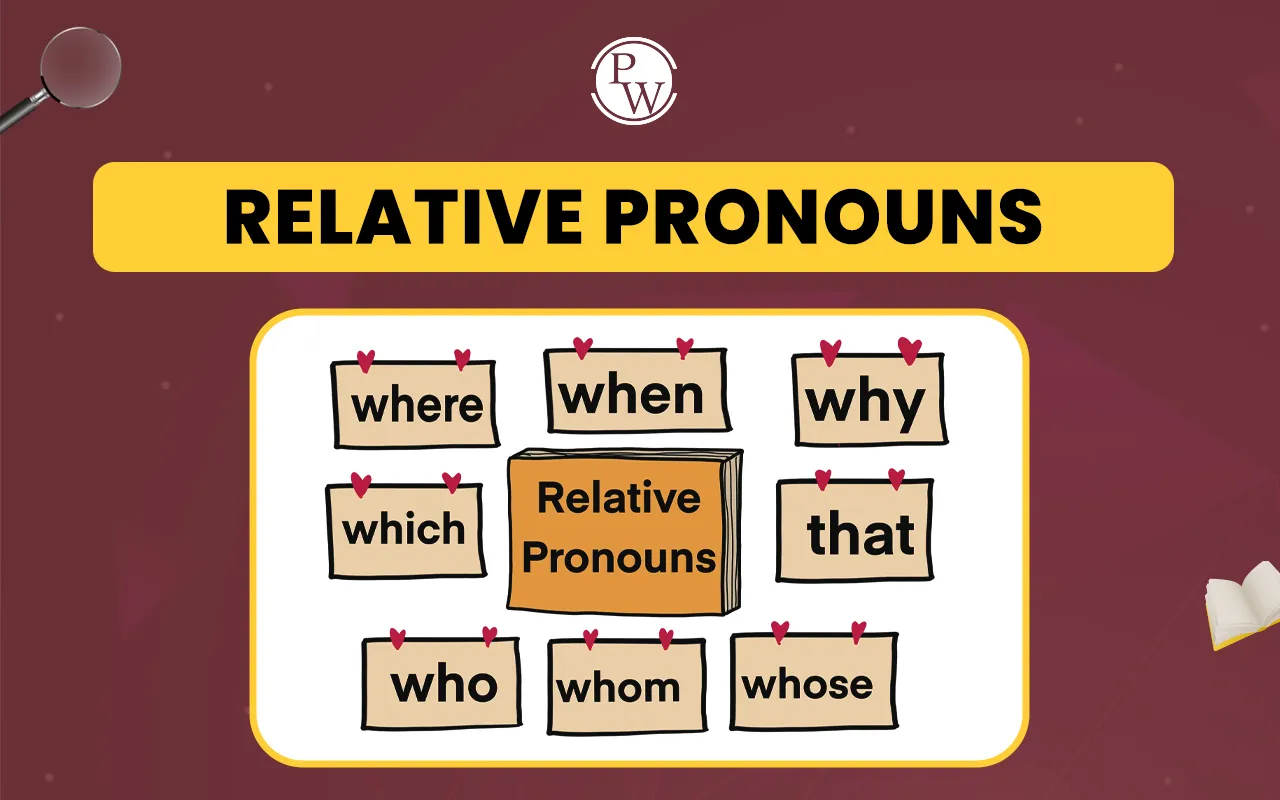
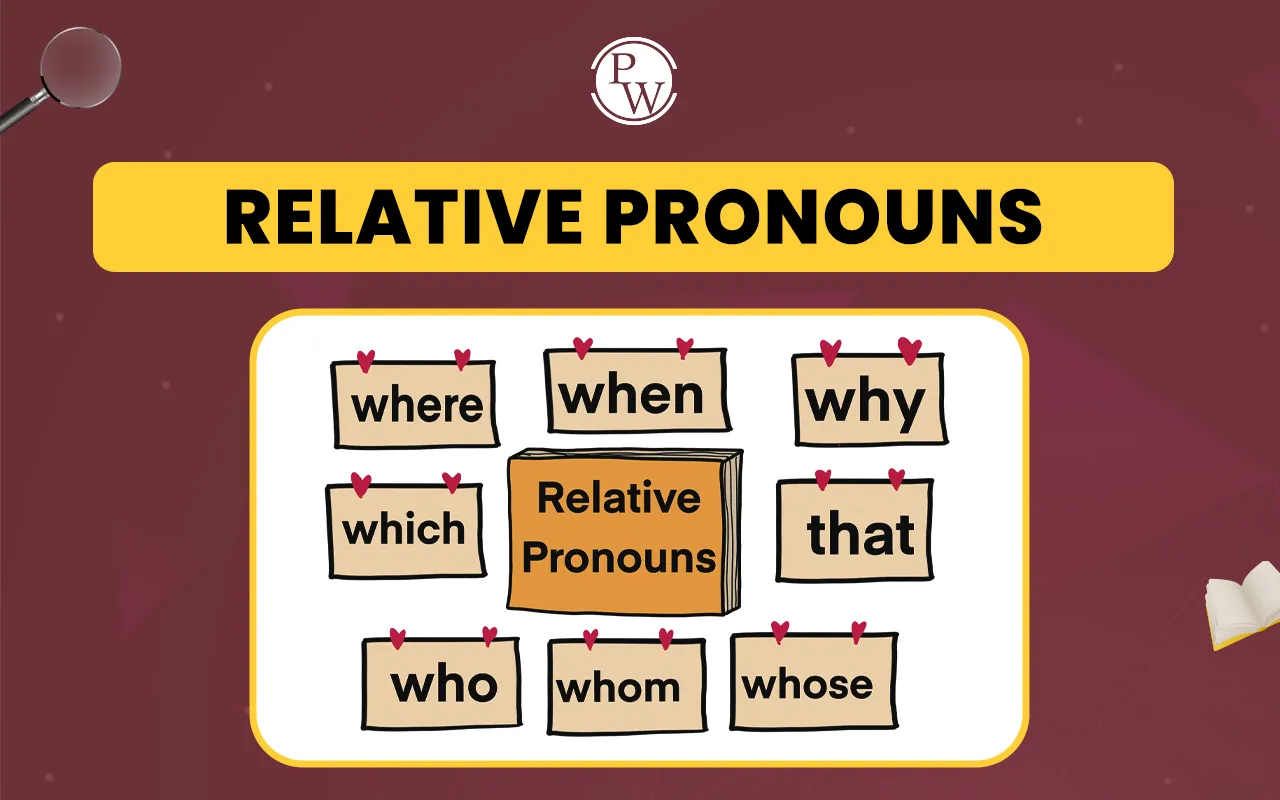
Relative Pronouns: Have you ever wanted to make your sentences more detailed and engaging but didn’t know how? Relative pronouns are the secret tools that help connect different parts of your sentences, making your writing smoother and more informative.
Words like “who,” “whom,” “whose,” “which,” and “that” allow you to add extra details without starting a new sentence. They make your writing more interesting and easier to read by linking ideas together naturally.
What Are Relative Pronouns and Why Are They Important?
Relative pronouns connect clauses or phrases to a noun or pronoun. They help make sentences clearer and more informative. Imagine trying to explain who your friend is without adding details.
It would be tricky! That’s why we use relative pronouns – to give more information and make our writing interesting and complete. The main relative pronouns are:
- Who
- Whom
- Whose
- Which
- That
These words help us add information about people, things, or animals without making our sentences choppy or disconnected. Let’s break down how each one is used!
Types of Relative Pronouns
Here, we will explore the different types of relative pronouns, what they are used for, and how they help us add more information to our sentences. By understanding these pronouns, you’ll be able to create sentences that are richer in detail and more connected.
1. Who
Used For : People Role : Acts as the subject of a clause. The relative pronoun “who” is used when we are talking about a person and need to provide more information about them. It acts as the subject of the clause and helps connect the extra information directly to the main noun.
Example : The girl who won the race is my sister. In this example, “who” links the clause “who won the race” to “the girl,” which helps us understand more about her. Without “who,” we’d have to break this into two shorter, less connected sentences: The girl won the race. She is my sister. Using “who” combines them smoothly.
2. Whom
Used For : People Role : Acts as the object of a clause. “Whom” is used when referring to the object of the sentence – the person who receives the action. While “whom” might sound formal, it’s an important word that helps us keep sentences clear and grammatically correct.
Example : The teacher whom we met was very kind. In this sentence, “whom” is used because the teacher is the object of the verb “met.” It tells us more about the teacher without starting a new sentence. Tip : If you can replace the word with “him” or “her,” then “whom” is the correct choice. For example, “We met him ” matches with “The teacher whom we met.”
3. Whose
Used For : Showing possession or ownership Role : Links a noun to show that something belongs to someone or something. “Whose” helps show that a person or thing possesses or owns something. It can refer to both people and things.
Example : The cat whose tail is long is very playful. Here, “whose” shows that the tail belongs to the cat. This word helps us understand that the cat and its tail are connected without creating separate sentences like The cat is very playful. The tail of the cat is long.
Additional Example : The student whose backpack was left behind came back to find it. In this sentence, “whose” connects “the student” to “backpack,” showing ownership.
4. Which
Used For : Things or animals Role : Provides extra information about a non-living thing or an animal. The word “which” is used when we need to add more detail about a specific thing or animal. It often introduces non-essential clauses that provide additional, interesting information but are not necessary for the main point of the sentence.
Example : The book which I am reading is about space. “Which” is used here to provide more details about the book, helping us understand its kind. This clause, which I am reading , adds value to the sentence but could be removed without changing the basic meaning: The book is about space.
Note : Use commas to separate non-essential clauses with “which,” like in this example: My computer, which is very old, still works well.
5. That
Used For : People and things Role : Often used in defining clauses where the information is essential. The relative pronoun “that” is used when we need to define or identify a particular person or thing. Unlike “which,” “that” is used in clauses that are crucial for understanding the sentence. These are called defining or restrictive clauses and don’t require commas.
Example 1 : The cake that she made was delicious. In this sentence, “that” introduces a clause that tells us which specific cake we are talking about. If we removed the clause, the meaning of the sentence would change significantly as " The cake was delicious, but it does not specify which cake".
Example 2 : The car that he drives is very fast . This sentence uses “that” to tell us exactly which car we mean. If we said, The car is very fast, it would be less specific.
Relative Pronouns Practice Questions: Fill in the Blanks
Now that we’ve learned about the main relative pronouns let’s put them to the test with some practice questions. Fill in the blanks with the correct relative pronoun:
- The boy ___ is wearing the red cap is my friend.
- The car ___ she bought last week is blue.
- The artist ___ work I admire most is coming to town.
- The movie ___ we watched was really funny.
- The teacher ___ I spoke to helped me with my homework.
Answers:
- who
- that
- whose
- which
- whom
How Relative Pronouns Improve Your Sentences?
Relative pronouns are powerful tools that make your writing clearer and more connected. They help you combine ideas and add important details to sentences without repeating words or breaking up the flow.
This means your sentences can be more interesting and informative without being long and choppy. Using relative pronouns makes your writing smoother and more detailed.
They help combine sentences and provide important information without repeating words. For example, compare these sentences:
- Without a relative pronoun: I have a friend. She plays the piano well.
- With a relative pronoun: I have a friend who plays the piano well.
See how the sentence flows better with the relative pronoun “who”? It connects the information in a more natural way, making the sentence easier to read and understand.
When to Use Commas with Relative Pronouns?
Here, we will learn when to use commas with relative pronouns like “who,” “which,” and “that.” Commas are important in sentences because they show whether the extra information is necessary or just adds more detail. Let’s break it down into simple rules!
“Who” and “Which” with Commas
Rule : Use commas with “who” and “which” when the clause they introduce adds extra information that is not essential to the main meaning of the sentence. This type of clause is called a non-defining clause . It’s like an extra detail that could be removed without changing the sentence's main idea.
Example : My friend, who loves soccer, plays every weekend. In this sentence, the part “who loves soccer” is extra information about “my friend.” If we took out this clause, the main idea of the sentence would still make sense: “My friend plays every weekend.”
“That” without Commas
Rule : Never use commas with “that” because the clause it introduces is essential to the sentence. This type of clause is called a defining clause . It tells us important information that we need to understand the sentence correctly.
Example : The house that we visited had a large garden. In this sentence, “that we visited” is necessary because it tells us which house we are talking about. If we removed the clause, we would lose important information, and the sentence would become unclear: “The house had a large garden.” This doesn’t tell us which house.
Practice Time!
Try to decide if the following sentences need commas or not:
- The movie ___ I watched last night was exciting.
- My brother ___ loves pizza can eat it every day.
- The park ___ has a big playground is my favorite place.
- The cat ___ I saw was very fluffy.
- The bicycle ___ she rode to school was bright red.
- The house ___ we visited last summer had a huge garden
Answers :
-
- (No commas with “that”) The movie that I watched last night was exciting.
- (With commas, non-essential) My brother, who loves pizza, can eat it every day.
- (With commas, non-essential) The park, which has a big playground, is my favourite place.
- (No commas with “that”) The cat that I saw was very fluffy.
- (No commas with “that”) The bicycle that she rode to school was bright red.
- (No commas with “that”) The house that we visited last summer had a huge garden.
Learning how to use relative pronouns properly can make your sentences clearer, more informative, and more enjoyable to read.
Remember to use “who” and “whom” for people, “whose” for possession, “which” for non-essential information, and “that” for essential details. Keep practicing with exercises, and soon you’ll be a pro at using relative pronouns!
| Related Articles | |
| Proverb | Unseen Passage |
| Preposition | Article Writing |
| Pronoun | Alphabet |