Why Kids Struggle with Multiplication in Class 3
 Nikita Aggarwal7 May, 2026

Why Multiplication Feels Difficult in Class 3
In the first few years of school, math is very visual. You count five apples, add three more, and see eight. Multiplication is the first time math becomes truly abstract. Instead of counting individual items, students must count groups of items.
Students move from counting objects to understanding groups
Class 3 is where the "Skip Counting" method often fails to keep up with the curriculum. When a child sees 6 \times 4, their brain might still be trying to add 6 + 6 + 6 + 6. While this works, it is slow. The struggle arises when the numbers get larger, and the mental "load" becomes too heavy, leading to errors.
Confusing multiplication with addition
It is common to see maths mistakes Class 3, where a student sees 3 \times 2 and writes 5. They are so used to the plus sign that the "X" symbol doesn't immediately trigger the grouping reflex. Breaking this habit requires consistent practice to distinguish between "putting together" (addition) and "scaling up" (multiplication).
Multiplication Problems Class 3 Students Face
Understanding the specific roadblocks can help parents and teachers provide better support. Most issues fall into three main categories:
Rote Learning Issues
Traditional teaching often focuses heavily on times tables. While knowing tables is useful, memorising them without understanding the logic leads to "memory blocks." If a child forgets what 7 \times 8 is, and they don't know the logic behind it, they get stuck.
Place Value Confusion
When moving to two-digit multiplication (like 12 \times 3), students often forget the value of the "tens" place. They might treat the '1' in 12 as a '1' rather than a '10', leading to an answer of 6 instead of 36.
Zero and One Confusion
The rules for 0 and 1 are unique in multiplication.
-
The Zero Property: Any number multiplied by 0 is 0.
-
The Identity Property: Any number multiplied by 1 stays the same.
Kids often apply addition logic here, thinking 5 \times 0 = 5, which is one of the most frequent errors in Class 3 workbooks.
Read More - What is Mental Maths? A Guide for Beginners
Easy Multiplication Tricks for Class 3
To make maths less intimidating, we can introduce fast multiplication tricks. These methods reduce the mental strain and make the process feel like a game rather than a chore.
Double and Double Again Trick
For the 4 times table, a simple trick is to double the number and then double it again.
-
Example: For 7 \times 4, double 7 (14), then double 14 (28).
-
Why it works: It builds on the student's existing strength in addition.
Finger Trick for 9 Times Table
There is a reason this is a classic. Put your ten fingers up. Fold down your third finger to find 9 \times 3. You have 2 fingers on the left and 7 on the right. The answer is twenty-seven. This kind of visual help gives you confidence right away.
Read More - Mental Maths Strategies to Solve Sums Faster
Benefits of Vedic Maths Multiplication for Kids
It is an old approach that breaks down hard math problems into simple steps. It is especially useful for students who think regular education approaches are boring or hard.
Why Vedic Maths Works for Class 3
-
Mental Sharpness: It encourages students to solve problems in their heads rather than relying on paper.
-
Flexibility: There is often more than one way to reach the answer, which suits different learning styles.
-
Speed: As the name suggests, these are fast multiplication tricks that help students finish their exams with time to spare.
One popular Vedic technique is "base multiplication." If you are multiplying numbers close to 10 (like 8 \times 9), Vedic math uses the difference from the base (10) to find the answer almost instantly.
Fun Ways to Practice Multiplication at Home
Correcting errors shouldn't just be about more worksheets. Try these interactive approaches:
-
Array Building: Use buttons or rajma seeds to create arrays. If the problem is 3 \times 5, let them make 3 rows of 5 seeds. Seeing the rectangle helps the concept click.
-
Real-world Shopping: Ask your child, "If one chocolate costs 5 rupees, how much will 4 chocolates cost?" Linking math to money always increases interest.
-
Target Practice: Create a grid of numbers and have them throw a soft ball. Whatever two numbers they hit, they must multiply.
|
Challenge |
Easy Fix |
|
Forgetting Tables |
Use Vedic math's multiplication techniques. |
|
Slow Calculation |
Practice multiplication tricks daily. |
|
Mixing + and x |
Use visual arrays to show the difference. |
|
Zero Confusion |
Explain the "Black Hole" rule (Zero swallows everything). |
How CuriousJr Helps with Multiplication Problems Class 3
While textbooks provide the theory, CuriousJr provides the engagement. Understanding multiplication problems Class 3 requires a shift from passive reading to active doing. CuriousJr Class 3 Mental Maths online class helps kids get better at mental math by:
-
Gamified Learning: Multiplication isn't a task; it’s a level to be cleared in a game.
-
Bite-sized Modules: The platform breaks down complex concepts into small, 5-10 minute sessions that fit a child’s attention span.
-
Instant Feedback: When a student makes one of those common math mistakes, the app corrects them immediately, preventing the wrong logic from setting in.
-
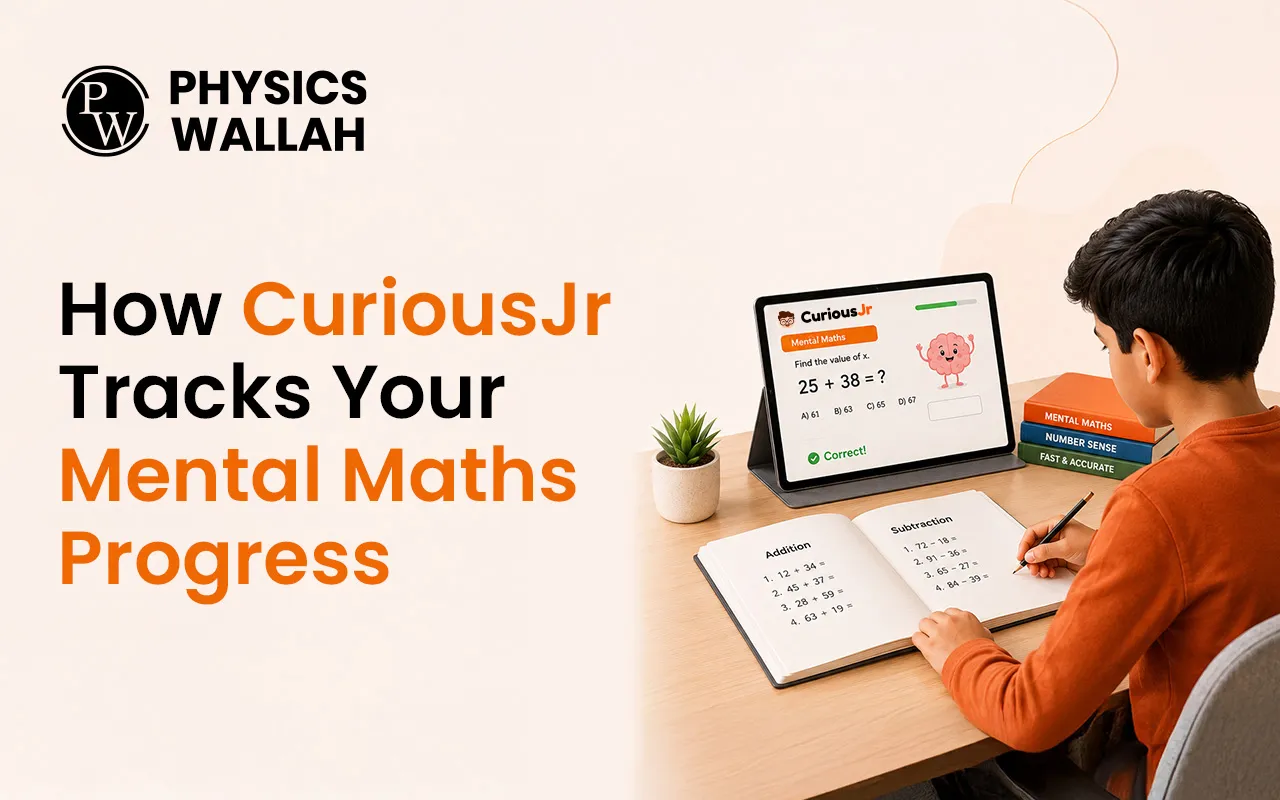
Progress Tracking: Parents can see exactly where the "block" is—whether it’s the 7 times table or the concept of carrying over.
CuriousJr makes sure that Class 3 children don't just learn multiplication; they learn it by blending the logic of Vedic math multiplication with a modern digital interface.