Mental Maths Strategies to Solve Sums Faster
 Nikita Aggarwal2 Mar, 2026

Improve your calculation speed with easy and effective mental maths strategies. Learn simple tricks, shortcuts, and smart techniques to solve sums faster, increase accuracy, and build strong number skills. Perfect for students who want to gain confidence and enjoy maths.Instead of reaching for a pen and paper for every small calculation, you can learn to process numbers internally. By mastering specific mental math techniques for kids, you can turn intimidating problems into simple, manageable steps. This guide will walk you through the most effective math calculation tips to help you solve sums mentally and significantly improve mental calculation skills for long-term success.
What Are Easy Mental Math Techniques
If you are just starting out, don't try to solve three-digit multiplication immediately. Start with these foundational habits of mental maths to solve sums
Use Number Bonds to Add Faster
Number bonds are pairs of numbers that add up to a round total, like 10, 50, or 100. For example, knowing that 7 + 3 = 10 or 65 + 35 = 100 allows you to "group" numbers quickly. If you see 7 + 5 + 3, your brain should immediately pair the 7 and 3 to get 10, then add the 5 to get 15.
Break Numbers into Tens and Ones
This is called partitioning. To add 24 and 35, don't look at them as whole chunks. Break them down:
-
Add the tens: 20 + 30 = 50.
-
Add the ones: 4 + 5 = 9.
-
Combine them: 50 + 9 = 59.
Try Doubles and Near Doubles
Most students find it easy to double numbers (8 + 8 = 16). You can use this to solve "near doubles" like 8 + 9. Since you know 8 + 8 is 16, then 8 + 9 must be one more, which is 17.
Count Forward and Back Quickly
Practice counting with jumps of 2, 5, 10, and 25. This maths speed practice helps your brain recognise patterns, making it easier to solve sums mentally when dealing with larger increments.
Read More - How to Improve Mental Maths Speed in 30 Days
What Are Tricks for Mental Addition
Addition is the foundation of almost all other maths. Speeding this up makes everything else easier.
Add from Left to Right
In school, we usually add from right to left (units first). However, for mental maths to solve sums, it is often faster to go from left to right. To add 45 + 32, think 40 + 30 (70) and then 5 + 2 (7), giving you 77. This follows the way we naturally read numbers.
Round Numbers to Make Them Easy
If you need to add 39 to a number, add 40 instead and then subtract 1. It is much easier for your brain to handle "round" numbers ending in zero.
Use the Compensation Trick
This is similar to rounding. If you are adding 48 + 25, you could take 2 from the 25 and give it to the 48 to make it a clean 50. Now the sum is 50 + 23, which is a very simple 73.
Add Using Place Value
Always keep the "value" of the digit in mind. In the number 562, the '5' isn't just a 5; it is 500. Keeping these "buckets" of hundreds, tens, and ones separate in your head prevents confusion.
Ways To Do Faster Mental Subtraction
Subtraction often feels harder than addition, but these math calculation tips simplify the process.
Turn Subtraction into Addition
Instead of thinking "what is 100 minus 87?", think "what do I add to 87 to get to 100?"
-
87 + 3 = 90.
-
90 + 10 = 100.
-
The answer is 13.
Subtract in Small Steps
To solve 84 - 36, don't do it all at once.
-
84 - 30 = 54.
-
54 - 6 = 48.
Breaking it down prevents mental fatigue.
Think on a Number Line
Visualise a line in your head. To find the difference between 52 and 38, jump from 38 to 40 (2) and then from 40 to 52 (12). Total jump: 14.
Round and Adjust for Speed
To subtract 19, subtract 20 and add 1 back. If you are taking away a number that is "nearly" a round number, use that to your advantage.
How To Do Mental Multiplication Quickly
Multiplication doesn't have to be a long process of columns and carries.
Multiply by 10, 100, and 1000 Mentally
This is the easiest trick in the book. Move the decimal point or add zeros. To multiply 45 by 100, simply stick two zeros at the end: 4,500.
Split Numbers Using Distributive Method
To multiply 14 x 6, split the 14 into 10 and 4.
-
10 x 6 = 60.
-
4 x 6 = 24.
-
60 + 24 = 84.
Use the Double and Half Trick
If you are multiplying two numbers, you can double one and halve the other without changing the answer.
-
16 x 5 is the same as 8 x 10.
-
8 x 10 = 80.
This is one of the most effective mental math techniques for kids when dealing with 5s or even numbers
How To Do Mental Division Quickly
Division is often just multiplication in reverse.
Divide by 5, 10, 25, and 50 quickly.
To divide by 5, divide by 10 and then multiply by 2. For example, 160 / 5:
-
160 / 10 = 16.
-
16 x 2 = 32.
Break Numbers Before Dividing
To divide 128 by 4, halve it twice.
-
Half of 128 is 64.
-
Half of 64 is 32.
Read More - How to Learn Mental Maths from Zero Level
How to Increase Speed of Mental Calculation
Consistency is the secret ingredient for maths speed practice.
Do 5-Minute Speed Drills
Every morning, solve 10 simple sums as fast as you can. Use a stopwatch to track your time. This wakes up your brain and prepares you for the day.
Use Real-Life Calculations Daily
Calculate the total of the grocery bill before the cashier finishes scanning. Figure out how many minutes are left until your favourite show starts.
Move from Easy to Hard Sums
Don't jump into four-digit division. Master two-digit addition, then three-digit, then move to multiplication. Progress should be a ladder, not a leap.
Fun Ways Practise Mental Math
Maths doesn't have to be boring drills. There are plenty of ways to keep it engaging.
-
Play Mental Math Games: Games like Sudoku, KenKen, or even card games like Blackjack (simplified) help with number recognition.
-
Use Flash Cards for Quick Practice: Have a friend show you a card with a sum, and try to answer within 3 seconds.
-
Try Online Math Quizzes: Use educational platforms to compete against other students worldwide.
Make Maths Simple and Fun with CuriousJr
At CuriousJr, we help children overcome their fear of maths and build strong number skills with confidence. Our Mental Maths Online Classes for students from Classes 1 to 8 focus on improving speed, accuracy, and logical thinking through easy techniques and interactive lessons.
With our special dual-mentor system, students attend live classes and also get personal doubt-solving support after each session. Animated explanations, enjoyable practice activities, and exciting challenges make learning maths interesting and effective.
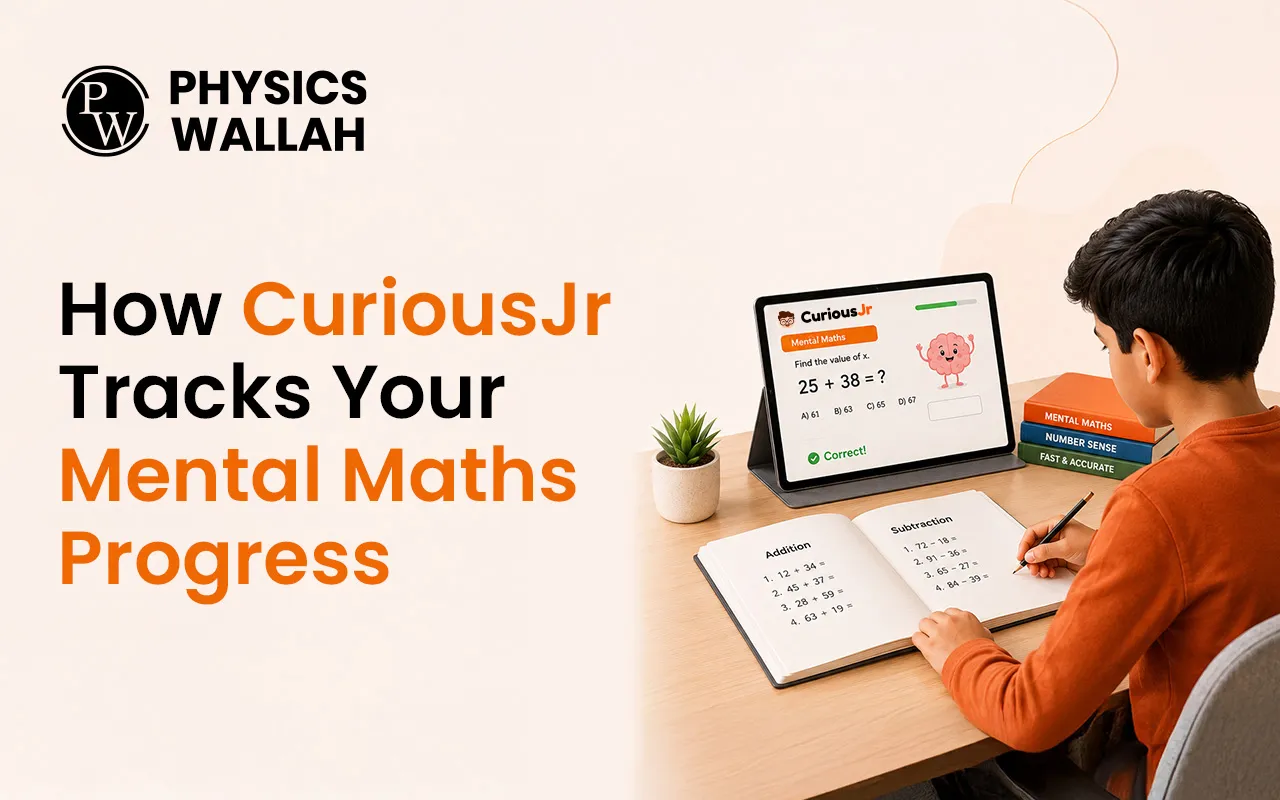
Parents receive regular progress updates and can attend review sessions to stay involved in their child’s learning journey.
Book a demo class today and see how CuriousJr makes maths easy, engaging, and confidence-boosting for your child.