
What is Finger Maths and Why Is It a Great Tool for Class 1 Beginners?
 Nikita Aggarwal19 Jun, 2026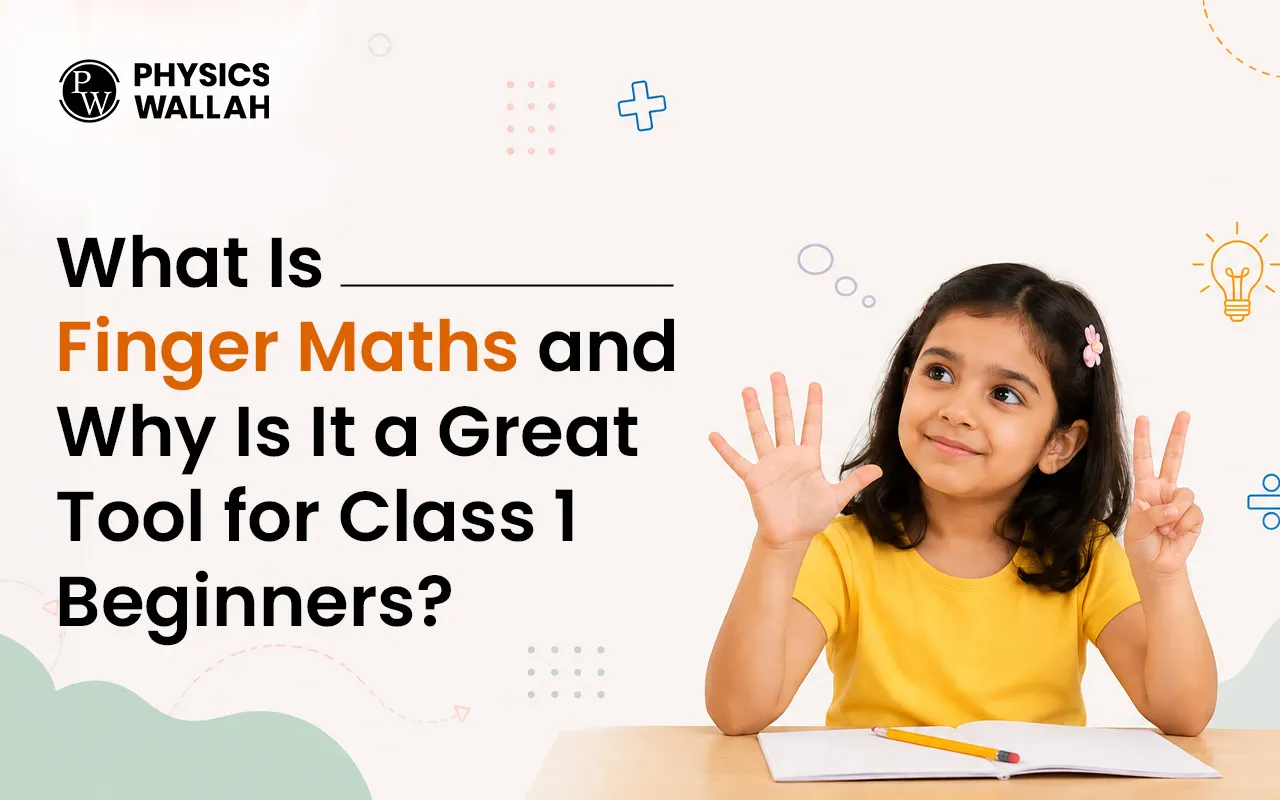
What Is Finger Maths?
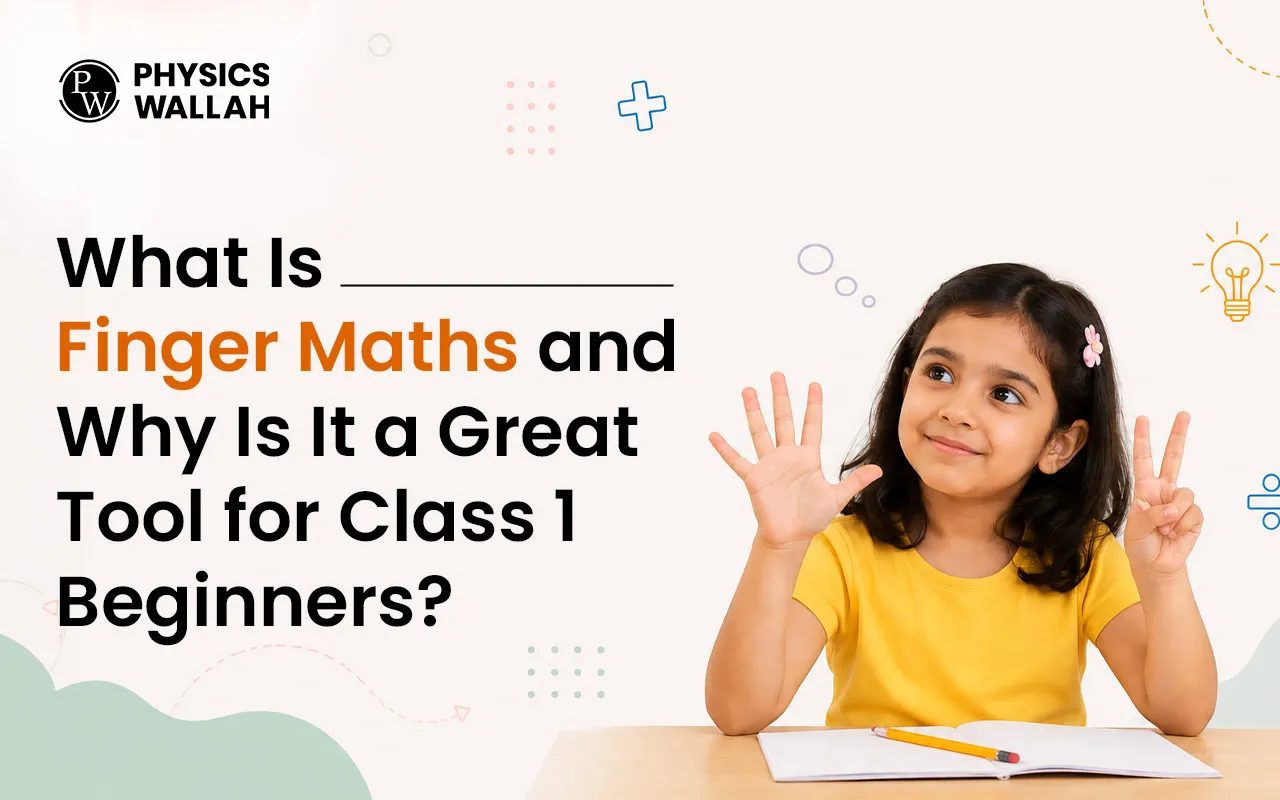
Finger maths is a sensory-based system that uses a child's fingers to represent numerical values and perform basic arithmetic functions. Formalised finger maths provides representations by place value and assigns more structured mathematical meaning across the fingers, unlike basic unstructured hand counting, where each digit simply represents the number one in an endless pattern.
Education researchers and neuroscientists have found that children who learn to use their fingers, as structured counting tools, do better in elementary maths. Studies have also shown a strong cognitive link between "finger sense" – more precisely called "finger gnosis" – and children's overall arithmetic ability.
Children start by making their fist a baseline zero, which gives them an instant physical anchor for understanding zero. It makes counting more structured; it means more when the kids have this structure. What they do instead is deliberately build an exact mechanism for one- or two-digit values.
Read More - Weak Number Recognition Mental Maths Tricks for Class 1
How Finger Maths for Class 1 Beginners Improves Counting
To go beyond counting one at a time to more complex mathematical calculations, you need a profound understanding of numbers. The system thus accelerates this cognitive shift. This method is for Class 1 newcomers to finger maths to distinguish the right hand from the left in terms of place values. That tactile difference allows six-year-olds to do quick calculations without reverting to pencil and paper execution.
-
Visualising the Base-10 System: The left hand represents the tens column, while the right hand represents the units column. This layout reflects how numbers are taught in classrooms.
-
Active Subitising: A child is able to recognise numbers based on finger positions that correspond to the number, thus eliminating one-by-one counting from zero and fast-tracking their ability to calculate.
-
Clear Spatial Awareness: Students build a bodily image of numbers. This visual perspective greatly facilitates the later transition to purely mental calculation.
This kind of structural approach keeps children from getting stuck in slow, repetitive counting loops. As they use their hands in a systematic way, the method creates visual pathways that show how the calculation progresses at every point, thus reducing simple errors.
Fun Activities Using Finger Maths for Class 1 Beginners
To convert these physical strategies into automatic habits, parents and teachers should introduce playful but regular practice. Games that engage children relieve the pressure often associated with early mathematics and provide a delightful routine.
The Human Abacus Race
This activity involves you calling out numbers from 1–99 and your child running to show the corresponding fingers as fast as possible. So if I shout 'thirty-two', your job is to use the fingers on your left hand to show the tens, the fingers on your right hand to show the units, and the first two fingers on the opposite hand to show the 2. This game will assist children in reinforcing rapid recognition of numbers while aiding them with said memory retention.
Simon Says Arithmetic
This game is an adaptation of a classic childhood favourite that helps children practise basic calculation steps. Simon says show me 0 (fists flat on the desk). Simon says put five in there (pop out your right thumb). The kids stay extremely engaged with this fun drill while they learn to process physical cues quickly.
Read More - Speed Maths Test for Class 1 (Try Now)
Benefits of Using Finger Maths for Class 1 Beginners
Learning finger maths in Class 1 lays the foundation of benefits that you will see for your child throughout their schooling and beyond. This works as a great mental maths starter Class 1 and has several key benefits:
-
Bridges the Abstract Gap: Changes the invisible math concepts into physical objects that a child can literally touch, feel and manipulate
-
Portability and Accessibility: No tools required; no extra tools are required, and practice can be done anywhere. The tool is always right at the ends of their arms, ready and waiting.
-
Drives Arithmetic Speed: This tool reduces the time to solve simple addition and subtraction problems, making homework sessions smoother and faster.
-
Lays the Groundwork for High-Speed Calculations: It builds clear patterns that support faster mental calculations.
-
Boosts Academic Confidence: The children no longer panic when presented with numbers on a page; they know that there is an instant and reliable way to get the answer.
-
Engages Multiple Senses: Visual input, touch and movement combine to help kinaesthetic learners effectively hold onto mathematical concepts more successfully than the traditional rote learning methods.
How Does CuriousJr Help with Class 1 Finger Maths?
Although finger counting is wonderful for the earliest years of learning, there comes a point where reliance on these techniques should not last forever. An over-dependence on physical fingers can slow calculation speeds as students struggle with numbers that exceed a manageable level. CuriousJr online kids class 1 mental maths class addresses this problem in a well-formed and gradual way:
-
Systematic Transition to Mental Math: The curriculum gradually pulls children away from physical reliance on fingers, teaching them to see and do calculations purely in their heads.
-
Advanced Vedic Maths Secrets: Students discover advanced mental maths techniques such as "compensations to 10", the adding-9 secret, and the doubles trick that allow them to accelerate their maths speed.
-
Gamified Learning Environment: Lessons are presented through fun and engaging interactive math games and activities that eliminate the stress inherent in elementary school-based mathematics
-
Easy Visual Explanations: Provides an easily understandable visual breakdown of tough concepts—making mental maths second nature and tension-free for kids as young as 6.
-
Live Interactive Practice: Children do not passively listen to a lecture; they continuously work on maths puzzles in class so that their new skills are locked into them immediately.
-
Patient, Expert Teacher Support: Caring instructors give children individualized help as they transition away from using their hands to count.




What Is Finger Maths and Why Is It a Great Tool for Class 1 Beginners? FAQs
Is finger maths for Class 1 beginners better than using a plastic abacus?
Can the finger counting technique for kids handle two-digit addition sums?
Will using finger maths for young learners delay my child mental arithmetic progress?
What are the best Class 1 maths beginner tips for parents working at home?


Get Free Counselling Today
and Clear up all your Doubts
 Live & recorded classes available at easeDashboard for progress trackingLakhs of practice questions

