
How 10 Minutes of Daily Mental Maths Practice Benefits Class 1 Students
 Nikita Aggarwal19 Jun, 2026

Mental Maths Overview
'Mental maths' refers to solving quantity problems entirely in your head, without any written steps or aids, such as counting or writing. Let me clarify—just a child in Class 1 doing highly complicated arithmetic at record speed is not what mental calculation means. But rather, it is a matter of getting to know numbers very closely and comfortably so that simple numerical responses start coming out on their own
At the age of 6, children are highly responsive to playful methods, visuals, and logic Incorporating mental calculations at this convenient stage alters a child's perspective on academics. Far from seeing mathematics as a dreaded chore, they start to see it as an opportunity — like solving surprisingly gratifying fun little puzzles.
Importance of Daily Mental Maths Practice Class 1
When teaching primary school kids, consistency beats intensity every time. We must develop a disciplined Class 1 mental maths routine because young minds love to distinguish between good and bad habits, leading to yearly logical growth and improvement. Just as physical fitness improves with short daily workouts, arithmetic skills multiply when a child attends a 10-minute maths practice block for kids every day!
Optimal Learning Window
Young children are trained to pay attention during small bursts of time. Forcing a 6-year-old to get through an hour-long maths worksheet each week rarely does anything other than overload their brain and exhaust them. Retention drops significantly when a child's brain knows that it is being overtaxed.
Children have short but highly effective concentration spans, and short maths practice benefits them, helping improve learning efficiency. Ten minutes is more than enough time to introduce and repeat a concept but short enough that even the most distracted child can still focus before ending it.
Importance of Habit-Building
For example, the science of short-interval practice shows that regular repetition hardens neural pathways. Think of how a child picks up spoken language – not through isolated weekly lectures, but through consistent daily exposure, day after day. Individual 10-minute sessions add up into hours of focused, frictionless learning over weeks when daily maths for Class 1 has become a non-negotiable family bonding time.
Adaptive systems, like adaptive learning models, allow young children to acquire knowledge and can significantly improve learning speed when they spend only 10 minutes with an adaptive system three days per week! These small steps give children agency, allowing them to return to the task feeling completely confident and prepared for tomorrow.
Activities for Daily Mental Maths Practice Class 1
Converting this daily mental maths practice Class 1 into an immensely captivating game keeps the interactive form of learning intact. Presented below are a number of easy, screen-free experiences that parents and educators can include in the day-by-day schedule to strengthen recall at pace.
1. Visual Dot Card Games
Class 1 children, who are very responsive to visual stimulation (yes), learn to associate quantity with dot patterns. Make custom dot cards with small bits of cardboard and a dark marker.
-
Flash Dot Game: Flash a card with 5 or 7 dots for exactly two seconds, just in front of your child, and tilt it to hide it behind your back. Ask them to quickly say how many dots there are in total. This requires the brain to use subitising, which is when you can automatically know the count of small numbers without having to count them one by one.
-
The Missing Dot Challenge: Show a card with 5 dots. Cover one dot, then ask the child how many are missing. So the exercise becomes more about the active visualization of sight as it relates to mental subtraction.
-
Add the Dots: Put two different dot cards next to each other (e.g., a 3-dot card and a 2-dot one). Prompt the child to find the total of both. Observing two distinct sets being merged gives a clear physical definition of addition.
Read More - Weak Number Recognition Mental Maths Tricks for Class 1
2. Number Bonds and "Making 10"
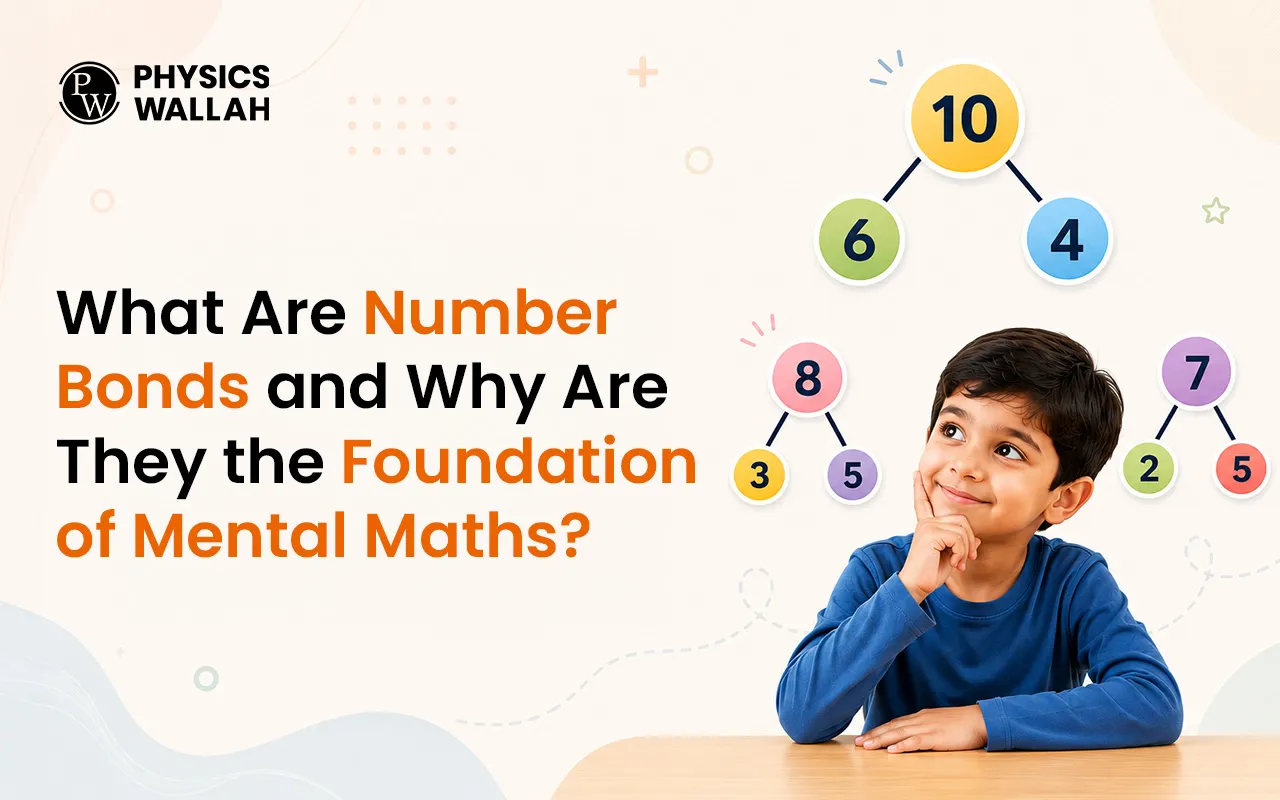
Number bonds are based on the relationship between pairs of numbers and a larger number. Learning all the different pairs that make up 10 is a necessary mental math foundation for Class 1.
-
The Compliments of 10: Hand your child quick questions such as, "I have seven... how many more do I need to make 10?
-
Splitting Numbers: This strategy helps your child separate small numbers to make ten. If they have to do 8 + 5, then for instance, take the five and break it down into two plus three. They can immediately identify that 8 plus 2 brings them to a total of ten and then add the remaining three for a sum of thirteen.
3. Before, After, and Between Sequencing
And when it comes to numbers, they should never be taught as mere symbols (like letters); numbers follow a structured and logical sequence of numeric representation.
-
Position Mapping: shout out a random number, say, 14 and ask your kid to tell you the numbers just before it as well as after it.
-
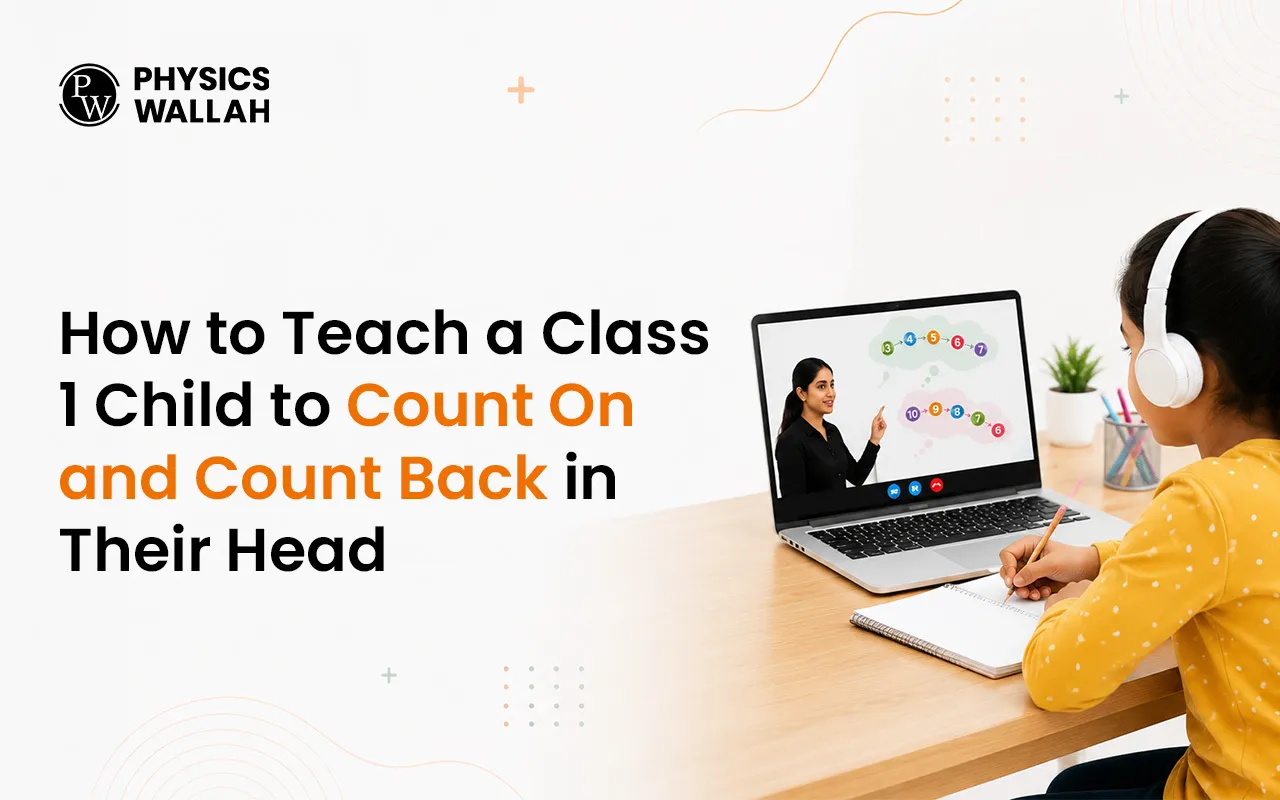
Backward Counting: Practising the opposite of forward decrement by recognising a decrease in numbers is what childhood needs to understand so that they can have an idea of how long a subtraction graph will look with future reductions.
4. Household Living Puzzles
Showing them real-world scenarios teaches children the practice of mathematics as a vibrant, usable language rather than an old rulebook.
-
The Utensil Pattern: In an order, a spoon and fork are lined up, followed by another spoon and fork, and placed on the dining table. Leave the next slot empty and then have your child put the right object down. Go for AABB or ABC patterns (spoon, spoon, knife, knife) to increase difficulty; this helps them with analytical reasoning.
-
The Clapping Rhythm: Sounds like clapping and stomping your feet two times, then clap the rhythm. Have your child tap the same rhythm and tell you what movement comes next. Numerical structure could thus map on to physical senses.
Read More - Speed Maths Test for Class 1 (Try Now)
Benefits of Daily Mental Maths Practice Class 1
Adhering to a constant and regular, regimented routine provides tremendous intellectual benefits that reach well beyond the primary school classroom. Eliminates Finger Counting: Eliminates Finger Counting: Replaces slow hand-counting with faster mental calculation skills.
-
Maximises Short Attention Spans: Takes advantage of the short attention span window, with a 6-year-old's peak capacity for focused work lasting about an hour—long worksheets are linked to cognitive fatigue and burnout.
-
Hardens Neural Pathways: Makes use of the compounding magic of habit formation – thousands upon thousands of tiny 1% daily repetitions create solid long-term recall that is far greater than studying in isolated weekly sessions.
-
Reduces Math Anxiety Early: This approach helps reduce the fear of maths itself by providing low-pressure and playful calculation goals before formal school tests have even begun.
-
Enhances Working Memory: It builds up a child's ability to keep digits and operation steps in their mind while working through the patterns
-
Smoothes the Higher-Grade Transition: It establishes an unshakeable foundation for 2nd grade and beyond, making advanced topics like fractions and multiplication feel intuitive.
How Does CuriousJr Help with Class 1 Mental Maths?
Daily home experiences provide amazing foundational elements; however, young kids ultimately need more regular structured stimulation to hone and develop critical thinking skills. This is where the mental maths online Class 1 curriculum by CuriousJr comes into the scene, revolutionising early comprehensive education.
CuriousJr builds a stress-free, responsive educational ecosystem that integrates digital play with structured study.
-
Story-Based Learning Curriculum: Converts dull maths into colourful story adventures — Mango Treat and Vegetable Farm are directly aligned with school-level poi curriculums.
-
Age-Appropriate Vedic Maths Shortcuts: Includes soothing mental hacks such as the Adding 9 Trick and left-to-right addition, which allow kids' brains to instantly process sums.
-
Interactive Gamified Ecosystem: Transforming passive video lectures into active mobile apps with logic puzzles, code games and dot-counts in tens of thousands.
-
Live Expert Teacher Guidance: The Couples aspect of the digital tools, paired with experienced teachers who guide through warm-up activities such as 1-minute speed rounds to help increase speed and accuracy in calculations.
-
Adaptive Learning Pace: Monitors the student's performance through low-stakes quizzes and adjusts curriculum difficulty accordingly to accommodate each child's individual pace of progress.




How 10 Minutes of Daily Mental Maths Practice Benefits Class 1 Students FAQs
What is mental maths for Class 1, and why does it matter?
How can a 10-minute maths practice routine for kids match the results of longer study hours?
Why should parents establish a permanent mental maths habit for 6 year olds?
What are the main benefits of using a daily maths for Class 1 routine at home?


Get Free Counselling Today
and Clear up all your Doubts
 Live & recorded classes available at easeDashboard for progress trackingLakhs of practice questions

