Why Practising Mental Maths Daily Builds Class 5 Exam Confidence
 Nikita Aggarwal15 Jun, 2026
How does Daily Mental Maths Practice Class 5 Exam Confidence Increase Speed?
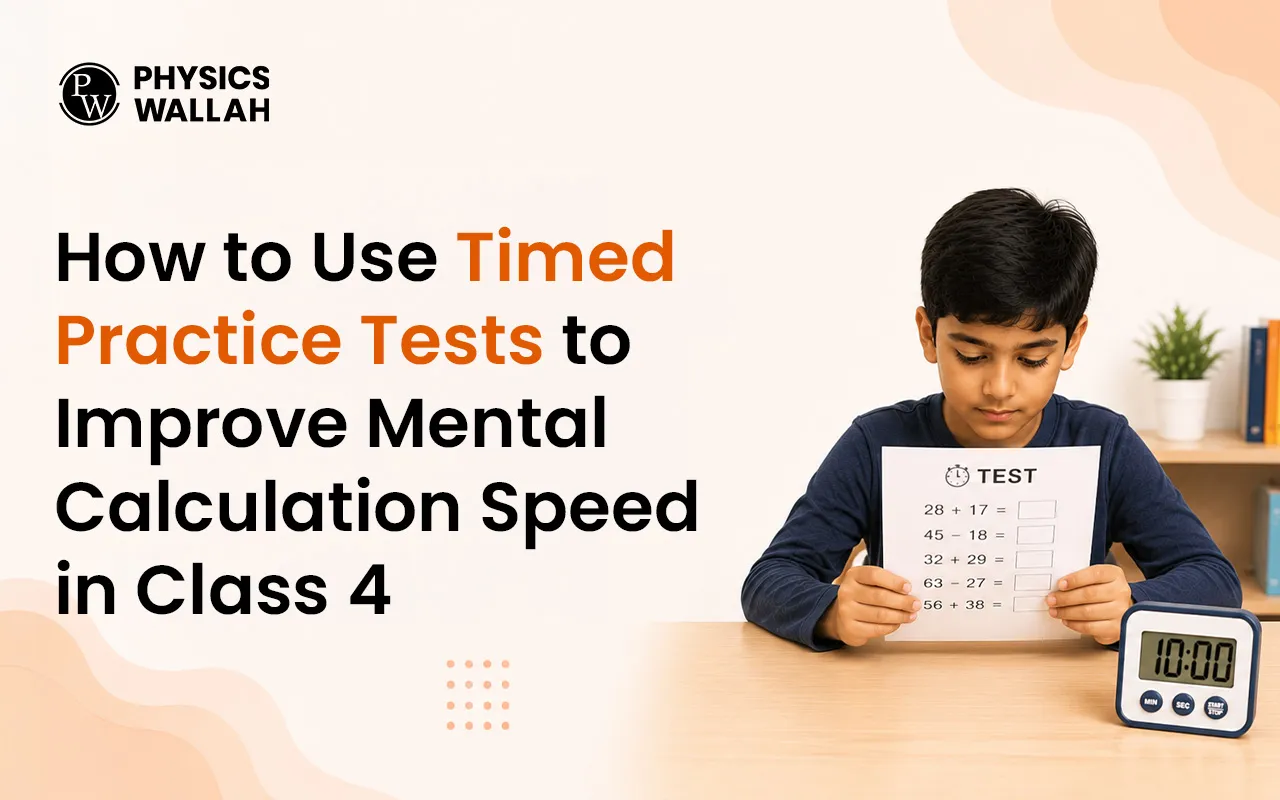
Speed is a major factor in school assessments. When students calculate sums in their heads, they skip the slow process of writing down every single step for minor calculations. This gives them a distinct advantage during time-bound tests.
The following list highlights how rapid calculations transform exam performance:
-
Eliminates Finger Counting: Students stop relying on physical counting, which speeds up processing time.
-
Quick Fact Retrieval: Fast access to times tables makes long division and multiplication effortless.
-
Subconscious Processing: Basic arithmetic operations become second nature, leaving more brainpower for complex, multi-step problems.
By reducing the time spent on basic operations, children secure extra minutes to review their test papers. This efficiency directly impacts how relaxed and prepared they feel when the exam timer begins.
Why Class 5 Maths Exam Preparation Needs Mental Arithmetic?
In the fifth standard, the topics become a little advanced and include fractions, decimals, and basic geometry. Even with just the standard written tests, exams can seem long and overwhelming. Regular studies coupled with quick-calculation habits make these new topics easier.
Below is a table comparing traditional written methods and mental maths strategies on standard assessments:
|
Exam Challenge |
Traditional Written Method |
Mental Math Strategy |
|
Rough Work Space |
Fills pages with messy scribbles |
Keeps the test paper clean and organised |
|
Time Consumption |
Takes 30 to 45 seconds per basic sum |
Takes 5 to 10 seconds mentally |
|
Error Tracking |
Difficult to spot silly mistakes quickly |
Immediate intuitive sense of wrong answers |
Above shows that Class 5 maths exam preparation is considerably slowed down by using pencil and paper. Better numerical intuition smooths the transition to complicated word problems.
Read More - How to Calculate Discounts and Simple Interest Mentally in Class 5
Daily Mental Maths Practice for Class 5
Test anxiety usually comes from students feeling overwhelmed by the sheer number of questions. Panic disappears when numbers are friends, not enemies. Daily consistent involvement makes maths a game you know and can predict
Regular engagement with numbers provides several emotional and psychological benefits:
-
Builds Numerical Familiarity: Frequent exposure reduces the fear of large or unfamiliar numbers.
-
Reduces Exam Panic: Quick mental checks reassure students that their answers are correct.
-
Creates Positive Reinforcement: Small daily wins build a strong, unstoppable can-do attitude.
Developing this comfort level ensures that children do not freeze when encountering a difficult paper. Instead, they rely on their sharp skills to navigate tough sections calmly.
Tips for Daily Mental Maths Practice Class 5
You need to work hard and have a good strategy to pass assessments. Knowing a few mental shortcuts can save valuable time during formal evaluations.
The following techniques help students process numbers rapidly without needing a pencil:
-
Compensation Method: Round numbers to the nearest ten before adding or subtracting, then adjust the difference. For example, to add 29, add 30 and subtract 1.
-
Left-to-Right Addition: Add numbers from left to right according to their place value, rather than right to left, to mirror how we read text.
-
Doubling and Halving: Simplify tricky multiplication by doubling one number and halving the other to keep calculations manageable.
Implementing these methods converts long, tedious problems into simple steps. This tactical advantage ensures students finish their papers well before the final bell rings.
Read More - Visual Reasoning Mental Maths Tricks for Class 5
Why Mental Maths Confidence Matters for Class 5 Students?
Confidence extends far beyond the examination hall. When a child masters rapid arithmetic, their entire approach to school changes for the better. They stop hiding at the back of the classroom and start engaging actively with the teacher.
This psychological boost impacts a student's daily school life in several ways:
-
Volunteering Answers: Students raise their hands confidently during live oral quizzes.
-
Peer Mentoring: Children explain concepts to friends, which reinforces their own understanding.
-
Positive Risk-Taking: A strong mindset encourages students to try solving advanced, challenging puzzles.
This newfound mental maths confidence Class 5 acts as a stepping stone. It transforms a child from a passive listener into an active, enthusiastic learner who genuinely enjoys STEM subjects.
Benefits of Daily Mental Maths Class 5
At 10, the belief in your mathematical ability is the basis for future academic choices. It opens doors to logical thinking, data analysis, and scientific reasoning in later years.
The journey from a hesitant calculator to a confident student involves key milestones:
-
Smooth High School Transition: Foundations built now make the standard 6 syllabus much easier.
-
Competitive Edge: Fast mental processing prepares children for future talent search exams.
-
Real-World Utility: Quick estimation assists in everyday financial literacy and smart decision-making.
Nurturing Class 5 maths confidence ensures that children view challenges as puzzles to solve rather than obstacles to avoid. This mindset shift benefits them far beyond their primary school education.
Self-study is great, but learning with structured guidance is much faster and more effective. Interactive websites provide activities tailored to the needs of young brains that keep them actively involved.
Modern digital learning environments support student growth through targeted features:
-
Gamified Practice: Interactive rewards turn repetitive arithmetic practice into an enjoyable game.
-
Instant Feedback: Real-time corrections prevent students from memorizing incorrect methods.
-
Adaptive Learning: Software adjusts difficulty levels based on the child's current learning speed.
Enrolling a child in high-quality Class 5 online maths tuition provides the consistent, daily structure needed to turn weaknesses into strengths. This systematic approach ensures no gaps remain in their conceptual understanding.
How Does CuriousJr Help with Daily Mental Maths Practice Class 5?
Developing great numerical agility requires the right mix of consistency, expert pedagogy, and engaging content. When learning feels like play, children willingly spend time mastering difficult concepts every single day without feeling exhausted.
The interactive framework at CuriousJr online class 5 mental maths class addresses student needs perfectly:
-
Visual Concepts: Abstract mathematical operations are broken down into clear, animated steps.
-
Bite-Sized Exercises: Short daily sessions fit easily into busy school schedules without causing burnout.
-
Progress Tracking: Detailed analytics show parents exactly where their child excels or needs support.
Enroll your child in the CuriousJr Class 5 Mental Maths Course that helps to bridge the gap between fear and academic mastery. It provides structured, fun and time-tested techniques. These prepare young minds to ace school assessments with absolute ease.




Why Practising Mental Maths Daily Builds Class 5 Exam Confidence FAQs
How many minutes of daily maths practice for kids is ideal?
Can mental arithmetic help a student transition to mental maths class 6?
What is the quickest way to improve a child's calculation speed before tests?

Get Free Counselling Today
and Clear up all your Doubts
 Live & recorded classes available at easeDashboard for progress trackingLakhs of practice questions