
How Mental Maths Helps Children Overcome Fear of Numbers
 Nikita Aggarwal18 Jun, 2026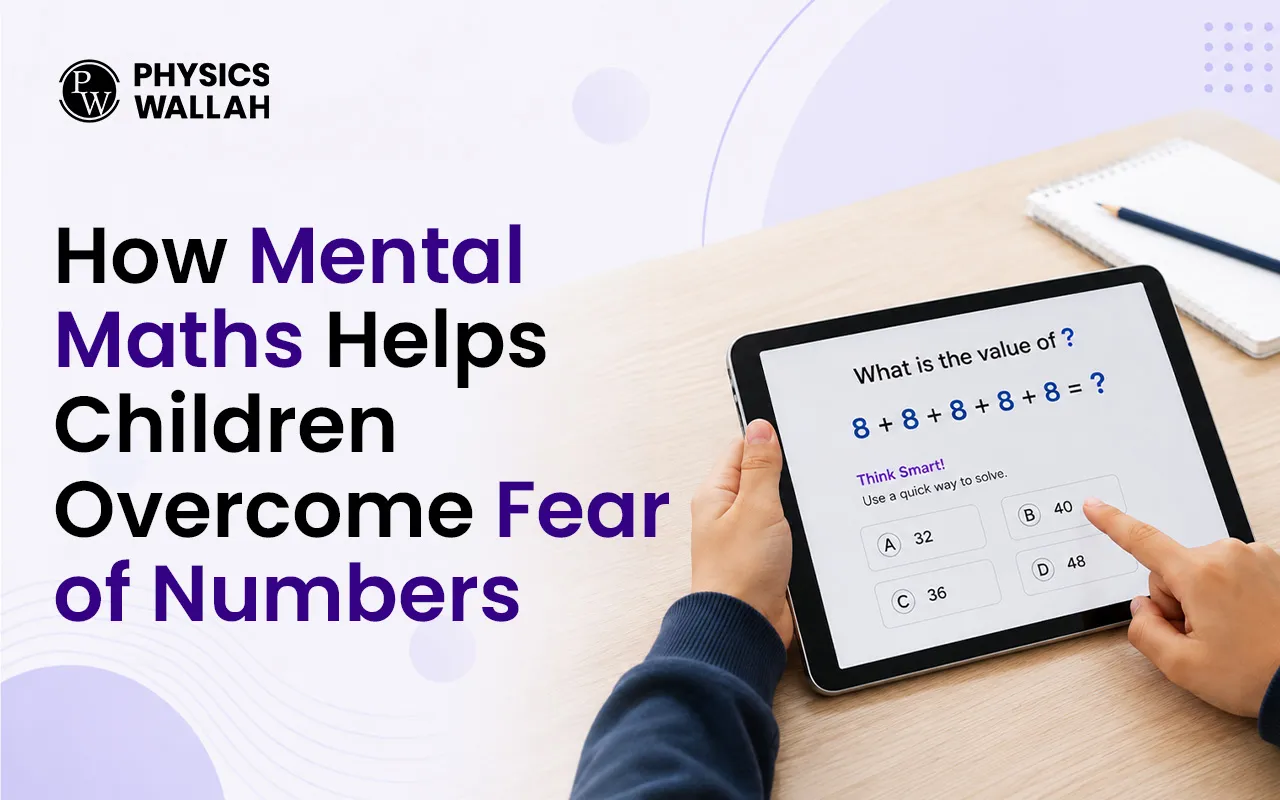
How Mental Maths Helps Overcome Fear of Numbers
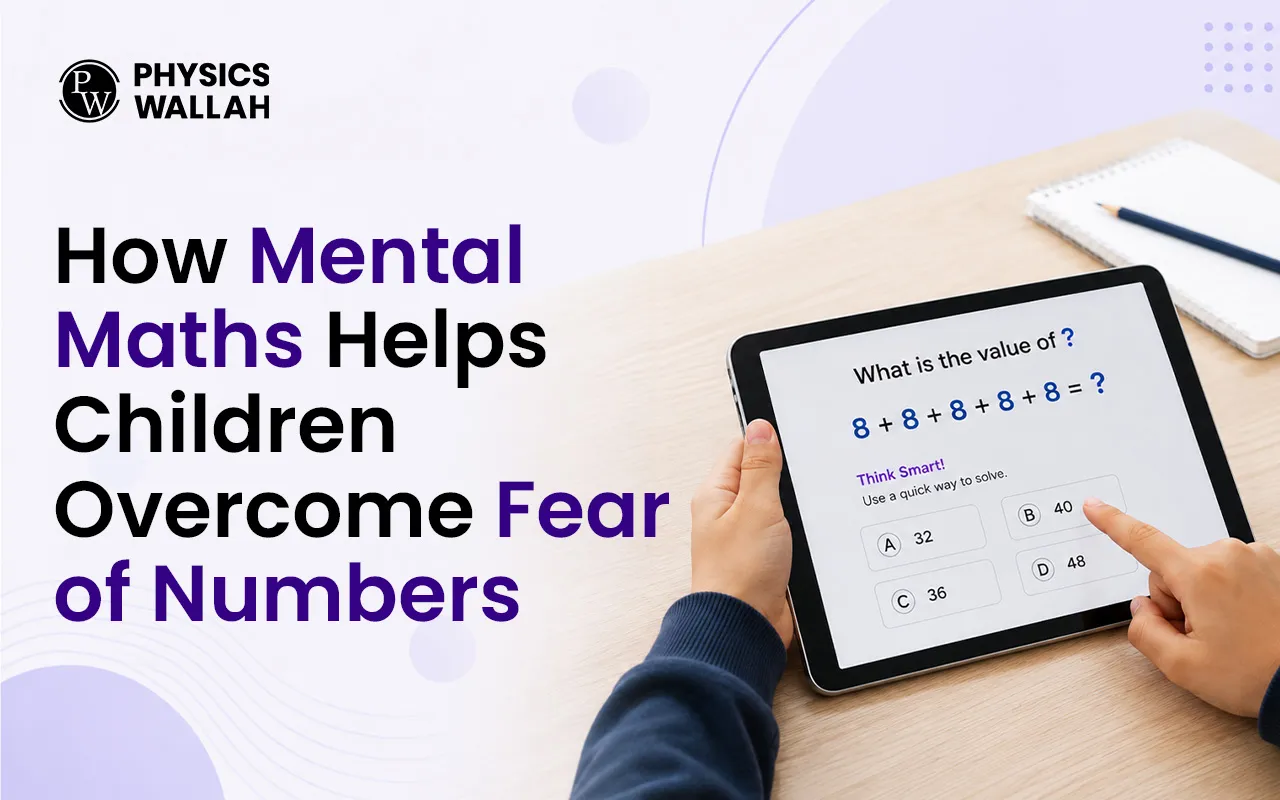
Mathematics can be a very scary subject for a young learner. Many students freeze with fear at the sight of columns of dense figures or obscure formulas. This is widely known as maths anxiety in children, a psychological barrier that can make even simple homework feel like a struggle.
A child scared of maths often finds this fear compounded when they are exposed to traditional teaching practices that reward fast and automatic recall through memorisation. And they eventually come to believe that they simply cannot do maths. We need to shift this negative perception into a positive view of arithmetic for children. Finding out how to make maths easy for kids is all about replacing the abstract fog of confusion with practical, everyday ideas.
Importance of Mental Maths to Overcome Fear of Numbers
In the classroom, teachers have focused mathematics severely on pen, paper, and unyielding processes. One misplaced digit derails a long division or column addition. Such things frustrate them at the start, leading to doubts about their ability to cope with it. Mental maths aims to lessen fear associated with numbers by offering an end goal that contrasts with tight paperwork and emphasises clear conceptual understanding.
Children develop a natural number sense when they learn to work through equations in their head. That's the cosy, qualitative grasp of numbers, their absolute and relative scale to each other in real-world situations. Children do not mechanically imitate steps they do not comprehend; they learn to play with values. Such direct acquaintance is removing the confusion, which often leads to a child fearful about maths shutting down.
Mental maths also lends itself to directly reducing the cognitive overload. When a child has to write out long, sequential problems, they are required to use their mind to hold multiple rules at one time. This burden frequently triggers panic. Mental arithmetic methods provide strategies that make these calculations easier, and this approach is a powerful way to use mental maths to overcome maths fears.
Read More: Top 10 Tricks to Master Mental Maths
Fun Techniques That Use Mental Maths to Overcome Fear of Numbers
Leading by example, the most effective method to defeat number-object terror is exposure: activities that involve hands-on, enjoyable learning. Arithmetic no longer feels like an arduous task when we are showing children how to split and reassemble numbers mentally. This gives children a simple way to approach arithmetic and learn about numbers with confidence — here are three powerful mental maths strategies:
1. The Dynamic Compensation Strategy
The concept of compensation shows children how to change scary numbers into the closest multiple of ten, which in turn makes the main operation much easier. After doing the simple addition, the child adjusts it by adding or subtracting to get an exact answer.
-
The Method in Action: For instance, a child wants to calculate 39 + 24. 39 looks like a difficult number to add in one's head.
-
The child rounds 39 up, making it temporarily 40.
-
This now becomes much simpler math: 40 + 24 = 64.
-
Because they added an extra 1 at the start, they simply subtract 1 from the total: 64 - 1 = 63.
-
Why It Eases Anxiety: This method removes the burden of carrying digits over columns and illustrates to children that numbers are highly flexible, having undergone a series of transformations in order for them to be more easily managed.
2. Number Deconstruction (The Splitting Method)
Splitting is where you break a big number down into its building blocks, such as tens and units. It enables kids to read huge numbers in parts, like smaller, more manageable parts.
-
The Method in Action: To solve 53 + 35 without pen and paper, the child will not try to picture all at once.
-
Instead, they split both numbers into tens and units: 50 and 3, and 30 and 5.
-
They first combine the tens: 50 + 30 = 80.
-
They then continue adding the remaining units: 3 + 5 = 8.
-
Then they simply add the two results together: 80 + 8 = 88.
-
Why It Eases Anxiety: The child does not suffer from cognitive overload, as only one simple addition will have to be focused on by looking at the board; this method eliminates all complex written calculations of a long written equation
3. The Friendly Numbers Method
This strategy teaches young learners to look for natural pairs of numbers that readily combine or are easily added together to form a multiple of 10 from long strings (blocks) along the number line. The problem is now easy once we group these "friendly pairs."
-
The Method in Action: If you ask a child of Class II to solve 8 + 5 + 2 + 5, he/she might freeze seeing how long this string is.
-
In this particular strategy, the child will identify 8 and 2 because they equal 10.
-
Then they match the two 5s, which also make ten.
-
The equation gets immediately reduced down to 10 + 10, which can give a very fast answer of 20.
-
Why It Eases Anxiety: It transforms a difficult-to-interpret series of numbers into an immediate game of visual matching, eliminating stress and replacing it with instant gratification.
Read More - What is Mental Maths? A Guide for Beginners
Benefits of Using Mental Maths to Overcome Fear of Numbers
Getting your mental arithmetic down completely changes how a student processes information by providing a whole arsenal of brain advantages. With regular practice of these skills, you can significantly improve how a child performs academically.
-
Enhances Cognitive Focus and Active Memory: By doing mental math, children must carry values in their heads. This habitual exercise of practice enlarges their working memory capacity and thereby inevitably extends their overall concentration spans in all subjects at school.
-
Develops Advanced Logical Thinking: Students are trained to seek patterns in numbers rather than mindlessly following rigid textbook rules. They are trained to identify structural patterns, which builds their overall problem-solving skills.
-
Provides Instant Real-World Practicality: Whether in the form of calculating change at a nearby shop, quick time calculations or measuring ingredients for cooking, mental calculation is one of those skills that have everyday utility. The utility of this skill shows children the value of their schoolwork, which is an example of True Self Reliance.
-
Fosters Long-Term Classroom Confidence: Students who can solve equations in their head are relieved – they won't freak out when the teacher surprises them with a quiz. This assurance leads to a shift from test-driven anxiety to positively engaging with their studies.
-
Creates a Strong Foundation for Higher Mathematics: If kids can divide, multiply or calculate percentages easily and confidently, they find it effortless to learn new topics like algebra or geometry. It allows the child to not be held back by basic multiplication or addition so they can wholeheartedly focus on complex new ideas.
How Does CuriousJr Help with Fear of Numbers?
We need a context that is caring, contextualised, and systematic, and that keeps children motivated without them even realising the effort involved. CuriousJr online kids mental maths class provides exactly this in the form of their expertly devised online mental maths classes, a fresh, relaxed learning line made for anxious kids.
Traditional drills and worksheets also make the problem worse in arithmetic anxiety, but CuriousJr understands these issues. This is because it focuses exclusively on interactivity and discussions of concepts.
-
Gamified Practice Challenges: A platform like CuriousJr transforms abstract maths problems and turns them into exuberant interactive journeys. Through playing educational games that revolve around core concepts, your kids can solve sums and move through levels, allowing them to learn naturally without the weight of a grading system.
-
Highly Manageable, Bite-Sized Lessons: The curriculum divides big theories of arithmetic into simple, bite-sized lessons. Sure, this slow burn will not allow burnout and keeps the children bubbling with natural curiosity throughout.
-
Immediate and Encouraging Feedback: As soon as a student completes a step, they receive immediate feedback on whether their attempt was correct or not. This instant reward reinforces their hard work and changes the frustration of homework into a feeling of accomplishment.
-
Visual Progress Tracking for Families: Plain and Simple transparent parent dashboards reveal a continuous stream of learning accomplishments. Nothing showcases their advancement in maths confidence for kids better than being at home and celebrating these small victories.




How Mental Maths Helps Children Overcome Fear of Numbers FAQs
How can parents spot early signs of maths anxiety in children?
Can mental maths to overcome fear of numbers help a student who struggles with basic counting?
Why are online mental maths classes better than traditional home tutoring?



Get Free Counselling Today
and Clear up all your Doubts
 Live & recorded classes available at easeDashboard for progress trackingLakhs of practice questions

