Repetition Figure of Speech - Definition, Types with Examples
 Nikita Aggarwal10 Apr, 2026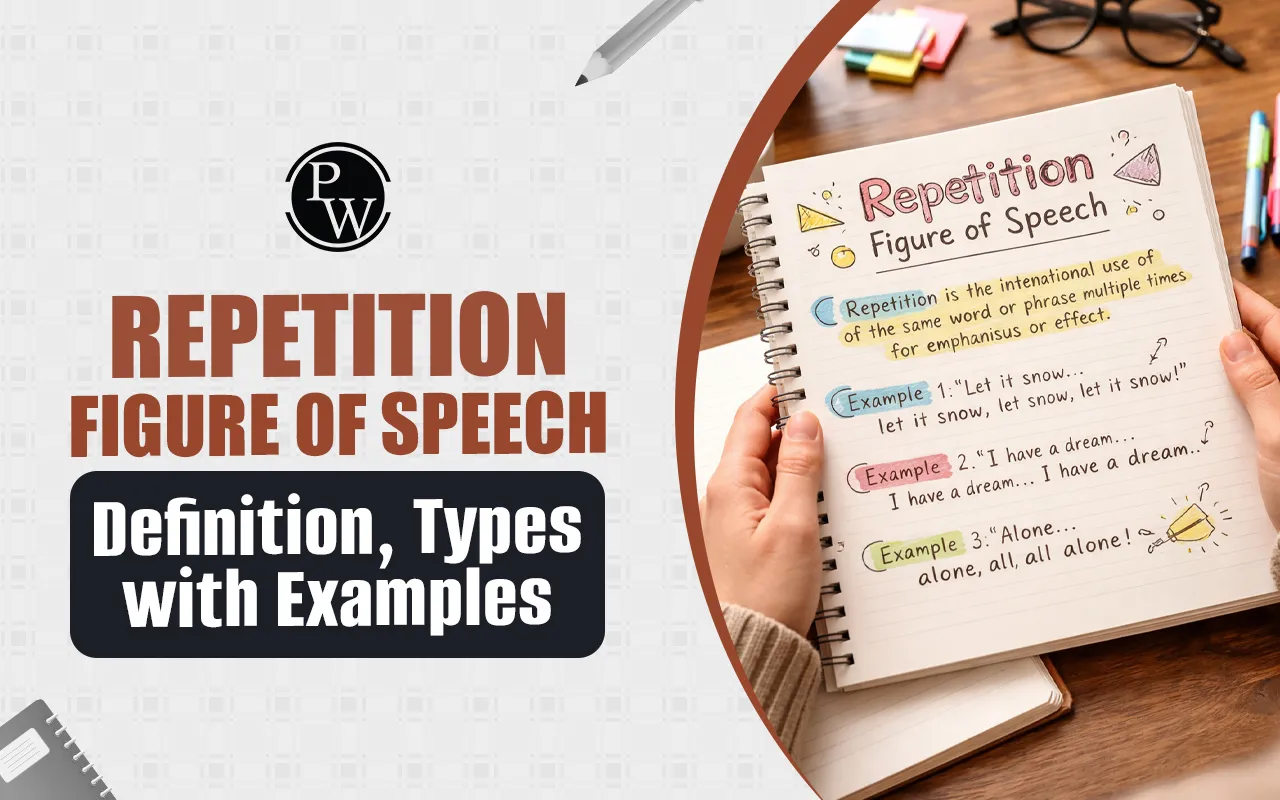
What is Repetition Figure of Speech?
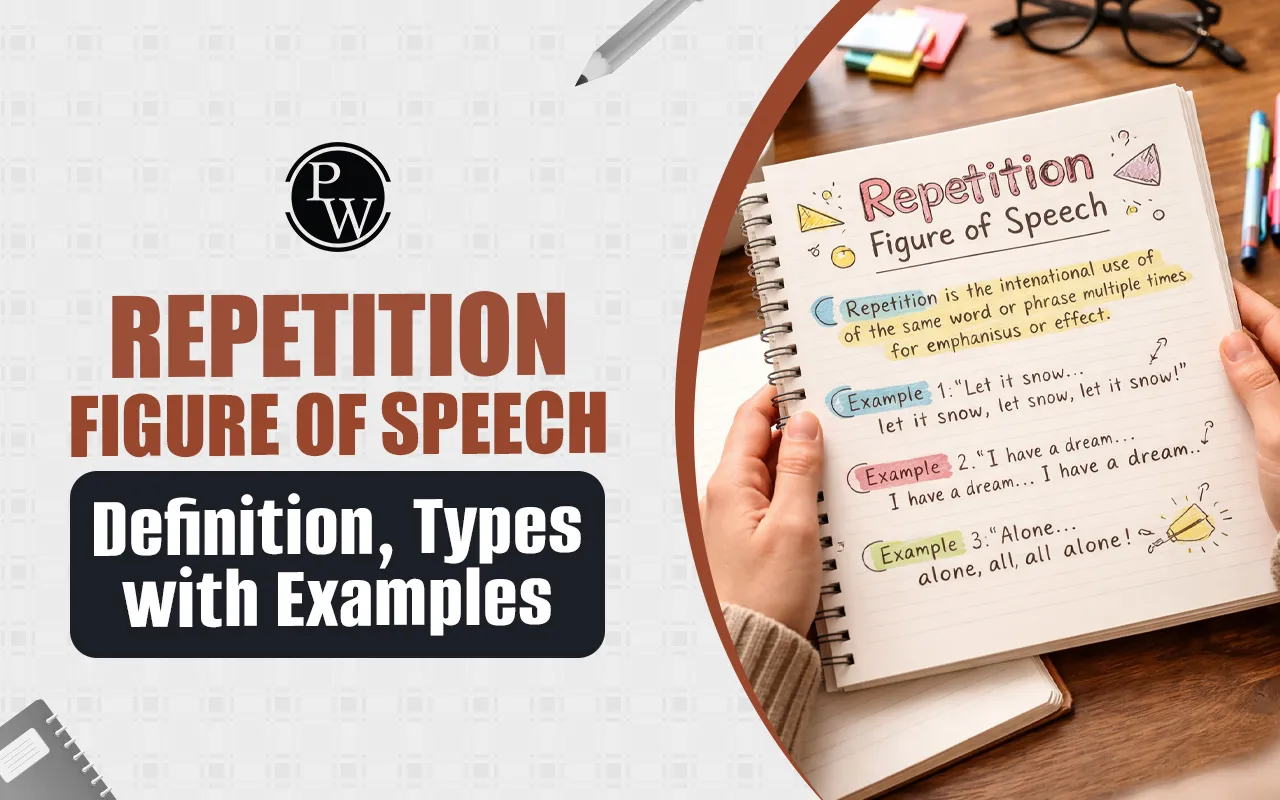
The simplest definition is that it means using a word, phrase, or sentence more than once in a brief paragraph on purpose. This is a purposeful creative choice, not a mistake where a writer accidentally uses the same term too often.
The goal is usually to provide emphasis. When we repeat something, we signal to the reader that this specific idea is important. It works like a highlighter for the eyes or ears. Writers can make a poem feel urgent, tense, or even relaxing and lyrical by repeating sounds or words.
Why Do Writers Use Repetition?
Our minds are made to see patterns. We pay more attention when we hear the same words over and over again.
-
Emphasis: It makes sure that the main point doesn't get lost in a lot of details.
-
Rhythm: It gives poetry and song lyrics a musical quality.
-
Memorability: It helps you recall slogans and important points.
-
Emotional Impact: Saying a term like "alone" over and over might make a story's misery or isolation feel stronger.
Repetition Figure of Speech Types
Repetition is not a universal concept. There are several specific categories that writers use depending on the effect they want to achieve. Understanding these types will help you analyse literature like a pro.
1. Anaphora
This is one of the most common forms found in speeches and formal writing. Anaphora occurs when the same word or phrase is repeated at the beginning of successive clauses or sentences. It builds momentum and creates a strong "beat" in the prose.
2. Epistrophe
Think of this as the opposite of anaphora. Epistrophe is the repetition of a word at the end of successive clauses. It serves to give a sense of finality or to hammer home a concluding thought.
3. Anadiplosis
This occurs when the last word of one clause is used as the first word of the next. It creates a chain-like effect, linking ideas together logically and rhythmically.
4. Polyptoton
In this type, words derived from the same root are repeated but in different forms (e.g., using "strong," "strength," and "strengthen" in the same paragraph).
5. Epizeuxis
This is saying a single word over and over again right away, usually without any other words in between. For example: "Run, run, run!"
6. Epanalepsis
When the same word or phrase is at the beginning and conclusion of a sentence or clause, this happens. It gives a sense of fullness and importance. For example, "Nothing will come of nothing."
7. Diacope
In this kind, a word is said again with a few more words in between. It is often used to make things more dramatic. "The horror! Oh, the horror!" is an example.
8. Symploce
This is a mix of anaphora and epistrophe, which means that the same thing happens at the start and conclusion of clauses.
9. Mesodiplosis
In this case, the repeat occurred in the middle of two sentences or clauses that come one after the other.
10. Polysyndeton
This means using conjunctions like "and" or "or" over and over again to make a flow or an overwhelming impression. For instance, "We lived, laughed, loved, and left."
11. Refrain
A refrain is a line or group of words that is repeated in poetry or songs at regular intervals to make a point stronger.
|
Type |
Placement of Repetition |
Primary Purpose |
|
Anaphora |
Beginning |
Builds rhythm and emphasis |
|
Epistrophe |
End |
Creates strong conclusion |
|
Anadiplosis |
End → Beginning |
Links ideas |
|
Epizeuxis |
Immediate |
Adds urgency |
|
Antanaclasis |
Same word, different meanings |
Creates wordplay |
|
Epanalepsis |
Beginning + End |
Creates symmetry and closure |
|
Diacope |
With words in between |
Adds dramatic emphasis |
|
Symploce |
Beginning + End combined |
Reinforces structure strongly |
|
Mesodiplosis |
Middle of clauses |
Subtle rhythmic effect |
|
Polysyndeton |
Repeated conjunctions |
Creates flow or intensity |
|
Refrain |
Repeated lines |
Reinforces theme |
Read More - Apostrophe Figure of Speech - Definition, Uses, Examples
Repetition Figure of Speech Examples in Literature
To truly grasp this figure of speech, we must look at how the masters of English have used it.
Examples in Poetry
Robert Frost’s famous poem, Stopping by Woods on a Snowy Evening, ends with the lines:
"And miles to go before I sleep, / And miles to go before I sleep."
Here, the examples show how repeating a line can shift the meaning. The first time, it might mean literal distance. The second time, it suggests a deeper, metaphorical exhaustion or the long journey of life.
Examples in Speeches
Martin Luther King Jr.’s "I Have a Dream" speech is perhaps the most famous example of anaphora. By starting multiple paragraphs with that specific phrase, he created a rhythmic structure that made his vision feel inevitable and powerful. This is a classic use of repetition figure of speech in english to inspire a crowd.
Examples in Everyday Language
We use repetition more than we realise. Think about common phrases like:
-
"Hand in hand"
-
"Time after time"
-
"All for one and one for all"
These phrases use the repetition figure of speech to sound more balanced and catchy.
Read More - Allegory Figure of Speech: Meaning, Features, and Examples
How to Identify Repetition Figure of Speech?
It's easy to find repetition in a sentence once you know what to look for. Here are a few easy things to do:
-
In a short text, look for words or phrases that are used more than once.
-
Look at where they are: in the start, in the middle, or at the end?
-
Look at the purpose: is the writer focusing on an idea, emotion, or rhythm?
-
Say the sentence out loud to hear how it sounds and how it flows.
After you do these things, it will be much easier to spot repetition in poems, speeches, and prose.
How to Use Repetition in Your Own Writing
Repetition is a strong tool, but it needs to be used with care. If you write too much for no reason, your writing could seem sluggish or repetitious (in a poor sense). Here are some ways to make the most of the repetition:
-
Set a goal: Before you say the word again, think about whether or not it is the most essential word in the statement.
-
Change the Length: Short, snappy repeats are good for making things exciting, while longer repeated phrases are excellent for a serious or meditative tone.
-
Placement is important: Use anaphora at the beginning to build up to a point and epistrophe at the conclusion to make a lasting impression.
-
Check the Rhythm: Say your work out loud. You might need to cut back on the repetition if it sounds clunky or unpleasant instead of rhythmic.
Repetition vs Redundancy
Many students confuse repetition with redundancy, but they are not the same.
-
Repetition is intentional and used for emphasis, rhythm, or emotional impact.
-
Redundancy is unnecessary repetition that does not add value to the sentence.
Example:
-
Repetition: "Never, never give up." (Adds emphasis)
-
Redundancy: "Free gift" (Unnecessary repetition of meaning)
Understanding this difference helps you use repetition effectively without weakening your writing.
Repetition vs Alliteration
It is easy to get confused between different literary devices. While repetition figure of speech definition focuses on whole words or phrases, alliteration focuses only on the initial consonant sounds of words. For example, "Peter Piper picked" is alliteration. Saying "I was hungry, I was tired, I was cold" is repetition. Both create rhythm, but they operate on different levels of language.
Give Your Child a Global Edge with CuriousJr’s Cambridge-Certified English Program
Is your child struggling to speak or understand English confidently at school or in everyday situations? CuriousJr helps children aged 6 to 14 improve their English skills through live online English learning classes guided by experienced teachers.
Our program follows internationally recognized Cambridge standards and is specially designed for Indian learners. It is divided into four structured levels—Pre A1, A1, A2, and B1—so children can steadily build their grammar, vocabulary, reading, writing, listening, and speaking skills.
With small batch sizes, each child gets personalized attention and proper guidance to grow at their own pace. We focus on helping children communicate clearly and confidently in both academic and real-life situations.
Book a demo session today and see how CuriousJr can support your child’s English learning journey.