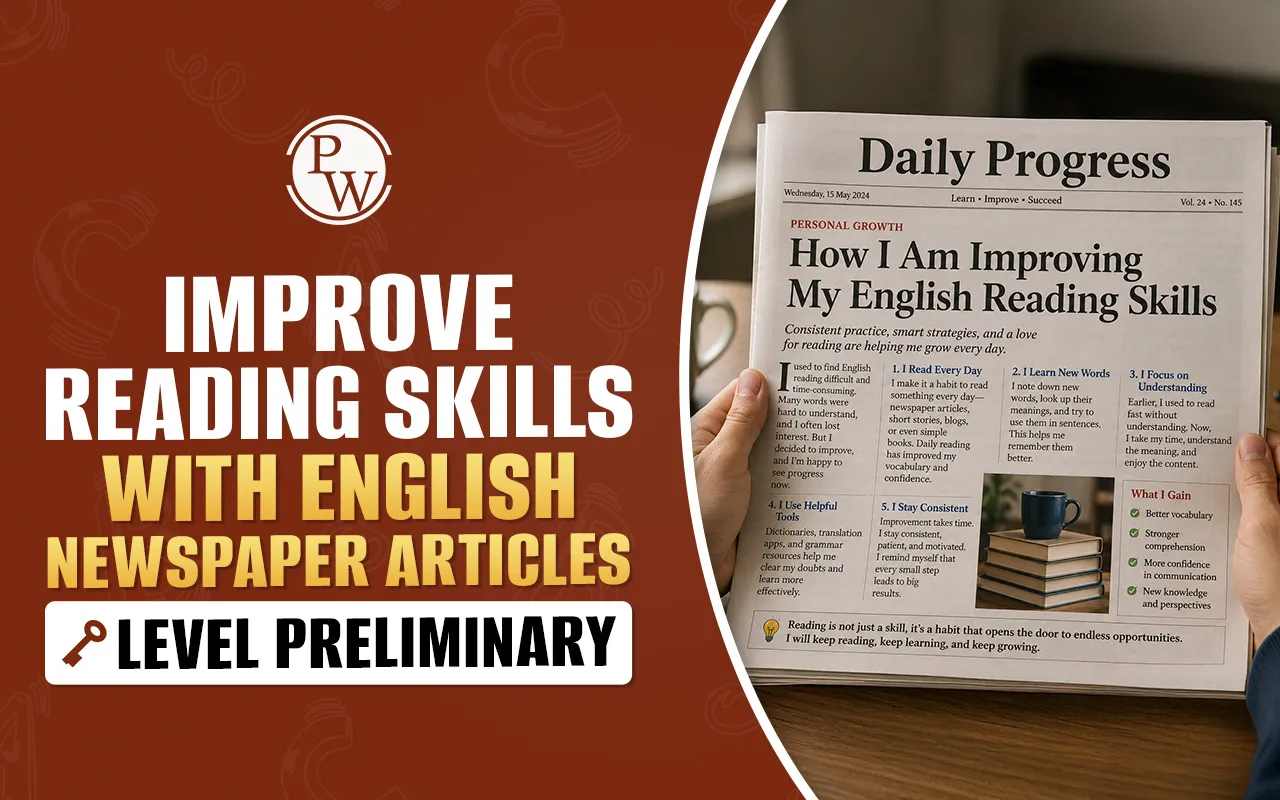
Improve Reading Skills with English Newspaper Articles (Level Preliminary)
 Nikita Aggarwal23 May, 2026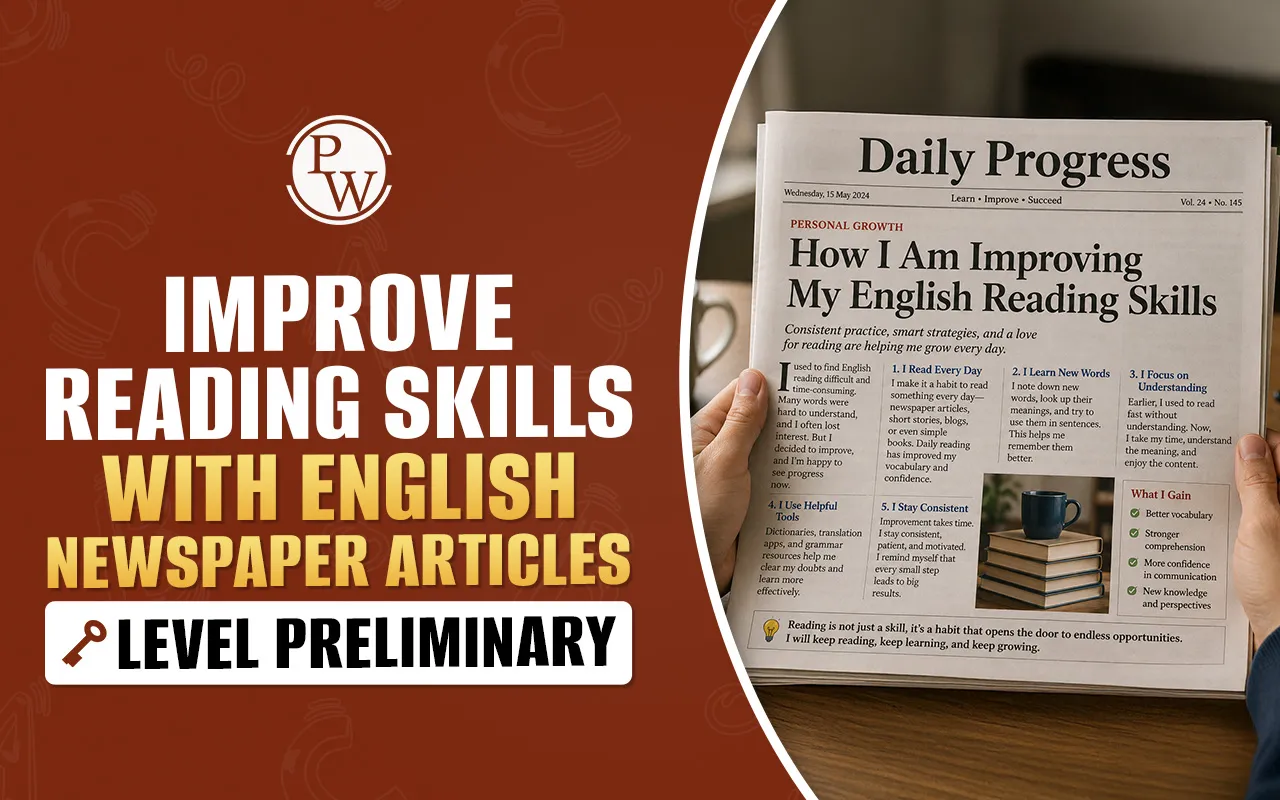
Importance of English Newspaper Reading Skills
Using reading skills with an English newspaper routine helps close the gap between basic reading and real-world English fluency. Normal classroom texts are carefully edited, so they usually do not prepare you for the natural style of casual or professional English. When you read real news articles, you see natural sentence structures and useful vocabulary that native speakers use every day.
For students working on the English learning preliminary level (usually ages 12 to 14), daily news works like a real practice book. It helps your brain stop depending on direct translation and start understanding meaning through context. Instead of seeing English as only a school subject, you begin using it as a real communication tool.
How English Newspaper Reading Improves Language Skills
Below are some of the main benefits of reading English newspapers to improve your English:
-
Natural Sentence Flow: News reports show how prepositions, conjunctions, and phrases connect together naturally.
-
Grammar Practice Through Context: You can see passive voice, reported speech, and conditional sentences used in real situations instead of only in exercise books.
-
Faster Reading Speed: Regular reading trains your eyes to scan groups of words faster, which helps reduce word-by-word translation in your mind.
How to Start with Newspaper Reading in English
Starting directly with difficult opinion columns can hurt your confidence. When beginning your English newspaper reading journey, choosing the correct section is very important. You need texts that support your learning without overwhelming you with unfamiliar words at once.
Start by reading local reports, short event news, or human-interest stories. These sections usually use simple descriptions and clear storytelling methods. Avoid technical topics like stock market reports or heavy political opinions during your early practice.
|
Newspaper Section |
Difficulty Level |
Main Structure Focus |
|
Local News / City Reports |
Beginner-Friendly |
Clear timelines, active verbs, and easy situations |
|
Human Interest Stories |
Intermediate |
Descriptive words, emotional expressions, and direct quotes |
|
Sports Roundups |
Intermediate |
Action phrases, past tense forms, and fast sentence flow |
|
Global Editorials |
Advanced |
Difficult arguments, passive voice, and metaphorical language |
Read More - Learn to Summarize Complex Ideas in English (Level Preliminary)
How Newspaper Headlines Improve Reading Comprehension
Headlines are great tools for reading comprehension practice because they give a lot of information using very few words. Journalists shorten major world events into small, powerful phrases by removing less important words like articles or helping verbs. Understanding these short phrases trains your brain to quickly find the most important sentence parts.
When reading headlines, try to rebuild the missing grammar parts. Find the hidden subject and the main action. This simple habit improves your reading speed and prepares your thinking skills for the longer article below. Below are some of the simple ways for heading headlines:
-
Find the Action Word: Look for the main verb to understand what happened.
-
Identify the Subject: Understand who or what caused the event or was affected by it.
-
Add the Missing Words: Say missing words like “is”, “are”, “a”, or “the” to turn the headline into a full sentence.
How to Choose the Best Newspaper Articles for Learners?
Finding good newspaper articles for learners means balancing your interests with your current English level. If you force yourself to read boring topics, your daily reading will soon feel tiring. Choose topics you already enjoy in your own language, whether that is technology, wildlife, or local sports.
At the preliminary stage, choose articles between 200 and 300 words. Short articles help you study the language deeply without tiring your brain. Your main goal is to understand the text carefully instead of only reading long pages quickly.
Is the article between 200 and 300 words?
-
NO → Pick a shorter report or divide it into smaller parts.
-
YES → Check the layout.
Are there useful subheadings or images?
-
YES → Good text for deep reading and structure study.
-
NO → Make sure the paragraphs are still clear and easy to read.
Daily Activities to Improve English Newspaper Reading Skills
To truly improve reading skills in English, you must stop passive reading and start using active reading methods. Passive reading means your eyes move across the page without fully understanding the meaning. Active reading means your brain thinks, asks questions, and connects with every paragraph.
Keep a notebook near you while reading. When you see a new word, do not search for the meaning immediately. First, try to guess the meaning from nearby sentences, then check a dictionary later. This method copies the natural context-reading process used in official language tests.
Read More - Paragraph Speaking Practice for Preliminary Level Students
Active Reading Methods for Newspaper-Based Learning
Active reading helps learners understand texts more effectively and retain important information.
-
Paragraph Summary Habit: Write one short sentence after each paragraph to remember the main idea.
-
Highlight Important Structures: Use different colours for unfamiliar verbs, transition words, and new vocabulary.
-
Read Aloud Regularly: Reading aloud strengthens reading, listening, and speaking skills.
-
Use Context Clues: Look at surrounding words to understand unfamiliar vocabulary.
-
Focus on Key Details: Pay attention to names, dates, locations, and important facts.