Build English Basics with Everyday Vocabulary (Level Starters)
 Nikita Aggarwal23 May, 2026

Why Build English Basics with Everyday Vocabulary?
Introducing a new language to young learners requires a natural approach. Instead of forcing complex grammar rules, focusing on common words helps children connect the language to the world around them.
The English learning starters level is designed specifically for children aged 6 to 8 who are taking their first steps in language acquisition. At this stage, the brain is highly receptive to sounds, patterns, and visual cues. By teaching words that describe objects they see daily, parents and educators create an effortless learning environment.
When children learn names for their toys, family members, or favourite foods, they can use them immediately. This instant application reinforces memory and builds early confidence. A structured starter program focuses heavily on this method, ensuring that vocabulary acquisition leads directly to basic speaking and listening skills.
Focusing on everyday language helps children:
-
Reduce anxiety when hearing or trying to speak a new language.
-
Understand instructions given by teachers in the classroom.
-
Express basic needs and feelings clearly.
-
Develop a strong foundation for reading and writing skills later on.
Essential English Basics with Everyday Vocabulary Word Lists
To effectively develop language skills, learners must start with high-frequency words. These are the building blocks that allow children to understand and engage with their environment.
Below are the foundational categories of basic English words for beginners that every young learner should master.
1. Essential Greetings and Personal Information
Before learning specific item names, children must know how to initiate a conversation and talk about themselves.
-
Greetings: Hello, Hi, Good morning, Goodbye, Bye.
-
Personal Details: Name, Age, Friend, Teacher, Child.
-
Feelings: Happy, Sad, Tired, Excited, Angry.
2. Common Objects and School Items
Children spend a large portion of their day interacting with objects at home and in the classroom. Recognizing these terms helps them follow instructions smoothly.
|
Category |
Everyday English Words |
|
Classroom Items |
Book, Pen, Pencil, Eraser, Ruler, Desk, Chair, Bag |
|
Home Objects |
Toy, Ball, Bed, Door, Window, Clock, Phone, Box |
|
Clothes |
Shirt, Pants, Shoes, Socks, Hat, Coat |
3. Animals and Colours
Animals and colours are highly engaging topics that naturally capture the interest of young minds.
-
Colours: Red, Blue, Green, Yellow, Orange, Pink, Purple, Black, White.
-
Domestic Animals: Dog, Cat, Fish, Bird, Rabbit, Horse, Cow.
-
Wild Animals: Lion, Tiger, Elephant, Monkey, Bear, Frog, Duck.
4. Simple Action Verbs
To form complete thoughts, kids need action words that describe what they are doing or what they see happening.
-
Daily Actions: Run, Jump, Walk, Sit, Stand, Sleep, Eat, Drink.
-
Classroom Actions: Listen, Look, Read, Write, Speak, Open, Close, Draw.
Read More - Daily 5 Sentence Practice for English Fluency (Level Starters)
English Basics with Everyday Vocabulary Through Interactive Activities
Sitting with a word list can quickly become boring for a seven-year-old child. To keep engagement high, lessons must incorporate movement, play, and visual elements.
Here are some proven English vocabulary-building activities that make learning interactive and memorable.
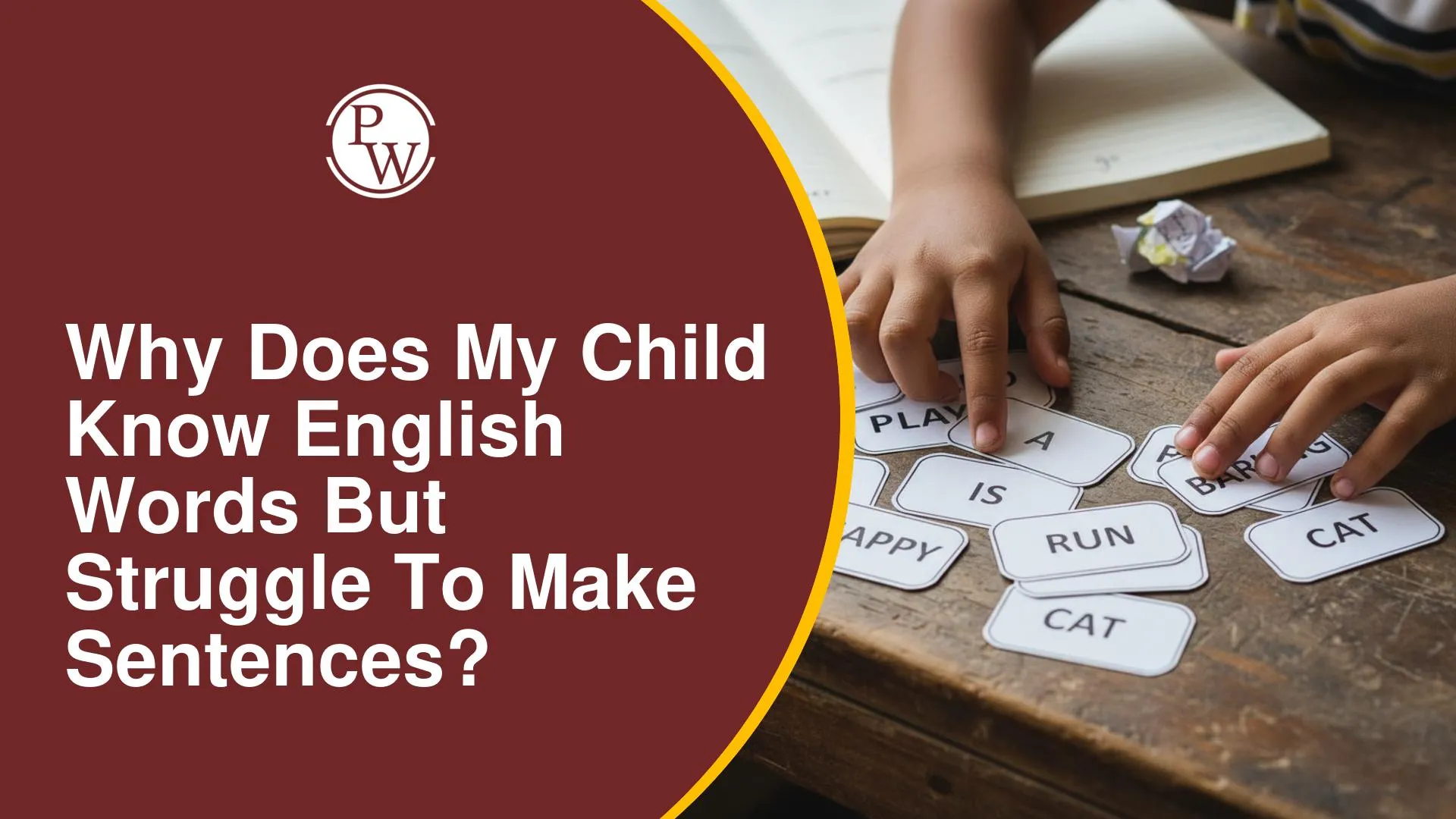
Word-Image Matching Games
Visual association is critical at the beginner level. Print out pictures of common objects alongside separate cards containing the corresponding words.
Have the child match the word card to the correct image. This activity reinforces letter recognition and connects abstract text directly to real-world objects.
Interactive Songs and Action Rhymes
Songs use rhythm and repetition, which are highly effective tools for memory retention. Rhymes that involve physical actions, such as "Head, Shoulders, Knees, and Toes," help children link language to physical movement.
When a child sings the word "jump" and physically leaps, the brain registers the meaning of the word much faster.
Simple Role-Plays
Create basic real-life scenarios at home or in class. For example, pretend to run a small grocery shop or a classroom.
Encourage the child to use simple phrases like:
-
"What is your name?"
-
"I am seven years old."
-
"Can I have a red apple, please?"
-
"Thank you, goodbye!"
[Role-Play Sample Flow]
Shopkeeper: "Hello! How are you?"
Child: "I am happy. Can I have a blue pen?"
Shopkeeper: "Here is the blue pen."
Child: "Thank you! Goodbye."
Read More - How to Stop Translating in English (Level Starters)
The "I Spy" Game
This classic game is excellent for practicing colours, sizes, and object names in a casual setting. Use prompts like, "I spy with my little eye, something that is green." The child must look around the room and name objects in English until they guess the correct one, such as "It is a book!" or "It is a plant!"
Building English Basics with Everyday Vocabulary at Home
Parents play a vital role in reinforcing what children learn during formal lessons. You do not need to be an expert English speaker to create a supportive environment for your child at home.
Here are practical ways to integrate simple English practice for children into your daily household routines:
-
Label Household Items: Stick small, colourful labels on everyday objects like the fridge, mirror, door, and toy box. Seeing these words daily helps children memorize their spellings and meanings effortlessly.
-
Use English Classroom Instructions: Practice common classroom commands at home so the child becomes familiar with them. Use phrases such as "Please sit down," "Listen carefully," "Open your bag," or "Clean your desk."
-
Set Up a Reward Chart: Create a simple chart where the child earns a star or a sticker for using English words correctly during the day. Small milestones build immense pride and motivation.
-
Watch Educational Animations: Allow your child to watch short, high-quality English educational animations or vocabulary videos. Limit screen time to 15 minutes, and sit with them to discuss what they see on screen.
By turning language learning into an engaging, everyday habit, children naturally absorb vocabulary without viewing it as stressful schoolwork. This seamless approach ensures they develop real-world language skills that will serve them well throughout their educational journey.
Daily Practice to Build English Basics with Everyday Vocabulary
Consistency is far more important than intensity when teaching young learners. Short, daily sessions of 15 to 20 minutes are much more effective than a single long lesson once a week.
A balanced daily routine should combine listening, speaking, and playful practice to build long-term retention.
Morning Practice: Greetings and Feelings
Start the day by asking the child how they feel. Use simple questions and encourage full-phrase responses rather than single words.
-
Question: "Good morning! How are you today?"
-
Response: "Good morning! I am happy and excited."
Afternoon Practice: Object Identification
During lunchtime or playtime, point out items around the house. Turn it into a quick challenge to keep it entertaining.
-
Ask the child to bring you "the blue ball" or "the small green book."
-
Have them point to the window, the door, or the clock while saying the words aloud.
Evening Practice: Story and Song Time
End the day with an interactive English song or a short picture book story. Look at the illustrations together and ask simple questions about what is happening in the images.
-
Prompt: "Look at this picture. What animal is this?"
-
Response: "It is a big brown bear!"
Common Challenges When Learning English Basics with Everyday Vocabulary
Young learners often face specific hurdles when starting their language journey. Recognizing these challenges allows parents and teachers to provide the right support without causing frustration.
Mispronunciation and Letter Sounds
Children at the English learning starters level are still developing their vocal skills. It is common for them to mispronounce certain letters or blend sounds incorrectly.
Avoid correcting them harshly. Instead, repeat the word correctly in a natural sentence. If the child says, "Look at the tat!", you can respond, "Yes, look at the beautiful cat!" This provides the correct sound profile without lowering their confidence.
Shyness and Fear of Speaking
Many children understand words when they hear them, but hesitate to say them out loud. This is known as the receptive language phase.
To help them overcome this shyness:
-
Use puppet shows or soft toys to speak on behalf of the child.
-
Provide plenty of praise and positive reinforcement for every attempt made.
-
Never pressure a child to speak in front of a large group until they feel completely ready.
Forgetting Words Quickly
It is completely normal for a child to forget a word they learned just yesterday. Language retention requires continuous exposure.
Revisit older word lists regularly through games and casual conversations. Connect old vocabulary with newly learned terms to build an interconnected web of language in their minds.