Grammar Correction Activities for Preliminary Level English Learners
 Nivedita Dar23 May, 2026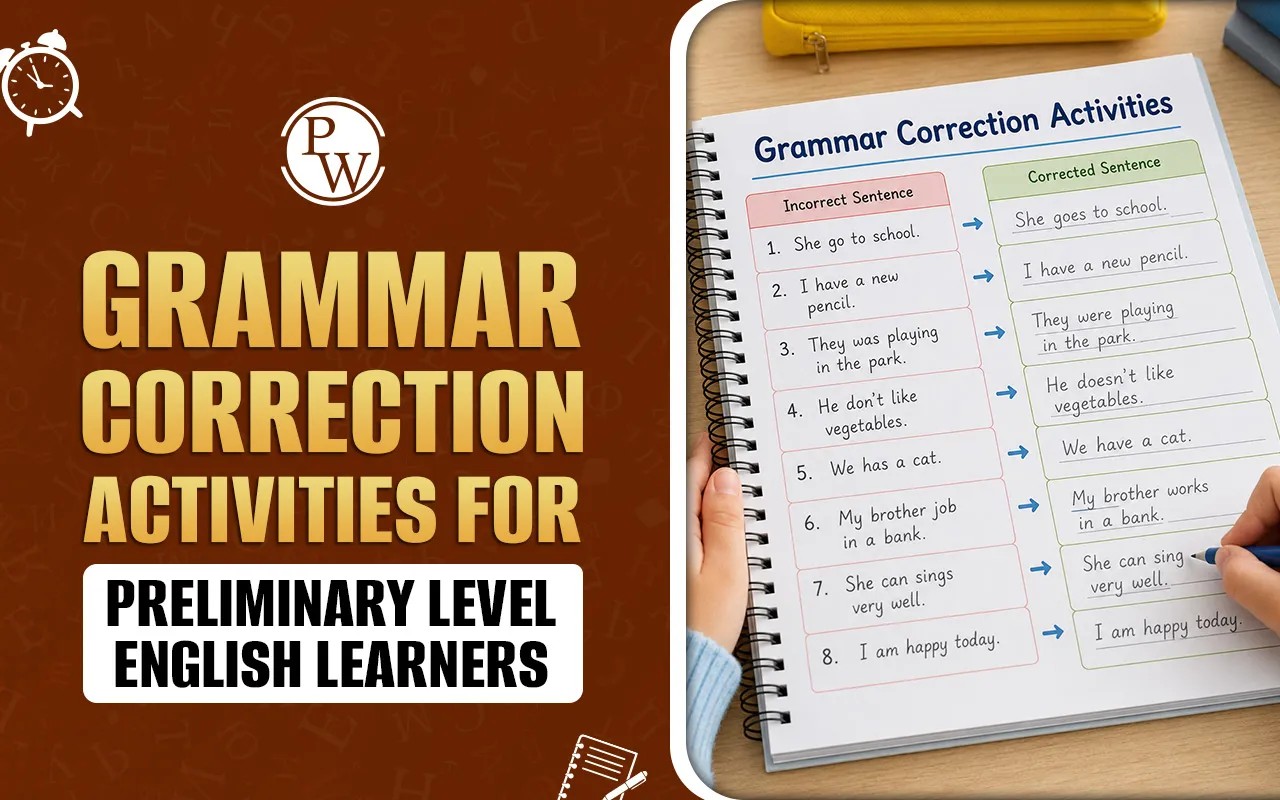
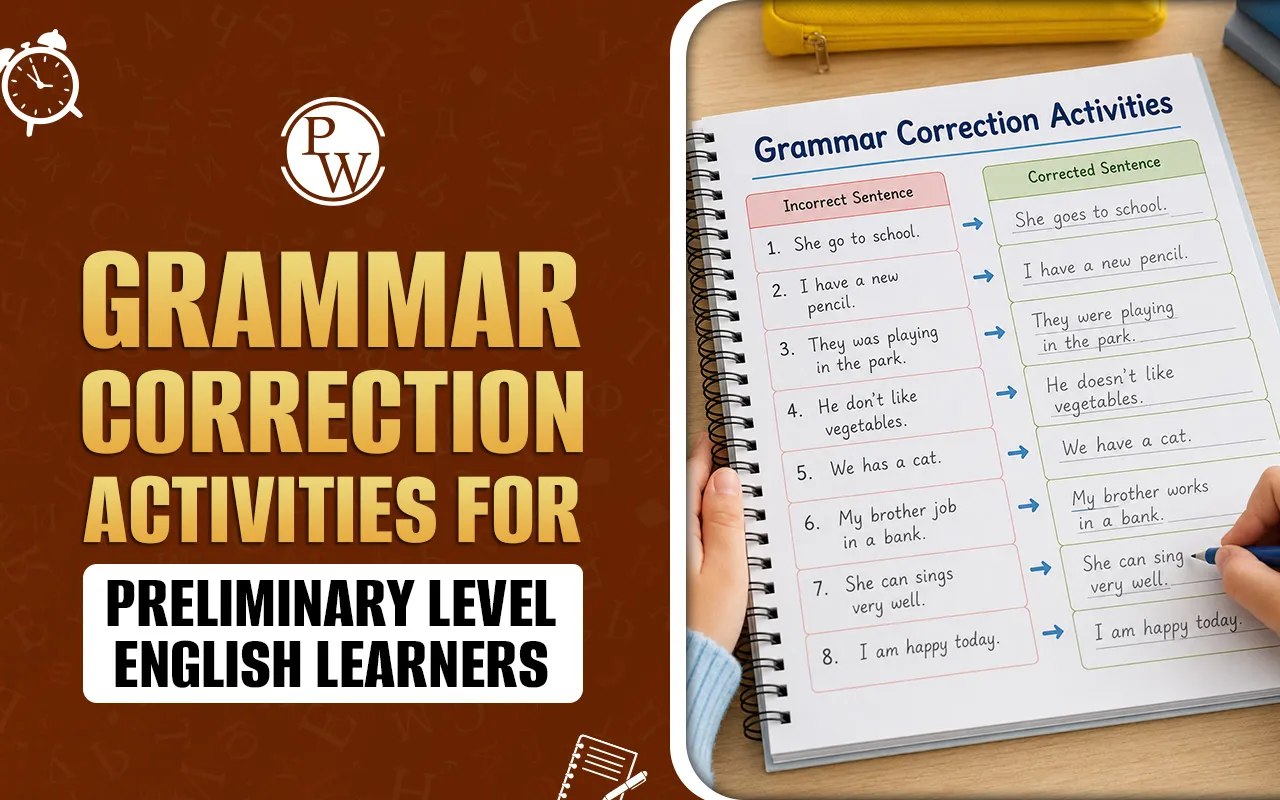
Many young kids are terrified of making mistakes and so cannot express their thoughts adequately. Children learning English frequently know lots of words but find it challenging to put them in the right order. That lack of confidence can cause individuals to shut down in lectures or in regular discussions. The only approach to break down this barrier is to change the way we view mistakes. By introducing playful grammar correction activities, we transform a tough subject into an enjoyable game.
Why Use Grammar Correction Activities?
Playful exercises help children see phrases as puzzles. They become linguistic detectives who enjoy uncovering clues rather than feeling awful about a mistake. Active learning is when youngsters remember rules a lot better than just reading passively.
1. Building Confidence
When kids learn how to fix mistakes gently, they lose the fear of speaking or writing incorrectly. Fear of failure is the biggest roadblock to language fluency. Once that fear disappears, students begin to experiment with new word combinations and express themselves more freely.
2. Improving Writing Habits
Children make less mistakes in writing short essays, letters and paragraphs during regular practice. They are starting to identify frequent pitfalls like missing punctuation or the wrong plural before they submit their work. This skill of self-editing is important for success in the preliminary stage.
3. Encouraging Active Thinking
Instead of just memorising rules from a textbook, students actively figure out how the language works. They look at the relationship between words, which builds a deeper and more permanent understanding of English structure.
4. Supporting Better Speaking
It swiftly switches to clearer speech in ordinary interactions by identifying flaws in written words. The brain learns to adjust itself on the go, letting the youngster speak more smoothly and accurately, without long, halting pauses.
Grammar Correction Activities for Kids
Here are some easy and engaging games you can play at home or in class to make grammar practice kids enjoy a regular part of their daily learning routine.
1. The Silly Sentence Monster
Tell your child that a silly monster has mixed up all the words in a sentence because he loves to eat bad grammar. Give them a sentence with a clear mistake and ask them to feed the correct version to the monster.
-
The Mixed-Up Sentence: "The two cat is sleeping on the mat."
-
The Corrected Sentence: "The two cats are sleeping on the mat."
This game is fantastic for teaching grammar rules like singular and plural nouns or matching subjects with the correct verbs. Kids love pretending to feed a monster, which completely removes the stress of a traditional test.
2. The Sentence Doctor
In this game, your child pretends to be a helpful doctor, and the written sentences are the patients. The doctor needs to identify the "sick" part of the sentence and heal it with targeted error correction tasks..
-
The Sick Sentence: "She go to the park yesterday."
-
The Healthy Sentence: "She went to the park yesterday."
Using a red pen or a fun sticker to mark the "healed" word makes children feel proud of their editing skills. It teaches them that mistakes are just things that need a little care and attention to be fixed.
3. Match the Tense Challenge
Give your child two cards: one says "Today" (Present Tense) and the other says "Yesterday" (Past Tense). Read out a sentence with an error and ask them to hold up the right card and perform an English sentence fixing task.
-
Incorrect Sentence: "Yesterday, I am playing with my friends."
-
Fixed Sentence: "Yesterday, I was playing with my friends."
This physical movement keeps children alert and engaged. It links abstract grammar concepts like time and tense to visual and tactile cues, making the rules much easier to remember.
Read More - English Fluency Activities That Improve Faster Responses (Preliminary Level)
How to Help Kids Learn Grammar Rules
Teaching grammar to young learners requires patience and a gentle strategy. If you focus too much on rigid rules, children might stop trying altogether. Here are some friendly methods to keep the learning journey smooth and effective.
-
Model the Correct Version
When your child makes a mistake while speaking, do not stop them mid-sentence. Let them finish their thought completely, and then gently repeat the sentence correctly. If they say, "I seed a bird," you can respond with, "Wow! You saw a bird? That is wonderful!" This teaches the correct form without making them feel corrected.
-
Keep Explanations Short
Kids do not need complex linguistic terms. Instead of explaining intricate subject-verb agreement rules, just tell them that "one person likes the 's', but many people do not need it." Simple, visual analogies stick in a child's mind much longer than technical jargon.
-
Focus on Everyday Themes
Use familiar topics that children love, such as family, pets, toys, school routines, and favourite snacks. Learning how to fix sentences about things they care about keeps them highly engaged. It also makes the vocabulary immediately useful in their daily lives.
-
Celebrate the Effort
Remind your child that every single mistake is just a helpful step toward mastering a new skill. Praise them for finding errors and trying their best to fix them. A positive attitude toward mistakes changes how they view learning for the rest of their lives.
Read More - Introducing Yourself Confidently in English (Preliminary Level)
Weekly Plan for Grammar Correction Activities
To help students build steady progress, here is a simple weekly breakdown of interactive activities. This structured timeline shows how easy it is to handle grammar correction activities step by step without overwhelming young learners.
|
Day |
Focus Area |
Activity Type |
Example Exercise |
|
Monday |
Nouns and Verbs |
grammar practice kids love |
Fix: "The dog bark loudly at the car." Correction: "The dog barks loudly at the car." |
|
Tuesday |
Past and Present Tenses |
error correction exercises |
Fix: "We eat a big cake last night." Correction: "We ate a big cake last night." |
|
Wednesday |
Making Polite Sentences |
English sentence fixing game |
Fix: "I want water now." Correction: "May I please have a glass of water?" |
|
Thursday |
Describing Everyday Actions |
beginner grammar rules check |
Fix: "He playing in the park now." Correction: "He is playing in the park now." |
|
Friday |
Short Paragraph Editing |
english learning preliminary level mix |
Fix: "I has a small cat. It like to play." Correction: "I have a small cat. It likes to play." |
How CuriousJr Supports Grammar Correction Activities
While playing games at home is an excellent way to practice, using a structured digital space can make a noticeable difference in a student's confidence, which is why Curiousjr online English learning classes provide the exact step-by-step guidance children need to steadily improve their language skills.
By keeping interactive small groups limited to just 4 to 5 learners, children stay highly active by watching their peers solve language puzzles, allowing them to see that everyone makes mistakes and creating a supportive and comfortable learning space to try out new skills.