Learn to Summarize Complex Ideas in English (Level Preliminary)
 Nikita Aggarwal23 May, 2026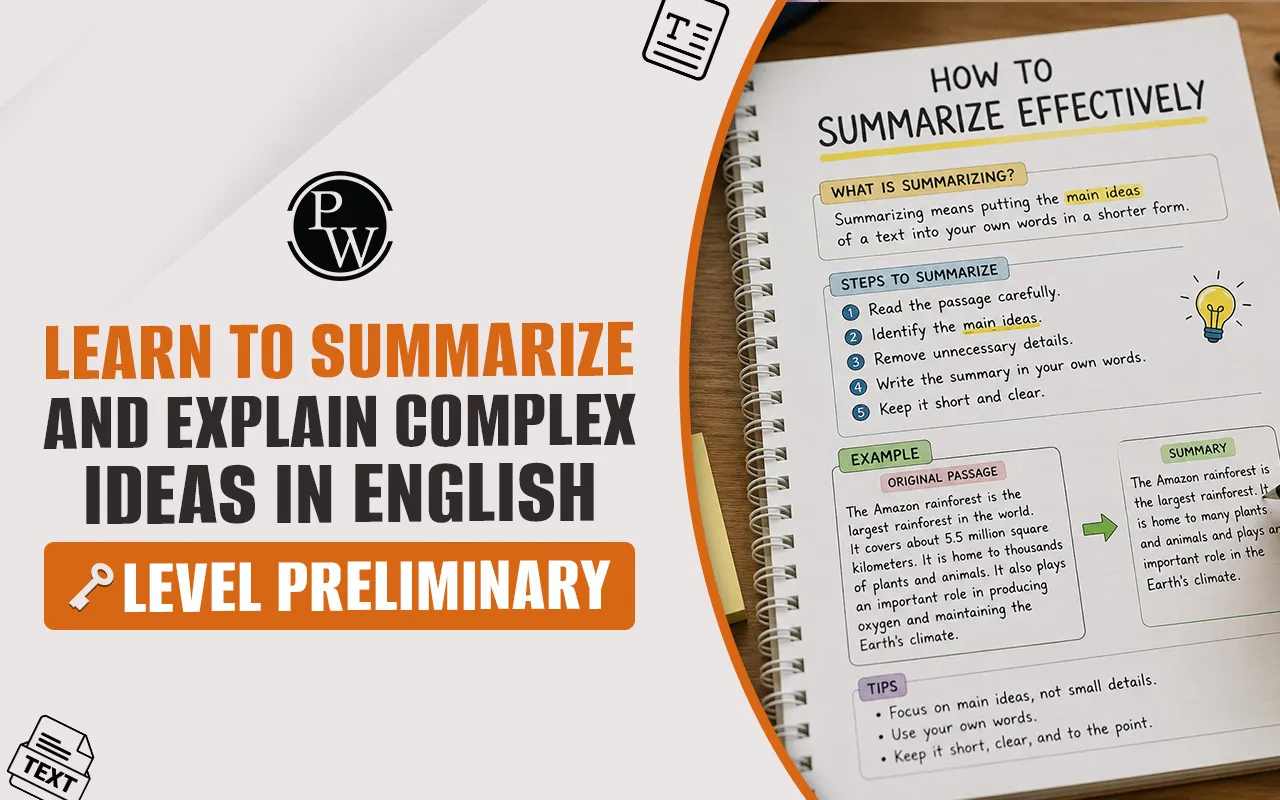
Why Learners Struggle to Explain Complex Ideas in English
Explaining deep ideas in another language is hard because your brain does many things at the same time. You must understand the idea, arrange it correctly, choose the right words, and also use proper grammar.
-
Small Vocabulary Problem: Many learners know difficult topic words but lack the simple connecting words that help ideas flow naturally.
-
Direct Translation Mistakes: Translating directly from your first language often creates long and confusing English sentences.
-
No Clear Structure: Without a simple structure, explanations become disorganised and difficult to follow.
To fix these problems, regular English summarizing practice is very important. Stop trying to remember every word. Focus more on understanding the main idea. This makes speaking easier and clearer.
How to Explain Complex Ideas in English?
To explain difficult topics, you need a clear system. You cannot read a long text once and repeat it perfectly. You need simple methods that help you manage information better.
The 3-Part Method
Do not explain everything together. Break the topic into three simple parts:
-
What is the idea?
-
How does it work?
-
Why does it matter?
This order helps you Explain Complex Ideas in English without stress.
Use Simple Examples
Examples make difficult ideas easy to understand. Compare a hard topic to something common in daily life.
For example, you can explain a computer firewall like a security guard checking people before they enter a building. This method helps people understand faster.
Read More - English Fluency Activities That Improve Faster Responses (Preliminary Level)
Build Skills to Explain Complex Ideas in English Through Reading
You cannot explain something clearly if you do not fully understand it first. Good advanced reading comprehension is the basis of strong speaking.
Passive Reading → Just reading words
Active Reading → Asking questions and finding main ideas
Clear Speaking → Explaining ideas in your own words
To improve your reading skills, read different types of content like news articles, science topics, and opinion blogs.
Ask yourself these questions while reading:
-
What is the main point?
-
What examples support the idea?
-
What does the writer want people to believe?
This improves your critical thinking English skills. It trains your mind to focus on the real message instead of difficult words.
Read More - Introducing Yourself Confidently in English (Preliminary Level)
How to Use English Summarizing Practice to Explain Complex Ideas More Clearly
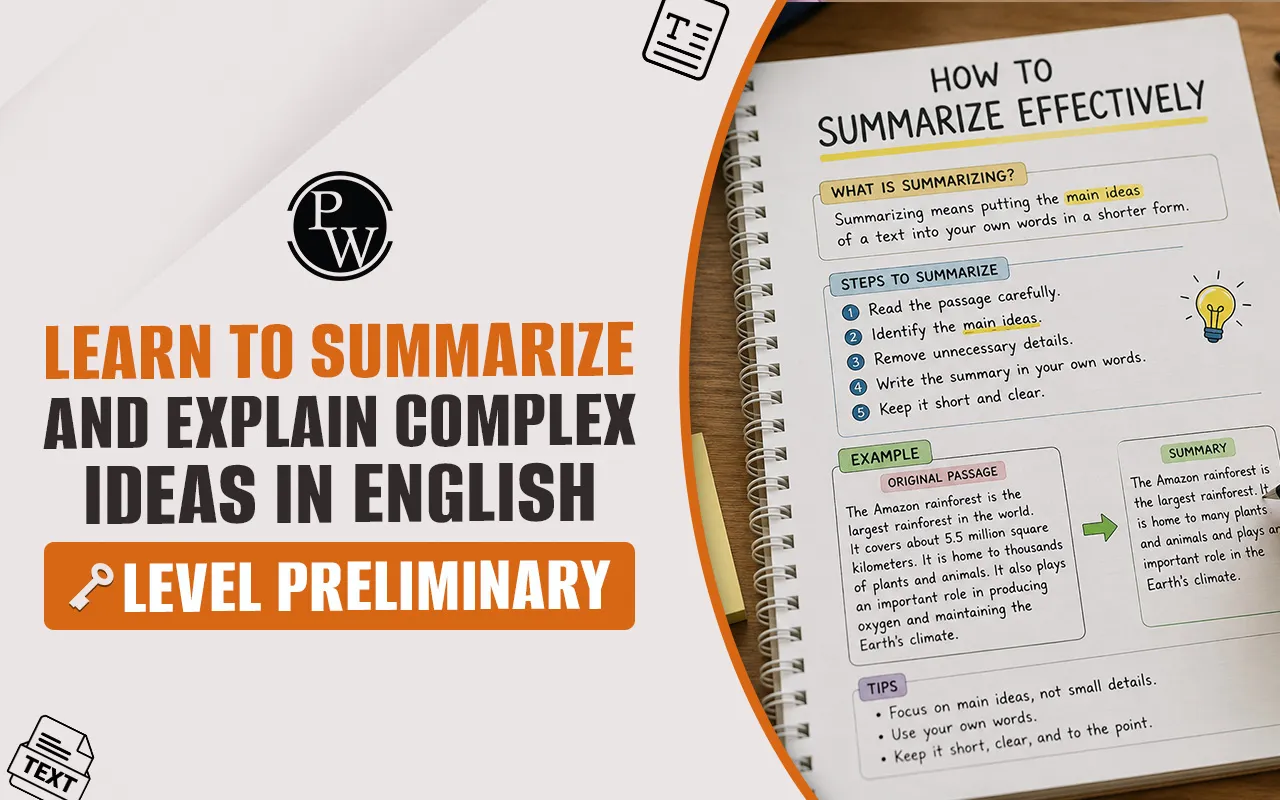
Summarizing helps you move from understanding to speaking. Regular English summarizing practice teaches your brain to turn large amounts of information into short and clear ideas.
Step 1: Find Main Ideas
Read the article once for general understanding. Read it again and highlight only the important lines. Ignore small details and repeated examples.
Step 2: Write One Sentence
Try to explain the full page in one sentence.
Use this simple pattern:
“The author says that [Main Idea] happens because of [Reason], which leads to [Result].”
Step 3: Expand Slowly
After one sentence, write three short sentences:
-
Sentence 1 → Main idea
-
Sentence 2 → Supporting example
-
Sentence 3 → Final conclusion
This keeps your writing short and clear.
Improve Your Ability to Explain Complex Ideas in English Through Writing
Writing gives you more time to think and improve your ideas. Daily English writing skills practice helps you build better sentences and stronger vocabulary.
|
Exercise Name |
Time |
Main Focus |
Result |
|
Synonym Swap |
10 Minutes |
Better Vocabulary |
Fewer repeated words |
|
50-Word Limit |
15 Minutes |
Short Writing |
Removes extra words |
|
Blind Rewriting |
15 Minutes |
Memory Practice |
Better natural speaking |
Synonym Swap
Take a simple sentence and improve the words.
Example:
“The problem got worse.”
Better version:
“The issue increased quickly.”
This improves your vocabulary.
50-Word Writing
Explain a hard topic using only 50 words. Remove unnecessary words like “very” or “basically.”
This teaches short and strong writing.
Blind Rewriting
Read a short paragraph and close the book. Then explain the idea from memory using your own words.
This helps you become more independent in English.
How to Explain Complex Ideas in English While Speaking
Once your ideas are organised in writing, begin practising them aloud. Speaking requires faster processing, so regular practice is essential.
-
The 30-Second Method: Explain a topic in only thirty seconds by focusing on the most important point.
-
Describe Visual Information: Look at charts, maps, or diagrams and explain them using simple language.
-
Record Yourself: Listen to recordings of your speaking and identify repeated words, unclear phrases, or long pauses.
How to Explain Complex Ideas in English with Easy Frameworks
Simple frameworks help you stay calm while speaking.
PREP Method
The PREP method is useful for presentations and discussions.
-
P = Point
-
R = Reason
-
E = Example
-
P = Point Again
This structure keeps your explanation clear and organized.
Time Order Method
When explaining a process or event, speak in order.
Use words like:
-
First
-
Next
-
After that
-
Finally
This helps listeners follow your explanation easily.
Daily Practice Plan to Explain Complex Ideas in English Better
A structured routine helps improve speaking and writing consistently.
-
Day 1 – Reading Practice: Read a challenging article and identify five new words.
-
Day 2 – Summarising Practice: Write both a one-sentence summary and a three-sentence summary.
-
Day 3 – Writing Practice: Write a 150-word explanation using the PREP method.
-
Day 4 – Speaking Practice: Explain the topic aloud for two minutes without notes.
-
Day 5 – Review: Listen to your recording and improve weak sections.
Common Mistakes to Avoid When You Explain Complex Ideas in English
Many learners make the same mistakes while trying to explain ideas in English.
-
Long Sentences: Very long sentences can confuse listeners and increase the chance of grammatical mistakes. Keep your sentences short and clear.
-
Too Much Technical Language: If you use difficult or specialised terms, explain them in simple English immediately so your audience can follow your ideas.
-
Speaking Too Fast: Speaking quickly does not improve communication. Speak at a steady pace and pronounce words clearly to make your message easier to understand.
Boost Your Child’s English Skills with CuriousJr
Is your child struggling to speak, read, or write English with confidence? Many traditional learning methods focus only on memorisation, which often makes children hesitant to use English in real-life situations.
That’s why CuriousJr English Online Classes are designed differently. Created for children aged 6 to 14, the program offers structured learning levels such as Starters, Movers, Key, and Preliminary, helping children improve step by step at a comfortable pace.
With Cambridge-certified fluency training, students build strong grammar, vocabulary, speaking, and communication skills through simple, engaging, and interactive learning methods.
Live classes provide personalised attention, expert guidance, and regular feedback so children can improve their confidence and speak English more naturally.
Each course level focuses on practical communication skills, helping children not only understand English but also use it confidently in everyday conversations.