Picture Description Practice for Better English Speaking (Movers Level)
 Nivedita Dar23 May, 2026
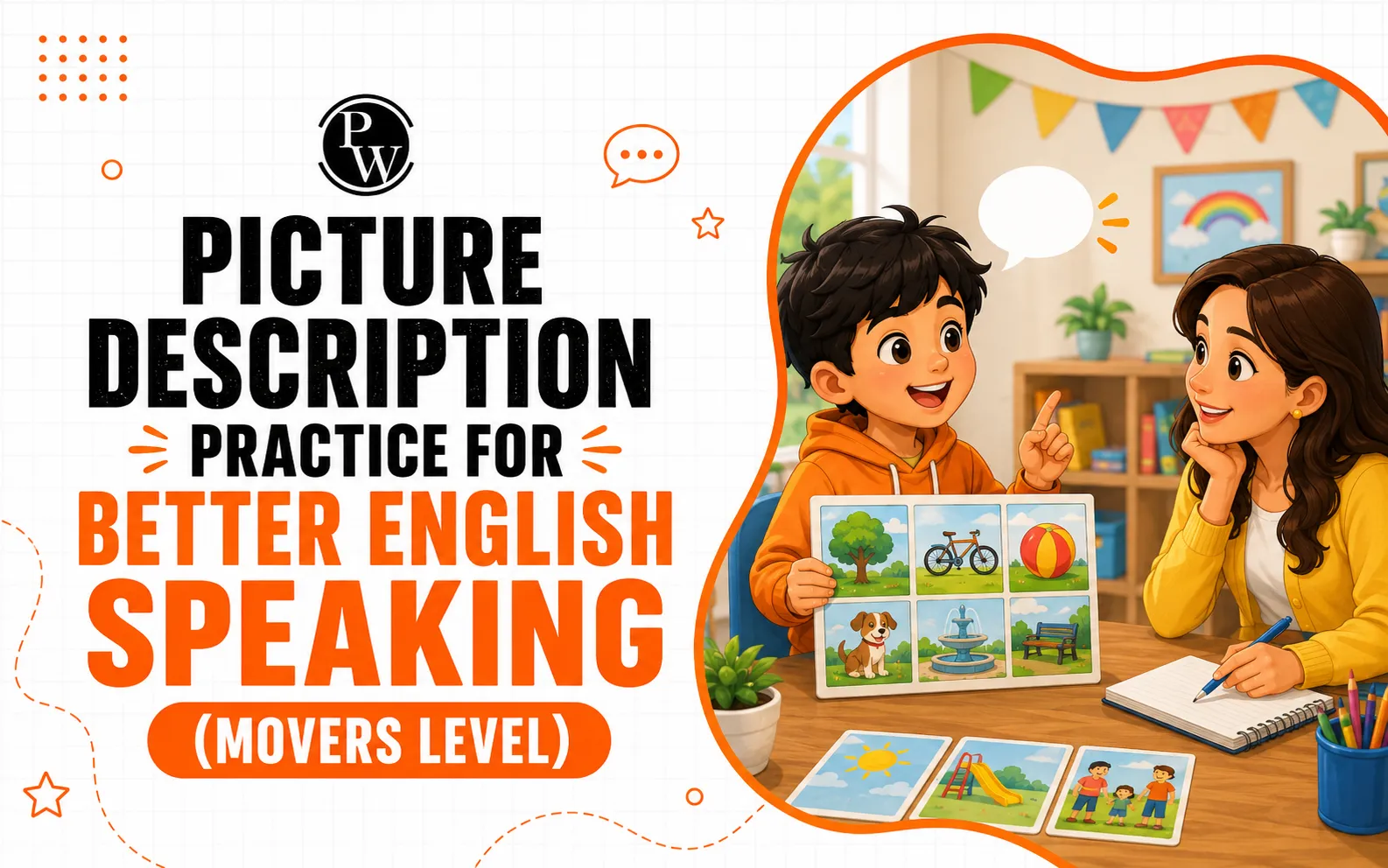
Many parents notice that their children understand English words but struggle to speak them out loud. When asked to talk about their day or tell a story, children might give short, one-word answers or hesitate because they are translating sentences in their heads. The best way to break this habit is through a regular picture description practice. Using colourful images helps children connect words directly to objects without mental translation. This engaging approach builds confidence and encourages kids to use complete sentences effortlessly.
Why Use Picture Description Practice for Young Learners?
Using photos and illustrations is an excellent way to get young learners talking. At this stage, children are ready to move beyond basic words and start using full sentences. Visual materials provide an immediate clue about what to say, removing the pressure of inventing a topic from scratch.
-
Builds Observation Skills: A structured picture speaking activity trains young minds to spot details like colours, sizes, shapes, and actions.
-
Encourages Complete Sentences: Instead of just saying "dog", children learn to say, "The brown dog is running after a small yellow ball."
-
Boosts Descriptive Language: It helps children practice using helpful adjectives and prepositions naturally.
-
Reduces Learning Stress: Looking at a funny or colourful image makes speaking feel like play rather than a difficult school exam.
Read More - Build Vocabulary without Memorizing (Level Movers)
Steps for Effective Picture Description Practice
To make your home sessions successful, you do not need complicated lesson plans. Following a simple, step-by-step method helps children look at an image and organize their thoughts logically.
Here is how you can guide your child through a standard visual description practice session:
1. Look and Spot (Observation Skills English)
Before speaking, give your child a minute to just look at the image. Encourage them to use their observation skills English to find hidden details, funny characters, or unusual background objects. Ask them to point to things as they find them.
2. Identify the Main Subject
Ask your child to name the main focus of the image. You can guide them with simple questions like:
-
"Where are these people?"
-
"Who is the main character in this drawing?"
-
"What is the weather like in this scene?"
3. Describe Actions with Verbs
Encourage the use of action words. Instead of just listing nouns, help your child describe what the characters are doing. For example, use words like splashing, climbing, cooking, or cycling to add life to their descriptions.
4. Connect Ideas for Storytelling
Help your child link multiple elements together. This is where storytelling English kids love to listen to comes into play. They can connect sentences using simple linking words like and, but, because, or then to explain why something is happening in the picture.
Weekly Plan for Picture Description Practice
Consistency is much more effective than long, tiring study sessions. Spending just 10 to 15 minutes every day keeps your child engaged without causing mental fatigue.
Use this structured weekly guide to run daily speaking fluency tasks smoothly:
|
Day |
Practice Focus |
Activity Type |
Example Sentence to Guide Your Child |
|
Monday |
Spotting Differences |
Comparing two similar pictures |
"In this picture, the boy is wearing a red hat, but in that one, his hat is green." |
|
Tuesday |
Action & Verbs |
Describing what characters are doing |
"Three happy children are building a huge sandcastle on the beach." |
|
Wednesday |
Prepositions & Places |
Stating where things are located |
"The small fluffy cat is sleeping soundly under the wooden table." |
|
Thursday |
Creative Storytelling |
Creating a short story from three frames |
"First, the girl found a map. Then, she walked to the old tree to look for treasure." |
|
Friday |
Feelings & Adjectives |
Expressing emotions and descriptions |
"The monster looks very surprised because his ice cream fell on the ground." |
Read More - Daily 5 Sentence Practice for English Fluency (Level Movers)
Fun Games for Picture Description Practice
If learning feels like a chore, children will quickly lose interest. Turning your daily check-ins into friendly challenges keeps motivation high and lowers anxiety about grammar rules.
-
The "I Spy" Challenge: Take turns describing a single object in a busy picture using only adjectives. For example, say, "I spy something round, shiny, and blue." Your child must guess the object and describe it back to you in a full sentence.
-
The Silly Story Game: Find a strange or funny illustration. Ask your child to invent a wacky explanation for what is happening. This activity turns standard storytelling that kids enjoy into an imaginative exercise that builds fast thinking.
-
The 60-Second Timer: Show your child a fresh image and see how many different things they can name or describe before the timer runs out. Celebrate their progress by tracking their daily word score on the fridge.
How CuriousJr Helps Kids to Practice Speaking
It’s great to practise at home with your parents, but to really thrive, young learners need the expert guidance of a structured online course. CuriousJr online English learning classes provide interactive online learning lessons customised for children in the age group of 8-10 years. It provides a completely safe, supportive, and immersive environment to practise speaking independently.
The group numbers in these specialised programs are small, often there are only 4 to 5 learners in each online class. This guarantees that every single child gets personal attention from the instructor. Children practise responding questions spontaneously in full sentences during live interactive sessions as well as through imaginative role-plays and game-based speaking challenges. With dedicated mentors providing constructive, real-time feedback and tracking daily progress, young learners develop the ultimate confidence to communicate effectively, accurately and fluently in everyday circumstances.