Apostrophe Figure of Speech - Definition, Uses, Examples
 Nikita Aggarwal25 Mar, 2026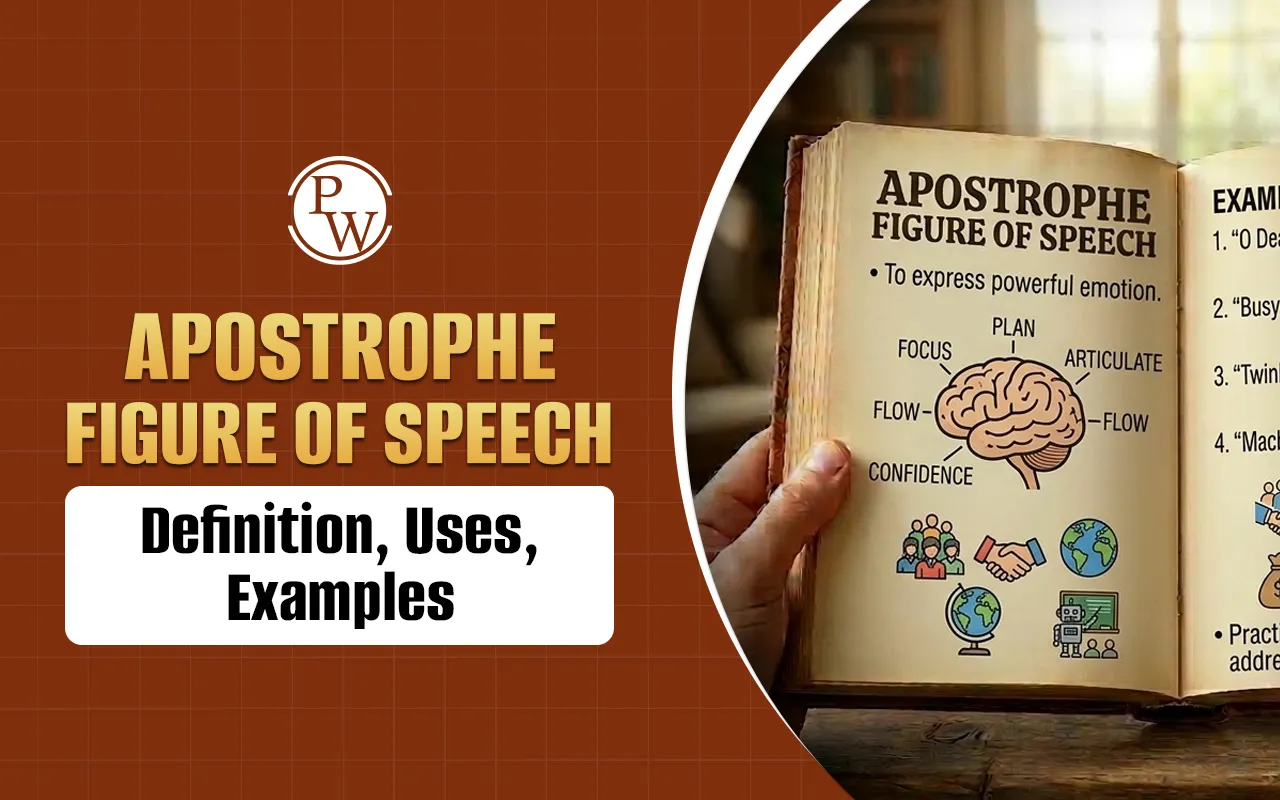
What is Apostrophe Figure of Speech?
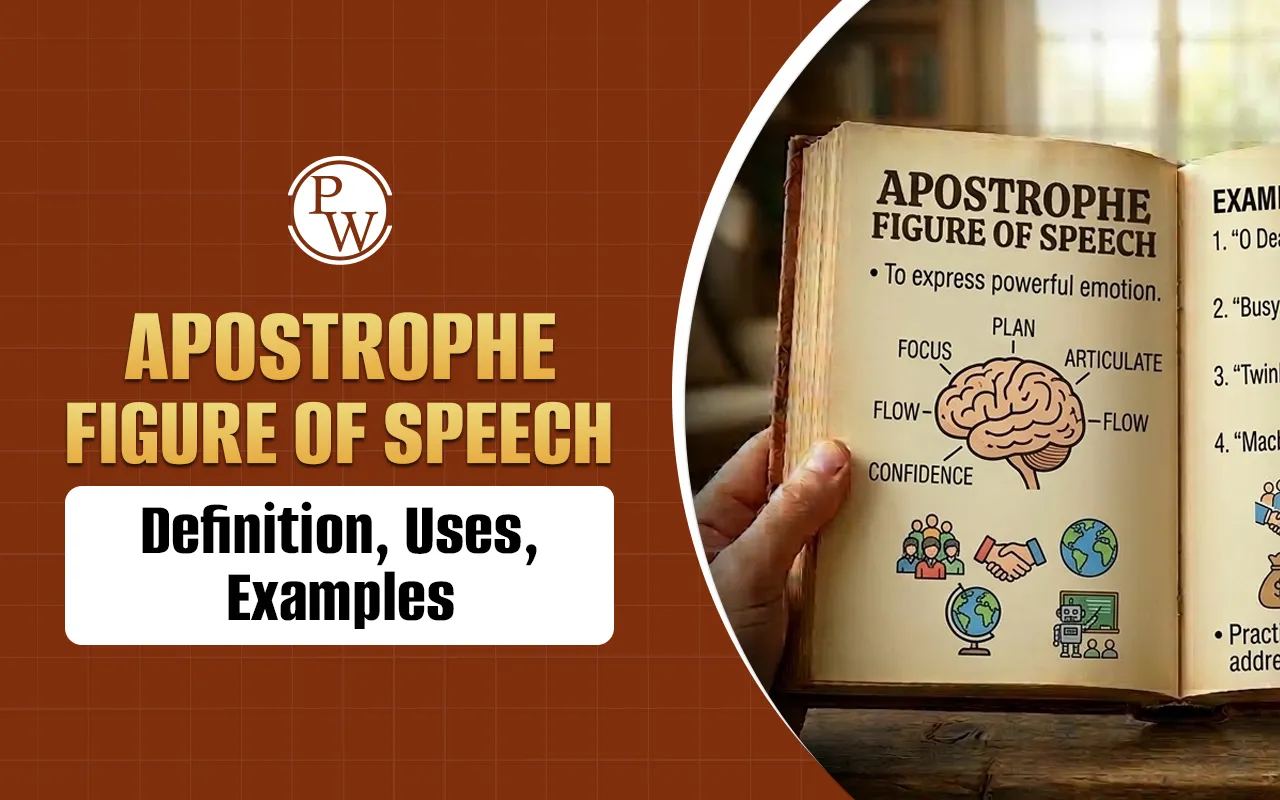
To understand the Apostrophe Figure of Speech Meaning, we must look beyond the keyboard symbol. In literature, an apostrophe occurs when a writer or speaker detaches themselves from reality to address a third party. This "third party" could be an individual who isn't present, a personified abstraction (like Liberty or Death), or even a physical object (like a star or a dagger).
The word comes from the Greek word apostrophē, which means "turning away." This is because the speaker "turns away" from the audience or the main story to talk to this quiet person. A one-sided chat is a strong technique to illustrate how a character is feeling, whether they are desperate, in love, or angry.
An apostrophe is when you talk to something that can't respond, such an object, an idea, or a person who isn't there.
Key Features of Apostrophe
-
Direct Address: The speaker speaks directly to the subject using "you" or "thou".
-
Absence of the Subject: The entity being spoken to cannot respond.
-
Personification: It often gives human-like qualities to non-human things so the speaker can interact with them.
-
Emotional Intensity: It is usually triggered by high levels of emotion.
This device is a staple in Romantic poetry and Shakespearean plays. It serves to make abstract concepts feel more tangible. For instance, when a poet speaks to "Time," they treat Time not as a measurement, but as a living antagonist. This creates a sense of drama that a simple description could never achieve.
Apostrophe Figure of Speech Uses
Authors don't just use this device to sound fancy; it serves several functional purposes in creative writing:
-
To Express Strong Emotion: When a character is overwhelmed, they often turn to the universe or a lost loved one to vent their feelings.
-
To Highlight Themes: Addressing "Justice" or "War" helps the reader focus on the central themes of the work.
-
To Establish Tone: Calling out to a "Bright Star" can create a serene, yearning tone, while screaming at "Raging Winds" creates a chaotic atmosphere.
-
To Humanise the Abstract: It makes difficult concepts like "Death" or "Love" feel like characters we can relate to.
Apostrophe Figure of Speech Examples
Here is a breakdown of apostrophe examples across different medium:
Examples from Literature
In William Shakespeare’s Macbeth, the protagonist sees a floating dagger and says:
"Is this a dagger which I see before me, the handle toward my hand? Come, let me clutch thee."
Here, Macbeth is not talking to another person; he is talking to a hallucination. The use of "thee" signals a direct address to an inanimate object, making his descent into madness feel real to the audience.
Examples from Poetry
In John Keats’ Ode on a Grecian Urn, he speaks to a piece of pottery:
"Thou still unravished bride of quietness..."
Keats treats the urn as a living being capable of hearing his praise. This is a classic example of apostrophe figure of speech in English literature.
Examples from Daily Life
Even children’s songs use this device. Consider Twinkle, Twinkle, Little Star:
"Twinkle, twinkle, little star, how I wonder what you are."
The child is speaking directly to a celestial body. Since the star cannot talk back, this is a perfect example of an apostrophe.
Here are some more examples from daily life:
-
"Oh, car, please just start one more time!"
-
"Coffee, you are my only friend this morning."
-
"Common sense, where have you gone?"
Personification vs. Apostrophe Figure of Speech
It is easy to confuse these two. While they often work together, they are distinct. Use this table to understand the differences:
|
Feature |
Personification |
Apostrophe |
|
Definition |
Giving human traits to non-human things. |
Directly addressing a non-present or non-human entity. |
|
Interaction |
The object performs an action (e.g., "The wind whispered"). |
The speaker speaks to the object (e.g., "Blow, winds!"). |
|
Purpose |
To describe something vividly. |
To express direct emotion or plea. |
|
Requirement |
Does not require a speaker to talk. |
Requires a speaker to address the subject. |
Read More - Daily Use English Words with Meaning and Examples
How to Identify Apostrophe Figure of Speech?
To spot an apostrophe, look for these three "clue" signs:
-
The "O" Vocative: Older texts often start an apostrophe with "O!" (e.g., "O, Romeo!").
-
Imperative Verbs: The speaker often gives commands to the object (e.g., "Death, be not proud").
-
Punctuation: Exclamation marks often follow the address to show the heightened emotional state.
Steps to Identify Apostrophe:
-
Check if the speaker is talking to something
-
Ask: Can it respond?
-
Look for direct words like “O”, “Oh”, or “you”
-
Notice if the sentence shows strong emotion
How to Use Apostrophe in Writing?
If you want to use the apostrophe in your own essays or stories, follow these steps:
-
Pick a Subject: Choose something that cannot talk back (an object, an idea, or a person who is away).
-
Identify the Emotion: Decide if you are angry, sad, or admiring.
-
Use Direct Pronouns: Use "you" or "your" to speak to the subject.
-
Make a Request or Statement: Ask the subject for help, or tell it how you feel.
Example: “Oh, Exam Paper, why must you be so difficult? Your blank pages stare at me with cruelty.”
Read More - 100+ Daily English Sentences for Kids and Beginners
Common Mistakes to Avoid with Apostrophe
-
Confusing the apostrophe with the punctuation mark (’s)
-
Mixing apostrophe with personification (they are related but not the same)
-
Assuming every emotional sentence is an apostrophe (it must involve direct address)
Practice Questions on Apostrophe Figure of Speech
1. Identify the figure of speech:
"O Sun, shine brighter today!"
2. Identify the figure of speech:
"The wind whispered through the trees."
3. Rewrite using apostrophe:
Talk to your exam paper as if it can hear you.
4. Identify the figure of speech:
"Oh Time, why do you move so fast?"
5. Identify the figure of speech:
"The stars danced in the night sky."
6. Rewrite using apostrophe:
Speak to someone who is not present as if they can hear you.
Answers
1. Apostrophe
2. Personification
3. "Oh Exam Paper, why are you so difficult?"
4. Apostrophe
5. Personification
6. "O my friend, I wish you were here with me."
Apostrophe Explanation in Simple Language
Get a quick overview of the apostrophe with this easy revision table:
|
Feature |
Apostrophe |
|
Definition |
Addressing absent/non-living |
|
Key Sign |
Direct speech |
|
Tone |
Emotional |
|
Example |
“O Death!” |
Help Your Child Build Strong English Skills with PW CuriousJr
PW CuriousJr offers well-designed online English classes that make learning simple and effective for young learners. With small batch sizes, each child gets personalized attention, leading to better understanding and consistent support. Interactive activities keep students engaged while helping them gain confidence in reading, writing, speaking, and listening.
The curriculum follows globally recognized English standards, allowing children to use the language confidently in everyday situations. Each course is clear, structured, and easy to follow, ensuring a smooth and enjoyable learning experience.
Along with live classes, students also get access to recorded video lessons for revision and extra practice. These recordings allow them to revisit concepts anytime and learn at their own pace, making the overall learning journey more flexible and complete.