Descriptive Vocabulary Activities for Movers Level Kids
 Nivedita Dar23 May, 2026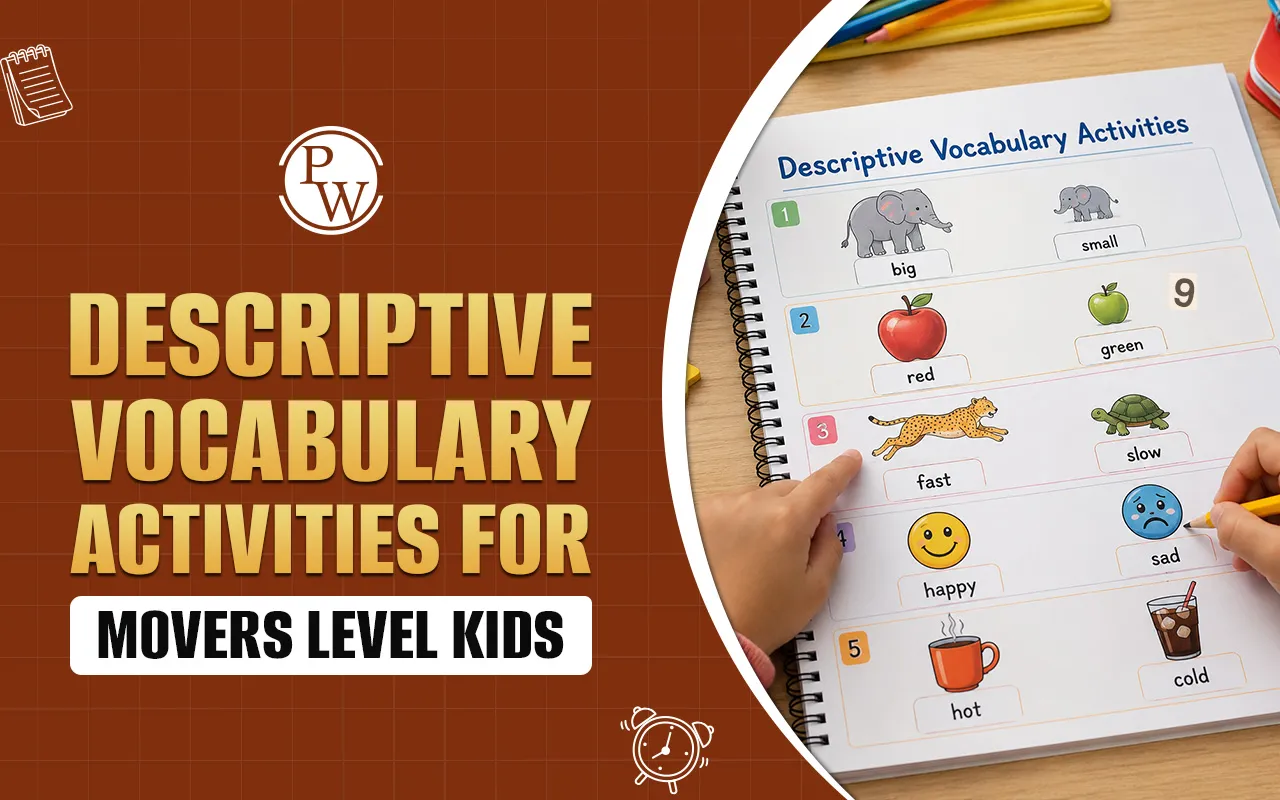
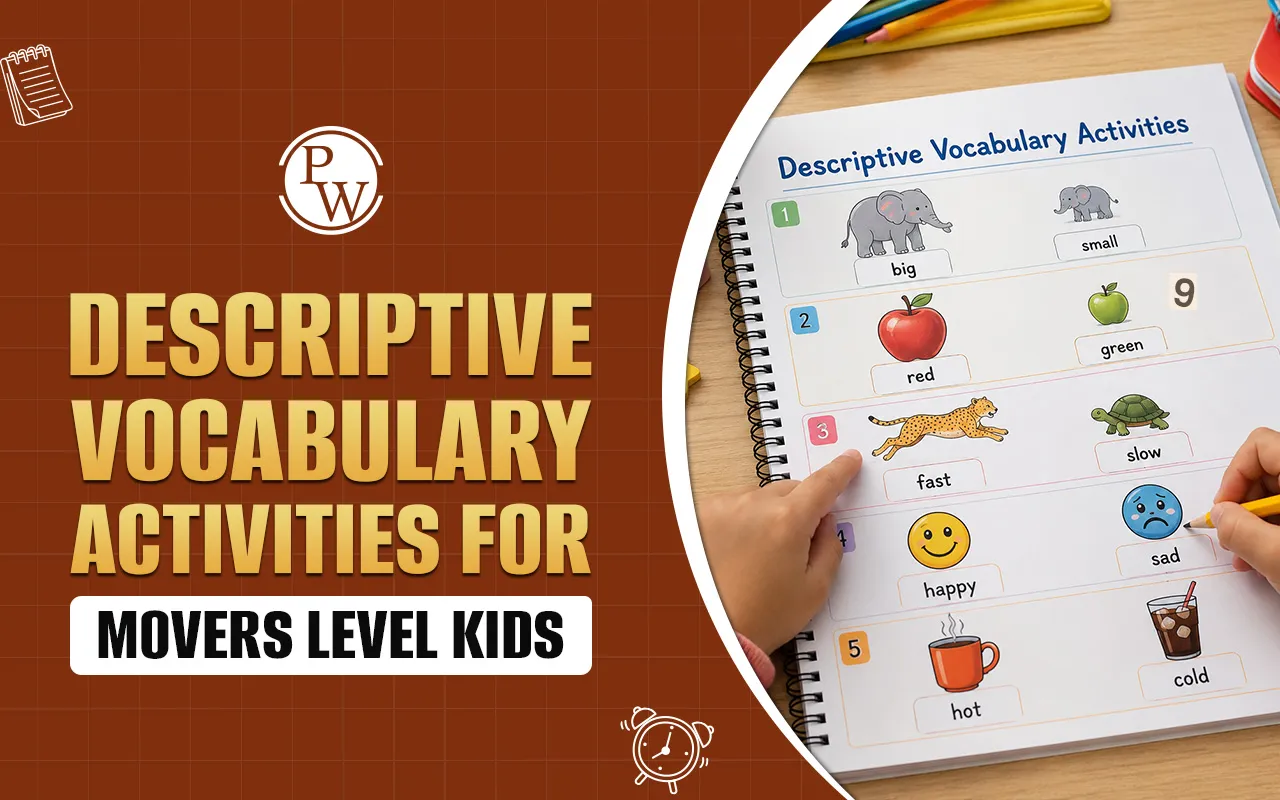
Is your child having trouble finding the correct words in English? Many young learners who are familiar with basic language may freeze or give simple one-word answers when asked to explain something. The biggest issue is that youngsters forget quite fast the lists of words that conventional learning depends upon. Young learners require active, hands-on descriptive vocabulary activities to really build confidence and make words useful communication tools.
Importance of Descriptive Vocabulary Activities for Young Learners
When children transition to the Movers stage, their language needs change. They must learn how to connect actions, objects, and feelings into full sentences. Engaging in focused descriptive vocabulary activities helps bridge the gap between knowing a word and using it naturally in speech.
-
Overcomes Mental Translation: Many children try to translate sentences from their native language, which causes long pauses. Practising descriptive words helps them link objects directly to English terms.
-
Reduces Speaking Anxiety: When activities are turned into games, the fear of making grammar mistakes disappears.
-
Encourages Full Sentences: Instead of just saying "dog", children learn to say, "The fluffy brown dog is barking loudly."
-
Supports Real-World Communication: It trains the brain to use language for storytelling, describing daily routines, and expressing emotions.
By focusing on vocabulary expansion kids can use in daily life, you help them see English as a tool for expression rather than just a school subject.
Descriptive Vocabulary Activities to Try at Home
You do not need a formal classroom to run effective descriptive vocabulary activities. You can easily mix descriptive word practice into your everyday family routines. Here are some simple, child-friendly activities that make word learning highly interactive:
1. The Household Label Challenge
Transform your living space into a live language game. Use sticky notes to label common household items, but add a descriptive twist. Instead of writing just "Door" or "Window", upgrade the text to "Wooden Door" or "Bright Window".
You can also label items with words like "Smooth Table" or "Soft Cushion". This visual learning method ensures that whenever your child looks around, they automatically associate objects with clear descriptions.
Read More - How to Stop Translating in English (Level Movers)
2. The Living Room Charades Game
Physical movement is excellent for memory retention. Play a game of charades using only descriptive words. Write down varied adjectives or feelings on slips of paper, such as "exhausted", "cheerful", "freezing", or "gigantic".
Take turns acting out the words without speaking. To make this an effective session of english speaking enrichment, the person guessing must use a full sentence, such as: "You are acting like a very tired penguin!"
3. The "Word of the Day" Fridge Match
Pick a new, interesting descriptive word every morning and stick it in the refrigerator. Choose words that elevate standard daily speech—for instance, use "delicious" instead of "good", or "chilly" instead of "cold".
Every time a family member uses that word correctly in a complete sentence during the day, they earn a point. Turning word usage practice into a friendly family competition keeps young minds highly motivated.
Read More - Daily 5 Sentence Practice for English Fluency (Level Movers)
Weekly Plan for Descriptive Words Practice
Consistency is the secret to building lasting language skills. Instead of forcing hours of stressful study over the weekend, short and regular sessions are much more effective. A brief 10 to 15-minute daily routine prevents mental fatigue and ensures high retention.
The table below provides a simple, structured weekly schedule for vocabulary expansion that kids can follow easily at home to improve their fluency vocabulary:
|
Day of the Week |
Activity Name |
How It Works |
Language Goal |
|
Monday |
Object Word Association |
Pick a random item (like a ball) and take turns saying related descriptive words. |
Build a quick bank of adjectives (e.g., round, bouncy, red). |
|
Tuesday |
The Movie Narrator |
Have your child describe their physical actions aloud while getting dressed or eating. |
Connect language to physical movements using word usage practice. |
|
Wednesday |
The Secret Mystery Box |
Hide a toy in an opaque bag. Your child feels it and describes it without looking. |
Use touch-based words (e.g., rough, smooth, hard, soft). |
|
Thursday |
Internal World Check-in |
Ask your child to describe how they feel about their school projects or playtime. |
Practise emotional vocabulary and English learning movers level skills. |
|
Friday |
The Silly Voices Challenge |
Repeat the same descriptive sentence using happy, scared, or robotic voices. |
Improve pronunciation, speech rhythm, and oral confidence. |
|
Saturday |
The Cool Word Jar |
Gather all the interesting words found during the week and celebrate the growth. |
Review and track vocabulary progress in a fun, rewarding way. |
How CuriousJr Helps Kids with Vocabulary Practice
Modern education platforms convert abstract language principles into real-world abilities. CuriousJr delivers an interactive gamified environment specifically customised to the curriculum. Instead of encouraging rote memorisation, the digital platform grabs the attention of young learners with contextual storytelling, graphic logic puzzles and audio-guided speech exercises.
CuriousJr online English learning class helps youngsters to practise descriptive vocabulary in a fun way with specific speaking exercises and interactive quizzes that allow pupils to learn without the pressure of a regular schoolroom setting.
This strategy makes sure that new language tools become a permanent part of a child’s active speaking practice, giving them a solid foundation for both the formal Movers tests and informal everyday discussions.