Mood in English Grammar: Definition, Types, Examples
 Shivam Singh20 Jan, 2026
Mood in English Grammar
Mood in English is a way to show how a verb expresses feelings, actions, or events in a sentence. In English Grammar, mood helps you understand if a sentence is telling a fact, giving a command, showing a wish, or asking something. Many times, when we study verbs, we also learn about tense, voice, number, person, and form, but the English grammar mood is often missed.
Knowing what is the mood of a verb and the types of moods in English can help make your speaking and writing better. So, keep reading to learn more about the grammatical moods in English with examples.
Read more: Sequence of Tenses
What Is the Mood of a Verb?
What is the mood of a verb? It is a common question among students learning grammar. The mood of a verb tells us the feeling or purpose behind what is being said. It shows whether a sentence is giving a fact, making a request, giving an order, showing a wish, or talking about something imaginary.
Therefore, mood in English grammar helps us understand the intention of the speaker or writer. It makes it clear if the sentence is telling something real, asking a question, or expressing a hope or condition.
Types of Moods in English Grammar with Examples
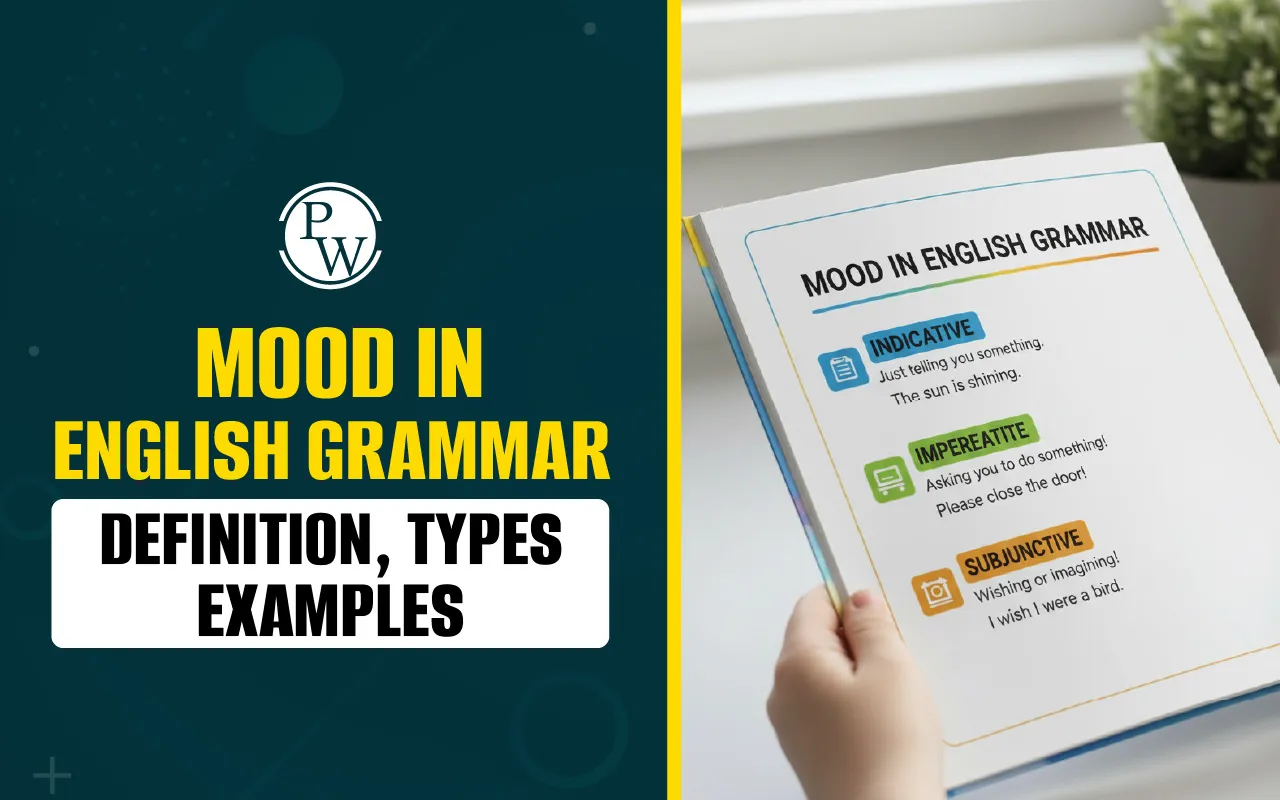
Grammatical moods in English are of different types. Each type shows the meaning or feeling in a sentence. The main types of moods in English are: Indicative Mood, Imperative Mood, Subjunctive Mood, Interrogative Mood, Exclamatory Mood, and Conditional Mood. Let’s understand these different types of moods in English Grammar with examples one by one:
1. The Indicative Mood is used to state facts, opinions, or general truths. Most sentences we speak or write are in this mood. It tells if something happened, will happen, or is happening.
For example:
-
I eat breakfast every day.
-
The sun rises in the east.
-
We will visit the park tomorrow.
2. The Imperative Mood is used for commands, requests, or advice. These sentences generally do not have a subject because the subject is “you” and is understood.
For example:
-
Close the door.
-
Please help me with this.
-
Wash your hands before eating.
Read More: Palindromes in English
3. The Subjunctive Mood is used for wishes, suggestions, or situations that are not real but imagined. It shows a thought, desire, or condition that may not happen.
For example:
-
I wish I could fly like a bird.
-
If I were taller, I could play basketball better.
-
The teacher suggested that we read this book.
4. The Interrogative Mood is used to ask questions. These sentences want information or answers.
For example:
-
Are you coming to the party?
-
What is your favourite colour?
-
When will the school reopen?
5. The Conditional Mood shows something that may happen if a certain condition is true. These sentences often use words like if, when, would, or could.
For example:
-
If it rains, we will stay home.
-
You would pass if you studied more.
-
When you finish your work, we can go out.
6. The Exclamatory Mood shows strong feelings or sudden emotions. These sentences generally start with words like “what” or “how” and always end with an exclamation mark (!).
For example:
-
How beautiful the garden is!
-
What a lovely day it is!
-
How well you played the game!
Read More: 7 Daily Habits to Improve English Fluency
Importance of Mood in English Grammar
Understanding mood in English grammar is important because it helps you understand the purpose of a sentence. It tells whether a sentence is giving a fact, making a request, showing a wish, or asking a question. When you know grammatical moods in English properly, you can:
-
Make Meaning Clear: You can show exactly what you mean in a sentence.
-
Write Correct Sentences: It helps you avoid grammar mistakes.
-
Express Feelings Better: You can share your thoughts, wishes, or commands clearly.
-
Improve Communication: It makes your speaking and writing easier to understand.
-
Do Better in Exams: Knowing moods helps answer grammar questions correctly.
Read more: Gender in Grammar
Grammatical Moods in English Practice Questions
After reading the meaning and definition of mood in English, here are some practice questions to help you check your understanding of grammatical moods in English. Identify the mood in each sentence given below:
Ques. 1. Please open the window.
Ques. 2. The sun rises in the east.
Ques. 3. I wish I could visit the zoo.
Ques. 4. Are you coming to school tomorrow?
Ques. 5. We will go to the park if it doesn’t rain.
Answers with explanation:
Ans 1. It is an Imperative Mood because it is giving a request or command.
Ans 2. It is an Indicative Mood because it states a fact.
Ans 3. It is the Subjunctive Mood because it shows a wish or something imaginary.
Ans 4. It is an Interrogative Mood because it is asking a question.
Ans 5. It is a Conditional Mood because it shows something that may happen if a condition is true.
Also Read: Figures of Speech
Build Strong Grammar Skills in Your Child with CuriousJr
Many parents see that their child finds grammar difficult and gets confused while writing or speaking in English. This can affect their confidence and performance at school. CuriousJr’s English Online Learning Classes make grammar simple and fun for children.
-
CuriousJr helps your child learn grammar step-by-step with clear explanations, interactive lessons, and practical examples.
-
With small class sizes, personalized attention, and fun activities, your child can improve grammar skills while enjoying learning.
Give your child the confidence to use grammar correctly. Book a demo class today and see the difference CuriousJr can make.