What Are Modal Verbs? Definition and Examples
 Shivam Singh20 Aug, 2025
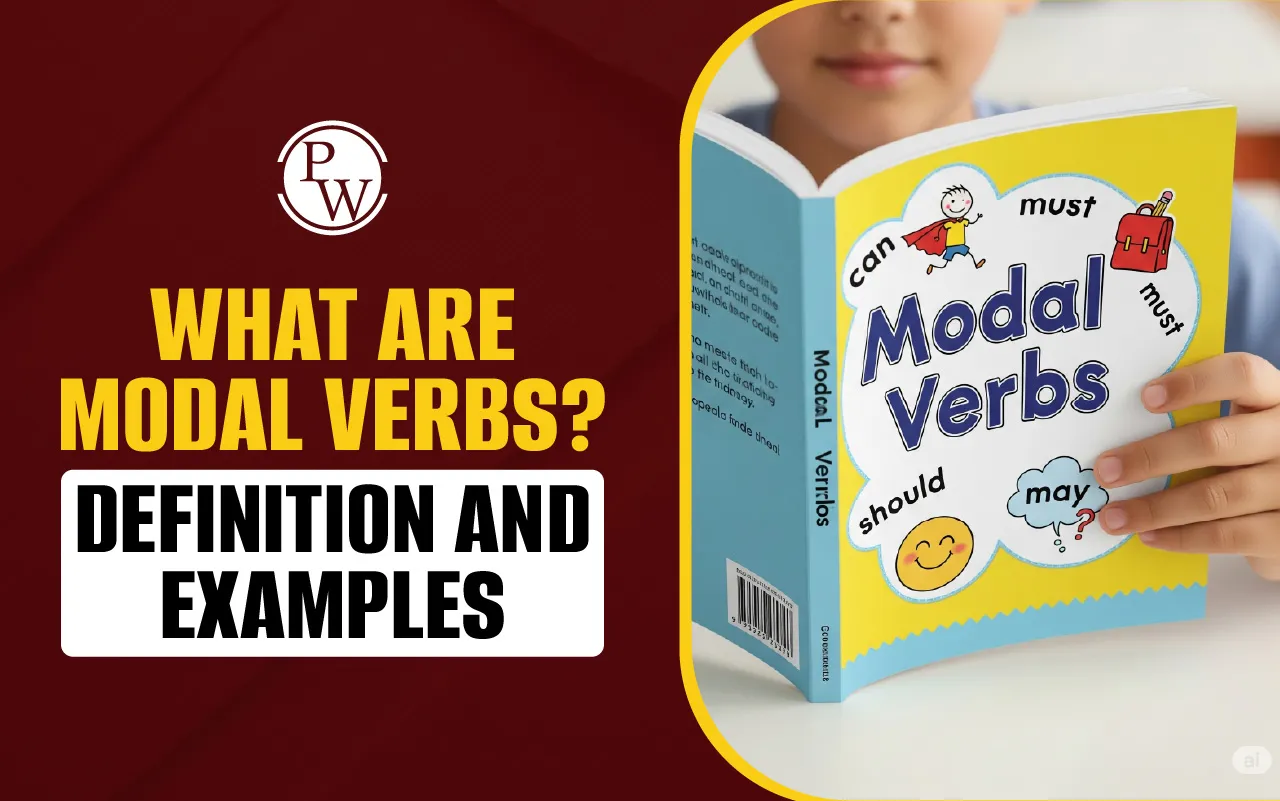
Modal verbs are short words that play an important role in English grammar. They help us talk about what someone can do, what might happen, what is necessary, or what is allowed. We use them every day without even thinking about it, in questions, advice, and everyday conversations.
Here, we will learn the meaning of each modal verb and how to use them correctly in sentences. Learning to use modal verbs the right way will make your sentence correct and your understanding of English grammar more complete.
Read More: Direct and Indirect Speech
What are Modal Verbs?
Modal verbs (modals) are auxiliary verbs that add meanings such as logical possibility, ability, necessity, and permission to the main verb. They are placed before the base form of the main verb and are not followed by “to.”
Modal verbs do not change with the subject, so you do not add “-s” or “-es” for third person singular. They are often used to express future possibilities, describe abilities, give advice, make requests, or ask for permission. The most commonly used modal verbs are can, could, may, might, must, shall, should, will, and would.
Modal Verbs Definition
Modal verbs definition states that they are helping verbs used alongside main verbs to express a subject’s ability, possibility, probability, or necessity in performing an action.
Examples:
-
She can ride a bicycle without training wheels. (ability)
-
We might go on a school trip next month. (possibility)
-
He may win the contest if he tries hard. (probability)
-
Students must follow the school rules. (necessity)
List of Common Modal Verbs
Here is a list of the most common modal verbs in English:
-
Can
-
Could
-
May
-
Might
-
Must
-
Shall
-
Should
-
Will
-
Would
-
Ought to
These modal verbs are used in different situations. Let’s learn what each one means.
Read More: Figures of Speech
Meanings of Modal Verbs
Modal verbs are words we use in English to show ability, permission, possibility, necessity, and advice. The table below outlines the meaning of each commonly used modal verb.
|
Meanings of Modal Verbs |
|
|
Modal Verbs |
Meaning |
|
Can |
Express ability or informal permission. |
|
Could |
Express past ability, polite requests, or suggestions. |
|
May |
Express possibility or formal permission. |
|
Might |
Express low possibility or makes tentative suggestions |
|
Will |
Express certainty or future intention. |
|
Would |
Express polite requests, preferences, or hypothetical situations |
|
Shall |
Express offers or formal future actions. |
|
Should |
Express advice, recommendation, or expectation. |
|
Must |
Express strong obligation or necessity |
|
Ought to |
Express moral duty or advisability. |
Read More: Clauses in English
Modal Verbs Rules
Modal verbs follow specific rules in English grammar. These rules help us use them correctly in different types of sentences. Below are the key guidelines, explained with clear examples:
Modal verbs are always followed by the base form of the verb
The base form of a verb is the simple form without “to,” “-s,” “-ed,” or “-ing.” Modal verbs must always be followed by this form, not a past tense or any other variation.
-
Correct: I could help you.
-
Incorrect: I could heed you.
-
Correct: They may go to the park.
-
Incorrect: They may going to the park.
-
Correct: She might read the book.
-
Incorrect: She might reads the book.
This rule is true for all modal verbs. Whether you use can, could, may, might, must, shall, should, will, or would, the verb that comes next must stay in its base form.
Modal verbs do not change with the subject
Modal verbs do not change with the subject of the sentence. You do not need to add “-s” for he, she, or it, which makes them easier to use than regular verbs.
-
Correct: She will arrive soon.
-
Correct: They will arrive soon.
-
Correct: He can swim.
-
Correct: I can swim.
Notice that the modal verb will or can stay the same in all cases, even when the subject changes. You do not need to make any agreement changes.
Do not add -s, -ed, or -ing to modal verbs
Modal verbs never take endings like -s, -ed, or -ing. These forms do not exist in English grammar.
-
Correct: He should listen carefully.
-
Incorrect: He shoulds listen carefully.
-
Correct: They must finish their work.
-
Incorrect: They musted finish their work.
-
Correct: She can drive a car.
-
Incorrect: She canning drive a car.
Modal verbs are special because they do not follow the usual verb rules. They are always written in their original form. You will never see “cans,” “musted,” or “shoulding” in correct English.
Read More: Abstract Nouns
How to Use Modal Verbs in Sentences?
Here, we have provided examples showing how modal verbs are used in different situations.
1. Expressing Possibility or Probability
Modal verbs help show whether something might happen, is likely to happen, or could be possible.
Examples:
-
She might win the art competition if she submits it on time.
-
The train may be delayed due to heavy rain.
-
They could be at the airport already.
-
I will probably join the meeting after lunch.
-
He might not come to school tomorrow because he is sick.
-
We may go hiking this weekend if the weather is nice.
2. Expressing Necessity and Obligation
Modal verbs also show what needs to be done, what is required, or what someone is expected to do.
Examples:
-
Students must carry their ID cards every day.
-
You should drink more water to stay healthy.
-
Drivers ought to follow the traffic rules at all times.
-
She has to submit her project before the deadline.
-
We must leave early to avoid the traffic.
-
Employees should attend the safety training session.
3. Making Requests, Offers, and Suggestions
Modal verbs are often used in polite language to make offers, ask for help, or give suggestions.
Examples of Requests:
-
Could you explain this question again?
-
Would you mind closing the window?
-
Can you send me the file before lunch?
Examples of Offers:
-
I can help you carry those bags.
-
Shall I open the door for you?
-
I could take your place if you're not feeling well.
Examples of Suggestions:
-
You should try the new library for studying.
-
It would be a good idea to save your work regularly.
-
We might want to bring umbrellas just in case it rains.
Modal Verbs Practice Questions
Fill in the banks with the correct modal verb
Choose from the following modal verbs:
can, could, may, might, must, shall, should, will, would, ought to
-
You _______ wear your seatbelt while driving.
-
She _______ play the piano when she was five.
-
We _______ visit the museum tomorrow if we have time.
-
He _______ come to school late again.
-
I _______ help you carry those books.
-
_______ I open the window?
-
They _______ finish their homework before the test.
-
You _______ not touch that wire; it’s dangerous.
-
We _______ leave now or we’ll miss the bus.
-
You _______ be more careful next time.
Also read: Two Letter Words in English
Strengthen Your Child’s English Skills with CuriousJr Online Classes
English is important for success in school and daily communication. CuriousJr’s online English classes help children use English correctly and with confidence. With a Personalised English Journey for Every Child, the program covers grammar, vocabulary, and public speaking in a simple and structured way that fits your child’s learning stage.
The course includes four levels: Starters, Movers, Key, and Preliminary. Each level offers lessons designed to improve language skills through real use and regular practice, guided by international standards.
If you want your child to speak, read, and write English more clearly and comfortably, now is the right time to begin. Book a demo session and start your child’s journey today.