Layers of Atmosphere: Structure and Importance
 Jiya Tyagi19 Jan, 2026
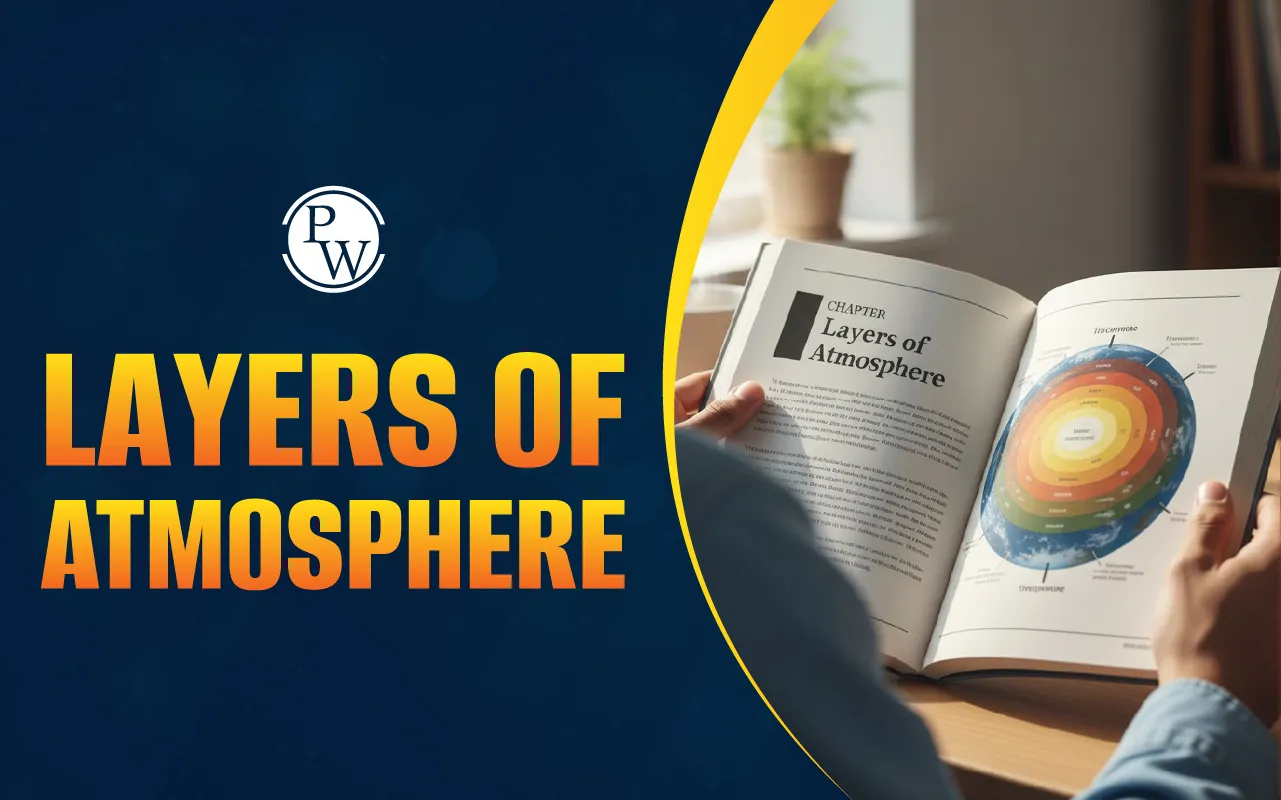
Layers of atmosphere are the gases that blanket the Earth and make life possible. The gases provide oxygen for breathing, they keep our temperature regulated, and they protect us from harmful rays from the Sun. The atmospheric layers consist of five main layers: troposphere, stratosphere, mesosphere, thermosphere, and exosphere.
Weather occurs in the troposphere, the stratosphere has an ozone layer, the mesosphere burns meteors before they hit the Earth, the thermosphere gets very hot and shows auroras, and the exosphere is where satellites orbit around the Earth. The atmosphere layers of Earth act as a blanket of protection, support life, and connect the Earth with Outer Space.
Read More: Facts About the Earth
Layers of Atmosphere Definition
Layers of Atmosphere mean the sections of gases that surround Earth. Each layer has a different temperature, density, and function that helps to protect life on Earth. The elements that make up the structure of the atmosphere are divided into five major parts it includes, troposphere, stratosphere, mesosphere, thermosphere, and exosphere.
For example, Clouds and rain form in the troposphere while satellites orbit in the exosphere, and the atmosphere layers on Earth help to protect us from harmful rays, burn up meteors, facilitate communication, and make life safe and possible on Earth.
Read More: Reproduction in Plants
What are Different Layers of Atmosphere?
The atmosphere is not a uniform space but is composed of layers. The structure of the atmosphere allows us to understand where weather happens, where satellites orbit, and how radiation is blocked. The atmosphere layers, in order from the surface of the Earth up, are:
-
Troposphere
-
Stratosphere
-
Mesosphere
-
Thermosphere
-
Exosphere
Structure of Atmosphere
Each layer has its own temperature pattern, thickness, and role in supporting life. To study Earth and atmosphere layers properly, we need to learn about them one by one.
Troposphere
The troposphere is the layer where humans and animals live, and it directly affects our daily lives. It contains the air we breathe and almost all the weather activities we experience.
-
Closest layer to Earth’s surface.
-
Extends up to 8–15 km.
-
All weather changes, like rain, storms, and clouds, occur here.
-
Temperature decreases as we go higher.
Example: When airplanes fly at high altitudes, they stay within the troposphere or just near its boundary.
Read More: Types of Natural Disaster
Stratosphere
Above the troposphere lies the stratosphere, which is calm and stable. This layer is important because it protects life by filtering harmful solar radiation.
-
Extends from 15 km to around 50 km above Earth.
-
Contains the ozone layer that absorbs harmful UV rays from the Sun.
-
Temperature increases with height due to ozone absorption.
-
Ideal for jet aircraft travel because it is stable and free from weather disturbances.
Example: The ozone layer, which protects humans and animals from radiation, is located in the stratosphere.
Mesosphere
The mesosphere is the middle layer of the atmosphere. It is extremely cold and acts as Earth’s shield against meteoroids.
-
Ranges between 50 km and 85 km.
-
Known as the coldest layer of the atmosphere.
-
Protects Earth by burning meteoroids before they reach the surface.
Example: The shooting stars we see at night are meteors burning in the mesosphere.
Thermosphere
The thermosphere is a very hot layer that plays a key role in communication and space science. It contains charged particles that help radio waves travel and create auroras.
-
Extends from 85 km to 600 km.
-
Extremely hot due to absorption of high-energy solar radiation.
-
Contains the ionosphere, important for radio communication.
-
This is an important part of Earth and atmosphere layers thermosphere, as it reflects radio signals and supports auroras.
Example: The Northern Lights (Aurora Borealis) occur in the thermosphere.
Exosphere
The exosphere is the outermost part of the atmosphere and slowly blends into space. It is where satellites orbit and where Earth’s atmosphere ends.
-
The outermost layer extends beyond 600 km.
-
Gradually merges into outer space.
-
Contains very thin gases like hydrogen and helium.
-
Satellites orbit in this region.
Example: Artificial satellites like GPS satellites orbit in the exosphere.
Also Read: Air and Atmosphere
Importance of Atmosphere Layers
Each layer of the atmosphere has a unique role that makes life possible. From giving us air and weather to shielding us from meteors and radiation, they work together to protect Earth. Without these atmospheric layers of Earth, life would not be possible, as they protect us from harmful space elements and maintain balance for survival. Below are the importance of atmosphere layers:
-
Troposphere: Supports life and weather.
-
Stratosphere: Ozone protection.
-
Mesosphere: Burns meteors.
-
Thermosphere: Enables communication and auroras.
-
Exosphere: Satellite movement and transition to space.
Help Your Child Explore Science Confidently with CuriousJr
Does your child feel Science is difficult because concepts seem confusing or too abstract at school? Many students just memorize facts for exams without truly understanding them.
CuriousJr’s online tuition classes make learning simple, interactive, and enjoyable. With real-life examples, step-by-step teaching, and hands-on methods, children start developing a genuine interest in Science. Features of CuriousJr Science Classes are:
-
Interactive Learning: Fun, engaging sessions with real-life examples.
-
Concept Clarity: Easy explanations to strengthen Science basics.
-
Boosts Curiosity: Encourages logical thinking and problem-solving.
-
Parent Updates: Regular progress reports and PTMs.
-
Flexible Support: After-school classes designed to fit schedules.
Support your child in exploring Science with CuriousJr. Book a demo class today to help them learn better, build confidence, and score well.