Reproduction in Plants: Key Concepts and Examples Explained
 Shivam Singh20 Jan, 2026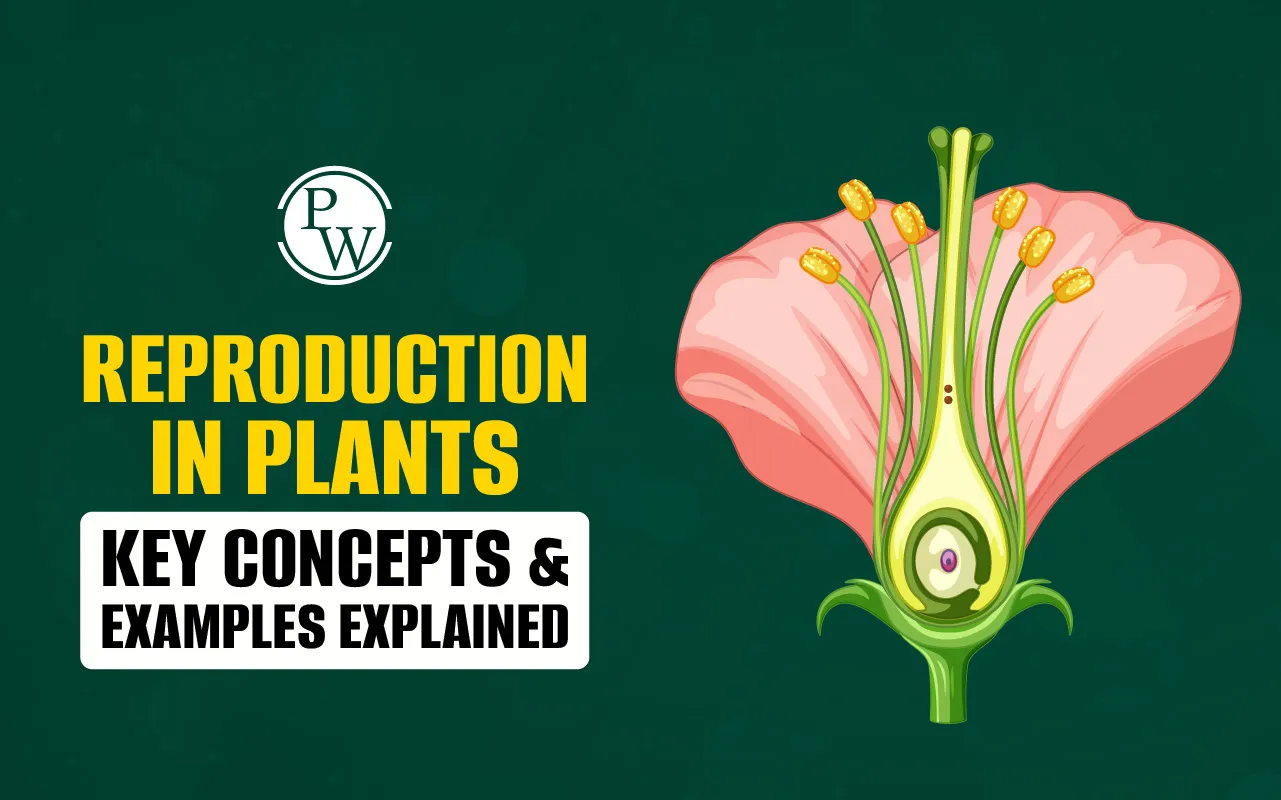
Reproduction in plants is one of the most significant life processes by which plants create new plants to continue the existence of their species. It occurs through two main processes: sexual and asexual reproduction.
Sexual reproduction means the involvement of male and female reproductive parts of a plant, whereas asexual reproduction happens from a single plant. We will discuss plant reproduction in detail to better understand how plants grow around us.
Read More: Human Digestive System
Asexual Reproduction in Plants
In this process, plants produce new individuals with only one plant involved. This method doesn't form any seeds or fruits but directly generates a replica of the original. Asexual reproduction in plants occurs in various ways, as explained below:
Vegetative Propagation
It is the process of new plant formation from the vegetative parts of the plants, such as stems, roots, leaves, etc. Vegetative Propagation can occur naturally in plants or can be performed artificially under specific conditions. Let's discuss these in detail:
Natural Vegetative Propagation
This process occurs when plants grow and develop naturally from the parent plant's roots, stem, and leaves.
-
Stem: Some plants grow along the ground with horizontal stems called runners. The runners grow buds from which new plants are generated. Example: strawberries.
-
Roots: Many plants contain swollen, modified roots known as tubers. Buds on these roots form new plants that grow above the ground. Example: sweet potato.
-
Leaves: A few plants contain buds that develop into new plants. Example: Bryophyllum.
Artificial Vegetative Propagation
It is the process of reproducing new plants artificially from the vegetative parts of the plants.
-
Cutting: It is the process of cutting a part of a plant, typically a stem, and planting it in the soil. It is nurtured under favourable conditions, and gradually the roots develop under the stem, and it grows into a new sapling.
-
Grafting: The cutting from a plant is grafted to the stem of another plant—both tissues become integrated and generate a plant with new characteristics.
Budding
It is a type of asexual reproduction where an external growth or bud is formed on the parent organism. It gradually grows and later gets detached from the original to form a new organism. For example: Yeast.
Fragmentation
The parent organism breaks into fragments, and each of the fragmented parts develops into new individuals. This process allows formation of multiple organisms very quickly. For example: Spirogyra.
Spore Formation
Some fungi reproduce asexually by spore formation. Spores can float in air and travel long distances even under harsh conditions. They germinate under favourable conditions and form new plants. For example: Moss and Ferns.
Read More: Reproduction in Animals
Sexual Reproduction in Plants
The sexual reproduction of plants involves the fusion of a male cell and a female cell, which leads to formation of fruits and seeds. The fusion takes place in the flowers that contain male and female reproductive parts. We will discuss the sexual reproduction in plants with the components and processes involved.
Flowers
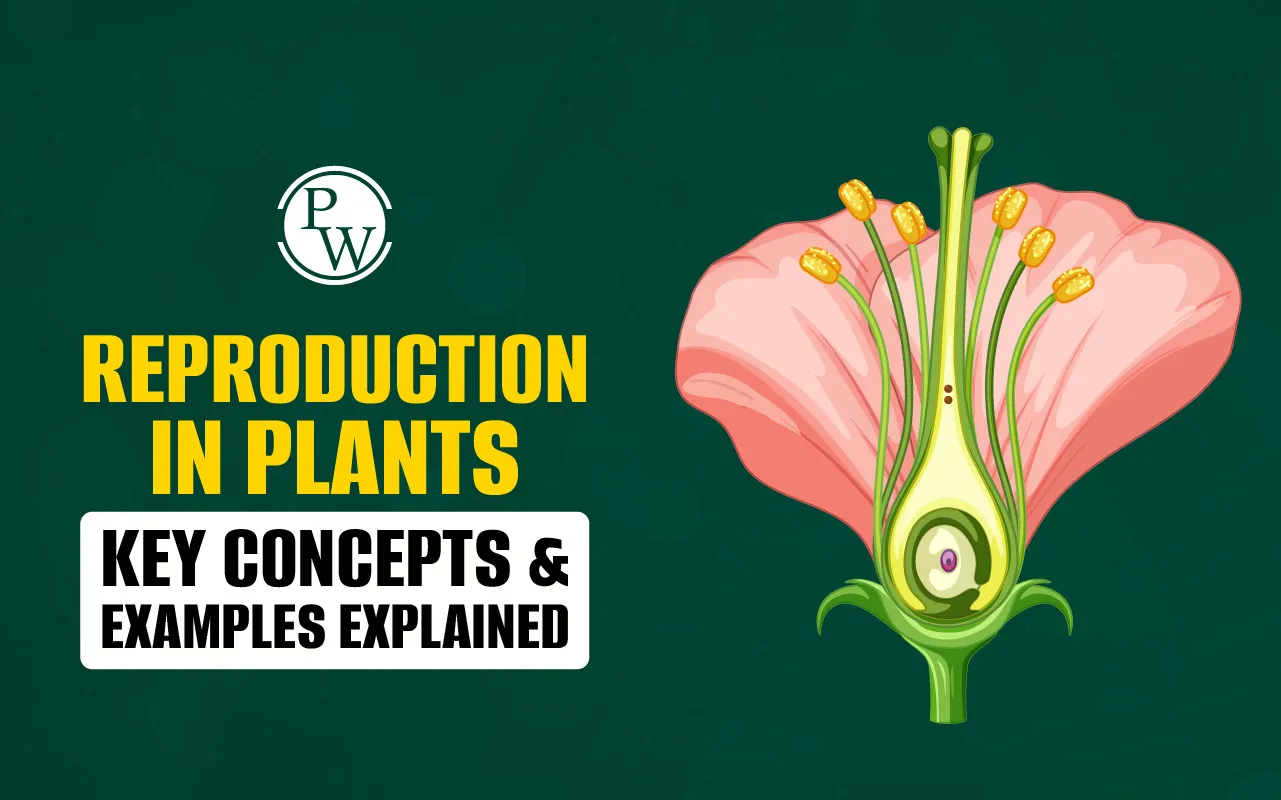
Flowers contain both male and female reproductive parts.
The male reproductive part of a flower is known as a stamen. It consists of two parts:
-
Filament: The stalk of the stamen
-
Anther: The swollen top part that contains pollen grains
The female reproductive part of a flower is known as the pistil. It consists of the following parts:
-
Stigma: the top part of the pistil that receives the pollen grains
-
Style: The tube-like middle part that connects the stigma and the ovary
-
Ovary: The swollen bottom part of the pistil. It contains the female gamete called an ovule.
Some flowers have only one type of reproductive part either male or female. They are called unisexual flowers. There are plants that have both types of reproductive parts (male and female) in their flowers. These are called bisexual flowers.
Read more: 5 Sense Organs
Pollination
It is the process in which the pollen grains from the anther of a flower are transferred to the stigma of another flower or same flower. When the pollen from one flower is transferred to another flower of the same plant or a different plant, it is called cross-pollination. When the pollen grain from a flower reaches the stigma of the same flower, it is called self-pollination.
Fertilization
After the pollen grains are deposited on the stigma, a long pollen tube develops from the pollen. It moves through the style and reaches the ovary. Inside the ovary, the male gamete from the pollen tube fuses with the female gamete (ovule) to form a zygote.
Fruit and Seed Formation
After fertilization, the ovary grows to form fruit, and the ovules develop into seeds. The other parts of the flower fall off. The fruits can be juicy (like mango, apple, etc.) or hard (like almonds, nuts, etc.).
Dispersal of Seeds
The seeds inside the fruit contain an embryo protected by the seed coat. When the seeds fall on the ground, they grow into new plants under the influence of water, light, and temperature.
Wind, birds, or animals carry the seeds and disperse them to different places. Without seed dispersal, a large number of plants will grow in a small place, and they will struggle for water and light. Seed dispersal allows the plants to get proper nutrients and grow healthy.
Read more: Health and Hygiene
10 Examples of Plants That Reproduce Sexually
We can find several plants around us that use sexual reproduction to produce new plants. Here are 10 examples of plants that reproduce sexually:
-
Rose: This common flowering plant has bisexual flowers. It is capable of both self-pollination and cross-pollination.
-
Sunflower: This plant reproduces with bisexual flowers. Insects or wind help carry the pollen.
-
Papaya: This plant has unisexual flowers (either male or female). So, cross-pollination is required for fruit and seed development.
-
Tomato: The fruit of this plant (tomato) contains multiple seeds resulting from sexual reproduction by flowers.
-
Mango: The mango tree reproduces sexually through flowers and forms fruits with a large seed.
-
Apple: This plant reproduces sexually through pollination and fertilization, from fruits containing multiple seeds.
-
Coconut: It is a plant with unisexual flowers. It relies on wind or other agents for pollination.
-
Pea Plant: Sexual reproduction in this plant results in formation of fruits with seeds enclosed within pods.
-
Cucumber: This plant has unisexual flowers and produces fruit with seeds through cross-pollination.
-
China Rose: It is a common flowering plant with bisexual flowers. It uses self-pollination and cross-pollination for sexual reproduction.
Asexual Reproduction in Algae
Algae are organisms that carry out photosynthesis, but they are not plants. They don't have distinct structures like plants. Their habitat is mostly aquatic. Asexual reproduction in algae involves the creation of new bodies from a single parent. There is no involvement of gametes. This process can occur through several methods, as explained below:
Fragmentation
In this process, the algae break into fragments or smaller parts. Each fragmented part gradually grows and develops into a new alga with properties and characteristics similar to the parent.
Multiple Fission
It is a common asexual reproduction where new organisms are produced through cell division. The parent cell divides into two parts, with the division of the nucleus and cytoplasm. The newly formed cells develop individually and are capable of creating new cells.
Spore Formation
Algae often produce spores, which are specialized reproductive cells. These spores often sustain harsh conditions and germinate under favourable conditions to develop into new individuals.
Reproduction in plants is an amazing process of nature that ensures plants and trees sustain on the Earth by growing in numbers. Every living organism shows the ability to reproduce, and so do the plants. Understanding the process of flower-to-fruit conversion, or the creation of new individuals by fragmentation or budding, helps us clarify many activities happening in the plant world.
Improve your child’s learning skills with CuriousJr Online Classes
As a parent, are you concerned that your child is losing interest in studies, struggling to keep up with school lessons, or forgetting quickly what they learn? To help address your worries, CuriousJr has developed live online tuition classes that focus on an interactive and engaging learning approach for students from classes 3 to 9.
How CuriousJr School Tuition supports your child's academic journey:
-
Daily interactive sessions engage students with structured learning modules that help clarify concepts simply for easy retention.
-
Our tuition classes align with the school curriculum and cover Maths, Science, English, and Social Studies to give your child well-rounded academic support.
-
The activity-based lesson plans with relatable explanations simplify complex ideas, which helps students understand and apply the knowledge.
-
Each student receives individual attention and guidance from two dedicated mentors for learning new concepts and real-time doubt clearing.
-
Regular assessments and feedback by expert mentors help parents track the child's progress and focus on improvement areas.
At CuriousJr, we aim to help your child overcome subject-related challenges, improve conceptual clarity, and stay ahead in their academic journey. Book a demo class today and see how our well-planned learning program supports your child's academic growth.