Air and Atmosphere - Definition and Meaning
 Shivam Singh19 Jan, 2026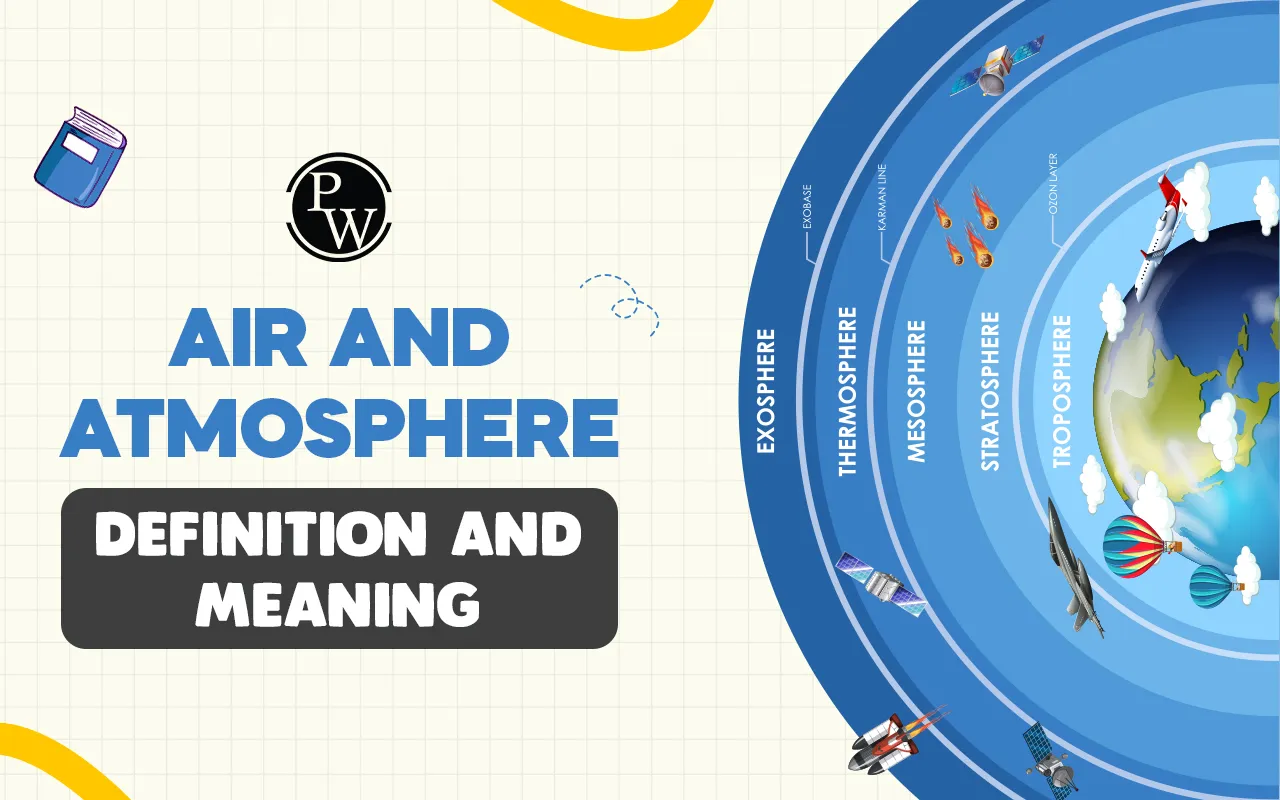
Air and atmosphere are related to each other, but they are different from each other. Air is the mixture of gases we breathe, like oxygen and nitrogen. It keeps us alive. On the other side, the atmosphere is like a big blanket of air that covers the whole Earth. It protects us from the hot rays of the sun, gives us air to breathe, and helps in many other ways. So, we can say that air is a part of the atmosphere.
It is important for students to learn about air and atmosphere because they play an important role in our daily life and in nature. When we understand the importance of air and atmosphere, we learn how to take care of them and keep our planet safe and healthy.
Read More: Unity in Diversity Speech
What is Air?
Air is all around us and is made up of many gases. This is called the air composition. The importance of air is very significant for all living things. Without air, neither humans, nor animals, nor even plants can survive. Air helps us breathe, moves clouds in the sky, and plays an important role in changing the weather. So, the answer to the question "What is air?" In simple words, "Air is a mix of gases that every living thing needs to survive."
Definition of Air
The definition of air is: Air is a mixture of gases that surrounds the Earth and helps living things survive. We cannot see air, but it is always present around us. It has gases like oxygen, which we breathe in, and nitrogen, which is useful for plants and the environment.
Read More: Social Issue
Properties of Air
Now that we have learned the definition of air, it's time to understand its properties. Air is a mixture of gases that makes up the Earth’s atmosphere. It is colourless, odorless, and tasteless. Even though we cannot see it, it is all around us, and the importance of air for life is vital. Here are some key properties of air:
-
Air takes up space: When you blow air into a balloon, it gets bigger because air fills it.
-
Air has weight and pressure: This is called air pressure. That’s why air can push things, like when wind moves leaves or flies kites.
-
Air can expand: When air gets warm, it spreads out and takes more space.
-
Air composition stays the same: As we go higher in the sky, the air composition (like oxygen and nitrogen) stays the same, but the amount of air becomes less.
Percentage of Gases in Air
The air composition in our atmosphere is made up of many gases. Some are present in large amounts, and some in very small amounts.
-
Nitrogen is present in about 78% of the air. It plays an important role in helping plants grow.
-
Oxygen makes up around 21% of the air. All living things need oxygen to breathe and stay alive.
-
Argon is present in about 1% of the air. It is a gas that does not react easily with other substances.
-
Carbon dioxide is only 0.03% of the air. Plants use carbon dioxide to make food during photosynthesis.
-
Other gases like neon, helium, methane, ozone, and water vapor are present in very small amounts. They balance the weather, temperature, and environment.
Read More: Types of Natural Disaster
Importance of Air
Air keeps all living things alive, which defines the importance of air in our lives. Without air, there is no life possible. To better understand the importance of air, keep reading.
-
Air gives us oxygen, which humans and animals need to breathe and stay alive.
-
Plants use carbon dioxide from the air to make their food through photosynthesis.
-
Air helps control the Earth’s temperature by trapping heat and spreading it all over the planet.
-
Air plays an important role in the water cycle by helping in evaporation, cloud formation, and rainfall.
-
Pollination happens with the help of air, as it carries pollen from one flower to another.
-
Many seeds travel in the air, helping plants grow in new places.
-
We hear sounds because air carries them to our ears.
-
Air forms the atmosphere, which protects us from harmful sun rays and falling meteoroids.
Now that you must have understood the answer to what is air, the importance of air, and its definition, it’s time to learn about what is atmosphere, of which the air is a part.
What is Atmosphere?
Atmosphere is a layer of gases that covers the Earth from all sides. It is like a big blanket made of different gases such as nitrogen, oxygen, carbon dioxide, and argon. These gases together make up the air we breathe. The atmosphere helps life on Earth in many ways.
It gives us oxygen to breathe, protects us from the sun’s harmful rays, and keeps the Earth warm by trapping heat. It also balances the temperature from becoming too hot in the day or too cold at night. Without the atmosphere, Earth would be too cold for anyone to live. Learning what is atmosphere helps us understand how life on Earth is possible.
Definition of Atmosphere
As per the National Aeronautics and Space Administration (NASA), the definition of atmosphere is "Atmosphere is the layer of gases that surrounds a planet or moon and is held in place by gravity."
On Earth, atmospheric layers are made up of nitrogen (78%) and oxygen (21%), along with small amounts of carbon dioxide, argon, and water vapor. The importance of atmosphere is very high, as it gives us air to breathe, keeps the Earth warm, and protects us from the harmful rays of the sun.
Read More: What Is Global Warming?
Atmospheric Layers of Earth
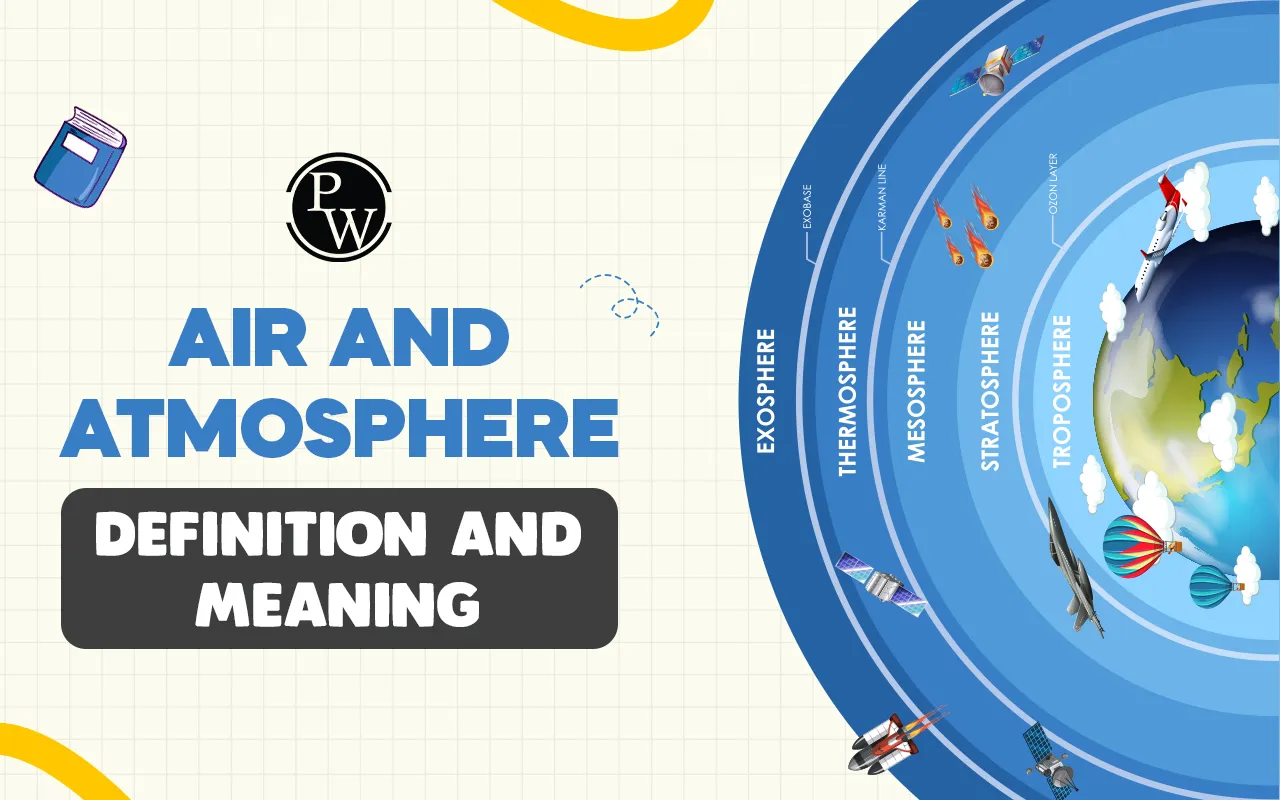
The atmosphere is made up of different layers. These atmospheric layers of Earth protect us from the sun’s harmful rays and help support life. There are five main layers of the atmosphere:
-
Troposphere: This is the lowest layer. We live in this layer, and all the weather-related things take place in this layer.
-
Stratosphere: This is above the troposphere. It has the ozone layer, which protects us from the sun’s harmful rays.
-
Mesosphere: This is the middle layer. It is the coldest part of the atmosphere.
-
Thermosphere: This layer is very hot. It absorbs the sun’s strong rays.
-
Exosphere: This is the outermost layer. It slowly fades into space, and is where satellites orbit.
These atmospheric layers of Earth work together to keep our planet safe and full of life.
Importance of Atmosphere
The importance of atmosphere is huge for life on Earth. It is like a protective cover that keeps our planet safe and sound. Here are the key points that explain the importance of atmosphere for survival:
-
The atmosphere gives us oxygen to breathe and carbon dioxide for plants to make food.
-
It protects us from the sun’s harmful rays, which can cause skin problems.
-
The atmosphere keeps the Earth warm by trapping heat, so we don’t freeze at night or get too warm during the day.
-
It helps in the water cycle, which gives us rain, clouds, and drinking water.
-
The atmosphere burns up meteoroids before they can hit the Earth.
-
It helps in weather and climate, giving us wind, rain, and seasons.
-
The atmosphere allows mobile and TV signals to work properly in the air.
Now you must have clearly understood what is air and atmosphere, and how both are different but closely related. The importance of air is seen in how it helps us breathe and supports life, while the importance of atmosphere is seen in how it protects the Earth and makes it a safe place for living things. Learning about air and atmosphere helps us understand how nature works and why we must always take care of our environment.
Also Read: Globe and Map
Make School Subjects Easy for Your Child with CuriousJr
Many children find subjects like Math, Science, English, or Social Studies hard to learn because school classes move too fast, and not every child learns at the same pace. This can make it hard to keep up and understand topics properly.
CuriousJr’s Online School Tuition program is designed to solve this problem. These live, interactive classes follow your child’s school syllabus and give them the regular support they need to do better in studies, right from home. Here’s how CuriousJr helps your child:
-
Live classes with certified and friendly teachers who explain topics in a simple and clear way
-
Daily practice and homework to build a strong understanding of learned concepts
-
Homework help when your child gets stuck
-
Progress tracking so you know how your child is doing
Give your child the help they need to feel confident in class and score better. Book a demo class today!