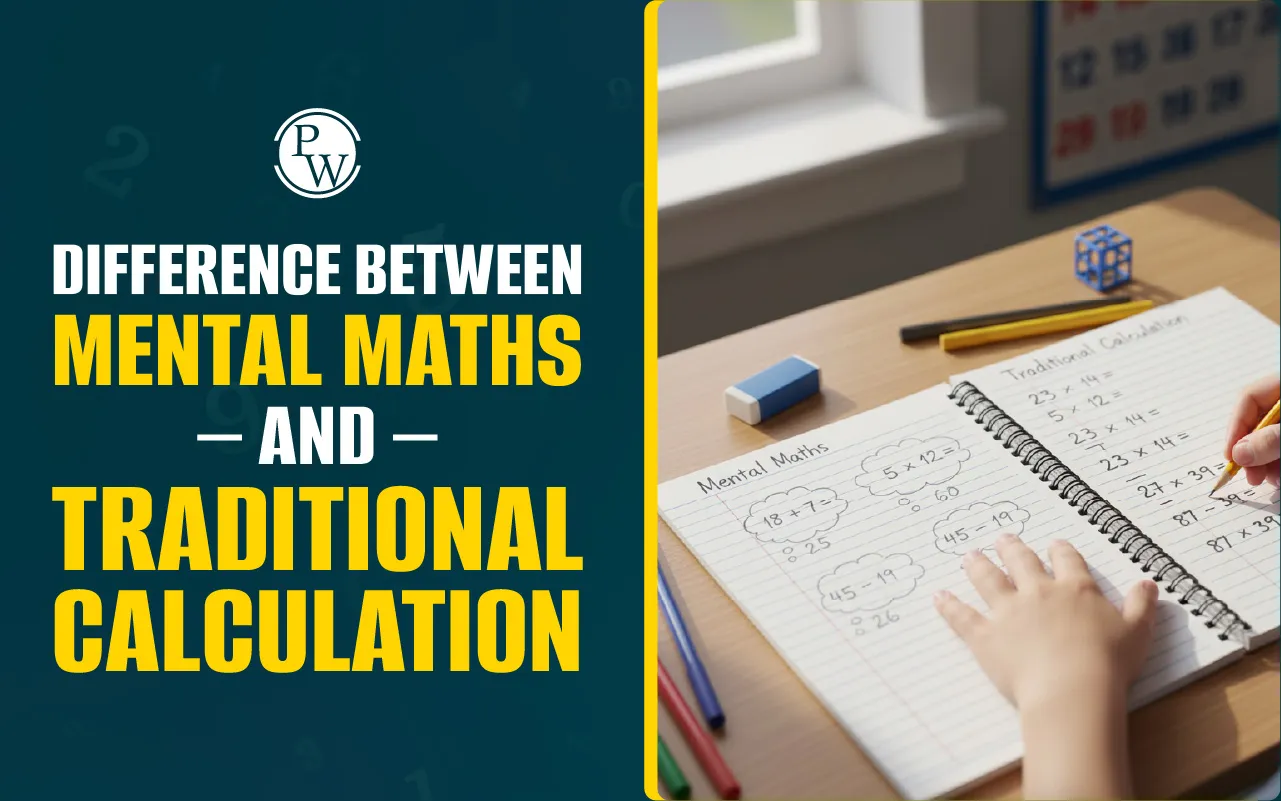
Difference Between Mental Math and Traditional Calculation
 Shivam Singh29 Oct, 2025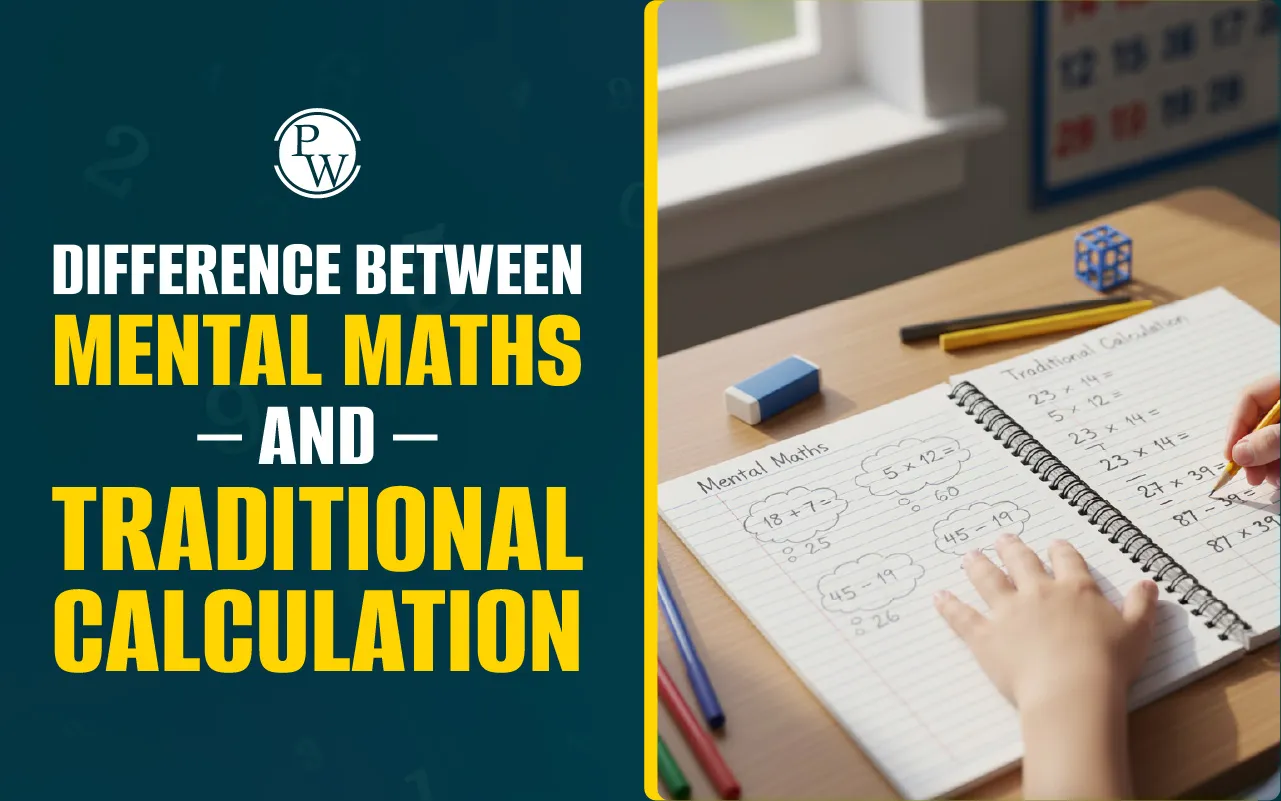
Mental Math and Traditional Calculation
Mental math and traditional calculation are the two different approaches to handle mathematical problems. Traditional calculations use tools like pen and paper or calculators.
On the other hand, mental math strategies help solve the problems by performing quick calculations in mind. Both have their importance, but they work differently. We will discuss both approaches to provide a clear understanding of how each method influences learning, accuracy, and speed in mathematics.
What is Mental Math?
Mental math is about performing math calculations in the mind, without using external physical aids. Mental math involves the application of some smart techniques based on logic, patterns, and visualization that approach math problems in a non-conventional way.
It uses methods like rounding and adjusting, breaking down numbers, and other shortcuts to deduce the solutions immediately. For example, to multiply 25 × 18, mental math applies the following process:
25 × 18 = (25 × 10) + (25 × 8) = 250 + 200 = 450
Read More: Top 10 Tricks to Master Mental Maths
What is Traditional Maths?
Traditional math refers to the conventional way of solving mathematical problems by following step-by-step written operations as conventionally taught in schools. It involves the long division method, multiplication tables, column addition, etc to solve problems.
For example, to find the result of 25 x 18 using traditional calculation, students need to multiply each digit in a systematic step-by-step way and add up the products to get the final result.
This process is slower compared to mental math but is often considered more the mathematical operations and uses easy and smart techniques to simplify structure and reliability for building basic arithmetic skills in learners. The traditional calculation method is used across schools and examinations.
Read More: Vedic Maths Tricks
Differences Between Mental Math and Traditional Calculation
Here is a comparison between mental math and traditional calculation based on several important factors, which can help your child understand both the approaches more clearly:
|
Differences Between Mental Math and Traditional Calculation |
||
|
Aspect |
Mental Math |
Traditional Calculation |
|
Definition |
Performing mathematical operations in mind without external tools |
Solving problems using written methods with tools like pen, paper, or calculator |
|
Speed |
Much faster due to the use of shortcuts and patterns |
Slower, as it involves step-by-step written procedures |
|
Accuracy |
High accuracy when practiced regularly |
Very accurate due to systematic steps |
|
Learning Style |
Based on logic, number patterns, and visualization |
Based on memorization and following fixed rules |
|
Application |
Useful for daily quick calculations for simple mathematical problems |
Used for solving long or complex problems in academics |
|
Cognitive Impact |
Enhances brainpower, concentration, and focus |
Improves discipline, structure, and understanding of procedures |
Read More: Abacus vs. Vedic Maths
Advantages of Mental Math
Among the different approaches, mental math offers unique benefits that go beyond just academics. Let’s look at the major advantages of mental math:
Faster Calculations
One of the biggest advantages of mental math is speed. With regular practice, students can solve arithmetic problems immediately without writing down anything.
Enhances Concentration and Memory
Practicing mental math strategies strengthen the memory and focus of the students. They can learn how to hold numbers in mind and process them for calculations.
Improves Confidence
When your child learns to calculate mentally without using external tools, they feel more confident handling mathematical problems, especially during exams.
Encourages Logical Thinking
Mental math improves the child’s ability to find patterns and relationships between numbers, which enhances reasoning skills.
Makes Learning Interesting
Smart calculation tricks in mental math make math learning more fun and interesting. It reduces anxiety and fear of math.
Improves Academic Performance
Students proficient in mental math often perform better in overall academics because they can think logically and manage complex calculations quickly.
Read More: Building Confidence Through Mental Math Practice
Tips to Master Mental Math
Students can learn mental math techniques through easy and exciting ways. Here are some practical tips and tricks for your child to acquire mental math skills and apply them effectively in school exams and beyond.
-
Learning mental math requires consistent practice. A few mental math exercises daily can sharpen problem-solving skills.
-
Learn multiplication tables up to 20 and memorize common squares, fractions, and percentages to make mental calculations faster.
-
Visualize numbers on a number line that can help in quick calculations.
-
Use learning apps designed for mental math practices that use puzzles, sequencing, data handling, memory games, etc.
Both mental math and traditional calculation play significant roles in mathematics learning. Mental math focuses on speed, logic, and flexibility and sharpens your child’s mind. Traditional calculation emphasizes accuracy, structure, and consistency through systematic procedures of problem-solving.
Also read: 10-Minute Daily Exercises to Improve Mental Maths Skills
Make Your Child a Math Wizard With CuriousJr Mental Maths Course
Turn screen time into skill time with our engaging and interactive Mental Maths online classes. CuriousJr helps children strengthen their calculation speed, accuracy, and logical thinking while making learning enjoyable.
Your child will
-
Learn smart and easy tricks for faster calculations
-
Strengthen focus, memory, and problem-solving skills
-
Gain confidence in handling numbers without using fingers or calculators
-
Receive step-by-step guidance from dedicated mentors
Our dual-teacher model ensures that every student gets personal attention and regular practice support. Fun games, visual activities, and real-life examples make each class interesting and effective.
At CuriousJr, we turn maths into an exciting skill that stays for life. Book a demo session today and see how your child can master numbers with speed, logic, and confidence.